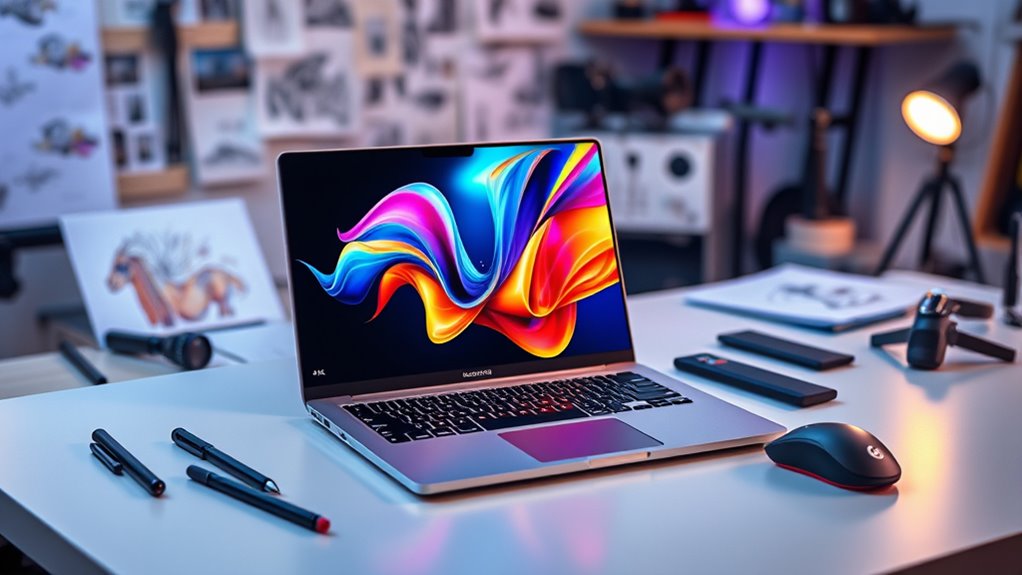

Finding the right content creation laptop in 2026 means balancing power, portability, and value. The Apple 2026 MacBook Air with its M5 chip stands out for its lightweight design and impressive performance for on-the-go editing. The ASUS Vivobook Core i9-13900H offers top-tier processing power suited for demanding tasks like video editing and 3D rendering, but at a higher price. Meanwhile, the Lenovo 16-Inch Business Laptop balances robust specs with a more traditional design, making it ideal for professionals who need reliability. The main tradeoffs involve choosing between raw power, portability, and budget. Keep reading for a detailed breakdown of each option and what makes them suitable for different creators.

Get everyday essentials delivered free — and shop member deals
- Fast, free delivery on millions of items
- Access to Prime Big Deal Days deals on October 6–7
- Prime Video, Amazon Music and more included
Key Takeaways
- High-end processors like the Intel Core i9-13900H and AMD Ryzen AI 7 significantly boost editing and rendering speeds.
- Display quality, especially 4K or high refresh rate screens, is essential for detailed content creation work.
- Memory capacity of 16GB or more is critical for multitasking and large project workflows, but 32GB can future-proof your setup.
- Portability varies widely; lightweight ultrabooks excel for mobility, while larger screens benefit stationary editing setups.
- Pricing varies based on specs—invest more if you prioritize speed and display quality, but good mid-range options still handle most tasks.
| Lenovo 16-Inch Business Laptop with Intel Core i7-13620H, 16GB DDR5 RAM, 512GB SSD |  | Best Overall for Content Creators on the Go | Processor: Intel Core i7-13620H (10 cores, up to 4.9GHz) | RAM: 16GB DDR5-4800 | Storage: 512GB PCIe 4.0 NVMe SSD | VIEW ON AMAZON | See Our Full Breakdown |
| Lenovo V15 G6 Laptop, 15.6″ FHD Display, 16GB DDR5 RAM, 256GB PCIe SSD |  | Best Budget-Friendly for Everyday Content Tasks | Display: 15.6″ FHD (1920×1080) anti-glare | Processor: Intel 4-Core (up to 3.4GHz Turbo) | RAM: 16GB DDR5 | VIEW ON AMAZON | See Our Full Breakdown |
| NIMO 15.6″ AI-Light Gaming Laptop with AMD Ryzen 7 7735HS, 16GB DDR5, 1TB SSD |  | Best for Creative Gamers and Multitaskers | Processor: AMD Ryzen 7 7735HS | Graphics: AMD Radeon 680M | RAM: 16GB DDR5 | VIEW ON AMAZON | See Our Full Breakdown |
| ASUS VivoBook 16″ Copilot+ PC Laptop with AMD Ryzen AI 7, 16GB DDR5, 512GB SSD, Windows 11 Home |  | Best for Productivity and AI-Enhanced Content Creation | Display: 16-inch WUXGA (1920×1200), 16:10, 300-nit | Processor: AMD Ryzen AI 7 350 | Memory: 16GB DDR5 | VIEW ON AMAZON | See Our Full Breakdown |
| ASUS Vivobook Core i9-13900H Laptop, 15.6″ FHD Display, Up to 48GB RAM, Up to 2TB SSD, Windows 11 Pro, Blue |  | Best for Power Users and Content Professionals | Processor: Intel Core i9-13900H | Display: 15.6″ FHD (1920×1080) | RAM: Up to 48GB DDR4 | VIEW ON AMAZON | See Our Full Breakdown |
| HP OmniBook X AI Laptop 17.3″ FHD Touch Intel 8-core Ultra 7 256V, 16GB RAM, 1TB SSD, GeForce RTX 4050, Wi-Fi 7, Win11Pro |  | Best for Power and Versatility in Content Creation | Display: 17.3″ FHD Touchscreen | Processor: Intel 8-core Ultra 7 256V, 2.2GHz base, 4.8GHz boost | Graphics: NVIDIA GeForce RTX 4050 6GB | VIEW ON AMAZON | See Our Full Breakdown |
| Acer Aspire FHD Touchscreen Laptop with Intel Ultra 7 258V, 32GB RAM, 1TB SSD |  | Best for Portable Power and Multitasking | Display: 14-inch FHD touchscreen | Processor: Intel Ultra 7 258V | Graphics: Intel Arc 140V with 8 Xe cores | VIEW ON AMAZON | See Our Full Breakdown |
| 2026 Laptop with Intel N95 Processor, 17.3-inch FHD IPS Screen, 16GB RAM, 256GB SSD, Windows 11, Webcam, HDMI, Type-C, 6000mAh Battery |  | Best for Multimedia and Versatile Use | Display: 17.3 inch FHD IPS | Processor: Intel N95 up to 3.4GHz | RAM: 16GB DDR4 | VIEW ON AMAZON | See Our Full Breakdown |
| NIMO 15.6 AI Creator Laptop, AMD Ryzen 5 6600H, 16GB RAM, 512GB SSD, FHD IPS Display |  | Best for Entry-Level Content Creation and Casual Use | Processor: AMD Ryzen 5 6600H | Cores: 6 cores, 12 threads | Display: 15.6 inch FHD IPS | VIEW ON AMAZON | See Our Full Breakdown |
| Apple 2026 MacBook Air 13-inch Laptop with M5 Chip, 16GB RAM, 512GB SSD, Liquid Retina Display, Touch ID, Wi-Fi 7 – Midnight |  | Best for Sleek Design and Seamless Ecosystem Integration | Display: 13.6-inch Liquid Retina | Processor: M5 chip | Memory: 16GB Unified Memory | VIEW ON AMAZON | See Our Full Breakdown |
| content creation laptop | Processor | Storage | Display | RAM |
|---|---|---|---|---|
| Lenovo 16-Inch Business Laptop | Intel Core i7-13620H (10 cores, up to 4.9GHz) | 512GB PCIe 4.0 NVMe SSD | 16-inch WUXGA IPS, 1920×1200, anti-glare, 300 nits | 16GB DDR5-4800 |
| Lenovo V15 G6 Laptop | Intel 4-Core (up to 3.4GHz Turbo) | 256GB PCIe SSD | 15.6" FHD (1920×1080) anti-glare | 16GB DDR5 |
| NIMO 15.6" AI-Light Gaming Lap | AMD Ryzen 7 7735HS | 1TB SSD | 15.6" FHD IPS, 1920×1080 | 16GB DDR5 |
| ASUS VivoBook 16" Copilot+ PC | AMD Ryzen AI 7 350 | 512GB PCIe SSD | 16-inch WUXGA (1920×1200), 16:10, 300-nit | — |
| ASUS Vivobook Core i9-13900H L | Intel Core i9-13900H | Up to 2TB PCIe M.2 SSD | 15.6" FHD (1920×1080) | Up to 48GB DDR4 |
| HP OmniBook X AI Laptop 17.3" | Intel 8-core Ultra 7 256V, 2.2GHz base, 4.8GHz boost | 1TB SSD | 17.3" FHD Touchscreen | 16GB |
| Acer Aspire FHD Touchscreen La | Intel Ultra 7 258V | 1TB PCIe SSD | 14-inch FHD touchscreen | 32GB LPDDR5X |
| 2026 Laptop with Intel N95 Pro | Intel N95 up to 3.4GHz | 256GB SSD | 17.3 inch FHD IPS | 16GB DDR4 |
| NIMO 15.6 AI Creator Laptop | AMD Ryzen 5 6600H | 512GB SSD | 15.6 inch FHD IPS | 16GB DDR5 |
| Apple 2026 MacBook Air 13-inch | M5 chip | 512GB SSD | 13.6-inch Liquid Retina | — |
More Details on Our Top Picks
Lenovo 16-Inch Business Laptop with Intel Core i7-13620H, 16GB DDR5 RAM, 512GB SSD
This Lenovo 16-inch model stands out for its balance of raw power and portability. Its Intel Core i7-13620H offers robust multitasking capabilities, making it well-suited for editing high-resolution videos or managing large content files—tasks that might strain less capable machines like the Lenovo V15 G6. The 16-inch WUXGA display provides vibrant visuals with anti-glare coating, enhancing editing accuracy. However, the 512GB SSD might fill quickly if working with large media libraries, unlike the 1TB SSD in the NIMO Ryzen 7 model. While it doesn’t include a dedicated GPU, its lightweight design at just 3.70 lbs means you can carry it easily between locations. Compared to the ASUS Vivobook with an i9 chip, the Lenovo offers a more balanced mix of power and portability for content creators who need mobility without sacrificing performance.
Pros:- Powerful Intel Core i7 processor suitable for demanding tasks
- High-resolution 16-inch display with anti-glare coating
- Lightweight and portable at just 3.70 lbs
- Fast DDR5 RAM and PCIe SSD for responsive performance
Cons:- Limited to 512GB storage, which may be insufficient for large files
- No dedicated graphics card for intensive rendering or gaming
- Battery life may require frequent charging during intensive use
Best for: Content creators and professionals who need a portable, powerful machine for multitasking and editing on the move.
Not ideal for: Heavy gamers or 3D artists requiring dedicated graphics and extensive storage for large media projects.
- Processor:Intel Core i7-13620H (10 cores, up to 4.9GHz)
- RAM:16GB DDR5-4800
- Storage:512GB PCIe 4.0 NVMe SSD
- Display:16-inch WUXGA IPS, 1920×1200, anti-glare, 300 nits
- Graphics:Intel UHD Graphics
- Weight:3.70 lbs
Our verdict“This model is ideal for mobile content creators who prioritize power and portability over extensive storage or gaming capabilities.”
Lenovo V15 G6 Laptop, 15.6″ FHD Display, 16GB DDR5 RAM, 256GB PCIe SSD
The Lenovo V15 G6 offers solid performance for routine content creation, especially for those who value affordability. Its 15.6-inch FHD anti-glare display provides clear visuals suitable for editing documents, images, and basic videos. The 16GB DDR5 RAM ensures smooth multitasking, comparable to more expensive models like the ASUS Vivobook, but its 256GB SSD can quickly become a bottleneck for larger projects. While it lacks a dedicated GPU, which limits its ability to handle high-end rendering or gaming, it compensates with a durable build and a variety of connectivity options, including HDMI and Ethernet. This makes it a sensible choice for students or remote workers managing moderate creative workloads without the need for extensive storage or graphics power.
Pros:- Reliable performance for everyday multitasking
- Bright, anti-glare FHD display
- Multiple ports for flexible connectivity
- Durable and portable design
Cons:- Limited to 256GB storage, which may fill quickly
- No dedicated graphics card for high-performance editing or gaming
Best for: Students or remote workers handling moderate content editing and multitasking on a budget.
Not ideal for: Pro content creators or video editors working with large files or requiring advanced graphics processing.
- Display:15.6″ FHD (1920×1080) anti-glare
- Processor:Intel 4-Core (up to 3.4GHz Turbo)
- RAM:16GB DDR5
- Storage:256GB PCIe SSD
- Weight:1.51kg
- Connectivity:Wi-Fi 6, Bluetooth 5.2, HDMI, Ethernet
Our verdict“This laptop suits budget-conscious users who need dependable performance for light to moderate content creation tasks.”
NIMO 15.6″ AI-Light Gaming Laptop with AMD Ryzen 7 7735HS, 16GB DDR5, 1TB SSD
The NIMO Ryzen 7 model combines gaming-ready specs with content creation potential. Its AMD Ryzen 7 7735HS provides robust multitasking power, rivaling higher-end Intel chips, while the Radeon 680M graphics enable light creative work and gaming, making it a versatile choice. The 15.6-inch IPS FHD display delivers vivid colors and wide angles, a plus for editing and viewing media. Its 1TB SSD offers ample space for media libraries, addressing the storage limitations seen in comparable models like the Lenovo V15. However, at 3.8 pounds, it adds some weight for portability, and its 9-hour battery life is moderate for a device designed for mobility. This pick makes sense for users who want a balanced device for both entertainment and creative tasks without splurging on a high-end gaming laptop.
Pros:- Powerful AMD Ryzen 7 processor for multitasking
- Vivid IPS FHD display with wide viewing angles
- Ample 1TB SSD storage for large media files
- Backlit keyboard for late-night work
Cons:- Relatively heavy at 3.8 pounds for frequent portability
- Limited battery life at 9 hours during demanding tasks
- No dedicated GPU for intensive rendering or gaming
Best for: Creative gamers who need a portable machine for editing, light rendering, and casual gaming.
Not ideal for: Heavy-duty 3D rendering or high-end gaming, as it lacks a dedicated GPU and has limited battery endurance under load.
- Processor:AMD Ryzen 7 7735HS
- Graphics:AMD Radeon 680M
- RAM:16GB DDR5
- Storage:1TB SSD
- Display:15.6″ FHD IPS, 1920×1080
- Weight:3.8 pounds
Our verdict“This device offers a compelling blend of gaming and creative performance for users who seek versatility without high-end gaming specs.”
ASUS VivoBook 16″ Copilot+ PC Laptop with AMD Ryzen AI 7, 16GB DDR5, 512GB SSD, Windows 11 Home
The ASUS VivoBook Copilot+ leverages AI acceleration through its AMD Ryzen AI 7 processor, making it a standout for productivity and light creative tasks. Its 16-inch WUXGA display with a 16:10 aspect ratio offers more vertical space for editing workflows, unlike the 60Hz refresh rate in the ASUS Vivobook, which might affect smoothness during fast-paced editing. While it lacks a dedicated GPU, the AI features can assist in optimizing workflows and managing content efficiently. The 10-hour battery life adds to its appeal for mobile creators, though the absence of high refresh rates limits smoothness in gaming or animation. It’s a good pick for those who want AI-powered productivity in a sleek, portable package without the premium price of a high-end gaming or content workstation.
Pros:- AI-powered features for optimized workflows
- Vivid 16-inch display with a 16:10 aspect ratio
- Long-lasting 10-hour battery
- Versatile connectivity options
Cons:- No dedicated graphics card for intensive tasks
- Display limited to 60Hz refresh rate
Best for: Content creators and professionals who want AI-enhanced productivity without heavy graphics requirements.
Not ideal for: High-end gamers or users needing dedicated GPU power for intensive rendering or 3D work.
- Display:16-inch WUXGA (1920×1200), 16:10, 300-nit
- Processor:AMD Ryzen AI 7 350
- Memory:16GB DDR5
- Storage:512GB PCIe SSD
- Graphics:Integrated AMD Radeon Graphics
- Battery Life:Up to 10 hours
Our verdict“This laptop makes sense for productivity-focused users seeking AI assistance and mobility over high-refresh gaming features.”
ASUS Vivobook Core i9-13900H Laptop, 15.6″ FHD Display, Up to 48GB RAM, Up to 2TB SSD, Windows 11 Pro, Blue
This ASUS Vivobook with an Intel Core i9-13900H is designed for users demanding extreme processing power, such as professional video editors and AI developers. Its high-end specs, including up to 48GB RAM and 2TB SSD, cater to large projects and multitasking at a professional level—outperforming models like the Lenovo 16-inch for heavy-duty workloads. The 15.6-inch FHD display balances portability with clarity, while the security features like a fingerprint reader and privacy shield webcam add to its appeal for sensitive work. The absence of a dedicated GPU may limit high-end gaming or 3D rendering, but for content creation, its CPU and configurable memory are more impactful. This laptop suits users who need a portable workstation capable of handling demanding tasks efficiently.
Pros:- Extremely powerful Intel Core i9 processor
- Up to 48GB RAM for intensive multitasking
- Large 2TB SSD for extensive storage needs
- Enhanced security features including fingerprint reader
Cons:- No dedicated GPU for high-end gaming or 3D work
- Potentially high cost due to premium specs
- Larger size may reduce portability slightly
Best for: Content professionals, video editors, and AI developers requiring maximum CPU and memory capacity.
Not ideal for: Gamers seeking dedicated graphics hardware or users who prioritize ultra-light portability.
- Processor:Intel Core i9-13900H
- Display:15.6″ FHD (1920×1080)
- RAM:Up to 48GB DDR4
- Storage:Up to 2TB PCIe M.2 SSD
- Security:Fingerprint reader, privacy shield webcam
- Operating System:Windows 11 Pro
Our verdict“This model is best suited for professionals needing maximum processing power in a portable form for content and AI workloads.”
HP OmniBook X AI Laptop 17.3″ FHD Touch Intel 8-core Ultra 7 256V, 16GB RAM, 1TB SSD, GeForce RTX 4050, Wi-Fi 7, Win11Pro
This model stands out for its combination of a large, vibrant 17.3-inch touchscreen paired with a robust Intel 8-core Ultra 7 processor. Compared to the Acer Aspire, which offers portability, the HP OmniBook prioritizes screen real estate and high-end graphics, making it ideal for editing high-resolution videos or complex design work. However, its weight and potential high cost are notable tradeoffs, and battery life remains uncertain, which can impact long sessions away from power. This laptop suits creators who need a desktop-like experience on a mobile device, especially when color accuracy and raw power matter most.
Pros:- Large 17.3-inch FHD touchscreen with excellent color accuracy
- Powerful Intel 8-core processor with high boost speeds
- Dedicated NVIDIA GeForce RTX 4050 graphics for intensive creative work and gaming
- Advanced connectivity including Thunderbolt 4 and Wi-Fi 7
Cons:- Likely high price point due to premium features
- Heavy and bulky, less convenient for frequent travel
- Battery life details are not specified, potentially limiting portability
Best for: Creative professionals needing a large display and powerful GPU for demanding editing and rendering tasks
Not ideal for: Travelers seeking lightweight, ultra-portable laptops with all-day battery life
- Display:17.3″ FHD Touchscreen
- Processor:Intel 8-core Ultra 7 256V, 2.2GHz base, 4.8GHz boost
- Graphics:NVIDIA GeForce RTX 4050 6GB
- RAM:16GB
- Storage:1TB SSD
- Connectivity:Thunderbolt 4, USB-C, USB-A, HDMI 2.1, Wi-Fi 7
- Camera:5MP IR privacy camera
- Operating System:Windows 11 Pro
Our verdict“This laptop is best suited for creators who prioritize screen size, graphics capability, and versatile connectivity over portability.”
Acer Aspire FHD Touchscreen Laptop with Intel Ultra 7 258V, 32GB RAM, 1TB SSD
The Acer Aspire excels in combining a compact 14-inch FHD touchscreen with a hefty 32GB RAM and a high-performance Intel Ultra 7 258V processor. It surpasses the NIMO 15.6 for raw multitasking capacity, making it a strong choice for remote workers juggling multiple applications. While its portability is a clear advantage, details on battery life are scarce, and its lack of a dedicated GPU limits high-end creative tasks. This device is ideal for users who need a lightweight but powerful machine for productivity and light creative work on the go.
Pros:- Large 14-inch FHD touchscreen with stylus support
- Massive 32GB RAM for seamless multitasking
- Powerful Intel Ultra 7 258V processor with AI acceleration
- Lightweight at just over 3 pounds for portability
Cons:- Limited details on battery life, which may impact mobility
- No dedicated GPU, reducing suitability for high-end creative work
- Potentially high cost for premium specifications
Best for: Remote workers or students requiring high multitasking capacity in a portable package
Not ideal for: Creative professionals focusing on graphics-intensive tasks or gaming, due to integrated graphics limitations
- Display:14-inch FHD touchscreen
- Processor:Intel Ultra 7 258V
- Graphics:Intel Arc 140V with 8 Xe cores
- RAM:32GB LPDDR5X
- Storage:1TB PCIe SSD
- Weight:3.09 lbs
- Thickness:0.7 inches
- Operating System:Windows 11 Home
Our verdict“This laptop is ideal for mobile professionals who need significant power and multitasking ability without sacrificing portability.”
2026 Laptop with Intel N95 Processor, 17.3-inch FHD IPS Screen, 16GB RAM, 256GB SSD, Windows 11, Webcam, HDMI, Type-C, 6000mAh Battery
This model features a spacious 17.3-inch FHD IPS display with slim bezels, offering a comfortable viewing experience for multimedia and casual content creation. Its Intel N95 processor provides solid performance for everyday tasks, surpassing some lower-end options like the Lenovo V15 in multitasking. However, the lower storage capacity and lack of a dedicated GPU suggest it’s less suited for high-end creative work or gaming. The 6000mAh battery supports portability but may only last around 5 hours under load. It makes sense for users who want a large screen and decent performance for media consumption and light productivity on the move.
Pros:- Large 17.3-inch FHD IPS display with slim bezels
- Decent performance with Intel N95 processor
- Long-lasting 6000mAh battery for portable use
- Multiple connectivity options including HDMI and Type-C
Cons:- Limited battery life (~5 hours under load)
- No dedicated GPU for graphics-intensive tasks
- Storage capacity of 256GB may be restrictive for large media files
Best for: Content creators and students seeking a large display and general-purpose performance
Not ideal for: High-end creators or gamers needing dedicated graphics and extensive storage for intensive projects
- Display:17.3 inch FHD IPS
- Processor:Intel N95 up to 3.4GHz
- RAM:16GB DDR4
- Storage:256GB SSD
- Battery:6000mAh
- Ports:HDMI, USB 3.2, Type-C, 3.5mm, TF Card
Our verdict“This laptop offers a spacious screen and versatile features suitable for multimedia and casual content creation, with some tradeoffs in power and storage.”
NIMO 15.6 AI Creator Laptop, AMD Ryzen 5 6600H, 16GB RAM, 512GB SSD, FHD IPS Display
The NIMO 15.6 balances affordability with decent creative performance, featuring a capable AMD Ryzen 5 6600H processor and a sharp 15.6-inch FHD IPS display. It’s a step below the HP OmniBook in raw power but offers a compelling package for students and entry-level creators. Its AMD Radeon 660M integrated graphics limit high-end editing or gaming, but for basic content tasks and casual editing, it holds up well. The full suite of ports and features like a backlit keyboard and fingerprint reader enhance usability, though battery life details remain vague, possibly affecting mobility. This device is ideal for beginners or those on a tighter budget who still want a reliable machine for everyday content work.
Pros:- Solid AMD Ryzen 5 6600H processor with good multitasking ability
- Full suite of ports including USB-C, HDMI, and SD card reader
- Affordable price point for entry-level content creators
- Features like backlit keyboard and fingerprint sensor improve usability
Cons:- Limited graphics performance for high-end editing or gaming
- Battery life info is not detailed, which could impact portability
- No dedicated GPU for demanding creative tasks
Best for: Students or beginners starting out in content creation and casual editing
Not ideal for: Pro creators or gamers needing dedicated GPU and extensive upgrade options
- Processor:AMD Ryzen 5 6600H
- Cores:6 cores, 12 threads
- Display:15.6 inch FHD IPS
- RAM:16GB DDR5
- Storage:512GB SSD
- Graphics:AMD Radeon 660M
Our verdict“This laptop offers a practical entry point for beginners seeking a balanced mix of performance and affordability for casual content creation.”
Apple 2026 MacBook Air 13-inch Laptop with M5 Chip, 16GB RAM, 512GB SSD, Liquid Retina Display, Touch ID, Wi-Fi 7 – Midnight
The MacBook Air M5 impresses with its sleek, lightweight design and long-lasting battery, offering a different experience from the bulkier HP OmniBook. Its Liquid Retina display provides stunning visuals, and the M5 chip delivers strong AI and productivity capabilities, rivaling the performance of Windows-based options like the NIMO. While it lacks a dedicated GPU, its optimized software and seamless Apple ecosystem make it ideal for professionals and students who prioritize portability, battery life, and smooth workflows. The main tradeoff is the higher price and limited external display support, which might be a concern for heavy multi-monitor setups.
Pros:- Powerful M5 chip with AI capabilities
- Beautiful Liquid Retina display with high color accuracy
- Up to 18 hours of battery life for all-day use
- Seamless integration with iPhone and Apple services
Cons:- Premium price may be prohibitive for some users
- Limited external display support (only two monitors)
- No dedicated GPU for graphics-intensive tasks
Best for: Professionals and students seeking a portable, stylish machine with excellent battery life and ecosystem benefits
Not ideal for: Content creators requiring dedicated graphics or extensive external display support for multi-monitor workflows
- Display:13.6-inch Liquid Retina
- Processor:M5 chip
- Memory:16GB Unified Memory
- Storage:512GB SSD
- Camera:12MP Center Stage
- Battery Life:Up to 18 hours
- Ports:Two Thunderbolt 4, MagSafe, headphone jack
Our verdict“This MacBook Air is best for users prioritizing portability, battery life, and ecosystem integration over raw graphics power or multi-monitor flexibility.”

How We Picked
To determine the best content creation laptops, I evaluated each model based on performance, display quality, build reliability, and value for creators. I prioritized CPUs and GPUs capable of handling demanding creative tasks such as video editing, 3D rendering, or graphic design. The ease of use, battery life, and portability also influenced the rankings, as content creators often work on the go. Cost-effectiveness was considered to ensure options suit different budgets, while build quality assured long-term durability. These criteria help identify laptops that provide the best combination of power, usability, and value for content creators in 2026.| content creation laptop | Graphics |
|---|---|
| Lenovo 16-Inch Business Laptop | Intel UHD Graphics |
| Lenovo V15 G6 Laptop | — |
| NIMO 15.6" AI-Light Gaming Lap | AMD Radeon 680M |
| ASUS VivoBook 16" Copilot+ PC | Integrated AMD Radeon Graphics |
| ASUS Vivobook Core i9-13900H L | — |
| HP OmniBook X AI Laptop 17.3" | NVIDIA GeForce RTX 4050 6GB |
| Acer Aspire FHD Touchscreen La | Intel Arc 140V with 8 Xe cores |
| 2026 Laptop with Intel N95 Pro | — |
| NIMO 15.6 AI Creator Laptop | AMD Radeon 660M |
| Apple 2026 MacBook Air 13-inch | — |
Factors to Consider When Choosing Content Creation Laptops
Choosing a content creation laptop involves assessing multiple factors that directly impact your workflow. Beyond raw specs, considerations like display quality, portability, and upgradeability can make a significant difference. This guide explores key factors to keep in mind, helping you avoid common pitfalls such as overpaying for unnecessary features or underestimating the importance of a high-quality display for detailed work.Performance Power
For content creation, a fast processor and dedicated GPU are essential. Look for recent Intel Core i7 or i9, AMD Ryzen 7 or 9, or Apple M-series chips that handle multitasking and intensive applications smoothly. Don’t skimp on GPU, especially for video editing or 3D work; integrated graphics often fall short. Balancing performance with your budget is key—higher specs mean more future-proofing but also come at a premium.
Display Quality
A high-resolution, color-accurate display is non-negotiable for content creators. Aim for at least a 15.6-inch 4K screen or a high-refresh-rate panel for smoother workflow. Color coverage (like Adobe RGB or DCI-P3) ensures your edits are true-to-life. Cheaper screens may save money but can cause eye strain or inaccurate color reproduction, which hampers detailed work.
Portability and Size
Deciding between a portable ultrabook and a larger desktop replacement depends on your workflow. Lighter models are easier to carry but may sacrifice some performance or screen size. Larger screens, like 17-inch models, facilitate detailed editing but are less convenient for mobility. Consider how often you’ll be working on the move versus stationary setups.
Memory and Storage
Content creation apps thrive on ample RAM and fast storage. 16GB of RAM is the minimum, with 32GB offering more room for multitasking. SSD storage speeds up load times and rendering, so prioritize NVMe SSDs over traditional HDDs. Think about your storage needs—large projects demand higher capacity, but cloud storage can supplement local space.
Battery Life and Build
Long battery life supports creative work outside the studio, but high-performance laptops often trade battery longevity for power. Choose a model with at least 8 hours of real-world use if mobility is a priority. Build quality matters too—sturdy materials and good cooling prevent overheating during intensive tasks, extending your device’s lifespan.
Frequently Asked Questions
Is a dedicated GPU necessary for content creation?
Yes, a dedicated GPU can dramatically improve performance in tasks like video editing, 3D rendering, and real-time previews. Integrated graphics are often sufficient for basic graphic design or photo editing but may struggle with demanding applications. Investing in a good GPU can reduce rendering times and improve workflow efficiency, especially with high-resolution projects.
How important is display color accuracy for content creators?
Color accuracy is critical if you require precise editing, especially for photography, video, or design work. A display with high color gamut coverage (like Adobe RGB or DCI-P3) ensures your work appears consistent across devices. While more expensive, high-quality screens save you from color mismatches and rework, making them a worthwhile investment for professional creators.
Should I prioritize portability or power in my content creation laptop?
This depends on your work style. If you often work remotely or on location, portability and battery life take precedence. However, for detailed editing or rendering, a larger, more powerful machine may be necessary, even if it’s less portable. Ideally, find a balance—look for a lightweight model with enough processing power for your typical workload.
Is more RAM always better for content creation?
More RAM generally improves multitasking and handling large files, but beyond 32GB, the benefits diminish for most users unless working on extremely complex projects. For typical workflows, 16GB to 32GB offers a good balance of performance and cost. Upgrading RAM can be a cost-effective way to extend your laptop’s usefulness in the future.
How much should I spend for a good content creation laptop?
Expect to spend between $1,200 and $2,500 for a capable content creation machine, depending on your needs. Budget models under $1,200 may lack the necessary power or display quality, while premium options above $2,500 offer the best performance and features. Consider your workload and future-proofing needs—spending more now can save you from upgrades later.
Conclusion
For casual creators or those just starting out, a mid-range model with solid performance and a good display, like the Lenovo V15 G6, offers great value. Professionals demanding top-tier power and display accuracy should consider the ASUS Vivobook Core i9-13900H or the Apple MacBook Air M5 for portability without sacrificing performance. Creators working primarily from a fixed location might prefer larger screens like the HP OmniBook X. Ultimately, choose based on your specific workflow: high-end options for intensive editing, lightweight models for mobility, and balanced choices for everyday use.
As an affiliate, we earn on qualifying purchases.Halloween Picks
halloween