If you’re looking for the best binoculars for astronomy in 2026, I recommend models like the Celestron SkyMaster 20×80 or 25×70 for their bright, detailed views of the night sky. The Vortex Crossfire HD 10×42 and Diamondback 12×50 are excellent for portability and sharpness. For deep-sky observing, the Celestron SkyMaster Pro 20×80 offers superb clarity. Keep an eye on features like large objective lenses and tripod compatibility—if you continue, you’ll discover even more top options and tips.
Key Takeaways
- High-power binoculars with large objective lenses (e.g., 20×80, 25×70) provide bright, detailed views of celestial objects.
- Models with fully multi-coated optics and BaK-4 or ED glass ensure maximum light transmission for clearer night sky observations.
- Waterproof, fogproof, and durable housing enhances outdoor performance in various environmental conditions.
- Tripod compatibility and stabilization features are essential for steady, prolonged astronomical viewing sessions.
- Compact, lightweight options with smartphone adapters offer versatile, beginner-friendly ways to explore the night sky.
Celestron SkyMaster 15×70 Astronomy Binoculars

If you’re serious about stargazing or long-range land observation, the Celestron SkyMaster 15×70 Astronomy Binoculars are an excellent choice. They deliver 15x magnification with 70mm lenses, producing bright, sharp images even in low light. The multi-coated optics and BaK-4 prisms maximize light transmission, perfect for dawn, dusk, or nighttime viewing. Designed for stability, they work well mounted on standard tripods with the built-in adapter. Their rubber-armored, water-resistant housing makes them durable and easy to grip in tough conditions. Plus, they come with a carry case and are backed by a lifetime warranty, ensuring reliable performance.
Best For: stargazers, astronomers, and long-range land observers seeking bright, detailed images in low-light conditions.
Pros:
- Powerful 15x magnification with 70mm lenses for bright, sharp images
- Multi-coated optics and BaK-4 prisms maximize light transmission for nighttime viewing
- Water-resistant and rubber-armored housing provides durability and a secure grip in tough conditions
Cons:
- Requires a tripod for stable long-distance viewing, which is not included
- Bulkier and heavier than compact binoculars, making them less portable
- May have a learning curve for beginners unfamiliar with mounting and handling large binoculars
Celestron SkyMaster 12×60 Binoculars with Case
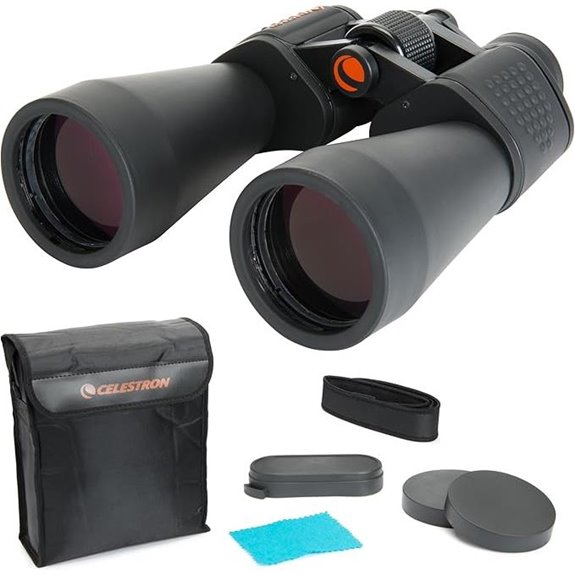
The Celestron SkyMaster 12×60 Binoculars with Case stand out as an excellent choice for amateur astronomers and outdoor enthusiasts seeking powerful, clear views of the night sky and distant land features. Their 12x magnification and large 60mm lenses deliver bright, sharp images, especially in low-light conditions. Equipped with BaK-4 prisms and multi-coated optics, they maximize light transmission for better contrast and detail. You can easily mount them on a tripod for extended viewing sessions, and their rubber-armored design ensures durability and a secure grip. Backed by a lifetime warranty, these binoculars combine performance and reliability for all your outdoor adventures.
Best For: outdoor enthusiasts and amateur astronomers seeking powerful, bright, and detailed long-distance viewing in low-light conditions, both for land and sky observation.
Pros:
- High 12x magnification with large 60mm lenses for bright, detailed images
- BaK-4 prisms and multi-coated optics enhance clarity, contrast, and color fidelity
- Can be mounted on a tripod for stable, extended viewing sessions and durability in outdoor conditions
Cons:
- Size and weight may make handheld use tiring over long periods
- Not included with a tripod, requiring additional purchase for steady viewing
- May be too large or heavy for casual, one-handed operation over extended periods
Celestron Cometron 7×50 Astronomy Binoculars
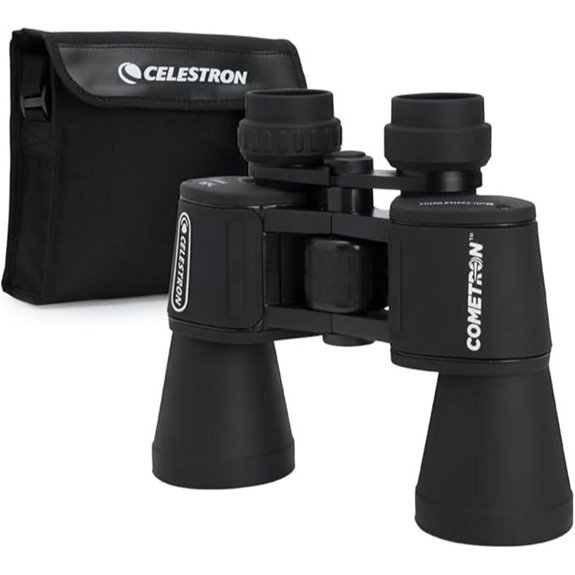
Celestron Cometron 7×50 Astronomy Binoculars stand out as an excellent entry-level option for beginners enthusiastic to explore the night sky. These binoculars are easy to use and versatile, perfect for stargazing, comet watching, and learning about the cosmos. With 50mm objective lenses, they gather plenty of light, providing bright, clear images. The multi-coated optics improve contrast and brightness, while the wide 6.6° field of view helps scan large sky areas quickly. The 7x magnification offers comfortable celestial viewing, and the built-in tripod socket allows for steady, extended sessions. Overall, they’re a reliable, beginner-friendly choice for exploring the night sky.
Best For: Beginners and amateur astronomers seeking an easy-to-use, versatile binocular for stargazing, comet watching, and outdoor exploration.
Pros:
- Wide 6.6° field of view allows quick scanning of large sky areas
- Multi-coated optics enhance brightness, contrast, and image clarity
- Tripod adapter socket provides stable, shake-free viewing during extended sessions
Cons:
- No tripod included, requiring an additional purchase for steady viewing
- Limited to 7x magnification, which may not be sufficient for detailed celestial observation
- Larger size and weight compared to smaller binoculars may be less convenient for portable use
Celestron SkyMaster 20×80 Binoculars with Tripod
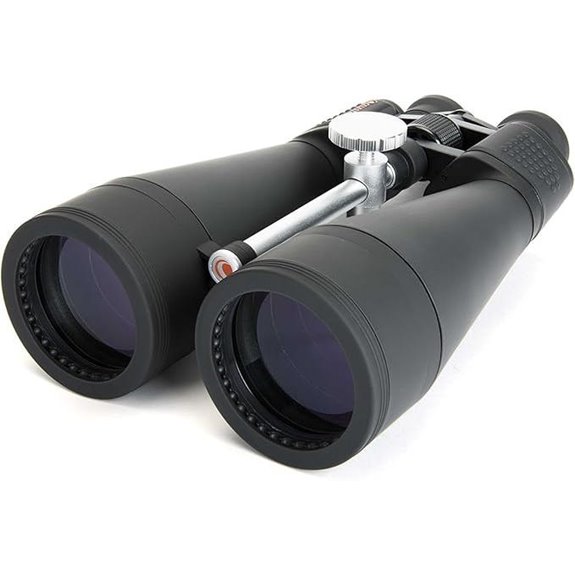
For amateur astronomers seeking detailed and bright views of the night sky, the Celestron SkyMaster 20×80 Binoculars with Tripod offer an excellent combination of power and clarity. Their 20x magnification and large 80mm lenses deliver sharp, bright images in low-light conditions like dusk, dawn, or nighttime. Equipped with BaK-4 prisms, they maximize light transmission, enhancing image brightness and detail. The built-in tripod adapter allows stable mounting on most tripods, reducing shake for extended viewing. With durable, water-resistant rubber-armored housing, they’re tough enough for outdoor use. Plus, Celestron’s lifetime warranty and US-based support give added confidence in their reliability.
Best For: amateur astronomers and outdoor enthusiasts seeking detailed, bright views of the night sky or distant terrestrial objects in low-light conditions.
Pros:
- High 20x magnification with large 80mm objective lenses for bright, detailed images in dim lighting.
- Equipped with BaK-4 prisms to maximize light transmission and image clarity.
- Durable, water-resistant rubber-armored housing suitable for outdoor use and stable tripod mounting.
Cons:
- Large size and weight may require a sturdy tripod for comfortable extended viewing.
- Not suitable for handheld use over long periods due to high magnification causing shake.
- Bulkier design may be less convenient for casual or everyday carry.
Celestron SkyMaster 25×70 Binoculars with Tripod

If you’re serious about astronomy and need powerful, detailed views of the night sky, the SkyMaster 25×70 binoculars with tripod are an excellent choice. They offer 25x magnification with large 70mm lenses, perfect for long-distance observations. Equipped with BaK-4 prisms, they produce bright, sharp images even in low-light conditions like dusk or dawn. For stability during extended viewing, they can be mounted on most tripods using the included adapter. The rubber-armored housing safeguards against damage, and the water-resistant exterior guarantees durability outdoors. With accessories like a tripod and carrying case, plus Celestron’s reliable warranty, these binoculars are a top pick for astronomy enthusiasts.
Best For: astronomy enthusiasts and long-distance land observers seeking powerful, detailed views in low-light conditions with stable support.
Pros:
- High 25x magnification with large 70mm objective lenses for detailed long-distance viewing
- Bright, sharp images even in low-light environments thanks to BaK-4 prisms
- Can be mounted on tripods for stable, extended observation sessions
Cons:
- Large and heavy, requiring a tripod for comfortable extended use
- Bulky design may be less portable for casual or quick observations
- May be overpowered for casual daytime use or casual wildlife watching
18×70 Waterproof Astronomy Binoculars with Smartphone Adapter

The x70 Waterproof Astronomy Binoculars with Smartphone Adapter stand out as an excellent choice for stargazers who want detailed, bright views even in low-light conditions. With 18×70 magnification and large 70mm lenses, I get sharp, broad images perfect for night sky observation. The Bak-4 prisms ensure brightness and clarity, while the waterproof, metal build makes them durable in any environment. The included smartphone adapter fits most phones, making it easy to capture and share views. Plus, the tripod adapter provides stability during long sessions. Compact and eco-friendly, these binoculars are versatile for astronomy, birdwatching, or outdoor adventures.
Best For: outdoor enthusiasts, birdwatchers, and amateur astronomers seeking durable, high-magnification binoculars with smartphone connectivity for versatile viewing and easy sharing.
Pros:
- High 18×70 magnification combined with large 70mm lenses delivers bright, detailed images suitable for low-light conditions.
- Waterproof and rugged metal construction ensures durability and reliability in various outdoor environments.
- Includes a smartphone adapter and tripod mount for convenient photo capturing and stable viewing during long sessions.
Cons:
- High magnification and metal build may require a tripod for steady viewing, which can add extra gear to carry.
- Slightly bulkier and heavier than compact binoculars, making them less portable for quick trips.
- The large objective lenses and high power may produce a narrow field of view, requiring careful aiming during use.
Celestron SkyMaster 15-35×70 Zoom Binoculars
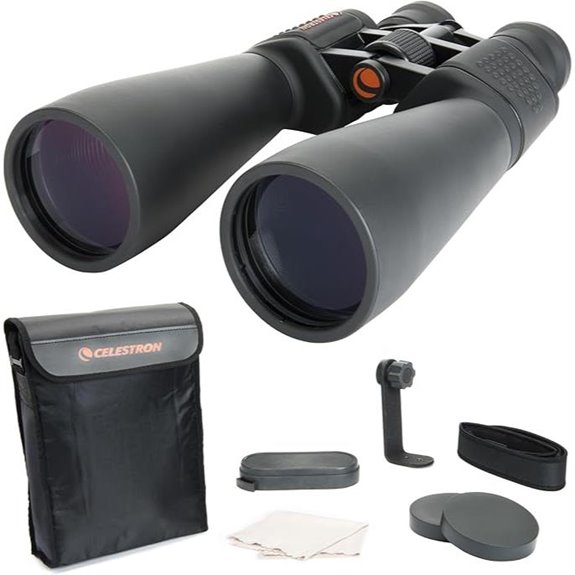
With its versatile 15 to 35x zoom, the Celestron SkyMaster 15-35×70 binoculars are perfect for astronomers seeking adjustable magnification for detailed celestial viewing. The 70mm objective lenses gather ample light, producing bright, clear images even in low-light conditions. Designed for stability, they’re compatible with most tripods using the included ¼”-20 adapter, making long observations comfortable. The BaK-4 prisms optimize light transmission, ensuring sharpness and brightness. Plus, the rubber-armored housing provides durability and a secure grip, while the water-resistant exterior handles tough weather. Backed by Celestron’s lifetime warranty, these binoculars are a reliable choice for serious stargazers.
Best For: outdoor enthusiasts and astronomers seeking adjustable magnification and bright, detailed views of celestial objects or distant landscapes.
Pros:
- Adjustable 15-35x zoom offers versatile viewing options for various distances
- Large 70mm objective lenses provide bright images in low-light conditions
- Compatible with most tripods for stable, comfortable long-distance viewing
Cons:
- Heavier and bulkier, which may reduce portability
- Higher magnification can make image stabilization more challenging without a tripod
- Requires a tripod for optimal use, which adds to setup complexity
SVBONY SV407 2.1x42mm Stargazing Binoculars
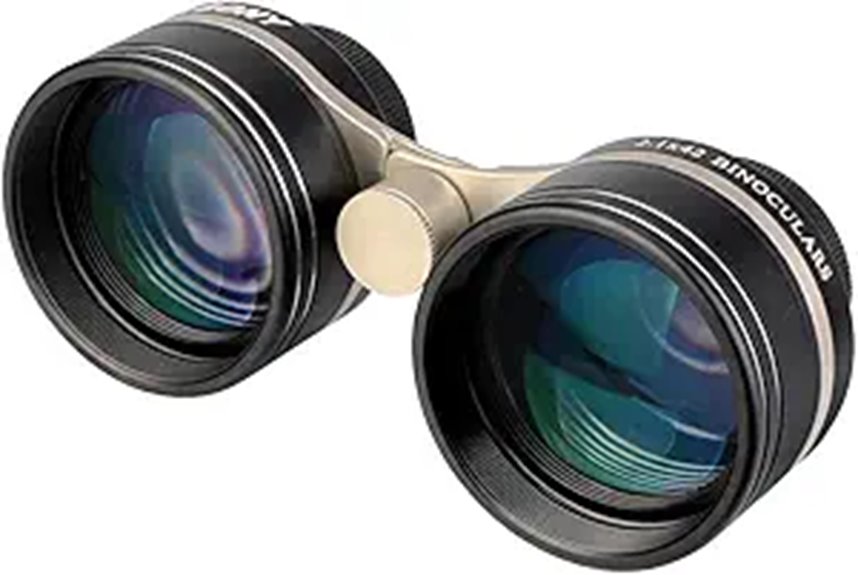
For amateur astronomers seeking a compact, easy-to-use binoculars option, the SVBONY SV407 2.1x42mm stands out. Its FMC objective lenses deliver bright, clear images with minimal distortion, making stargazing more enjoyable. The wide 26° field of view lets you explore entire constellations and star fields effortlessly. With a magnification of just 2.1 times, objects appear about twice as large, perfect for low-light conditions. Its lightweight, portable design, along with features like waterproofing and a focus mechanism that adjusts from 1 meter to infinity, make it versatile for outdoor adventures and detailed sky observations.
Best For: amateur astronomers and outdoor enthusiasts seeking a compact, easy-to-use binocular for stargazing and low-light observation.
Pros:
- Fully Multi-Coated (FMC) objective lenses for bright, clear images with minimal distortion
- Wide 26° field of view for immersive constellation and star field viewing
- Lightweight and portable design with waterproof IPX6 rating for outdoor durability
Cons:
- Magnification of only 2.1x may limit detailed close-up viewing of celestial objects
- Limited focusing distance (minimum 1 meter), unsuitable for very close terrestrial observation
- Not suitable for high-magnification needs like detailed planetary or deep-sky astrophotography
Celestron SkyMaster Pro ED 7×50 Binoculars
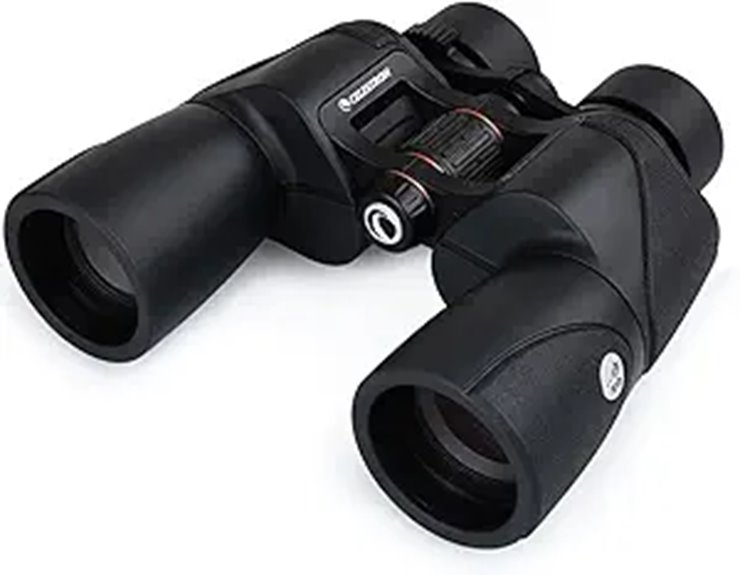
If you’re serious about stargazing, the Celestron SkyMaster Pro ED 7×50 binoculars stand out as an excellent choice thanks to their large 50mm objective lenses and ED glass, which deliver bright, sharp images even in low-light conditions. The fully multi-coated XLT optics maximize light transmission, providing clearer views of faint celestial objects. With BaK-4 prisms and 7x magnification, you get a wide field of view and detailed observations. Built with durable, waterproof housing and a tripod adapter, these binoculars are perfect for extended stargazing sessions and outdoor adventures. They include essential accessories and come with a lifetime warranty for added confidence.
Best For: amateur astronomers and outdoor enthusiasts seeking high-quality, low-light capable binoculars for stargazing, wildlife viewing, and outdoor exploration.
Pros:
- Bright, sharp images in low-light conditions thanks to 50mm objective lenses and ED glass
- Durable, waterproof, nitrogen-purged housing suitable for all weather environments
- Built-in tripod adapter for stable, extended viewing sessions
Cons:
- Relatively heavy compared to smaller binoculars, which may impact portability
- 7x magnification offers a wide field but limited for detailed close-ups of distant objects
- Higher price point due to premium optics and construction materials
20×80 Astronomy Binoculars with Tripod and Case

The x80 Astronomy Binoculars with Tripod and Case stand out as an excellent choice for serious astronomers who want high-powered, stable viewing during their celestial observations. With 20x magnification and 80mm objective lenses, they provide bright, detailed images of the moon, star clusters, and deep-sky objects. BaK-4 prisms enhance light transmission, ensuring clarity in low-light conditions. The rugged, waterproof design with shock-absorbing rubber armor makes them durable and reliable. The included tripod and case facilitate steady viewing and easy transport, making these binoculars perfect for extended stargazing sessions and outdoor adventures.
Best For: serious astronomers and outdoor enthusiasts seeking high-powered, stable, and durable binoculars for celestial and nature observation.
Pros:
- High 20x magnification with 80mm objective lenses for detailed, bright images of celestial objects and wildlife.
- Rugged, waterproof, shock-absorbing rubber armor enhances durability and protection against the elements.
- Includes a tripod, adapter, carrying case, and leather bag for stable viewing and easy portability.
Cons:
- Relatively heavy at 8.73 pounds, which may require a sturdy mount for extended use.
- Larger size may be less convenient for casual or quick outdoor activities.
- Higher price point compared to smaller or lower-powered binoculars, reflecting its advanced features.
20×50 Waterproof Binoculars for Bird Watching & Travel

With its impressive 20×50 magnification and waterproof design, this binoculars model stands out as an excellent choice for bird watchers and travelers alike. Its wide 168-yard field of view at 1000 yards makes spotting distant birds, wildlife, or scenic views easy. The ergonomically designed 26mm eyepiece reduces eye fatigue and offers a clear, stable image during prolonged use. Multilayer-coated aspherical lenses and BAK4 prisms deliver bright, sharp, and true-to-color visuals. Built with impact-resistant rubber, it’s durable and suited for outdoor adventures. Plus, the non-slip handles ensure a firm grip, making it perfect for hiking, safari, or everyday exploration.
Best For: outdoor enthusiasts, bird watchers, and travelers seeking a durable, high-powered binocular for distant viewing in various outdoor conditions.
Pros:
- 20×50 magnification with a wide 168-yard field of view at 1000 yards for excellent distant observation
- Waterproof and impact-resistant rubber-coated body suitable for harsh outdoor environments
- Multilayer-coated aspherical lenses and BAK4 prisms for bright, sharp, and true-to-color images
Cons:
- Not designed for immersion in water, only water-resistant
- Slightly heavier at 1.96 pounds, which may be less comfortable for prolonged handheld use
- Larger size (8.07 x 7.91 x 3.19 inches) may be less convenient for compact storage or travel
Vortex Crossfire HD 10×42 Binoculars with Warranty
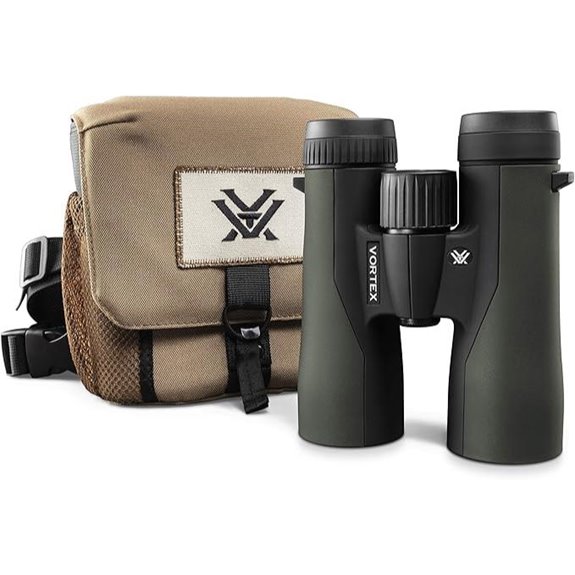
For astronomers seeking a durable, high-performance binoculars option, the Vortex Crossfire HD 10×42 stands out thanks to its rugged construction and exceptional optical quality. It features 10x magnification with fully multi-coated lenses that deliver bright, sharp images with minimal chromatic aberration. The roof prism design makes it compact and tough, while the rubber armor offers a secure grip and impact resistance. Waterproof and fogproof, it’s built for outdoor use in various conditions. Adjustable eyecups and a center focus wheel ensure comfortable viewing, and the tripod adaptability adds stability. Plus, the unconditional lifetime VIP warranty provides peace of mind.
Best For: outdoor enthusiasts, birdwatchers, and astronomers seeking durable, high-performance binoculars for various lighting and weather conditions.
Pros:
- Exceptional optical clarity with fully multi-coated lenses and select glass elements for sharp, bright images
- Rugged, waterproof, and fogproof construction with rubber armor for durability and secure grip
- Tripod adaptable and adjustable eyecups for customized and comfortable viewing experiences
Cons:
- Slightly heavier than compact models, which may impact long-duration hand-held use
- May be more expensive compared to basic binoculars, reflecting its high-quality features
- Requires proper maintenance to ensure waterproof and fogproof integrity over time
Vortex Diamondback HD 12×50 Binoculars with Warranty
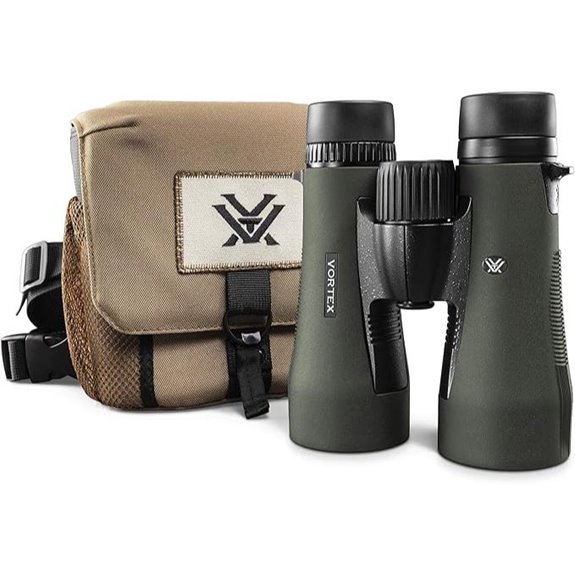
If you’re serious about stargazing, the Vortex Diamondback HD 12×50 Binoculars stand out thanks to their powerful 12x magnification and large 50mm objective lenses, offering bright, detailed views even in low-light conditions. Their HD optical system with select glass elements and fully multi-coated lenses deliver sharp resolution, minimized chromatic aberration, and true color fidelity. Built to withstand the elements, they’re waterproof, fogproof, and shockproof, with protective Armortek coatings. Adjustable eyecups and a center focus wheel ensure comfortable viewing, while the tripod adaptability and lifetime VIP warranty make these binoculars a reliable, high-performance choice for astronomy enthusiasts.
Best For: astronomy enthusiasts and serious stargazers seeking high-quality, durable binoculars for low-light viewing conditions.
Pros:
- Exceptional 12x magnification with large 50mm lenses for bright, detailed images in low-light situations
- Rugged, waterproof, and fogproof construction with Armortek coatings for durability in harsh environments
- Fully multi-coated lenses with dielectric coating ensure sharp resolution, true colors, and minimal chromatic aberration
Cons:
- Heavier and bulkier due to large lenses, which may affect portability
- May require a tripod for extended viewing sessions to reduce hand fatigue
- Higher price point compared to basic binoculars, reflecting premium features
Celestron SkyMaster Pro 20×80 Binoculars with Tripod

The Celestron SkyMaster Pro 20×80 Binoculars with Tripod stand out as an excellent choice for serious amateur astronomers seeking high-quality, detailed views of the night sky. These binoculars feature large 80mm objective lenses, BaK-4 prisms, and fully multi-coated optics with XLT coatings, delivering brighter, sharper images with better color and contrast in low-light conditions. They include a detachable reflex sight rail for precise targeting and a tripod adapter for stability during long viewing sessions. Built with a rugged, waterproof, fog-proof housing, they’re designed to withstand outdoor conditions. Celestron’s limited lifetime warranty and US-based support provide added confidence in their durability and performance.
Best For: serious amateur astronomers and outdoor enthusiasts seeking high-quality, detailed views of the night sky and distant land objects.
Pros:
- Large 80mm objective lenses and fully multi-coated optics provide bright, sharp images with excellent contrast.
- Durable, waterproof, nitrogen-purged housing ensures reliable performance in outdoor conditions.
- Includes a tripod adapter and detachable reflex sight rail for stable viewing and precise targeting.
Cons:
- Bulky and heavy design may be less convenient for extended hand-held use.
- Higher price point compared to smaller or less feature-rich binoculars.
- Requires a tripod for optimal stability during long observation sessions.
Factors to Consider When Choosing Binoculars for Astronomy
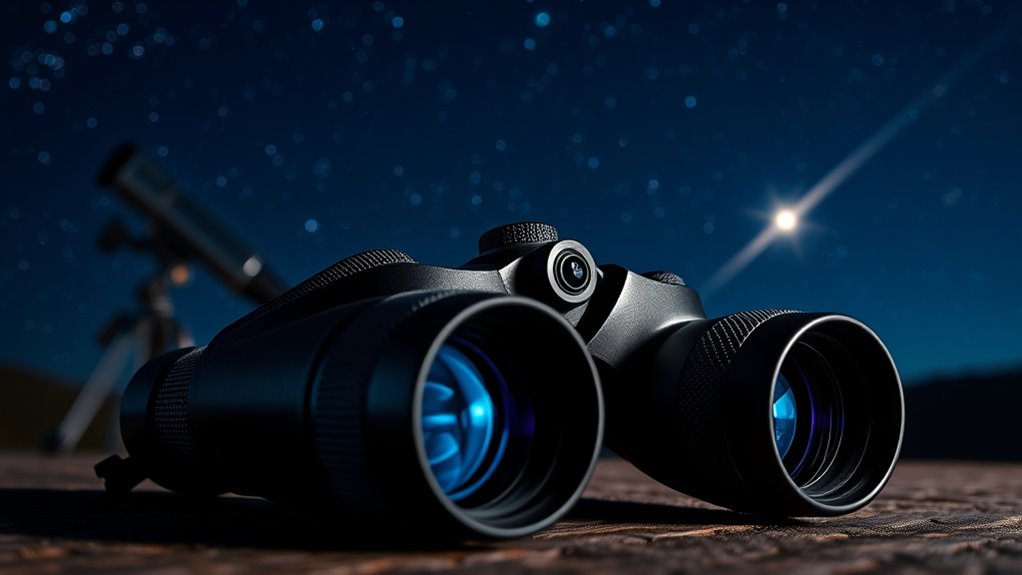
When selecting binoculars for astronomy, I focus on several key factors that impact your viewing experience. Things like magnification power, lens size, and image clarity are vital, along with compatibility with a tripod and weather resistance. Understanding these points helps guarantee you choose the best binoculars for clear, steady stargazing.
Magnification Power
Choosing the right magnification power is essential for a satisfying astronomy experience. Higher magnifications, like 15x or 20x, reveal more detail in planets and stars, but often require a tripod for stability. Lower magnifications, between 7x and 10x, are easier to hold steady and are perfect for beginners. Keep in mind, increased magnification narrows your field of view, making it harder to find and follow objects across the sky. Binoculars above 25x usually demand mounting on a tripod to prevent shaky images and reduce fatigue. Ultimately, the best magnification depends on your experience level, observing conditions, and whether you’ll use them handheld or mounted. Finding the right balance ensures clearer views without frustration.
Lens Aperture Size
Larger lens apertures, such as 70mm or 80mm, allow more light to enter, resulting in brighter images of faint celestial objects. This increased light-gathering ability helps me see dim galaxies, nebulae, and star clusters more clearly, especially in low-light conditions. The aperture size also affects how well I can resolve fine details in the night sky. A bigger aperture improves the overall detail and contrast, making my views more impressive. However, larger lenses mean the binoculars are heavier and require a sturdier mount to stay stable during use. While a bigger aperture boosts performance, I also consider portability because bulkier binoculars can be less convenient for travel and extended viewing sessions. Balancing aperture size and practicality is key.
Image Brightness & Clarity
To experience bright, clear images of faint celestial objects, I focus on optics that maximize light transmission. High-quality lenses with multi-coated or fully multi-coated surfaces are essential because they reduce light loss and boost brightness. Larger objective lenses, like 70mm or more, allow more light to enter, making dim stars, planets, and deep-sky objects stand out more vividly. Using BaK-4 or ED glass prisms further enhances light quality and minimizes internal loss, resulting in sharper, more luminous images. Proper alignment and keeping the lenses clean are also *vital*—they prevent light scattering and distortion, ensuring maximum clarity. Combining a generous aperture with top-tier coatings makes a noticeable difference in observing the night sky’s subtle details.
Tripod Compatibility
Since stability is essential for detailed astronomical observations, verifying that your binoculars can attach to a tripod is important. Many binoculars designed for astronomy feature a built-in tripod adapter or a socket for external tripod mounting. This is especially relevant for high-magnification models above 10x, where image shake can hinder viewing. Not all binoculars include a tripod mount, so always check the specifications for a ¼”-20 or similar threaded socket. Using a tripod greatly reduces user fatigue during long sessions and keeps images steady and clear. Proper tripod compatibility transforms the viewing experience, providing a stable platform that enhances detail and minimizes shaking. Ensuring your binoculars can attach to a tripod is a key step toward ideal stargazing.
Weather Resistance
When selecting binoculars for astronomy, weather resistance is a crucial factor to consider, especially if you plan to observe in various outdoor conditions. Waterproof and fogproof features are essential, thanks to O-ring seals and nitrogen purging that prevent internal fogging and moisture damage. Rubber-armored exteriors not only add impact resistance but also provide a secure grip, protecting your binoculars from drops and harsh environments. Binoculars rated with standards like IPX7 or IPX6 ensure they can withstand water immersion or splashes, giving you confidence during rainy or misty nights. Reliable weather resistance guarantees consistent optical performance and durability, so you can enjoy extended outdoor sessions without worrying about environmental damage. Ultimately, good weather resistance enhances your overall experience and longevity of your binoculars.
Frequently Asked Questions
How Do Binoculars Enhance Night Sky Observation?
Binoculars enhance night sky observation by gathering more light, making faint stars and celestial objects clearer and brighter. I love how they provide a wide field of view, so I can easily scan the sky and locate objects. Their portability makes star gazing more spontaneous and accessible. With good binoculars, I see more detail and enjoy a richer, immersive experience of the night sky.
What Is the Optimal Magnification for Astronomy Binoculars?
I recommend a magnification of 7x to 10x for astronomy binoculars. This range offers a great balance between detail and stability, making it easier to view celestial objects without shaky images. Higher magnifications can be harder to stabilize and more affected by hand movements. So, sticking within this range helps you enjoy clearer, brighter views of the night sky while maintaining ease of use and comfort.
How Important Is Field of View for Stargazing?
The field of view is essential for stargazing because it determines how much of the night sky I can see at once. A wider view helps me locate constellations and scan for interesting objects more easily. While some believe magnification is more important, I’ve found that a generous field of view makes the experience more immersive and less frustrating, especially when trying to spot faint or moving objects in the dark.
Are Waterproof Binoculars Necessary for Astronomy?
Waterproof binoculars aren’t strictly necessary for astronomy, but they’re definitely a smart choice. I’ve found that if you’re out under the stars in unpredictable weather or near damp areas, waterproofing keeps your gear safe and ready to go. Plus, it adds durability, so your binoculars last longer. Even if you don’t plan to get caught in rain, investing in waterproof ones is a small price for peace of mind.
How Does Aperture Size Affect Astronomical Viewing Clarity?
Did you know that increasing aperture size by just 1 inch can let in four times more light? It’s a game-changer for clarity. Aperture size directly impacts how well you see dim celestial objects; the larger it is, the brighter and more detailed your view. I’ve found that bigger apertures reveal fainter stars and nebulae, making your astronomy experience much more impressive and immersive.
Conclusion
In summary, choosing the perfect binoculars boils down to balancing budget, brightness, and binocular brilliance. By considering clarity, comfort, and compatibility, you’ll capture mesmerizing cosmos with confidence. Don’t delay—dive into the dazzling depths of the night sky and discover a universe of unforgettable moments. Remember, the right pair of binoculars transforms your stargazing experience from simple sight to spectacular sight. So, seize the starlight—your celestial adventure awaits!