If you’re looking for the best astronomy laptops with long battery life, I recommend options like the NIMO 15.6″ FHD laptop with 16GB RAM and 1TB SSD, and the ACEMAGIC 17.3″ model with a quad-core processor and FHD display. The Laptop Computer 15.6” offers ample storage and power, while others feature lightweight designs and efficient processors for extended stargazing sessions. Keep exploring these choices to find the perfect fit for your space adventures.
Key Takeaways
- Select lightweight laptops with energy-efficient processors like Intel Alder Lake-N or 13th Gen chips for extended battery life.
- Opt for displays with adaptive brightness and lower manual brightness settings to conserve power during long observation sessions.
- Prioritize models with large-capacity SSDs and ample RAM for smooth multitasking without excessive energy consumption.
- Ensure devices feature power management tools, sleep modes, and integrated graphics to maximize runtime in remote stargazing conditions.
- Consider battery life specifications of at least 5 hours, combined with portability features for comfortable, extended field use.
NIMO 15.6″ FHD Laptop with 16GB RAM and 1TB SSD
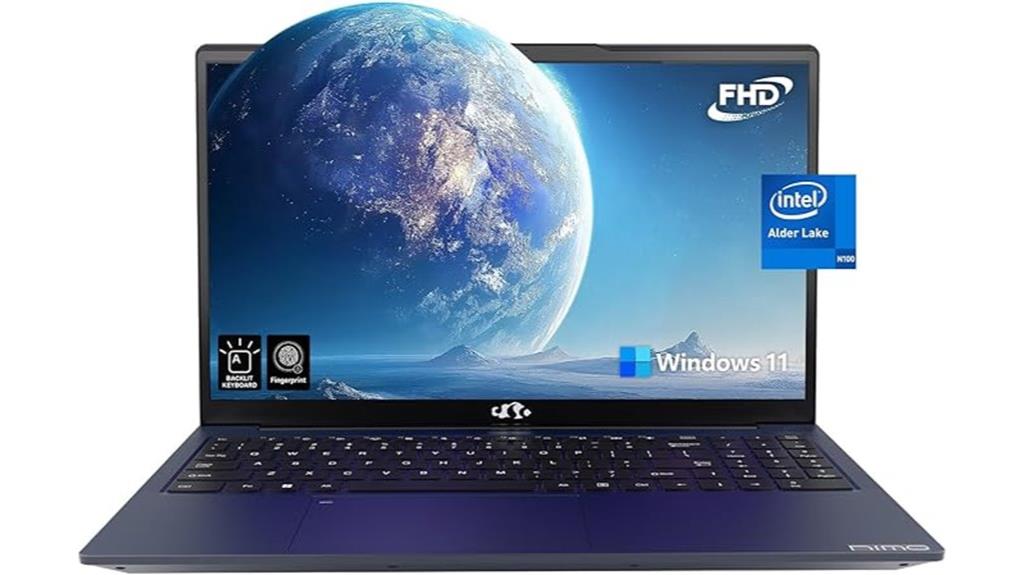
If you’re looking for a portable, high-performance laptop to enhance your stargazing experience, the NIMO 15.6″ FHD Laptop is an excellent choice. It features a vibrant 15.6-inch anti-glare display, perfect for reducing eye strain during late-night sessions. With 16GB DDR4 RAM and a speedy 1TB PCIe SSD, it handles multitasking and large files effortlessly. Powered by a 12th Gen Intel Pentium N100 processor, it offers fast performance and smooth operation. Its lightweight design, weighing only 3.8 pounds, makes it easy to carry anywhere. Plus, the durable metal shell and long battery life guarantee reliability for extended nights under the stars.
Best For: students, professionals, and outdoor enthusiasts seeking a portable, high-performance laptop for work, entertainment, and stargazing under the stars.
Pros:
- Vibrant 15.6-inch anti-glare FHD display reduces eye strain and offers clear visuals
- Fast 16GB DDR4 RAM and 1TB PCIe SSD ensure smooth multitasking and quick data access
- Lightweight (only 3.8 pounds) with durable metal shell for portable and long-lasting use
Cons:
- The Intel Pentium N100 processor, while fast for everyday tasks, may not be ideal for heavy-duty computing or gaming
- Limited battery life of around 5 hours could require frequent recharging during extended outdoor use
- No dedicated graphics card, which might affect performance for high-end graphic design or gaming applications
ACEMAGIC 17.3″ Laptop with Quad-Core Processor and FHD Display

The ACEMAGIC 17.3″ laptop is an excellent choice for stargazing enthusiasts who want a portable yet powerful device to explore astronomical data or stream celestial events. Its 12th Gen Alder Lake N97 processor delivers smooth performance, outperforming basic models, while 16GB DDR4 RAM and a 512GB SSD ensure fast multitasking and data access. The large 17.3-inch FHD IPS display provides immersive viewing, perfect for detailed star maps or videos. With a long-lasting 6000mAh battery offering about 5 hours of use, plus multiple connectivity options and a durable metal chassis, this laptop combines portability, power, and reliability for space lovers.
Best For: astronomy enthusiasts and stargazing hobbyists seeking a portable, high-performance laptop for exploring celestial data and streaming space events.
Pros:
- Powerful 12th Gen Alder Lake N97 quad-core processor with smooth multitasking capabilities
- Large 17.3-inch FHD IPS display ideal for detailed star maps and multimedia viewing
- Durable metal chassis combined with long battery life and multiple connectivity options
Cons:
- Approximately 5 hours of battery life may require frequent charging during extended sessions
- Limited data-only Type-C port and no dedicated GPU for high-end graphics or gaming
- Slightly heavier and larger compared to ultra-portable laptops, which may affect travel convenience
Laptop Computer 15.6in with 1TB SSD and 16GB RAM
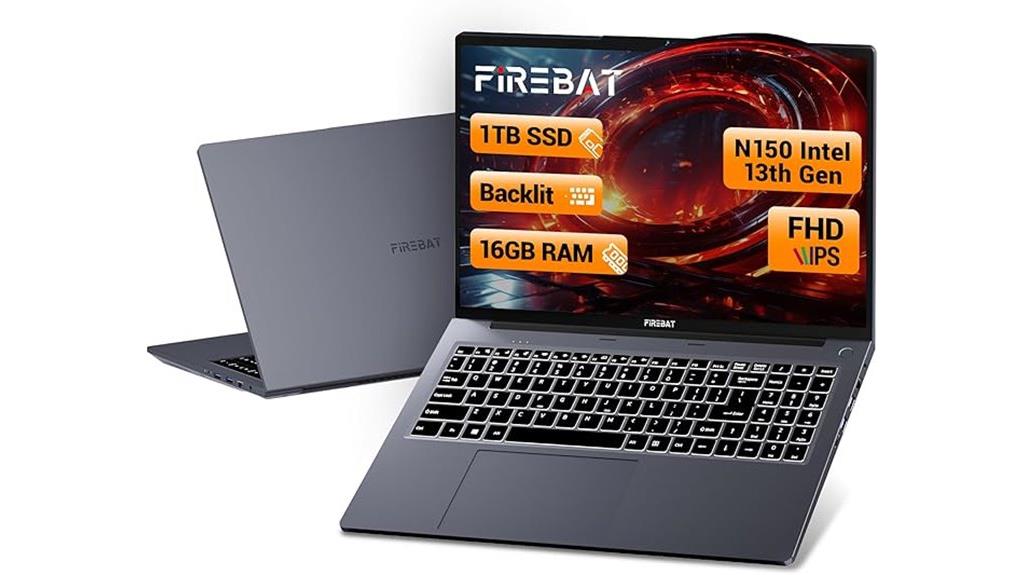
Designed for enthusiasts who want reliable performance during late-night stargazing sessions, the 15.6-inch Laptop combines a sharp FHD display with powerful specs. It features the Intel 13th Generation Twin Lake N150 processor, offering a 30% performance boost over previous models, along with fast Turbo speeds up to 3.6GHz. The bright IPS screen delivers crisp visuals, perfect for star charts and space videos. With 16GB RAM and a 1TB SSD, multitasking is seamless, and storage is ample. Its long-lasting battery guarantees hours of use away from power outlets. This lightweight, modern laptop is ideal for both serious astronomers and casual space explorers.
Best For: enthusiasts and casual astronomers seeking reliable, high-performance portable computing for stargazing, space videos, and multitasking.
Pros:
- Powerful Intel 13th Gen Twin Lake N150 processor with significant performance boost
- Bright, sharp 15.6-inch IPS FHD display ideal for detailed star maps and videos
- Large 16GB RAM and 1TB SSD ensure smooth multitasking and ample storage
Cons:
- Limited to Wi-Fi 5, which may be slower than newer Wi-Fi standards
- Battery capacity, while substantial, may still require frequent charging during intensive use
- Lacks dedicated graphics card, which could impact high-end gaming or advanced rendering
New Laptop with 15.6″ FHD Display, 8GB RAM, 256GB SSD, N5095 CPU
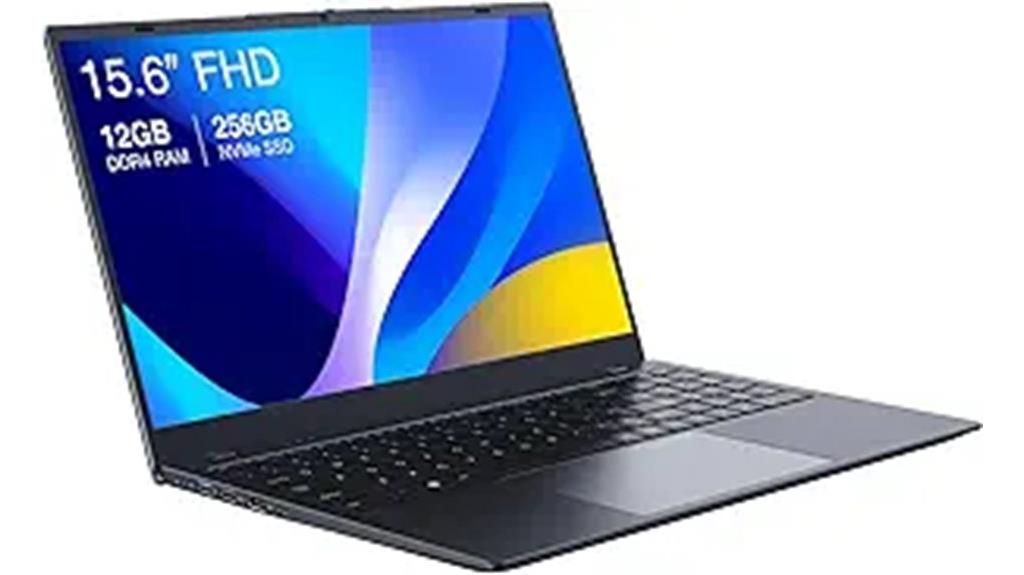
With its 15.6-inch FHD IPS display offering vibrant, detailed visuals, this laptop is ideal for stargazing enthusiasts who want clear, crisp images of the night sky. The 1920×1080 resolution guarantees realistic visuals, making it easier to identify celestial objects. Powered by the 11th Gen Intel N5095 quad-core processor, it handles multiple applications smoothly. With 8GB of high-speed DDR4 RAM and a 256GB NVMe SSD, it offers quick responsiveness and ample storage. Its connectivity options, including WiFi, Bluetooth, USB ports, and HDMI, make it versatile. Weighing just over 3 pounds, it’s portable enough to take on outdoor adventures. Plus, Windows 11 keeps everything running seamlessly.
Best For: outdoor enthusiasts and amateur astronomers seeking a portable, high-resolution laptop for stargazing and celestial observation.
Pros:
- Vibrant 15.6-inch FHD IPS display delivers detailed, colorful visuals for clear sky viewing.
- Lightweight design (just over 3 pounds) enhances portability for outdoor adventures.
- Fast performance with 11th Gen Intel N5095 CPU, 8GB RAM, and 256GB SSD ensures smooth multitasking.
Cons:
- Limited to integrated UHD Graphics, which may not support intensive graphic tasks.
- Optical drive (DVD) included, but may be unnecessary for most users.
- Battery life details are not specified, which could impact long outdoor use.
Laptop Computer with 15.6″ FHD IPS Display, Intel Celeron N5095, 12GB RAM, 512GB SSD, Expandable to 1TB, WiFi 2.4G+5G, 2-Year Warranty

If you’re looking for a portable yet powerful laptop to enhance your stargazing experience, this model fits the bill perfectly. It features a 15.6-inch FHD IPS display with vivid visuals and thin bezels, ideal for viewing star charts and space images. Powered by the Jasper Lake N5095 processor with 12GB of RAM and a 512GB SSD, it handles multitasking and large files effortlessly. Its sleek, ultralight design (about 3 pounds) makes it easy to carry on trips. Plus, with WiFi 2.4G+5G, a 2-year warranty, and expandable storage up to 1TB, it’s a smart choice for astro enthusiasts on the go.
Best For: astro enthusiasts and travelers seeking a powerful, portable laptop for stargazing, space image viewing, and on-the-go productivity.
Pros:
- Vibrant 15.6-inch FHD IPS display with thin bezels for immersive visuals
- Lightweight and slim design (about 3 pounds) for easy portability during trips
- Robust performance with Jasper Lake N5095 processor, 12GB RAM, and expandable storage up to 1TB
Cons:
- Limited to integrated graphics, which may not support high-end gaming or intensive 3D applications
- No dedicated graphics card for specialized visualization tasks
- Battery life details are not specified, which could impact long outdoor stargazing sessions
Factors to Consider When Choosing Astronomy Laptops With High Battery Life
When selecting an astronomy laptop with long battery life, I focus on battery capacity and how long it can run without recharging. I also consider power efficiency features, display brightness, and processor consumption to maximize runtime. Ultimately, I look at port options and how they might impact power use during extended stargazing sessions.
Battery Capacity and Runtime
Choosing an astronomy laptop with high battery life hinges largely on its battery capacity, which is measured in watt-hours (Wh). A larger capacity generally means longer usage between charges, but real-world runtime also depends on factors like processor efficiency and display size. Energy-efficient processors, such as Intel’s Alder Lake series, help extend battery life by reducing power consumption. The size and resolution of the screen matter too; larger or higher-resolution displays drain power faster. Additionally, optimized power management features and software can enhance runtime by minimizing background processes and adjusting performance settings. Keep in mind, actual battery life varies based on your usage patterns, including brightness levels, tasks, and connected peripherals. So, a higher capacity battery, combined with smart power management, is key for extended stargazing sessions.
Power Efficiency Features
Power efficiency features are essential for maximizing battery life in astronomy laptops, especially during long stargazing sessions. I look for energy-efficient processors like Intel’s Alder Lake-N100 or the latest 13th Gen chips, which optimize power consumption during use. Low-power display technologies, such as IPS panels with high contrast and reduced backlight brightness, help extend runtime without sacrificing visibility. Power management tools, including adaptive brightness and sleep modes, conserve energy when performing lighter tasks. Hardware components like fast SSDs and integrated graphics reduce energy draw compared to traditional HDDs and discrete GPUs. Additionally, intelligent power regulation systems and software optimizations guarantee that all functions operate efficiently, minimizing energy waste and maximizing battery longevity—crucial when observing in remote locations with limited charging options.
Display Brightness Settings
Adjusting your display brightness settings plays a key role in extending your laptop’s battery life during long stargazing sessions. Lowering the brightness reduces power consumption of the backlight, markedly boosting battery longevity. Many laptops feature automatic brightness adjustment, which adapts screen brightness based on ambient light, helping conserve energy without user intervention. Manually setting the brightness to around 50% or lower often strikes a good balance between visibility and efficiency. High brightness levels, like 100%, can drain your battery 20-30% faster or more, limiting your observation time. Fortunately, most laptops offer quick access to brightness controls via function keys or quick settings, making it easy to optimize brightness on the go. Keeping brightness in check is a simple yet effective way to maximize your stargazing hours.
Processor Power Consumption
When selecting an astronomy laptop for extended stargazing sessions, paying attention to processor power consumption is essential. Processors with lower TDP (Thermal Design Power) use less energy, which directly boosts battery life during long sessions. Modern architectures like Intel’s Alder Lake-N and Jasper Lake are designed for efficiency, reducing power use without sacrificing performance. Multi-core processors with optimized power management help balance workload and conserve energy, especially when the system isn’t under heavy load. Choosing laptops with integrated graphics over dedicated GPUs also cuts power consumption, enhancing battery longevity. Additionally, many processors feature dynamic frequency scaling, which adjusts processing speeds based on demand, preventing unnecessary energy drain. All these factors combined help you get the most out of your laptop while stargazing far from power sources.
Port Selection and Usage
Selecting the right ports on your astronomy laptop is vital for maintaining high battery life during field observations. Multiple USB ports, including USB-C and USB 3.2, allow you to connect various devices like telescopes, external drives, or cameras without extra hubs, saving power. An HDMI or DisplayPort output is essential for connecting external monitors or projectors, enhancing your viewing experience without draining battery excessively. An SD or microSD card slot simplifies transferring data from imaging devices, reducing reliance on adapters or external card readers. Wireless options like Wi-Fi 6 and Bluetooth 5.2 ensure stable, high-speed connections in remote locations, conserving power compared to older standards. Finally, a headphone/microphone combo jack allows for audio communication or data listening, keeping your setup streamlined and power-efficient.
Software Optimization Techniques
Effective software optimization plays a critical role in maximizing a laptop’s battery life for stargazing. By minimizing background processes and disabling unnecessary startup programs, I can substantially reduce power consumption. Utilizing power management settings, like lowering screen brightness and enabling sleep modes, helps conserve energy during long sessions. I also optimize astronomy software by limiting real-time data updates and reducing graphical demands, which lightens the CPU and GPU workload. Using lightweight or cloud-based applications further decreases local resource use, extending battery life. Keeping my software up to date is essential, as updates often include energy-efficient features and bug fixes that enhance overall power management. These techniques ensure I get the most out of my laptop’s battery during those necessary stargazing nights.
Usage Patterns and Habits
Understanding your typical usage patterns is essential when choosing an astronomy laptop with high battery life. Knowing how long you usually work unplugged helps determine the battery capacity you need for extended stargazing or data collection sessions. If you frequently observe outdoors, opt for models that combine long battery life with portability to avoid interruptions in remote locations. When using power-intensive applications like star mapping or video processing, prioritize energy-efficient laptops that can handle demanding tasks without draining quickly. Analyzing your habits—such as how often you’re away from power sources—guides you toward models offering the best balance between performance and longevity. Recognizing these patterns ensures you select a laptop capable of supporting prolonged observation, minimizing the need for frequent recharging during your astronomical pursuits.
External Power Compatibility
When choosing a laptop for stargazing, guaranteeing compatibility with external power sources is crucial, especially if you’ll be observing in remote locations. I look for models that support universal external power adapters with standard voltage and plug compatibility, making charging straightforward anywhere. It’s also important to verify that the laptop can run off portable power sources like power banks or solar chargers that supply sufficient wattage. I check if it works with external batteries or backup units to extend usage during outdoor sessions. Additionally, I confirm the charging port type, such as USB-C Power Delivery, which offers fast and versatile charging options. Ultimately, I ensure the laptop’s firmware or BIOS supports external power input, preventing any hardware issues during alternative charging methods.
Frequently Asked Questions
How Does Screen Size Impact Battery Longevity During Stargazing?
A larger screen size can drain your battery faster during stargazing because it requires more power to illuminate and process. I’ve noticed that smaller screens tend to last longer, giving me more time to explore the night sky without constantly searching for a charger. If you want extended battery life, I recommend opting for a laptop with a more compact display, especially if you’ll be away from power sources for long stretches.
Which Operating System Is Best for Astronomy Software Compatibility?
I find Windows to be the best operating system for astronomy software compatibility because it supports a wide range of applications like Stellarium, Starry Night, and various planetarium programs. Plus, most astronomy tools are optimized for Windows, making it easier to install, update, and troubleshoot. If you’re serious about stargazing, choosing a Windows laptop guarantees seamless access to the latest software and updates for your celestial adventures.
Can These Laptops Withstand Outdoor Weather Conditions?
Yes, many of these laptops are built with durability in mind, featuring rugged exteriors and weather-resistant designs. I choose models with sturdy casings, reinforced hinges, and some even have water-resistant keyboards. However, I always recommend adding extra protection like a weatherproof case or sleeve when venturing outdoors. Even with tough build quality, it’s best to be cautious and avoid exposing your laptop to extreme elements for prolonged periods.
How Important Is GPU Performance for Astrophotography?
GPU performance is pretty important for astrophotography because it handles the heavy lifting of image processing and rendering. A powerful GPU speeds up tasks like stacking images, noise reduction, and detailed editing, making your workflow smoother. Without a robust graphics card, you might face lag or longer processing times, which can frustrate your stellar pursuits. So, for sharper, faster astrophotography, prioritize a laptop with a solid GPU.
Are There Specific Ports Needed for Astrophotography Accessories?
Yes, specific ports are essential for astrophotography accessories. I recommend a laptop with multiple USB ports, especially USB 3.0 or higher, for fast data transfer from cameras and mounts. An HDMI port can be useful for connecting external displays or controllers. Additionally, an SD card reader simplifies importing images. Having these ports guarantees smooth connectivity and efficient workflow during your stargazing and astrophotography sessions.
Conclusion
Choosing the right astronomy laptop is like finding your trusty telescope under the night sky—reliable, enduring, and ready to reveal the universe’s secrets. With the right battery life and specs, these laptops become your loyal companions, illuminating your stargazing journey. So, pick wisely, and let your device be the guiding star in your cosmic adventures. After all, the universe awaits, and your perfect laptop will be your shining beacon.