
When searching for an analog synthesizer keyboard, you face a balance between sound quality, versatility, and price. The Arturia MicroFreak stands out for its innovative hybrid design and affordability, making it a top overall choice. Meanwhile, the Moog Messenger offers pure monophonic sound for dedicated bass or lead lines, but at a premium price. The main tradeoffs involve choosing between complex features and simplicity, or between authentic analog sound and hybrid versatility. Keep reading to see how these options compare to help you find the best fit for your needs.

Get everyday essentials delivered free with Prime
- Fast, free delivery on millions of items
- Prime Video, Amazon Music and more included
- Member-only deals all year
Key Takeaways
- Top picks balance sound authenticity and feature variety, with the Arturia MicroFreak standing out for its hybrid approach.
- Price varies significantly, with more affordable options like Behringer MS-1-RD offering good value but fewer advanced features.
- Polyphony and modulation options are key differentiators, especially for more complex sound design.
- Compact size often means sacrificing some control or sound capabilities, so consider your workspace and performance needs.
- Most top synthesizers include step sequencers or arpeggiators, but their implementation and usability differ widely.
| Arturia MicroFreak Synthesizer Keyboard |  | Best for Experimental Sound Design and Compact Flexibility | Number of Keys: 25 | Skill Level: Advanced | Special Features: Arpeggiator and Step Sequencer, Digital Oscillator with Multiple Modes, State-Variable 12 dB Oberheim SEM Filter, Touch-Plate Keyboard with Poly AT, Vocoder Mode | VIEW ON AMAZON | See Our Full Breakdown |
| Korg Minilogue 37-Key Polyphonic Analog Synthesizer with 16-Step Sequencer |  | Best for Warm, Classic Analog Sound with Sequencing | Number of Keys: 37 | Polyphony: 4 voices | Sequencer: 16-step | VIEW ON AMAZON | See Our Full Breakdown |
| Arturia MiniFreak 37-Key Polyphonic Hybrid Synthesizer Keyboard |  | Best for Versatile Hybrid Sound Exploration | Number of Keys: 37 | Polyphony: 6-voice | Type: Hybrid synthesizer | VIEW ON AMAZON | See Our Full Breakdown |
| Novation Bass Station II Analog Monosynth |  | Best for Classic Bass and Lead Sounds with Pattern Sequencing | Oscillators: 2 tuneable analog oscillators + sub-oscillator | Waveforms: Four waveforms, noise, ring modulation | Filters: Multi-mode filter, 24dB Acid Filter | VIEW ON AMAZON | See Our Full Breakdown |
| MOOG Messenger Monophonic Analog Synthesizer |  | Best for Classic Moog Sound with Modern Expressiveness | Oscillators: Two wavefolding VCOs with sync and FM | Filter: Next-Gen Ladder Filter with Resonance Bass Compensation | Keys: 32 semi-weighted keys with velocity and aftertouch | VIEW ON AMAZON | See Our Full Breakdown |
| Korg Multipoly Analog Modeling Synthesizer with Four Oscillators, 60 Voices, and Built-in KAOSS Pad |  | Best Overall for Versatile Sound Design and Performance | Oscillators: 4 | Voices: 60 | Filters: Dual | VIEW ON AMAZON | See Our Full Breakdown |
| Behringer MS-1-RD 32-Key Analog Monophonic Synth with 32-Step Sequencer, Red |  | Best for Classic Monophonic Sound and Sequencing on a Budget | Number of Keys: 32 | Type: Analog Monophonic Synthesizer | Sequencer: 32-step, 64 patterns, 8 banks | VIEW ON AMAZON | See Our Full Breakdown |
| analog synthesizer keyboard | Number of Keys | Sequencer |
|---|---|---|
| Arturia MicroFreak Synthesizer | 25 | — |
| Korg Minilogue 37-Key Polyphon | 37 | 16-step |
| Arturia MiniFreak 37-Key Polyp | 37 | — |
| Novation Bass Station II Analo | — | Step sequencer with pattern recording |
| MOOG Messenger Monophonic Anal | — | 64-step with probability-based behavior |
| Korg Multipoly Analog Modeling | — | — |
| Behringer MS-1-RD 32-Key Analo | 32 | 32-step, 64 patterns, 8 banks |
More Details on Our Top Picks
Arturia MicroFreak Synthesizer Keyboard
The Arturia MicroFreak stands out for its hybrid synthesis engine, combining digital oscillator modes with an analog filter, making it highly versatile for experimental soundscapes. Unlike the Korg Minilogue, which emphasizes warm, traditional analog tones, the MicroFreak excels in producing diverse, hybrid textures suited for sound designers seeking experimental flexibility. Its compact size and advanced modulation options make it ideal for studio setups or on-the-go creativity, though the 25-key format may limit live performance options for pianists or performers needing full-range keys. The absence of a detailed display can hinder precise editing, but its extensive connectivity (CV, USB, MIDI) compensates for this in complex setups. This pick makes the most sense for advanced users who want a portable, highly versatile synth for experimental sound creation, despite its learning curve and limited keys.
Pros:- Versatile hybrid synthesis with multiple oscillator modes
- Compact and portable design
- Advanced modulation and sequencing features
- Rich connectivity options including CV, USB, and MIDI
Cons:- Limited to 25 keys, restricting live performance range
- Complex for beginners due to advanced features
- No built-in display for detailed editing
Best for: Advanced electronic musicians and sound designers who need a portable, versatile hybrid synthesizer with extensive modulation and connectivity options.
Not ideal for: Beginners or performers who require a full-sized keyboard and straightforward interface for traditional playing or simple setups.
- Number of Keys:25
- Skill Level:Advanced
- Special Features:Arpeggiator and Step Sequencer, Digital Oscillator with Multiple Modes, State-Variable 12 dB Oberheim SEM Filter, Touch-Plate Keyboard with Poly AT, Vocoder Mode
- Operating System:Multiple (Windows, MacOS, Linux, Etc.)
- Supported Software:Multiple DAWs
- Connectivity Technology:CV, USB, MIDI
Our verdict“This synth is best suited for experimental sound creators and advanced users who prioritize versatility over traditional playability.”
Korg Minilogue 37-Key Polyphonic Analog Synthesizer with 16-Step Sequencer
The Korg Minilogue offers a highly approachable entry into true analog synthesis with four-voice polyphony, making it suitable for both beginners and seasoned musicians. Compared to the Arturia MicroFreak, which leans into hybrid and experimental sounds, the Minilogue focuses on delivering warm, classic analog tones with a straightforward interface, including a real-time oscilloscope display that helps visualize sounds. Its 37 keys strike a balance between performance flexibility and portability, though the slim keys might not satisfy pianists or players seeking full-sized action. The built-in 16-step sequencer and onboard effects expand creative possibilities, but limited polyphony can restrict complex arrangements and layering. This makes it ideal for musicians wanting authentic analog sounds with intuitive sequencing for live or studio use, even if it doesn’t prioritize advanced digital modulation or extensive connectivity.
Pros:- Rich, warm analog sound with versatile sound-shaping options
- Built-in 16-step sequencer and real-time sound visualization
- Compact and portable design suitable for live and studio use
- Affordable price for high-quality analog synthesis
Cons:- Slim keys may not suit pianists or those needing full-sized keys
- Limited to 4-voice polyphony, restricting complex layering
- Some users may find the interface less intuitive for advanced editing
Best for: Beginners seeking authentic analog tone and simple sequencing, or professionals wanting a portable, warm-sounding synth for live performance.
Not ideal for: Producers needing extensive digital modulation or complex polyphonic layering, or pianists requiring full-sized keys.
- Number of Keys:37
- Polyphony:4 voices
- Sequencer:16-step
- Effects:Tape-style delay
- Display:Oscilloscope
- Preset Sounds:200
Our verdict“This synth offers authentic analog tones combined with user-friendly sequencing, perfect for those starting out or performing live with classic sounds.”
Arturia MiniFreak 37-Key Polyphonic Hybrid Synthesizer Keyboard
The Arturia MiniFreak combines a 37-key layout with six-voice polyphony, offering a flexible hybrid synthesis platform for diverse sound design. It bridges the gap between the MicroFreak’s experimental edge and the Minilogue’s warmth, providing a broader sonic palette suitable for musicians seeking versatility in a compact form. Compared to the MicroFreak, the MiniFreak emphasizes more traditional polyphony and a more intuitive interface, though it still retains complex features that may challenge beginners. Its 37 keys make it practical for performance and studio work, but some players may find the interface complex if unfamiliar with hybrid synthesis. This synth makes the most sense for intermediate users who want a wide range of sounds without sacrificing portability, but it’s less ideal for those who prefer straightforward analog tones or full-sized keys.
Pros:- Versatile hybrid synthesis engine
- Compact 37-key design suitable for performance
- Rich sound possibilities with six-voice polyphony
- Flexible modulation and effects options
Cons:- Limited to 37 keys, which may not suit all players
- Potentially complex for users new to hybrid synthesis
- Higher price point compared to simpler analog models
Best for: Intermediate sound designers and performers who need a versatile, polyphonic hybrid synthesizer with a manageable size.
Not ideal for: Absolute beginners or pianists who require full-sized keys and simple operation, as the interface can be complex.
- Number of Keys:37
- Polyphony:6-voice
- Type:Hybrid synthesizer
Our verdict“This synthesizer is best for musicians who want a compact, feature-rich hybrid synth with broad sound design capabilities, even if it requires a learning curve.”
Novation Bass Station II Analog Monosynth
The Novation Bass Station II is a dedicated monosynth designed for bass, leads, and aggressive textures, with two analog oscillators and a sub-oscillator for thick, punchy sounds. Compared to polyphonic options like the Minilogue or MiniFreak, it excels in creating powerful monophonic lines perfect for dance music or gritty sound design. Its pattern-based arpeggiator and step sequencer provide immediate inspiration, but the 25-key setup limits melodic performance and polyphonic layering. While it offers extensive patch storage and a variety of waveforms, it lacks built-in effects beyond filtering and modulation, requiring external gear for full effects processing. This makes it ideal for producers focused on basslines and leads who value tweakability and immediacy, though it’s less suited for complex harmonic arrangements or live full-range playing.
Pros:- Versatile sound design with multiple oscillators and filters
- Includes pattern-based arpeggiator and step sequencer for inspiration
- Extensive patch storage and downloadable artist packs
- Punchy, classic analog sound suitable for dance and electronic genres
Cons:- Limited to 25 keys, restricting melodic play
- No built-in effects beyond filter and modulation
- Requires external gear for full effect processing
Best for: Electronic music producers and performers focusing on bass, leads, or FX that need a compact, powerful monosynth with sequencing.
Not ideal for: Musicians who require polyphony, full-sized keys, or onboard effects for broader soundscapes.
- Oscillators:2 tuneable analog oscillators + sub-oscillator
- Waveforms:Four waveforms, noise, ring modulation
- Filters:Multi-mode filter, 24dB Acid Filter
- Sequencer:Step sequencer with pattern recording
- Patches:128 patch slots
- Connectivity:MIDI I/O (5-pin DIN)
Our verdict“This synth is ideal for bass-heavy and lead-focused electronic music producers who want a compact, powerful monophonic instrument.”
MOOG Messenger Monophonic Analog Synthesizer
The MOOG Messenger delivers the iconic Moog sound in a portable, feature-rich package, perfect for studio or live use. Its dual wavefolding oscillators with sync and FM provide thick, expressive tones, while the next-gen ladder filter offers classic resonance and character. Compared to the Bass Station II, it emphasizes more expressive control with full-size keys, velocity, and aftertouch, making it more versatile for performance. The 256 presets and 64-step sequencer expand creative options, though the complex interface might challenge beginners. Its extensive modulation possibilities and CV patch points make it ideal for advanced sound design, but the limited polyphony and lack of onboard effects restrict harmonic complexity. This instrument is perfect for players seeking a portable, expressive Moog-style mono synth with a modern touch, but not for those needing digital effects or polyphony.
Pros:- Rich, classic Moog sound with modern enhancements
- Versatile modulation and sequencing features
- Full-size keys with expressive controls including velocity and aftertouch
- Portable design suitable for studio and live performance
Cons:- Complex interface that may require learning
- Limited to monophonic play, not polyphonic
- No built-in effects or digital processing
Best for: Experienced performers and sound designers wanting a portable, expressive Moog-style mono synth with extensive modulation and sequencing.
Not ideal for: Beginners or those needing polyphony and onboard effects for broader soundscapes or full arrangements.
- Oscillators:Two wavefolding VCOs with sync and FM
- Filter:Next-Gen Ladder Filter with Resonance Bass Compensation
- Keys:32 semi-weighted keys with velocity and aftertouch
- Presets:256
- Connectivity:6 CV patch points, external audio in, expression and sustain pedal ins, MIDI over USB-C
- Sequencer:64-step with probability-based behavior
Our verdict“This synth is ideal for experienced players seeking a portable, expressive Moog sound with advanced modulation and sequencing features, but not for beginners or polyphonic needs.”
Korg Multipoly Analog Modeling Synthesizer with Four Oscillators, 60 Voices, and Built-in KAOSS Pad
The Korg Multipoly stands out for its blend of powerful analog modeling capabilities and innovative features like the KAOSS Pad, making it ideal for performers and sound designers who want multidimensional sounds in a compact form. Compared to the Behringer MS-1-RD, which excels in simplicity and authentic monophonic tones, the Multipoly offers a richer palette with four oscillators and extensive modulation options. However, its complexity can be intimidating for newcomers, and its price tag is higher, reflecting its advanced feature set. This synth’s layered routing and motion sequencing enable complex soundscapes that are less accessible on simpler monosynths, but may overwhelm users seeking straightforward, plug-and-play gear.
Pros:- Rich, multidimensional analog sounds with four oscillators
- Highly flexible routing and modulation options for complex sound shaping
- Expressive performance capabilities via the KAOSS Pad and motion sequencing
- Compact design that fits well into various setups
Cons:- Steep learning curve for users new to advanced synthesis
- Higher price point that may be prohibitive for casual hobbyists
Best for: Experienced musicians and sound designers seeking deep modulation possibilities and expressive live performance features.
Not ideal for: Beginners or casual users who prefer simple, straightforward analog monosynths without advanced modulation or performance controls.
- Oscillators:4
- Voices:60
- Filters:Dual
- Envelopes:4
- LFOs:5
- Features:Layer Rotate, Kaoss Physics, Motion Sequencing 2.0
Our verdict“This synth makes the most sense for experienced creators who want a versatile, performance-ready instrument with complex sound design capabilities.”
Behringer MS-1-RD 32-Key Analog Monophonic Synth with 32-Step Sequencer, Red
The Behringer MS-1-RD offers authentic analog monophonic tones combined with a 32-step sequencer, making it a solid choice for producers and performers focused on basslines and lead sounds. It compares favorably to the Arturia MicroFreak for its dedicated analog circuitry and straightforward interface, though it sacrifices polyphony and effects to keep costs lower. Its velocity-sensitive keys enhance expressiveness, but the monophonic limitation means it’s best suited for single-line melodies or basslines, not complex layered sounds. Additionally, the absence of built-in effects and polyphony makes it less versatile for modern hybrid setups, but its extensive connectivity facilitates integration into various studios and live rigs.
Pros:- Authentic analog sound with rich, warm tones
- Velocity-sensitive keys for expressive playing
- Built-in 32-step sequencer for pattern creation
- Wide connectivity options including USB MIDI and multiple inputs/outputs
Cons:- Limited to monophonic playback, reducing complexity for layered sounds
- No built-in effects or polyphony, limiting versatility
- Learning curve for mastering detailed sound shaping
Best for: Beginners and musicians who want authentic, classic analog sounds with sequencing capability in a compact, affordable package.
Not ideal for: Advanced sound designers or performers needing polyphony, effects, or complex layering features.
- Number of Keys:32
- Type:Analog Monophonic Synthesizer
- Sequencer:32-step, 64 patterns, 8 banks
- Connectivity:USB MIDI, 5-Pin DIN, 1/4″ and 3.5mm inputs/outputs
- Sound Control:VCF, VCA, LFO, Envelope
Our verdict“This synth is ideal for those starting out or focusing on basslines and leads with authentic analog tone at an accessible price.”
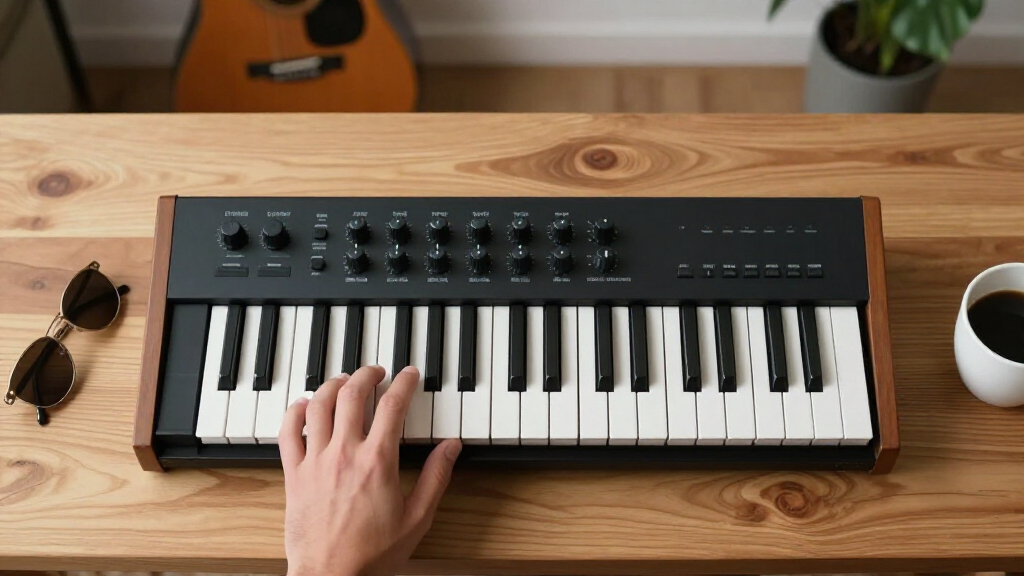
How We Picked
The products were chosen based on a combination of sound quality, build durability, feature set, and user interface. I prioritized models that offer true analog circuitry or high-quality modeling, ensuring authentic sound. Usability was a key factor, especially for live performance and studio work, along with value for the price. The ranking reflects a balance between versatility and simplicity, with top models offering a broad array of controls while more affordable options focus on core features. Additionally, we considered user reviews and reputation within the synth community to ensure these options are reliable and well-supported.Factors to Consider When Choosing Analog Synthesizer Keyboard
Choosing the right analog synthesizer keyboard involves understanding several key factors beyond just sound. It’s important to evaluate your intended use—whether for live performance, studio recording, or experimentation—as this impacts the features you’ll need. Consider polyphony if you want layered sounds or complex sequences, and look at control options like knobs and sliders for hands-on editing. Budget constraints also influence whether you should prioritize authentic analog circuitry or high-quality digital modeling. Lastly, think about size and portability if space or mobility matters, and check the availability of future expandability or integration with other gear.Sound Quality and Authenticity
Authentic analog sound typically involves true circuitry that produces warm, organic tones. Some synths use digital modeling to mimic analog, which can be more stable and affordable but may lack some nuances. Decide whether genuine circuitry or modeling suits your sound preferences, and listen to demos or reviews to gauge character and richness. Remember, the most authentic sound isn’t always the best for every style, so choose a model that aligns with your musical goals.
Polyphony and Sequencing
Polyphony refers to how many notes can be played simultaneously. For complex chords or layered sounds, higher polyphony is essential, but it often increases cost and complexity. Sequencers and arpeggiators expand creative possibilities, especially for live performances or experimental work. Be aware that some budget models may omit these features or implement them in basic forms, which could limit your workflow.
Control Interface and Usability
Hands-on control with knobs, sliders, and dedicated buttons enhances real-time sound shaping and reduces reliance on menus. Consider how intuitive the interface is for your workflow—more controls generally mean easier editing but add to the size and cost. For beginners, a simpler layout might be preferable, while advanced users may desire extensive modulation options and assignable controls for detailed sound design.
Size, Portability, and Durability
Size matters if you have limited space or plan to perform live. Compact models are easier to transport but may sacrifice some controls or sound capabilities. Build quality also influences durability, especially for gigging or frequent use. Look for sturdy cases, reliable buttons, and robust construction to ensure longevity without sacrificing portability.
Price and Future Expandability
Budget options can deliver excellent sound but might lack features like extensive modulation or polyphony. Higher-end models often include MIDI compatibility, CV outputs, and more comprehensive controls, which can be vital for expanding your setup. Think about whether you plan to upgrade or integrate your synth with other gear, and choose a model that offers room to grow within your budget.
Frequently Asked Questions
Is it better to choose a true analog synthesizer or a digital modeling synth?
Choosing between true analog and digital modeling depends on your priorities. Analog synthesizers produce warm, organic tones that many musicians prefer for their character and real-time control. Digital modeling synths often offer more stability, a wider range of sounds, and more features at a lower price point. If authentic vintage sound is your goal and you’re willing to invest, a true analog synth may be worth it. Conversely, for versatility and convenience, digital models can be a smart choice.
Can I get good sound quality with a budget-friendly analog synthesizer?
Yes, many affordable options deliver impressive sound quality, especially models like the Behringer MS-1-RD or Arturia MicroFreak. However, lower-cost synths often compromise on features like polyphony, modulation options, or build quality. They are well-suited for beginners or for those experimenting with analog sounds without a large investment. Expect some limitations in complexity and expandability at this price point, but they can still produce rich, usable tones.
What features should I prioritize if I want to perform live?
For live performance, prioritize a synthesizer with hands-on controls like knobs and sliders, reliable build quality, and a straightforward interface. Polyphony and sequencing capabilities can also enhance your live setup, allowing for more dynamic performances. Compact size and portability are important if you plan to move frequently. Additionally, consider how easily you can save and recall patches, as this speeds up live workflows.
Are hybrid synths worth considering over pure analog models?
Hybrid synthesizers blend analog circuitry with digital control, which often results in a versatile instrument that balances authentic sound with modern features. They typically offer more stability, more extensive modulation, and easier integration with other gear. If you need a flexible instrument for both studio and live use, hybrids can be an excellent compromise. However, purists may prefer the simplicity and warmth of a fully analog synth, despite potentially higher costs or limited features.
How important is modulation and connectivity in choosing an analog synth?
Modulation options like LFOs, envelopes, and assignable controls greatly influence a synth’s expressive potential. Connectivity features such as MIDI, CV, and audio outputs enable integration with other equipment, expanding creative possibilities. If you plan to use your synth within a larger setup or perform complex sound design, prioritize models with extensive modulation and connectivity. For basic use or beginners, simpler controls may suffice and provide a more straightforward experience.
Conclusion
For most users, the Arturia MicroFreak offers an excellent balance of features, affordability, and modern hybrid technology, making it ideal for beginners and intermediate players. The Moog Messenger remains the top choice for purists seeking authentic monophonic tones, suitable for dedicated sound designers or performers who prioritize sound quality over features. If budget is a concern, the Behringer MS-1-RD delivers solid analog sound at a lower price, but with limitations on control. For those wanting a premium, feature-rich experience, models like the Korg Minilogue or Korg Multipoly provide extensive polyphony and sequencing. Ultimately, your choice should align with your skill level, intended use, and budget, ensuring you select an instrument that complements your musical journey.
As an affiliate, we earn on qualifying purchases.Halloween Picks
halloween