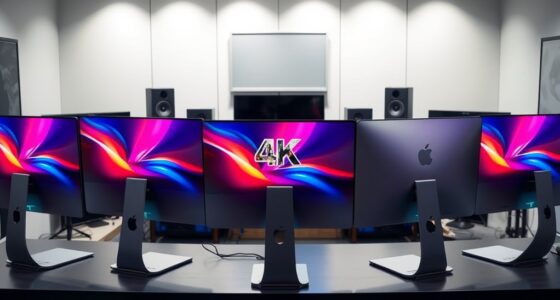
If you’re looking to elevate your music production, I recommend exploring these 14 high-quality analog synthesizer keyboards. They range from classic monophonic models like Moog Messenger to versatile hybrid options such as the MicroFreak and Roland JD-XI. Whether you’re into studio sound design or live performance, these synths offer authentic tones, intuitive controls, and portability. Keep going to discover detailed features and how to pick the best fit for your musical journey.
Key Takeaways
- The list features versatile analog synthesizers with rich sound engines, filters, and extensive modulation options.
- Many models offer intuitive controls, tactile interfaces, and visual displays for precise sound design.
- Compact, portable designs suitable for studio, stage, and on-the-go music production are included.
- Advanced sequencing, arpeggiators, and performance features enhance live play and creative experimentation.
- Popular brands like Moog, Korg, Arturia, and Behringer are represented, ensuring high-quality, professional-grade options.
| MOOG Messenger Monophonic Analog Synthesizer with Sequencer | 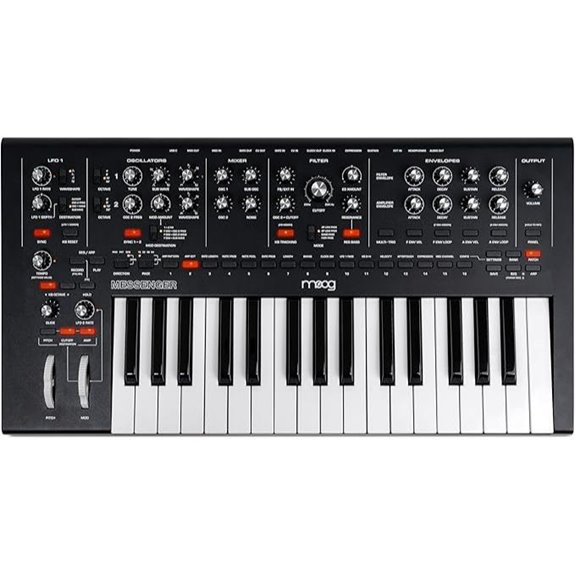 | Studio Powerhouse | Polyphony: Monophonic | Keyboard Size: 32 full-size keys | Connectivity: CV, MIDI, USB | VIEW LATEST PRICE | See Our Full Breakdown |
| Roland JD-XI 37-Key Interactive Analog/Digital Crossover Synthesizer Black |  | Live Performance | Polyphony: 8-note polyphony | Keyboard Size: 37 keys | Connectivity: MIDI, USB, audio input | VIEW LATEST PRICE | See Our Full Breakdown |
| Novation MiniNova Compact 37-Key Synth with Effects | 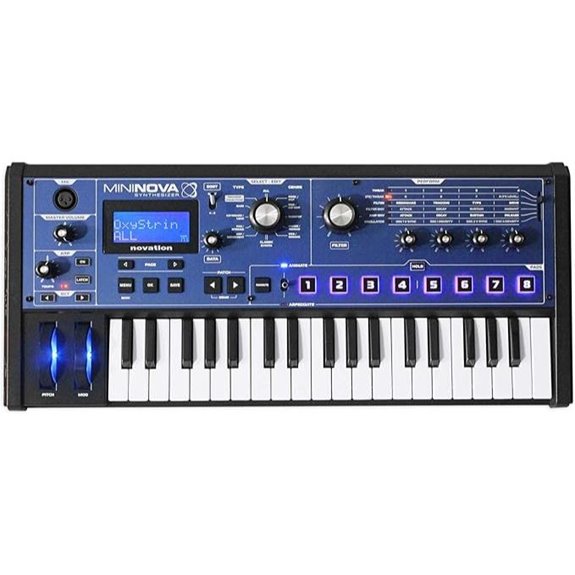 | Compact Creativity | Polyphony: 18 voices | Keyboard Size: 37 mini keys | Connectivity: MIDI, USB | VIEW LATEST PRICE | See Our Full Breakdown |
| Arturia MicroFreak Synthesizer Keyboard with Oscillators | 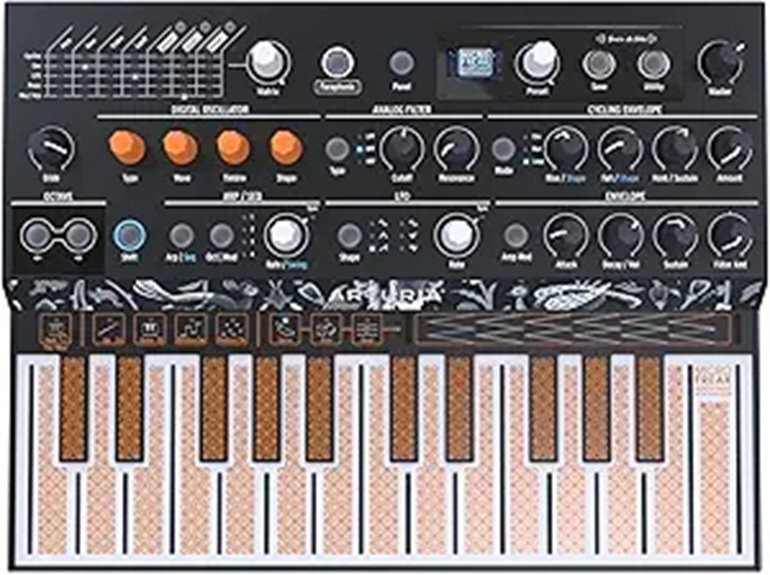 | Experimental Edge | Polyphony: Paraphonic (up to 4 voices) | Keyboard Size: 25 keys | Connectivity: CV, MIDI, USB | VIEW LATEST PRICE | See Our Full Breakdown |
| Behringer POLY D Analog Polyphonic Synthesizer | 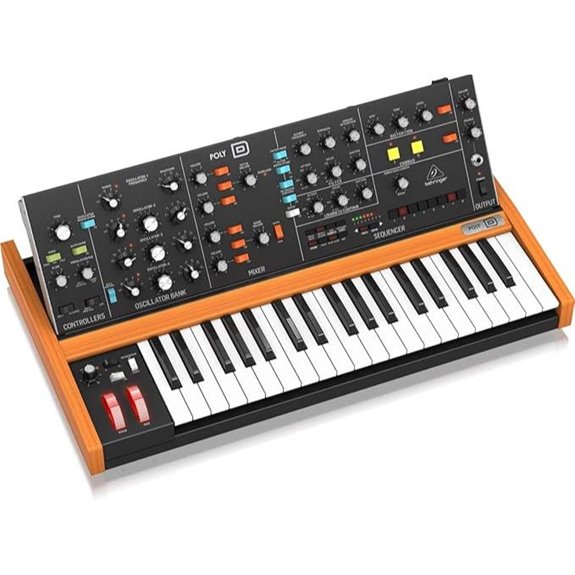 | Classic Analog | Polyphony: 4-voice polyphony | Keyboard Size: 37 semi-weighted keys | Connectivity: MIDI, CV, USB | VIEW LATEST PRICE | See Our Full Breakdown |
| Korg Multipoly Analog Synthesizer with KAOSS Pad | 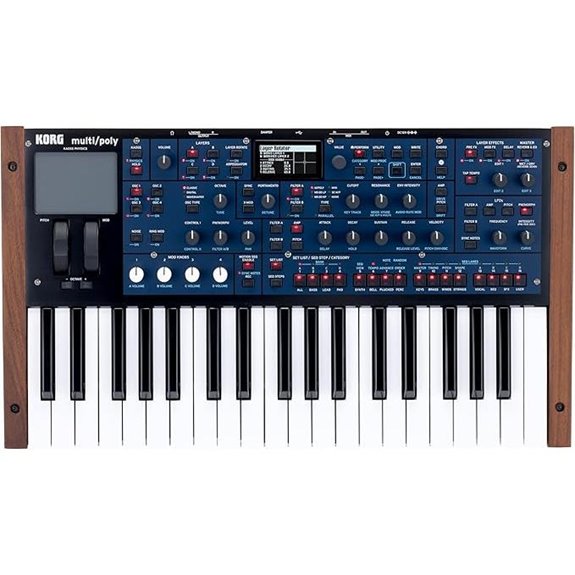 | Budget Choice | Polyphony: 60 voices | Keyboard Size: 4 stacked oscillators (no traditional keyboard) | Connectivity: CV, MIDI, USB | VIEW LATEST PRICE | See Our Full Breakdown |
| Arturia KeyLab Essential mk3 49-Key MIDI Controller |  | Versatile MIDI | Polyphony: Not applicable (controller) | Keyboard Size: 49 keys (controller) | Connectivity: MIDI, USB (controller) | VIEW LATEST PRICE | See Our Full Breakdown |
| Yamaha Portable 37-Key Analog Synthesizer (reface CS) | 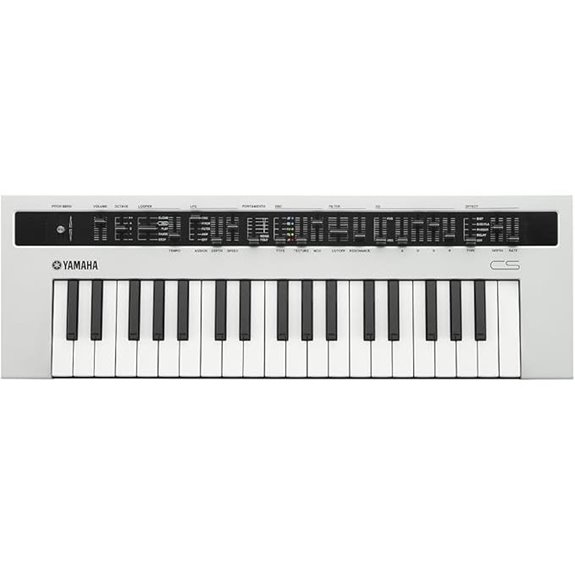 | Innovative Synthesis | Polyphony: 8-note polyphony | Keyboard Size: 37 keys | Connectivity: MIDI, USB | VIEW LATEST PRICE | See Our Full Breakdown |
| Korg Minilogue 37-Key Polyphonic Synthesizer | 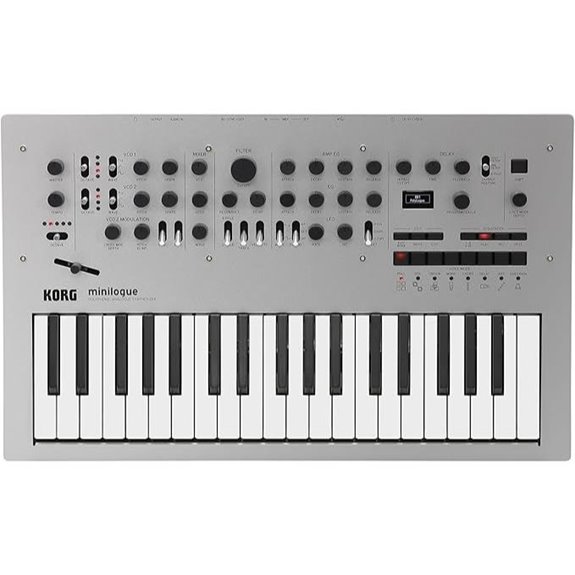 | Beginner Friendly | Polyphony: 4-voice polyphony | Keyboard Size: 37 keys | Connectivity: MIDI, USB | VIEW LATEST PRICE | See Our Full Breakdown |
| Novation Bass Station II Monosynth with Patches | 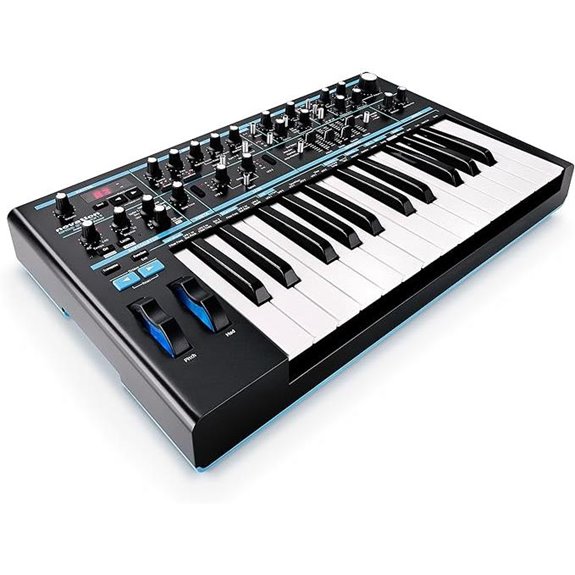 | Deep Bass | Polyphony: Monophonic | Keyboard Size: 25 keys | Connectivity: MIDI, USB | VIEW LATEST PRICE | See Our Full Breakdown |
| MOOG Subharmonicon Semi-Modular Analog Synthesizer |  | Modular Ready | Polyphony: Paraphonic (4 voices) | Keyboard Size: No keyboard (semi-modular) | Connectivity: MIDI, CV | VIEW LATEST PRICE | See Our Full Breakdown |
| Stylophone Pocket Electronic Synthesizer Musical Instrument |  | Retro Charm | Polyphony: Monophonic | Keyboard Size: Touch pad/stylus | Connectivity: 3.5mm audio out, USB | VIEW LATEST PRICE | See Our Full Breakdown |
| Synth-a-Sette Portable Cassette-Sized Analog Synthesizer | 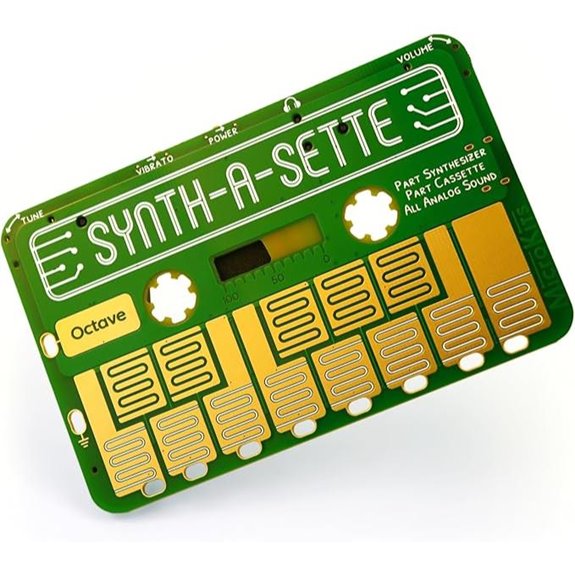 | Educational Tool | Polyphony: Monophonic | Keyboard Size: Touchpad (no traditional keys) | Connectivity: Line out, battery power | VIEW LATEST PRICE | See Our Full Breakdown |
| MS-1 MKII RD Analog Synthesizer Red | 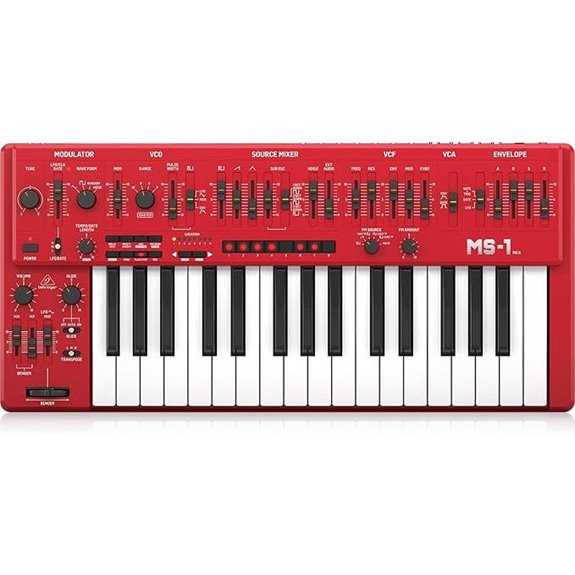 | Authentic Tone | Polyphony: Monophonic | Keyboard Size: 25 keys | Connectivity: MIDI, USB, CV | VIEW LATEST PRICE | See Our Full Breakdown |
More Details on Our Top Picks
MOOG Messenger Monophonic Analog Synthesizer with Sequencer
The MOOG Messenger Monophonic Analog Synthesizer with Sequencer is an excellent choice for performers and studio musicians who want a portable, versatile synth with classic Moog sound. Its timeless, intuitive design builds on Moog’s iconic monosynths, featuring a robust metal panel and 32 semi-weighted keys with velocity and aftertouch. Inside, it delivers legendary analog tones enhanced with modern features like wavefolding oscillators, a sub-oscillator, and a next-generation ladder filter. The integrated 64-step sequencer, arpeggiator, and extensive modulation options make it perfect for live performance and studio creativity, all in a compact, durable package.
- Polyphony:Monophonic
- Keyboard Size:32 full-size keys
- Connectivity:CV, MIDI, USB
- Effects:Built-in filter, modulation
- Sequencer/Arpeggiator:64-step sequencer
- Modulation & Controls:ADSR, 2 LFOs, velocity
- Additional Feature:Iconic Moog design
- Additional Feature:Velocity and aftertouch keys
- Additional Feature:Extensive preset library
Roland JD-XI 37-Key Interactive Analog/Digital Crossover Synthesizer Black
If you’re looking for a versatile synthesizer that combines authentic analog tones with digital versatility, the Roland JD-XI 37-Key Interactive Analog/Digital Crossover Synthesizer is an excellent choice. It features hybrid sound engines, blending rich analog lead and bass sounds with powerful digital synth sections that deliver SuperNATURAL tones. The four-track pattern sequencer and high-quality rhythm sounds make it perfect for composing and live performance. Plus, with four effects—Delay, Reverb, and two Effect slots—and a built-in vocoder with AutoPitch, it offers dynamic sound shaping. Its compact design makes it ideal for musicians seeking both flexibility and portability.
- Polyphony:8-note polyphony
- Keyboard Size:37 keys
- Connectivity:MIDI, USB, audio input
- Effects:Reverb, delay, effects
- Sequencer/Arpeggiator:Pattern sequencer, rhythm
- Modulation & Controls:Filters, modulation, LFOs
- Additional Feature:Hybrid analog/digital engines
- Additional Feature:Built-in vocoder/microphone
- Additional Feature:Rhythm pattern sequencer
Novation MiniNova Compact 37-Key Synth with Effects
For musicians seeking a portable yet powerful synthesizer, the Novation MiniNova Compact 37-Key Synth with Effects stands out as an excellent choice. Despite its small size, it packs a professional-grade sound engine with 256 onboard sounds and room for 128 user patches. Its versatility shines through features like rich oscillators, multiple filter types, and effects such as distortion, reverb, and a unique Gator effect. The built-in VocalTune and vocoder open creative vocal possibilities, while intuitive controls and performance features like animate buttons and expressive wheels make live tweaking effortless. Its durable design, USB connectivity, and software support make MiniNova perfect for studio and stage use.
- Polyphony:18 voices
- Keyboard Size:37 mini keys
- Connectivity:MIDI, USB
- Effects:5 effects per voice
- Sequencer/Arpeggiator:No built-in sequencer
- Modulation & Controls:6 assignable knobs, animate buttons
- Additional Feature:Vocal processing effects
- Additional Feature:Performative modulation controls
- Additional Feature:User sound library
Arturia MicroFreak Synthesizer Keyboard with Oscillators
Designed for experimental sound designers and performers who crave versatility, the Arturia MicroFreak Synthesizer Keyboard with Oscillators stands out with its hybrid synthesis engine. It combines digital and analog technologies, offering 17 paraphonic oscillator modes—including wavetable, physical modeling, and noise modes—plus a resonant analog filter. Its 25-key flat PCB keyboard supports rapid note tracking, pressure, and aftertouch. With extensive connectivity options like CV outputs, USB, and MIDI, it integrates seamlessly into any setup. The intuitive interface, featuring four dedicated knobs and a flexible modulation matrix, empowers me to craft complex, evolving sounds effortlessly, making it a powerful tool for both studio and live performance.
- Polyphony:Paraphonic (up to 4 voices)
- Keyboard Size:25 keys
- Connectivity:CV, MIDI, USB
- Effects:Digital effects, filter
- Sequencer/Arpeggiator:4 automations, sequencer
- Modulation & Controls:Mod matrix, various oscillators
- Additional Feature:Paraphonic oscillator modes
- Additional Feature:Extensive modulation matrix
- Additional Feature:USB and CV connectivity
Behringer POLY D Analog Polyphonic Synthesizer
The Behringer POLY D stands out as an excellent choice for musicians seeking authentic analog sound combined with versatile performance features. With 37 semi-weighted keys that respond to velocity, it offers expressive control suited for dynamic playing. Its 4 VCOs, classic ladder filter, LFO, BBD chorus, and distortion deliver rich, vintage tones that capture the essence of classic D-type circuitry. Supporting 4-voice polyphony and paraphonic modes, it provides flexible sound design options. Built with high-quality components for durability, the POLY D ensures a professional feel and authentic tonal quality, making it a powerful addition to any music production setup.
- Polyphony:4-voice polyphony
- Keyboard Size:37 semi-weighted keys
- Connectivity:MIDI, CV, USB
- Effects:BBD chorus, distortion
- Sequencer/Arpeggiator:32-step sequencer, arpeggiator
- Modulation & Controls:Modulation matrix, assignable controls
- Additional Feature:Authentic D-type circuitry
- Additional Feature:Semi-weighted keys
- Additional Feature:4-voice polyphony
Korg Multipoly Analog Synthesizer with KAOSS Pad
If you’re looking to push your sound design boundaries and incorporate expressive performance elements, the Korg Multipoly Analog Synthesizer with KAOSS Pad is an excellent choice. It features four stacked oscillators, 60 voices, and advanced analog modeling technology that delivers authentic vintage sounds. Its versatile architecture includes dual filters, multiple envelopes, LFOs, and modulation processors, allowing for rich, evolving tones. The built-in KAOSS Pad adds real-time expressive control, making it perfect for live performance and studio experimentation. Its intuitive interface and compact design make it easy to integrate into any setup, empowering you to craft innovative, dynamic sounds effortlessly.
- Polyphony:60 voices
- Keyboard Size:4 stacked oscillators (no traditional keyboard)
- Connectivity:CV, MIDI, USB
- Effects:Insert FX
- Sequencer/Arpeggiator:Sequencing via external
- Modulation & Controls:6 modulation processors
- Additional Feature:Vintage analog modeling
- Additional Feature:Built-in KAOSS Pad
- Additional Feature:Multiple modulation processors
Arturia KeyLab Essential mk3 49-Key MIDI Controller
For musicians and producers seeking a versatile MIDI controller that enhances creative workflows, the Arturia KeyLab Essential mk3 49-Key stands out with its intuitive controls and powerful features. It offers new modes like Scale, Chord, and Arpeggiator, making composition and beat-making effortless. The RGB-backlit pads are velocity and pressure-sensitive, complemented by a bright 2.5” LCD for real-time feedback. Deep DAW integration via custom scripts simplifies control over Ableton Live, Logic, and FL Studio. With 2000 presets in Analog Lab V, plus included pianos and subscription options, this controller delivers a versatile, portable, and user-friendly experience for both beginners and pros.
- Polyphony:Not applicable (controller)
- Keyboard Size:49 keys (controller)
- Connectivity:MIDI, USB (controller)
- Effects:No effects (controller)
- Sequencer/Arpeggiator:No sequencer, controller
- Modulation & Controls:Pads, knobs, modulation controls
- Additional Feature:RGB-backlit pads
- Additional Feature:Integrated arpeggiator
- Additional Feature:2000 preset library
Yamaha Portable 37-Key Analog Synthesizer (reface CS)
Designed for musicians who need a portable yet versatile synthesizer, the Yamaha reface CS stands out with its 37-key mini keyboard that offers a natural playing feel. It features an analog physical modeling engine with multiple oscillator types, giving you a broad palette of sounds from rich analog tones to digital textures. With 8-note polyphony, you can play complex chords or switch to mono mode for bass lines and leads. Built-in effects, filter, LFO, and EG animate your sounds, while the onboard phrase looper helps capture ideas quickly. Its compact size and built-in speaker make it perfect for studio, stage, or on-the-go creativity.
- Polyphony:8-note polyphony
- Keyboard Size:37 keys
- Connectivity:MIDI, USB
- Effects:Built-in effects
- Sequencer/Arpeggiator:No sequencer
- Modulation & Controls:LFO, envelope
- Additional Feature:8-note polyphony
- Additional Feature:Built-in phrase looper
- Additional Feature:Portable mini size
Korg Minilogue 37-Key Polyphonic Synthesizer
The Korg Minilogue 37-Key Polyphonic Synthesizer stands out as an excellent choice for musicians seeking authentic analog sound in a compact package. Its warm, punchy tones and four-voice polyphony let me craft rich, layered sounds perfect for complex arrangements. I love the onboard tape-style delay, adding depth and texture effortlessly. With 200 presets plus extensive editing options, I can quickly find a sound or create my own from scratch. The OLED oscilloscope display helps me visualize waveforms during sound design. Its responsive keyboard and built-in sequencers make live performance and studio work seamless—all at an affordable price, making it ideal for both beginners and pros.
- Polyphony:4-voice polyphony
- Keyboard Size:37 keys
- Connectivity:MIDI, USB
- Effects:Built-in delay, chorus
- Sequencer/Arpeggiator:16-step sequencer
- Modulation & Controls:3 assignable knobs, LFOs
- Additional Feature:OLED oscilloscope display
- Additional Feature:4-voice polyphony
- Additional Feature:Tape delay effect
Novation Bass Station II Monosynth with Patches
If you’re looking for a versatile monosynth that offers deep sound design options and intuitive performance features, the Novation Bass Station II stands out. It has two tunable oscillators with four waveforms, plus a sub-oscillator, noise, and ring modulation for rich textures. The synth includes 64 factory patches and space for 128, making customization simple. Its improved analog filter offers classic multi-mode and new 24dB Acid options, perfect for shaping tones from mellow to aggressive. With a built-in step sequencer and arpeggiator, you can create complex patterns, inspiring live and studio performances. Connectivity options ensure seamless integration with your setup.
- Polyphony:Monophonic
- Keyboard Size:25 keys
- Connectivity:MIDI, USB
- Effects:Filter, distortion
- Sequencer/Arpeggiator:Arpeggiator, sequencer
- Modulation & Controls:Modulation matrix
- Additional Feature:Classic filter types
- Additional Feature:64 factory patches
- Additional Feature:External audio processing
MOOG Subharmonicon Semi-Modular Analog Synthesizer
For musicians who crave intricate rhythmic patterns and lush harmonic textures, the MOOG Subharmonicon Semi-Modular Analog Synthesizer offers an exceptional platform. I love how its six tonal sources, including two VCOs with subharmonic generators, create dense, enthralling sounds. The four rhythm generators and dual sequencers make complex polyrhythms simple to craft, perfect for experimental soundscapes. Its expandability with modules like Mother-32 and DFAM means endless possibilities. Designed for live and studio use, it’s versatile—capable of producing everything from ambient pads to percussive textures. Its mathematical tuning ensures coherent patterns, fueling my creativity with rich, dynamic patterns.
- Polyphony:Paraphonic (4 voices)
- Keyboard Size:No keyboard (semi-modular)
- Connectivity:MIDI, CV
- Effects:No effects
- Sequencer/Arpeggiator:Dual sequencers
- Modulation & Controls:Step sequences, modulation
- Additional Feature:Semi-modular patchbay
- Additional Feature:Dual sequencers
- Additional Feature:Extensive modulation options
Stylophone Pocket Electronic Synthesizer Musical Instrument
Designed for musicians who value portability and vintage sound, the Stylophone Pocket Electronic Synthesizer offers a unique blend of simplicity and character. Less than 12cm wide, it’s perfect for on-the-go creativity. Its authentic analog sound recalls the iconic tones from 1968, with three octaves and an optional vibrato. Playing is intuitive—just tap or slide the stylus on the touch-sensitive metal surface to produce notes. It features a built-in speaker, headphone jack, and can connect to computers or audio gear via a 3.5mm stereo cable. Lightweight and battery-powered, it’s a fun, versatile instrument that’s great for beginners and seasoned musicians alike.
- Polyphony:Monophonic
- Keyboard Size:Touch pad/stylus
- Connectivity:3.5mm audio out, USB
- Effects:No effects
- Sequencer/Arpeggiator:No sequencer
- Modulation & Controls:No modulation controls
- Additional Feature:Touch-sensitive metal surface
- Additional Feature:Retro analog sound
- Additional Feature:Battery operated portability
Synth-a-Sette Portable Cassette-Sized Analog Synthesizer
The Synth-a-Sette Portable Cassette-Sized Analog Synthesizer stands out as the perfect choice for musicians on the move or students exploring sound synthesis. Its tiny, portable design packs a surprising amount of features, including a touchpad monophonic keyboard, octave up button, vibrato switch, built-in speaker, and line-out. You can create melodies anywhere, even connecting fruits or forks to craft custom banana keyboards and complete circuits for unique sounds. It’s ideal for beginners learning analog synthesis or experienced musicians adding spontaneous textures. This compact synth makes experimenting with sound accessible, fun, and educational, blending music creation with STEM exploration effortlessly.
- Polyphony:Monophonic
- Keyboard Size:Touchpad (no traditional keys)
- Connectivity:Line out, battery power
- Effects:No effects
- Sequencer/Arpeggiator:No sequencer
- Modulation & Controls:Touch pad modulation
- Additional Feature:Conductive object input
- Additional Feature:Educational STEM focus
- Additional Feature:Smallest pocket synth
MS-1 MKII RD Analog Synthesizer Red
If you’re looking to create authentic analog sounds with expressive control, the MS-1 MKII RD Analog Synthesizer in striking red is an excellent choice. It offers warm, character-rich tones thanks to its analog architecture and versatile VCO, which provides four waveforms for a wide range of sounds. The 12dB/oct multimode filter and adjustable ADSR envelopes give you detailed sound shaping options. Its compact design is perfect for studio or live use, with seamless connectivity via USB, MIDI, CV/Gate, and audio outputs. Plus, the bold red finish adds a stylish touch to any setup, making it both functional and visually appealing.
- Polyphony:Monophonic
- Keyboard Size:25 keys
- Connectivity:MIDI, USB, CV
- Effects:Filter, modulation
- Sequencer/Arpeggiator:Step sequencer
- Modulation & Controls:Filter, envelope, pitch controls
- Additional Feature:Striking red finish
- Additional Feature:Wide waveform range
- Additional Feature:Versatile connectivity
Factors to Consider When Choosing an Analog Synthesizer Keyboard
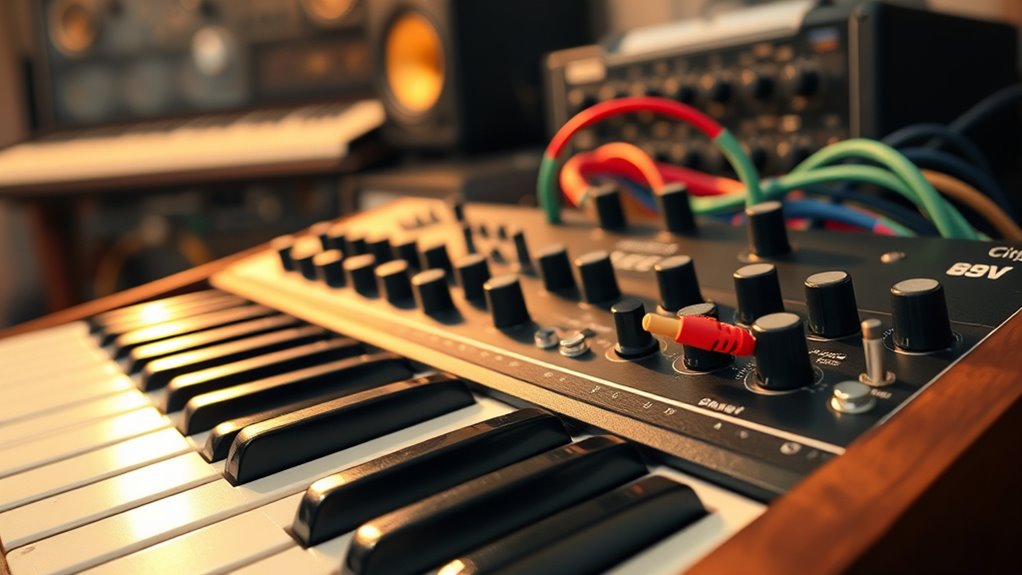
When choosing an analog synthesizer keyboard, I focus on sound quality and tone to guarantee it fits my musical style. I also consider the interface and controls for ease of use, along with connectivity options for integrating with my setup. Finally, I weigh portability, size, and budget to find a model that balances features and value.
Sound Quality and Tone
Choosing an analog synthesizer hinges largely on its sound quality, which is shaped by the interplay of VCOs, filters, and the signal path. True analog synths generate their sound through voltage-controlled oscillators and filters, creating a warm, organic tone that digital emulations often lack. The type of filter—whether ladder, state-variable, or multimode—dramatically influences the tonal color, resonance, and overall character of the sound. Subtle imperfections and nonlinearities in analog circuitry add a lively, distinctive quality that varies between units, making each one unique. The quality of components like matched transistors and high-grade resistors also impacts clarity and fidelity. Ultimately, the richness, warmth, and personality of an analog synth’s tone are what set it apart and make it a valuable addition to any music production setup.
Interface and Controls
A synthesizer’s interface and controls are essential because they determine how easily and creatively you can shape your sound. An intuitive layout with clearly labeled controls allows for quick adjustments and spontaneous experimentation. Physical knobs, sliders, and buttons provide tactile feedback, making precise parameter tweaks straightforward without constantly traversing menus. Dedicated controls for oscillators, filters, envelopes, and LFOs give instant access to core sound-shaping tools, enhancing workflow efficiency. A well-organized interface helps you steer through complex modulation routing and settings, especially during live performances or intricate studio sessions. Features like assignable knobs and customizable mappings add flexibility, letting you tailor the control layout to your unique style. Ultimately, a user-friendly interface boosts creativity and makes sound design more intuitive.
Connectivity Options
The way a synthesizer connects with other gear can substantially impact your workflow and creative possibilities. I look for models that offer multiple connectivity options like CV, MIDI, USB, and audio inputs/outputs to guarantee seamless integration. Modern digital connections such as USB MIDI are essential for easy communication with DAWs, while traditional CV/Gate jacks keep compatibility with modular setups. I also check the number and type of patch points for external modulation, sequencing, and control voltage routing, which expand creative control. Compatibility with my existing studio gear, including external effects and other synths, is a must. Features like MIDI over USB and diverse audio connection types make setup flexible and future-proof, enabling me to adapt and evolve my rig effortlessly.
Portability and Size
Portability and size are crucial factors when selecting an analog synthesizer keyboard, especially if I plan to perform live or move gear frequently. A smaller, lightweight model makes transportation easier, whether I’m carrying it in a backpack or a gig bag. Compact options with 25 or 37 keys reduce bulk and weight, perfect for on-the-go setups. These portable synths often prioritize small form factors and may include features like built-in batteries, which eliminate the need for power cords during performances. Larger synths with full-sized keys and extensive control panels tend to be less portable, making them better suited for studio use. When choosing, I consider how often I’ll move the synth and whether portability outweighs the desire for a full keyboard or advanced features.
Budget and Value
When choosing an analog synthesizer keyboard, balancing your budget with the features you need helps guarantee you get the best value. I recommend comparing different models’ sound engines, like analog versus hybrid, to see which offers the tonal quality and flexibility you desire within your price range. Don’t forget to factor in the cost of accessories like MIDI controllers, patch cables, or cases, which can enhance your setup. Consider future-proof features such as connectivity options and software compatibility to ensure your synth remains useful as your skills grow. While higher-end models often boast better build quality and advanced features, a well-chosen budget synth can still meet your core creative needs without breaking the bank. It’s all about finding the right balance for your needs and budget.
Frequently Asked Questions
How Do Analog Synthesizers Differ From Digital Models?
Analog synthesizers produce sound through continuous electrical signals, giving them a warm, organic tone that many musicians love. Digital models, on the other hand, generate sound using algorithms and sampling, offering more versatility and precision. I find analogs feel more hands-on and expressive, while digital synths excel in complex sounds and convenience. Both have unique qualities, so it really depends on what kind of sound and workflow you’re after.
Can I Integrate These Synths With Modern DAWS Seamlessly?
Absolutely, you can integrate analog synths with modern DAWs seamlessly. I connect mine using audio interfaces or MIDI controllers, which allow for smooth recording and control. Many synths come with USB or MIDI ports, making integration straightforward. I also use software plugins for additional editing, ensuring my analog sounds blend perfectly with digital workflows. It’s a flexible setup that enhances creativity and gives my music a unique, warm character.
What Maintenance Is Required for Vintage Analog Synthesizers?
Vintage analog synthesizers need regular maintenance to keep them sounding their best. For example, I once serviced a classic Minimoog, replacing worn-out capacitors and cleaning the contacts. I recommend checking and cleaning the sliders and knobs, inspecting power supplies, and occasionally recalibrating the tuning. Keeping the synth in a stable, dry environment also prevents dust buildup and corrosion, ensuring your vintage gear continues to deliver rich, warm sounds.
Are Portable Analog Synthesizers Suitable for Live Performances?
Absolutely, portable analog synthesizers are great for live performances. I love how lightweight and compact they are, making setup and transport easy. Plus, their hands-on controls give me real-time tweaking, which adds energy to my shows. While they might have fewer features than larger models, I find their simplicity and unique sound make them perfect for live gigs. If you want versatility on stage, a portable analog synth is a solid choice.
How Do I Choose the Right Number of Oscillators for My Sound?
I recommend choosing two to three oscillators for a versatile sound. Two oscillators give you a rich, full tone, perfect for classic sounds, while three allow for more complex, layered textures. Think about the kind of music you make—if you want thick, evolving sounds, go for three. For simpler, punchy tones, two are enough. Always consider your skill level and the sonic possibilities you’re aiming for.
Conclusion
Choosing the right analog synthesizer is like finding the missing piece to your musical puzzle. Each of these top picks offers unique textures and warmth that can transform your sound. Trust your instincts and let your creativity run wild—these keyboards are your gateway to sonic adventure. Remember, the perfect synth isn’t just a tool; it’s the heartbeat of your music. Embrace it, and watch your soundscape come alive.