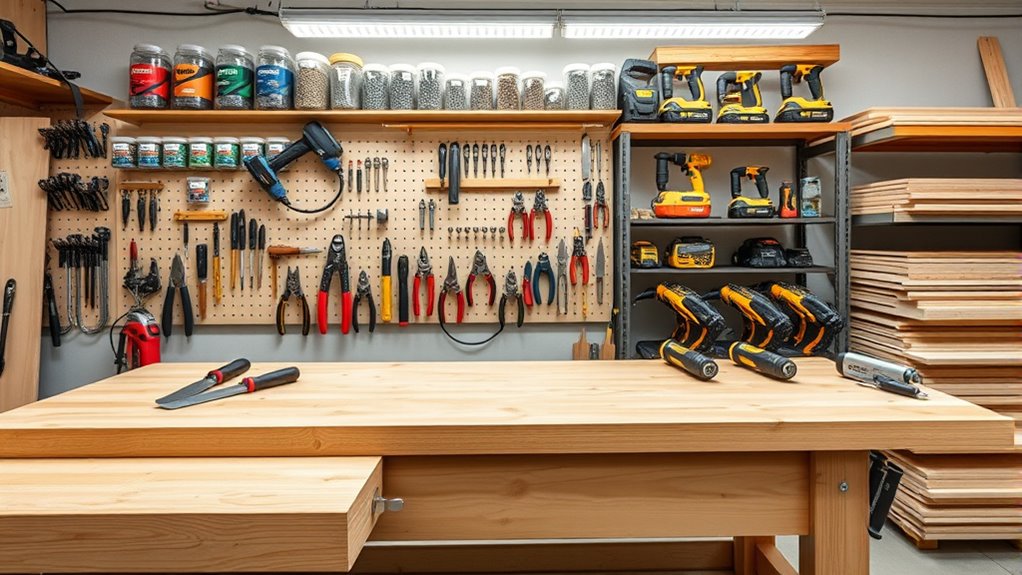

To organize your workshop, focus on dedicated storage solutions like wall-mounted pegboards, drawer cabinets, or sturdy tool chests to keep tools accessible and protected. Set up your workspace with ergonomic considerations, such as adjustable workbenches and proper lighting, to reduce strain. Arrange your layout with clear pathways and functional zones to support efficient movement. If you keep these tips in mind, you’ll create a workspace that’s both productive and safe—learn more to perfect your setup.
Key Takeaways
- Invest in designated storage solutions like pegboards, drawers, or tool chests to keep tools organized and easily accessible.
- Arrange work surfaces at ergonomic heights and use adjustable benches to support comfort during different tasks.
- Keep frequently used tools within arm’s reach to minimize unnecessary movement and improve workflow.
- Design clear pathways and dedicated zones to ensure efficient movement and task-specific organization within the workshop.
- Maintain a tidy environment by regularly organizing tools and materials, enhancing safety, productivity, and overall workspace comfort.
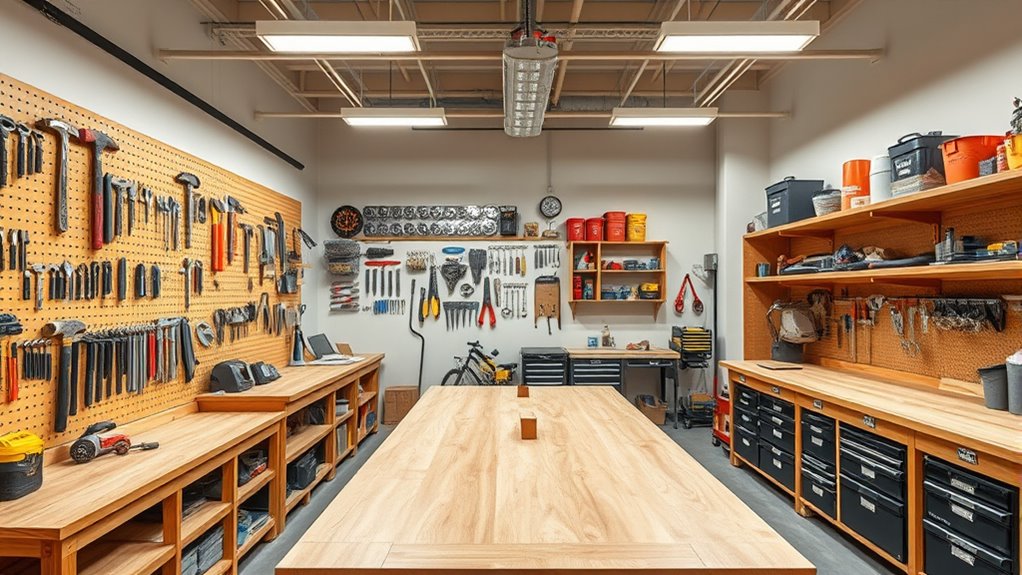
Are you ready to transform your workspace into an efficient and comfortable workshop? The key to achieving this lies in smart organization and thoughtful planning. Start by focusing on your tool storage, which is the backbone of an organized workspace. Instead of cluttering your workbenches with scattered tools, invest in a variety of storage solutions like wall-mounted pegboards, drawer cabinets, or sturdy tool chests. These options make it easy to access your tools quickly while keeping them protected and neatly arranged. When tools are stored properly, you save time searching for that specific screwdriver or wrench, allowing you to work more efficiently. Remember, the goal is to design a system where everything has a designated place, reducing chaos and boosting productivity.
Organize your workspace with smart tool storage for efficiency and productivity.
Alongside tool storage, workspace ergonomics plays a fundamental role in creating a comfortable, efficient workshop. Your workspace should be designed to minimize strain and fatigue, which means paying attention to how you move and work within the space. Position your work surfaces at a height that supports good posture, and avoid bending or reaching excessively. Use adjustable workbenches if possible, so you can tailor the height to suit different tasks or your own comfort. Make certain that frequently used tools and materials are within arm’s reach; this reduces unnecessary movement and keeps your workflow smooth. Proper lighting is also essential — bright, focused lighting helps you see details clearly and reduces eye strain. Consider task lighting above your work areas and ambient lighting for general illumination.
Good tool storage and workspace ergonomics go hand in hand. When your tools are organized logically, with the most-used items within easy reach, you naturally adopt better ergonomics. For example, keep your drill and screwdriver nearby when working on projects that require them, rather than constantly reaching across the shop. This setup not only speeds up your work but also prevents repetitive strain injuries. Furthermore, maintaining a clean and clutter-free environment enhances safety, making it easier to move around and reducing the risk of accidents. Additionally, selecting the right storage solutions, such as storage options suited for various tools, can further optimize your workspace organization.
Finally, plan your layout with flow in mind. Create clear pathways that allow you to move freely between different zones — storage, workbenches, and equipment. This thoughtful setup improves your workspace ergonomics and overall efficiency. Remember, a well-organized workshop isn’t just about storage; it’s about designing an environment that supports your work comfortably and efficiently. When you prioritize tool storage and workspace ergonomics, you’ll notice your projects become more enjoyable and less frustrating. With a little effort upfront, your workshop will become a place where productivity and comfort go hand in hand.
Frequently Asked Questions
How Often Should I Reorganize My Workshop?
You should reorganize your workshop every few months or whenever you notice clutter hindering your workflow. Regular updates help maintain effective storage organization and guarantee tools are easy to find. By proactively optimizing your workspace, you prevent chaos and boost productivity. Keep an eye on how your current setup functions, and don’t hesitate to make adjustments as needed to keep everything streamlined and efficient for your projects.
What Are the Best Lighting Options for a Workshop?
You should choose LED lighting for your workshop because it offers bright, energy-efficient illumination. Incorporate task lighting in specific areas where you need detailed work, like soldering or carving. Position overhead LED fixtures to evenly light the entire space and add adjustable task lights to reduce shadows and eye strain. This setup guarantees you have clear visibility, making your projects safer and more precise.
How Can I Maximize Storage Space Efficiently?
You can maximize storage space efficiently by utilizing vertical storage solutions and modular shelving. Hang tools on wall-mounted pegboards or install tall shelves to free up floor space. Modular shelving units allow you to customize storage based on your needs, making it easy to add or rearrange as your collection grows. This approach keeps your workspace organized, accessible, and maximizes every inch of available space.
What Safety Gear Is Essential for Workshop Use?
You need essential safety gear like personal protective equipment, including safety glasses, ear protection, and gloves, to keep yourself safe. Don’t forget fire safety measures such as a fire extinguisher nearby and proper ventilation to prevent hazards. Always wear the right gear when working with power tools or chemicals, and make certain your workspace is equipped with safety signs and first aid supplies. Staying prepared minimizes risks and keeps your workshop safe.
How Do I Choose the Right Workbenches and Surfaces?
Ever wondered how to pick the perfect workbench? You should focus on workbench materials that suit your projects and prioritize surface durability. Choose a sturdy material like hardwood or sturdy metal for longevity and stability. Consider the size and height that best fit your work style to prevent strain. Are you ready to find a workbench that combines durability, comfort, and functionality? Your ideal workspace starts here!
Conclusion
Now that your workshop is a well-oiled machine, every tool and surface has a place, ready to bring your projects to life. Think of your space as a blank canvas, waiting for your creativity to paint masterpieces. When your tools are organized and your workspace flows seamlessly, inspiration strikes effortlessly. With a little effort now, you’ll create a haven where ideas ignite and craftsmanship thrives—your perfect workshop, humming like a symphony of productivity.