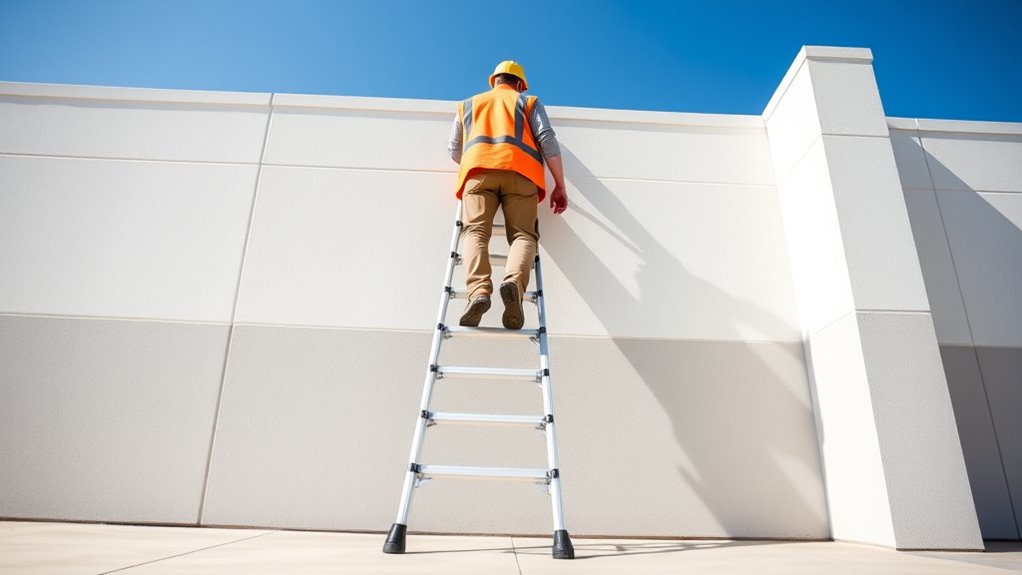

To use a ladder safely, choose the right type and inspect it for damage before each use. Set it up on a stable, level surface at the proper angle (about 75 degrees) and secure it to prevent slipping. Climb carefully with three points of contact, avoid overreaching, and keep your tools secured. Be aware of hazards like unstable surfaces or overloading. If you want to master safe ladder practices, more tips and precautions await you.
Key Takeaways
- Always inspect the ladder for damage and ensure it is clean and in good condition before use.
- Set up the ladder on a stable, level surface at a proper 75-degree angle using the 4:1 rule.
- Maintain three points of contact (two hands and one foot or two feet and one hand) while climbing and working.
- Keep tools secured and organized to prevent slips, overreaching, or dropping objects.
- Avoid using damaged or unstable ladders, and consider alternatives like scaffolds for long or high tasks.
Selecting the Right Ladder for Your Task

Choosing the right ladder for your task is essential to guarantee safety and efficiency. First, consider the height you need to reach; select a ladder that extends at least three feet above the landing point for stability. Next, assess the weight capacity, including your weight and tools, ensuring it meets or exceeds OSHA standards. Pick the type of ladder suited for your environment—step ladders are ideal for indoor tasks on level surfaces, while extension ladders work better for higher outdoor work. Check the ladder’s material—aluminum or fiberglass—based on electrical safety and durability. Finally, evaluate the ladder’s condition, making sure it’s free from damage or defects. Using the correct ladder reduces overreaching and instability, minimizing the risk of falls and injuries. Proper ladder placement is also critical to maintain balance and prevent accidents during use. Additionally, selecting a ladder with appropriate load capacity ensures it can safely support your weight and equipment, preventing overloading hazards. Ensuring that your ladder has the proper stability features can significantly enhance safety during use. To further improve safety, consider proper ladder storage practices to keep your equipment in good condition and ready for use.
Inspecting and Maintaining Your Ladder

Have you regularly inspected your ladder before each use? If not, you’re risking serious accidents. Check for any damage, like bent rungs, cracks, or loose parts. Make sure rungs are clean and free of grease or debris to prevent slips. Examine the side rails for corrosion, corrosion, or other deterioration. Ensure all locking mechanisms work properly and securely hold the ladder in place. If you find any defects, remove the ladder from service immediately. Keep the ladder clean and store it in a dry, sheltered area to prevent damage. Regular maintenance, like tightening bolts and replacing worn parts, extends your ladder’s lifespan and keeps it safe. Consistent inspections help catch issues early, reducing the risk of falls or other accidents during use. Proper ladder maintenance is essential for ensuring safety and longevity. Additionally, understanding the importance of structural integrity can help prevent failures during use. Regularly inspecting your ladder also helps identify hidden damages that might not be immediately visible but could compromise safety. Incorporating preventive maintenance practices enhances overall safety and prolongs your ladder’s usability.
Proper Setup and Placement Techniques

You need to set up your ladder on a stable, level surface to guarantee slipping or tipping. Make sure you position it at the correct angle—about 75 degrees—to ensure stability while climbing. Always secure the ladder’s footing and support to keep it steady and safe during use. Remember to check for any industry safety standards that might apply to your specific situation. Additionally, ensuring the proper installation of ceiling fans can serve as a good analogy for maintaining equipment stability and safety. Regularly inspecting the ladder for wear and tear helps prevent accidents and ensures ongoing safety. Incorporating modern safety features like non-slip feet and reinforced locking mechanisms can further enhance ladder stability. Applying proper fire control techniques during setup can also prevent slips or accidents caused by uneven surfaces or environmental hazards.
Stable Surface Placement
Setting a ladder on a stable surface is essential for safe use and preventing falls. Before climbing, verify the ground is firm, level, and free of debris, mud, or spills. Use a level or check the surface with a straightedge to confirm stability. If the ground is uneven, use ladder levelers or place a sturdy board underneath to create a flat base. Avoid soft soil, loose gravel, or slippery surfaces like ice or wet concrete. Always set the ladder away from doors, walkways, or high-traffic areas unless secured. Confirm the ladder’s feet are fully in contact with the surface and won’t shift during use. Proper placement reduces wobbling or slipping, keeping you safe while working at height. Ensuring the ladder is on a free floating surface can further enhance stability and safety during use. Additionally, inspecting the surface for hidden hazards can prevent unexpected shifts or accidents. Regularly checking the ground conditions before use helps maintain a secure setup and avoid dangerous surprises. Performing a visual inspection prior to setup is vital for identifying potential risks that could compromise stability, especially on uneven terrain.
Correct Ladder Angle
Did you know that the correct ladder angle is essential for stability and safety? If your ladder isn’t set properly, it can slip or tip, leading to serious injuries. To guarantee a safe setup, follow the 4:1 rule—place the base one foot away from the wall for every four feet of ladder height. This creates a stable, leaning angle that minimizes fall risk. Proper ladder setup not only reduces accidents but also extends the lifespan of your equipment.
Key points to remember:
- Use a level to verify the ladder is at the proper angle.
- Keep the top of the ladder flush against the surface.
- Avoid leaning or overreaching while on the ladder.
- Adjust the angle if the ladder shifts or feels unstable.
- Regularly inspect your ladder for market safety standards to ensure it’s in good condition.
- Always follow manufacturer instructions and ladder safety guidelines to prevent accidents.
Proper setup helps prevent slips and falls, keeping you safe at height.
Secure Footing and Support
Ensuring secure footing and proper support is crucial for ladder safety, as unstable or uneven placement can lead to slips and falls. You should always set up your ladder on a stable, level surface. Use a level to check stability before climbing. Avoid placing the ladder on loose or slippery ground, and use ladder levelers if needed. Maintain a firm grip and ensure the rungs are dry and free of debris. Proper placement also means following the 4:1 ratio—place the base one foot out for every four feet of height. Use the following table as a quick reference:
| Support Feature | Proper Technique |
|---|---|
| Stable Surface | Level, firm ground |
| Ladder Angle | 4:1 ratio for safety |
| Securing the Base | Use stabilizers or tie-offs |
| Surface Conditions | Avoid slippery or uneven surfaces |
| Ladder Feet | Non-slip pads or shoes |
Safe Climbing Practices and Techniques

Safe climbing practices are essential to prevent falls and injuries when working on ladders. To stay safe, always face the ladder and keep your body centered between the side rails. Climb slowly and deliberately, never skipping rungs, to maintain secure footing. Use both hands to hold the ladder and avoid overreaching, which can cause instability. Remember to keep your tools secured, so your hands stay free for climbing. Maintain three points of contact—two hands and one foot or two feet and one hand—at all times. Avoid sudden movements or leaning too far to one side. Proper technique reduces the risk of slips and falls, keeping you safe throughout your work.
- Face the ladder when climbing or descending
- Climb slowly and avoid rushing
- Keep tools secured to free your hands
- Maintain three points of contact at all times
Using Tools and Equipment Safely on Ladders

Using tools and equipment correctly while on a ladder helps prevent accidents and injuries. Always carry tools in a belt or hoist them separately to keep your hands free for climbing and maintaining three points of contact. Avoid overloading your ladder with heavy or bulky tools, which can cause instability or tip-overs. Secure power tools with safety lanyards to prevent falls if dropped. Use the correct tools for the job to avoid forcing or damaging equipment on the ladder. Keep cords and hoses organized and out of your path to prevent tripping or entanglement. Before starting work, inspect tools and equipment for damage and repair or replace any faulty items. Properly managing tools and equipment reduces the risk of falls and keeps your work area safe.
Common Hazards and How to Avoid Them

Many common hazards can turn a routine ladder task into a dangerous situation if you’re not careful. To stay safe, you must recognize and avoid these risks.
Always be aware of common ladder hazards to prevent accidents and stay safe.
- Overreaching: Stretching too far can throw off your balance and cause a fall. Keep your body centered on the ladder.
- Unstable surfaces: Placing a ladder on uneven or slippery ground increases instability. Always set it on solid, level ground.
- Damaged ladders: Cracks, bent rungs, or broken rails compromise safety. Inspect thoroughly before use and remove damaged ladders.
- Incorrect setup: Failing to follow proper angle or locking extension ladders correctly can lead to collapse. Always follow safety guidelines for setup.
Being aware of these hazards helps prevent accidents and keeps you safe while working at heights.
Alternative Solutions for Elevated Work

To minimize the risks associated with ladder use, consider alternative solutions that make elevated work safer and more efficient. Using equipment like aerial lifts, scaffolds, or mast climbing platforms reduces fall hazards and provides stable work surfaces. These options are especially useful for extended or repetitive tasks, improving safety and productivity. Here’s a quick comparison:
| Solution | Benefits | Limitations |
|---|---|---|
| Aerial lifts | Easy to reposition, high reach | Costly, requires training |
| Scaffolds | Stable, large work area | Setup time, space required |
| Mast climbing platforms | Safe, efficient for long jobs | Expensive, specialized use |
Choosing the right solution depends on your task, environment, and budget. Prioritize safety and efficiency with these alternatives.
Training and Workplace Safety Measures
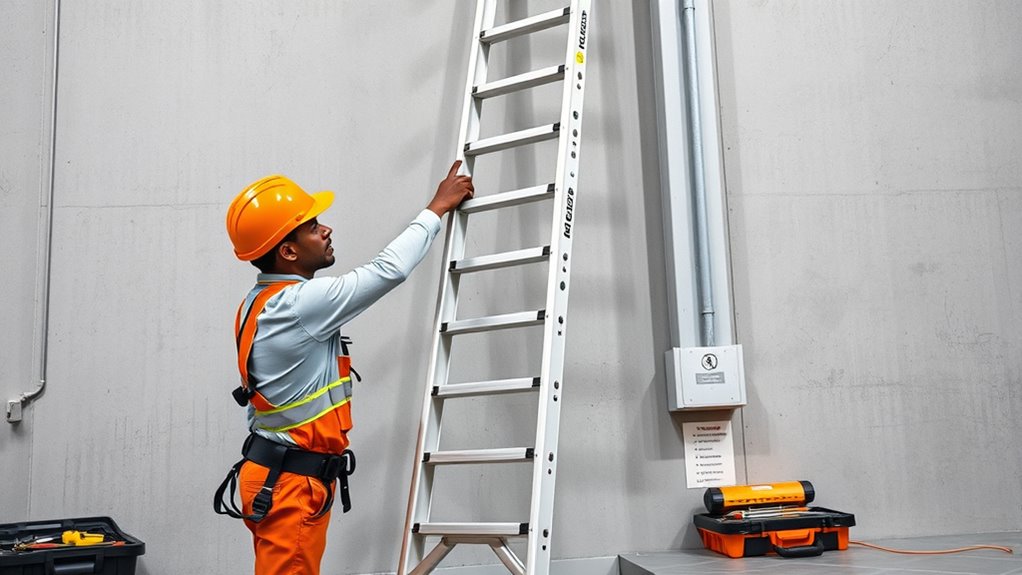
Effective training is essential for promoting workplace safety when working with ladders. You need to understand proper setup, inspection, and safe climbing techniques to prevent accidents. Proper training ensures you recognize hazards, such as unstable surfaces or damaged ladders, and take corrective actions. OSHA mandates that employers provide exhaustive ladder safety education, which should include hands-on demonstrations and regular refreshers.
Proper ladder safety training prevents accidents through hands-on guidance and regular refreshers.
To maximize safety, focus on:
- Inspecting ladders thoroughly before each use and removing damaged ones
- Maintaining three points of contact while climbing
- Setting ladders on stable, level surfaces following the 4:1 ratio
- Using tools and materials safely to keep your hands free
Training fosters awareness, improves habits, and reduces fall risks, creating a safer work environment.
Frequently Asked Questions
How Often Should I Replace My Ladder for Safety Reasons?
You should replace your ladder immediately if you notice any damage, such as bent rungs, broken rails, or missing parts. Regularly inspect your ladder before each use, and if it shows signs of wear or faulty components, don’t risk it—get a new one. Even if it looks fine, substitute it at least every 5-10 years, especially if it’s heavily used or exposed to harsh conditions, to ensure safety.
Are There Specific Safety Gear Required When Using Ladders?
You need to wear safety gear when using ladders, just like wearing a helmet and harness on a construction site. This gear protects you from falls and falling objects. OSHA recommends using non-slip footwear and gloves for a secure grip. In some cases, fall arrest systems or lanyards are necessary, especially when working at heights. Always inspect your safety gear before use to verify it’s in good condition and provides maximum protection.
What Are the Legal Penalties for Ladder Safety Violations?
If you violate ladder safety laws, you could face penalties like hefty fines, citations, or even work stoppages. OSHA enforces these regulations and can impose penalties up to thousands of dollars per violation, especially if violations result in injuries or fatalities. Repeated violations may lead to increased fines or legal action. It’s crucial you follow safety standards to avoid these penalties and guarantee a safe work environment for everyone.
How Can I Identify a Defective or Damaged Ladder?
Think of a ladder as a trusted friend—you need to spot the warning signs early. Check for bent or cracked rungs, loose or broken rails, and damaged locking mechanisms. Look for rust, corrosion, or missing parts. make certain all parts are secure and functioning properly. If anything looks off, it’s time to retire that ladder. Don’t take chances—your safety depends on a thorough inspection before each use.
What Are the Most Common Misconceptions About Ladder Safety?
You might think that as long as a ladder looks okay, it’s safe, but that’s a misconception. Many damaged ladders have hidden defects like bent rungs or broken rails that can cause accidents. Others believe they don’t need to inspect ladders regularly or that higher ladders are safer. Always inspect your ladder thoroughly, even if it looks fine, and follow safety guidelines to prevent falls and injuries.
Conclusion
By following these safety tips, you build a sturdy foundation for accident-free work. Think of your ladder as a bridge between you and safety—every step you take strengthens that connection. When you choose the right ladder, inspect it carefully, and climb with caution, you’re not just avoiding falls; you’re constructing a fortress of confidence and security. Remember, safety isn’t just a rule—it’s the ladder that lifts you to success without falling.