When starting with plumbing, you’ll use key tools like wrenches to tighten or loosen fittings, Teflon tape to seal threaded connections, and pipe cutters for clean cuts. Pliers help with gripping and adjusting parts, while drain snakes clear blockages. Using the right tools guarantees safe, leak-proof repairs and installations. If you continue exploring, you’ll discover how each tool plays a essential role in making plumbing tasks easier and more effective.

Get everyday essentials delivered free — and shop member deals
- Fast, free delivery on millions of items
- Access to Prime Big Deal Days deals on October 6–7
- Prime Video, Amazon Music and more included
Key Takeaways
- Plumbing tools include wrenches, tape, pipe cutters, pliers, and drain snakes, each serving specific repair or installation tasks.
- Wrenches, like adjustable and basin wrenches, help tighten or loosen fittings in tight or hard-to-reach spaces.
- Teflon tape (plumber’s tape) ensures leak-proof threaded pipe connections by creating a water-tight seal.
- Drain cleaning tools, such as plungers and augers, dislodge clogs and clear blockages in pipes and drains.
- Proper safety gear and the right tools prevent damage and ensure efficient, secure plumbing repairs.
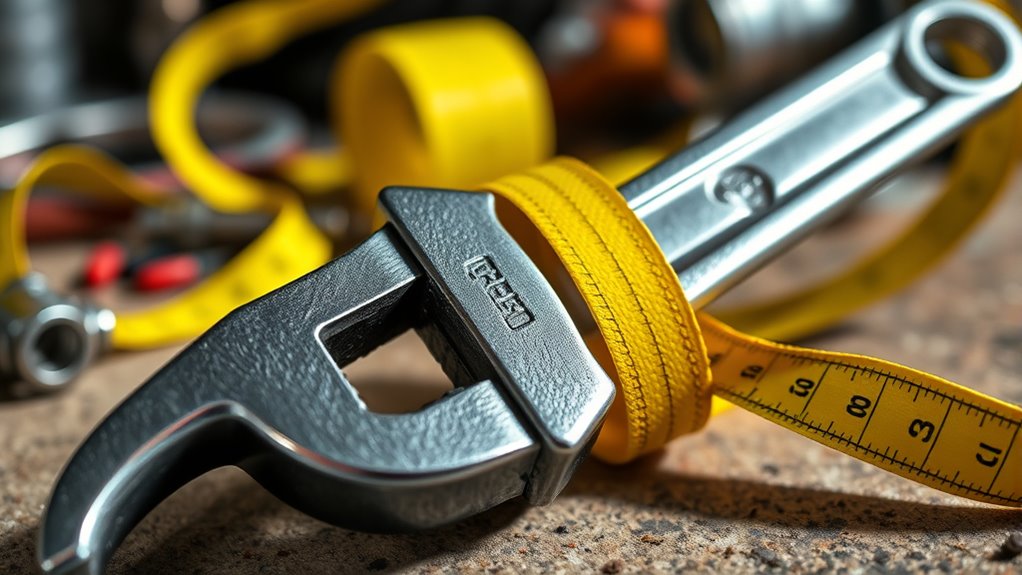
Have you ever wondered what tools a plumber needs to get the job done? Whether you’re tackling a pipe repair or clearing out a stubborn drain, having the right equipment makes all the difference. Plumbers rely on a variety of specialized tools to handle different tasks efficiently and safely. At the core of most plumbing work are wrenches, tape, and other essential devices that help you manipulate pipes, seal connections, and troubleshoot issues.
Discover essential plumbing tools like wrenches and tape that make every repair safer and easier.
When it comes to pipe repair, wrenches are indispensable. A pipe wrench, with its adjustable jaw, allows you to grip and turn pipes securely, even in tight spaces. You’ll find that using the right size wrench prevents damage to fittings and ensures a tight seal when reconnecting pipes. For smaller or more delicate fixtures, a basin wrench becomes your best friend, especially when working under sinks. It helps you access hard-to-reach nuts and fittings without causing damage or strain.
Drain cleaning is another common task that requires specific tools. A simple plunger can often resolve minor clogs, but more stubborn blockages demand specialized equipment. A drain snake, also called a auger, extends into pipes to dislodge or hook onto debris like hair, grease, or mineral buildup. Manual or power-powered drain snakes are effective for clearing out drains quickly, saving you from the hassle of dismantling pipes. For tougher clogs, a motorized auger might be necessary, especially in larger pipes or main lines.
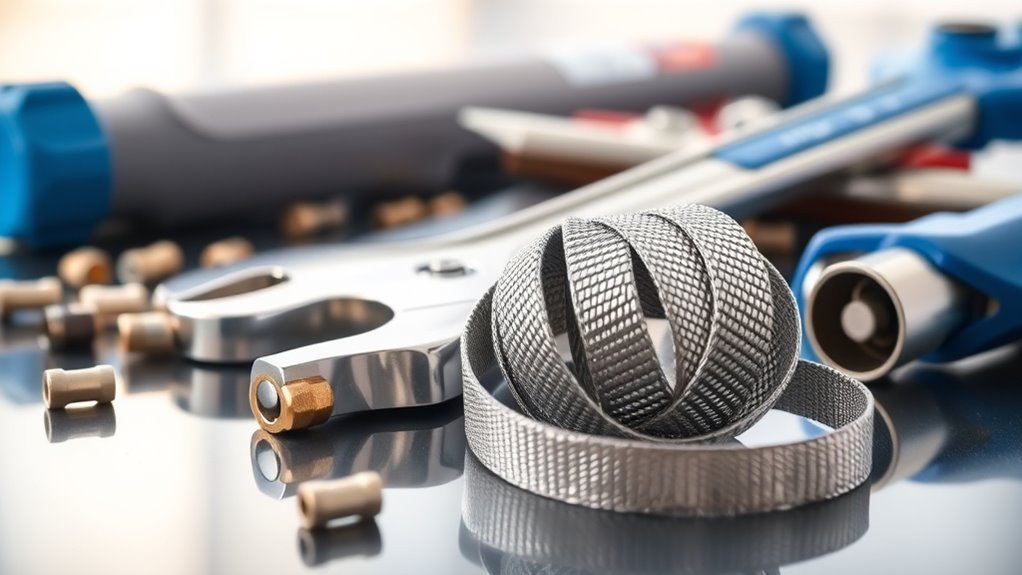
Sealing connections is equally important to prevent leaks and future problems. Plumbers use Teflon tape, often called plumber’s tape, to wrap around threaded pipe fittings. This tape creates a water-tight seal that prevents leaks without the need for additional sealants. When combined with pipe dope or thread sealants, the tape ensures a durable connection that withstands pressure and time.
Other essential tools include pipe cutters, which help you make clean, precise cuts in pipes, and pliers, which assist in gripping, twisting, and adjusting fittings. A good set of these tools allows you to handle most tasks on your own, from minor repairs to more complex installations. Remember, safety is key—wear gloves and goggles when working with pressurized or sharp components.
As an affiliate, we earn on qualifying purchases.
Frequently Asked Questions
What Are the Best Brands for Plumbing Tools?
You should go for brands with a strong reputation for quality and tool durability, like Ridgid, Craftsman, and Kobalt. These brands are known for producing reliable, long-lasting plumbing tools that can handle tough jobs. Their tools often come with warranties, giving you extra confidence. Investing in reputable brands guarantees you get durable tools that stand the test of time, making your plumbing projects easier and more efficient.
How Do I Choose the Right Wrench Size?
To choose the right wrench size, consider your task and the wrench grip you’ll need. Measure the nuts or bolts you’re working with to find a matching size, ensuring the wrench fits snugly without slipping. Size selection is key—using a wrench that’s too small or large can damage fittings or make work harder. Always select a wrench that provides a secure grip and the right size for efficient, safe plumbing repairs.
Can I Use Regular Tape for Plumbing Repairs?
Using regular tape for plumbing repairs is like trying to patch a leaky dam with tissue paper. You shouldn’t rely on it because specialized tape types, like Teflon or plumber’s tape, are designed for sealing techniques that withstand water pressure and prevent leaks. Regular tape may seem convenient, but it won’t provide a durable seal. Always choose the right type of plumbing tape for a reliable, long-lasting fix.
How Often Should Plumbing Tools Be Maintained?
You should maintain your plumbing tools regularly, ideally after each use or at least once a month. Follow simple tool maintenance tips like cleaning, drying, and lubricating moving parts. Store them properly using smart tool storage solutions to prevent rust and damage. Regular maintenance keeps your tools in top shape, extends their lifespan, and ensures they’re ready whenever you need them. This way, your plumbing work stays efficient and hassle-free.
Are There Eco-Friendly Plumbing Tools Available?
Yes, you can find eco-friendly plumbing tools made from sustainable materials like bamboo, recycled steel, and biodegradable plastics. Many eco-conscious brands prioritize reducing environmental impact, offering products that last longer and are safer for the planet. When shopping, look for certifications or labels indicating eco-friendly manufacturing practices. Choosing these tools helps you support sustainability while maintaining your plumbing needs effectively.
As an affiliate, we earn on qualifying purchases.
Conclusion
Now that you’ve explored the essential plumbing tools, imagine yourself confidently reaching for that wrench or tape, ready to tackle any leak. Feel the cool grip of the tools in your hand, the satisfying click as everything tightens into place. With these basics in your toolkit, you can picture your home’s pipes flowing smoothly again. Armed with knowledge and the right tools, you’re all set to turn plumbing problems into simple fixes.
As an affiliate, we earn on qualifying purchases.
As an affiliate, we earn on qualifying purchases.
Halloween Picks
halloween
As an affiliate, we earn on qualifying purchases.