To use a table saw safely, start by wearing safety gear like eye and ear protection. Always keep the blade guard and push sticks in place for added safety. Before cutting, double-check the saw and verify the blade is sharp and properly aligned. Support your workpiece and maintain a steady pace without forcing the wood. Stay focused and keep your hands away from the blade. Following these safety steps will protect you and ensure successful cuts; learn more about proper techniques as you go.
Key Takeaways
- Always use the blade guard and push sticks to keep hands away from the spinning blade.
- Turn off and unplug the saw before making adjustments or inspecting the blade.
- Support workpieces properly and align them against the fence for accurate, safe cuts.
- Wear safety gear such as eye and hearing protection during operation.
- Maintain a clean workspace and stay alert to prevent accidents and kickback.
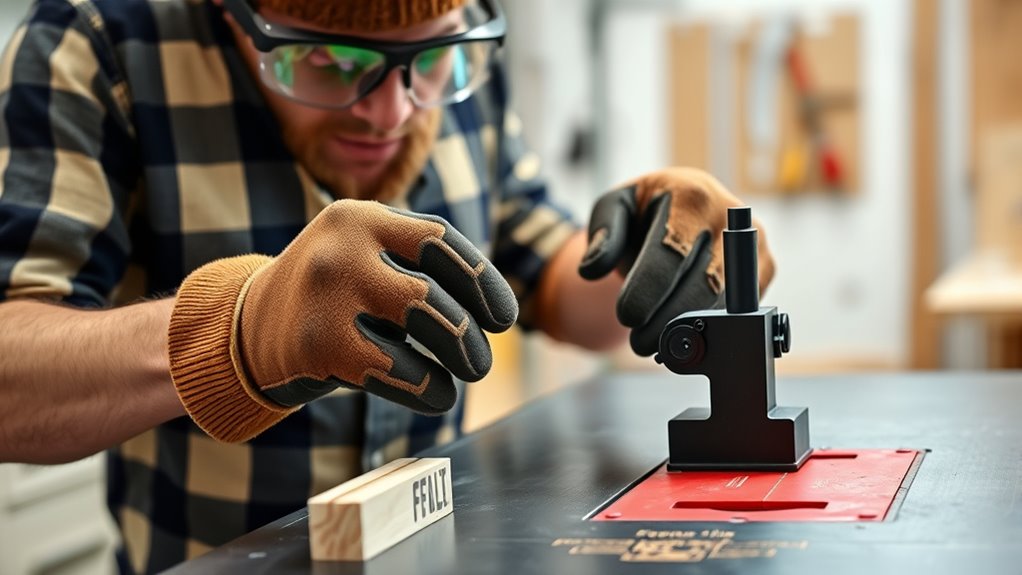
Using a table saw can be an efficient way to cut wood, but safety should always come first. One of the most important safety features you should always use is the blade guard. This clear plastic cover surrounds the saw blade, providing a shield that helps prevent accidental contact. Never operate a table saw without ensuring the blade guard is correctly installed and functioning. It not only keeps your hands at a safe distance from the blade but also helps contain sawdust and debris, making the workspace safer and cleaner.
Always ensure the blade guard is installed and functioning for safe table saw operation.
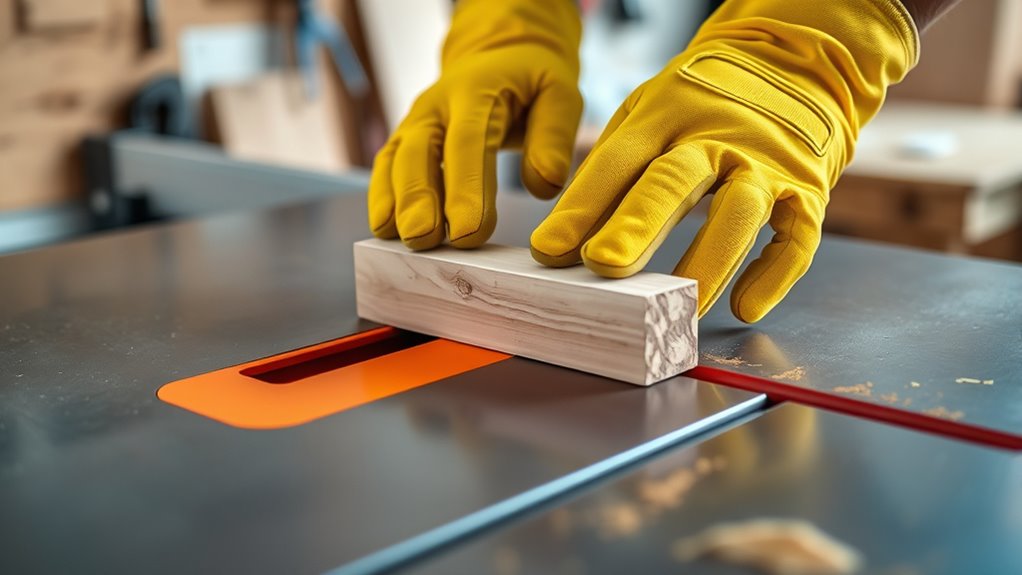
In addition to the blade guard, push sticks are essential tools that keep your hands away from the blade during tricky cuts. When ripping narrow or small pieces of wood, your fingers might be tempted to guide the material directly, but that’s risky. Instead, use a push stick to maintain control and keep your hands safely behind the blade’s cutting line. Push sticks are simple, inexpensive, and highly effective at reducing the chances of slips or accidental contact. Keep a few nearby and familiarize yourself with how to use them properly before starting any cutting task.
Before cutting, make sure the saw is turned off and unplugged when adjusting the blade height or installing accessories. Once you’re ready, double-check that the blade guard is properly in place and the push sticks are within reach. Always align your workpiece against the fence for straight cuts, and don’t force the wood through the blade—let the saw do the work at a steady pace. Pushing too hard can cause the wood to shift or kick back, which increases the risk of injury. If you’re working with long or large pieces, support both ends to prevent sagging or binding. Proper workpiece support is essential for safe operation.
Wear safety gear, such as eye protection and hearing protection, to shield yourself from flying debris and loud noise. Keep your workspace free of clutter, and never reach over the blade while it’s spinning. If a kickback occurs or if the saw starts to vibrate excessively, turn it off immediately and inspect the setup. Regularly inspect the blade for dullness or damage, as a dull blade requires more force and increases the chance of accidents.
Using a table saw safely requires attention and respect for the tool’s power. By consistently utilizing blade guards and push sticks, maintaining proper focus, and following safety protocols, you can make your woodworking projects both productive and safe.
Frequently Asked Questions
How Do I Choose the Right Blade for My Project?
To choose the right blade for your project, consider blade materials like carbide for durability and sharpness, especially with harder woods. Match the blade to your cutting techniques—ripping or cross-cutting—to guarantee clean cuts and safety. Think about the thickness and diameter needed for your saw, and select a blade designed for the material you’re working with. Proper blade selection helps you work efficiently and safely on any project.
What Should I Do if the Saw Blade Binds?
If your saw blade binds, stop the saw immediately to prevent injury. Gently back out the material if possible, and verify for a blade jam or misalignment. To avoid kickback, always use push sticks and keep your fingers clear of the blade path. Regularly inspect and maintain your saw, and make sure you’re following proper kickback prevention techniques. This helps keep your cuts safe and smooth.
How Often Should I Replace or Sharpen the Blade?
You should replace or sharpen your table saw blade when you notice it dulling, burning, or producing rough cuts. Regular blade maintenance and sticking to a sharpening schedule helps guarantee safety and smooth operation. Typically, you might sharpen the blade every 10-20 hours of use or when performance declines. Keep an eye on cut quality and listen for unusual noise—these are signs it’s time for maintenance or replacement.
Is It Safe to Use the Saw Without a Riving Knife?
Using a table saw without a riving knife isn’t safe because it increases the risk of kickback and injury. Always follow safety precautions and consider alternative tools like push sticks or guards if a riving knife isn’t available. These safety measures help protect you while maintaining control during cuts. If you’re unsure, consult your saw’s manual or a professional to ensure safe operation and avoid accidents.
Can I Use a Table Saw for Cutting Metal or Plastics?
You can use a table saw for cutting metal or plastics, but it’s like switching from a bicycle to a motorcycle—requires different tools and precautions. For metal cutting, use a blade designed for that purpose and make certain proper coolant to prevent overheating. When working with plastics, choose a fine-toothed blade to avoid melting. Always wear safety gear, and adjust your saw to match the material to avoid accidents.
Conclusion
Remember, a table saw is like a trusted dance partner — when you move in harmony and respect its rhythm, the steps become smooth and safe. Keep your focus sharp, your hands steady, and your workspace clear, so every cut flows seamlessly. With patience and caution, you’ll find the dance becomes second nature, guiding you through projects with confidence. Embrace safety as your steady rhythm, and you’ll enjoy the craft without missing a beat.