
To hang heavy items safely, choose the right wall anchors based on your wall type and weight. Use proper tools, drill a snug pilot hole, and insert the anchor flush with the wall. Tighten the screw just enough for a secure fit without overtightening. For extra support, make sure toggle bolts or molly bolts fully expand behind the wall. Want expert tips on ensuring secure, long-lasting hangings? Keep going for everything you need to know.
Key Takeaways
- Choose the appropriate wall anchor type based on wall material and item weight for secure support.
- Drill a properly sized pilot hole, using masking tape to control depth and prevent wall damage.
- Fully insert and expand toggle bolts or molly bolts behind the wall before tightening to ensure stability.
- Avoid overtightening screws to prevent wall damage and ensure the anchor remains flush.
- Test the anchor’s grip and gradually add weight, regularly inspecting for looseness or shifting over time.
Choosing the Correct Wall Anchor for Your Project
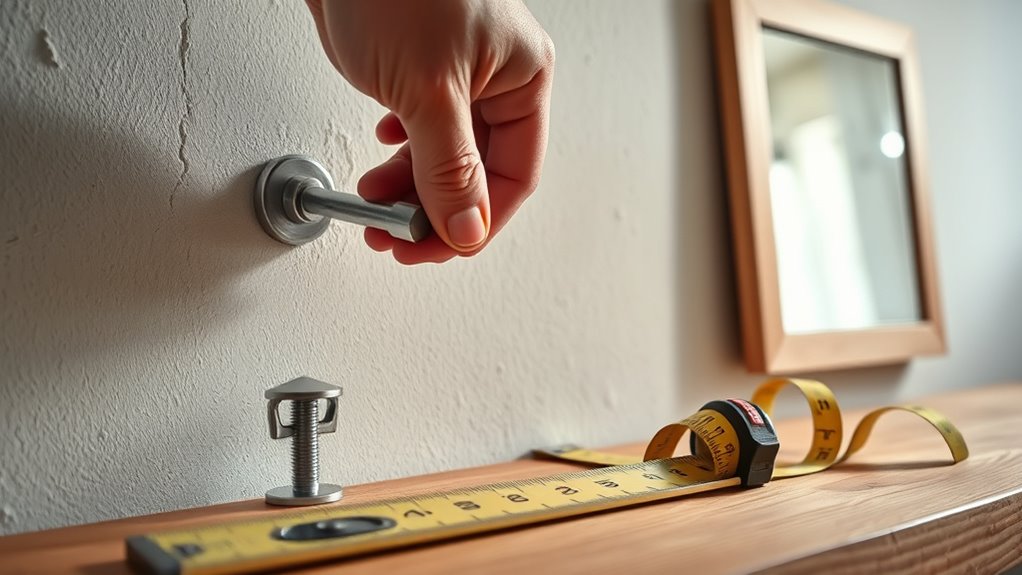
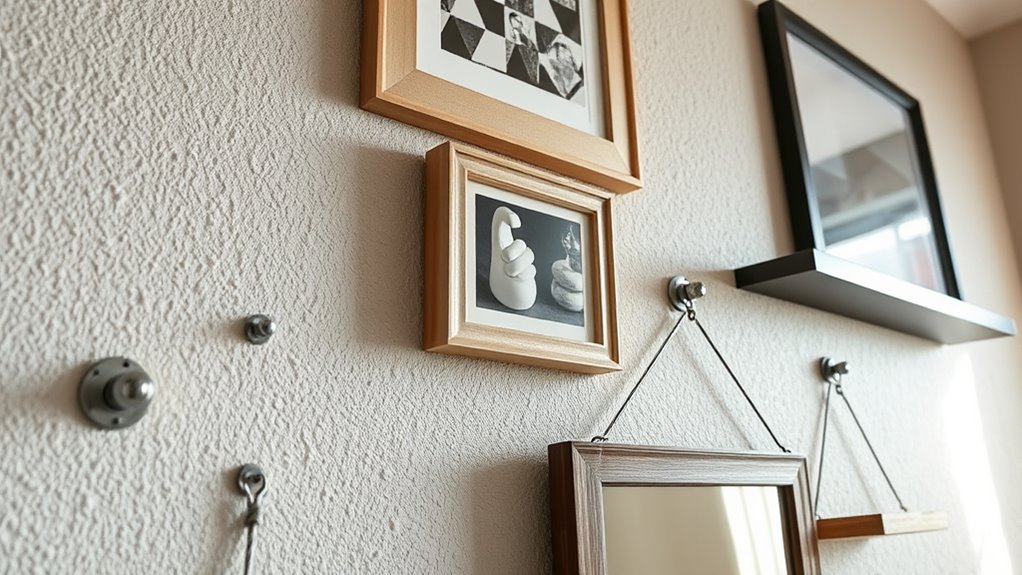
How do you determine the best wall anchor for your project? First, consider the weight of the item you want to hang. Light objects like small pictures or decor can usually be secured with plastic ribbed anchors, which hold up to 10 lbs per pair. For slightly heavier items, threaded plastic or metal anchors are suitable, supporting between 25 and 150 lbs depending on size and wall type. Medium to heavy-duty items like shelves or mirrors often require molly bolts or toggle bolts, which can handle 50 to over 100 lbs. Also, think about the wall material; some anchors perform better in drywall, while others are designed for masonry or metal studs. Matching the anchor type with your item’s weight and the wall’s composition guarantees a secure hold. Understanding the different categories of wall anchors helps ensure you choose the most appropriate type for your specific project. Additionally, considering the installation process can make your project easier and more reliable. Being aware of the wall material compatibility ensures that you select the right anchor for durability and safety. Furthermore, selecting the proper anchoring technique can prevent damage to your wall and improve overall safety.
Understanding Wall Types and Compatibility of Anchors
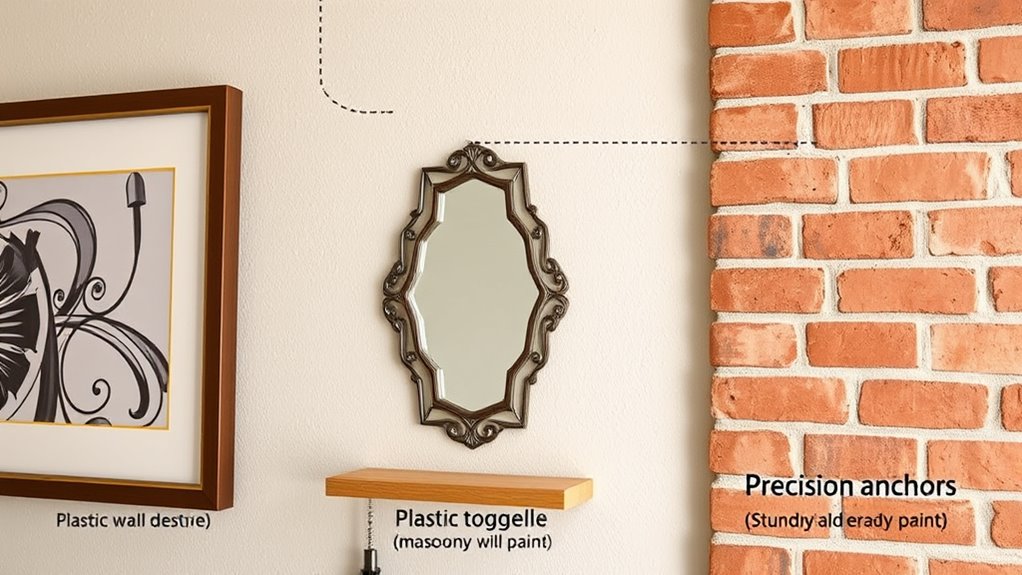
Choosing the right wall anchor depends on understanding the type of wall you’re working with, as each material has unique requirements. Drywall is common and versatile, but its weight capacity varies; lightweight anchors like plastic ribbed ones work well, while toggle bolts can handle heavier loads. For plaster walls, use anchors rated for plaster or masonry, since plaster is brittle. Masonry walls need anchors designed for concrete or brick—standard drywall anchors won’t do. Metal studs require specialized anchors like toggle bolts to ensure stability. Lath and plaster walls are delicate; avoid plastic anchors, opting instead for molly bolts or toggle bolts. It’s also important to consider the weight capacity of each anchor type to prevent overloading and potential failure. Matching your anchor type to the wall material guarantees a secure hold and prevents damage or failure when hanging heavy objects. Additionally, understanding the wall material can help you select the most suitable anchor and ensure a safe, long-lasting installation. Recognizing wall strength and density can further influence your choice of anchor type and installation method for optimal safety. Being aware of the installation technique is also crucial for ensuring the anchor performs correctly and maintains a secure hold over time. Properly assessing the wall condition can help prevent damage and ensure the longevity of your hanging solutions.
Step-by-Step Guide to Installing Wall Anchors
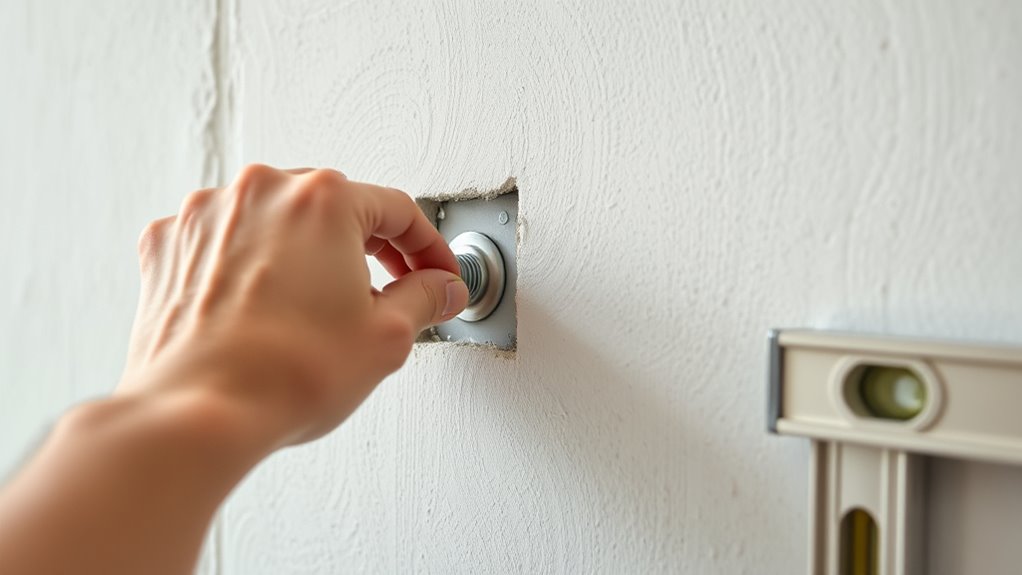
To guarantee a secure and reliable hold when hanging items, follow a clear step-by-step process for installing wall anchors. First, mark where you want the anchor. Drill a pilot hole using the size recommended on the packaging. Insert the anchor into the hole, tapping gently if needed. Next, expand or secure the anchor by turning the screw or pulling the toggle. Finally, mount your item by screwing into the anchor. To make it easier, check the table below for quick reference: Additionally, always consider the wave and wind conditions that might affect the stability of your hanging items in outdoor settings.
Common Mistakes to Avoid When Using Wall Anchors

Using wall anchors correctly is essential to guarantee your items stay securely mounted, but many people make avoidable mistakes that compromise their effectiveness. One common error is choosing the wrong anchor type for your wall material or weight. Using a small plastic anchor for a heavy mirror, for example, will likely cause failure. Drilling a pilot hole that’s too large weakens the anchor’s grip. Not driving the anchor flush with the wall surface can reduce holding strength and cause instability. Overtightening screws can strip the anchor or damage the wall. Ignoring manufacturer weight ratings or installation instructions increases the risk of failure. Always double-check your anchor’s specifications and ensure proper installation techniques. Proper wall anchor selection is crucial for heavy items to prevent damage and accidents. Additionally, using the correct tools and following the manufacturer’s installation guidelines can greatly improve the durability of your wall mount. Being aware of wall material compatibility can help you choose the most effective anchors for your specific wall type. Understanding anchor types and their appropriate applications ensures a more secure hold. Remember that excessive weight beyond the anchor’s capacity can still cause failure despite correct installation, so always stay within recommended limits. Avoid these mistakes, and your wall mounts will hold securely and safely over time.
Expert Tips for Ensuring Secure and Safe Mounting
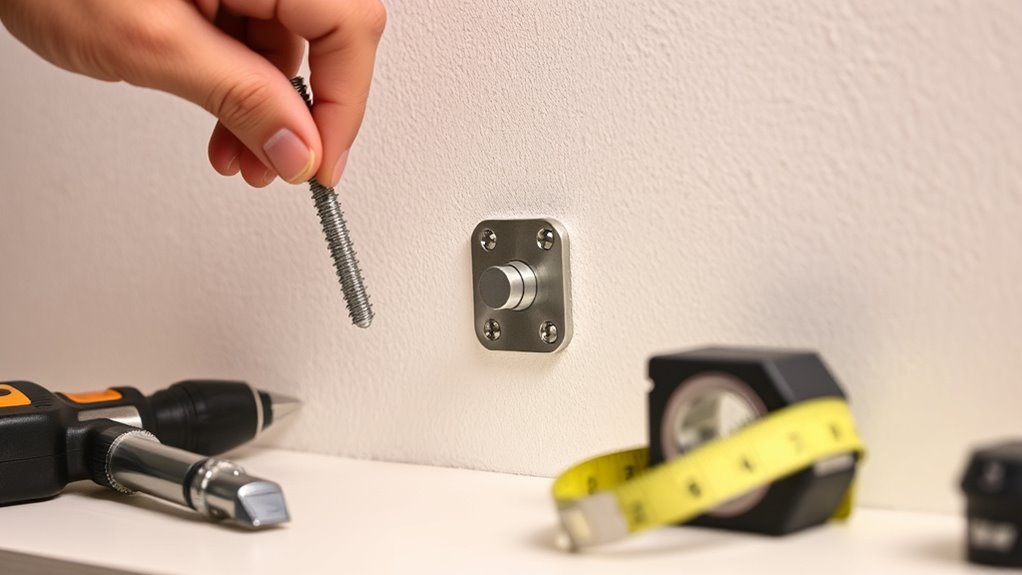
To guarantee your wall mount stays secure, you need to choose the right anchor for your wall type and item weight. Proper installation techniques, like drilling the correct pilot hole and tightening the screw just enough, are essential for safety. Always test the anchor’s strength before hanging heavy objects to prevent accidents and damage. Additionally, considering projector placement and ensuring proper weight distribution can help maintain a safe and stable setup. Using high-quality wall anchors can significantly improve the holding power and durability of your mount. For added security, selecting vetted wall anchors designed for your specific wall material can further enhance stability and peace of mind. Understanding hydraulics and proper load distribution can also help prevent stress on the anchors over time, especially when considering how aviation regulations influence safety standards and best practices.
Choose the Correct Anchor
Choosing the right wall anchor is essential for making certain your items stay secure without damaging your wall. Start by considering the weight of your item and the wall material. For lightweight objects like small pictures, plastic ribbed anchors work well. If you’re hanging heavier shelves or mirrors, threaded or molly bolts provide better support. For very heavy loads, toggle bolts are your best choice due to their high weight capacity. Always check the manufacturer’s weight ratings and match the anchor type to your wall type—drywall, plaster, or masonry. Using the correct anchor guarantees maximum holding power and prevents wall damage. Take time to select the proper anchor, as it’s the foundation for a secure, safe mount that lasts.
Proper Installation Techniques
Proper installation is key to guaranteeing your wall anchors hold securely and your items stay safe. First, always follow the manufacturer’s instructions, including recommended drill bit size and installation steps. Mark your spot precisely, then drill a clean, straight pilot hole. Use masking tape on the drill bit to prevent over-drilling and to set the correct depth. Gently tap the anchor into the hole until it’s flush with the wall surface. For toggle bolts, ensure the toggle fully expands behind the wall before tightening. Avoid overtightening screws, which can strip the anchor or damage the wall. Test the anchor’s grip by pulling gently before hanging heavy objects. Taking your time and following these steps ensures a secure, safe mount that will hold over time.
Test Before Heavy Use
Before hanging heavy items, it’s important to test the stability of your wall anchors. Gently pull on the mounted item or the screw to confirm it doesn’t shift or loosen. If the anchor moves or feels loose, stop and tighten or replace it before adding more weight. Use a level to check that the item hangs straight, verifying the anchor’s proper placement. For toggle bolts and molly bolts, give a firm tug to ascertain they’re fully expanded and secure behind the wall. Avoid applying full weight immediately; instead, gradually add load and observe the anchor’s response. Regularly check the mounting over time, especially if the item is heavy or in a high-traffic area. Proper testing helps prevent accidents and guarantees your items stay safely mounted.
Troubleshooting and Adjusting Your Wall Anchor Setup
If your wall anchor isn’t holding as expected, it’s important to identify and fix common issues rather than just re-drilling blindly. First, check if the anchor is the right type for your wall and weight. Loose or slipping anchors often mean over-tightening or improper installation. Ensure the anchor is flush with the wall surface. If it’s loose, consider replacing it with a stronger one, like a toggle bolt or molly bolt. Also, verify the pilot hole size matches the anchor’s specifications. If needed, remove the anchor, drill a slightly larger hole, and reinstall. Use this quick guide to troubleshoot common problems:
| Issue | Solution | Prevention |
|---|---|---|
| Anchor slipping | Use a stronger anchor or larger size | Choose the correct anchor type |
| Anchor not flush | Tap it in gently with a hammer | Check installation steps |
| Over-tightening | Loosen slightly, don’t force | Follow manufacturer’s guidelines |
| Wall damage or cracking | Switch to an appropriate wall type or anchor | Use proper wall material |
| Anchor pulling out | Replace with a more secure anchor like toggle bolt | Use correct weight-rated anchor |
Frequently Asked Questions
Can I Reuse Wall Anchors After Removing Them?
You can often reuse wall anchors after removing them, but it depends on the type. Plastic ribbed anchors usually aren’t reusable because they crumple or lose grip. Metal anchors like molly bolts and toggle bolts can sometimes be reused if they’re undamaged and the wall material is still intact. Always inspect the anchor for cracks or deformation before reusing, and confirm the new load matches the anchor’s weight capacity.
How Do I Remove Wall Anchors Without Damaging the Wall?
To remove wall anchors without damaging the wall, start by unscrewing the screw or bolt completely. For plastic anchors, gently wiggle or pry them out with a flat tool like a putty knife. If they’re stuck, apply a bit of heat with a hairdryer to loosen the adhesive or material. Be careful and work slowly to avoid gouging or chipping the wall surface. Fill any holes with spackle afterward.
What Weight Can a Single Drywall Anchor Support?
A single drywall anchor can typically support between 10 to 50 pounds, depending on the type. Plastic ribbed anchors hold about 10 pounds, while threaded metal anchors can carry up to 150 pounds if properly installed. For lightweight items like small pictures or decor, plastic anchors work well. Always check the manufacturer’s weight rating, and avoid exceeding the recommended limit to prevent damage or failure.
Are There Special Anchors for Outdoor or Humid Environments?
Did you know that moisture can weaken standard wall anchors by up to 50%? For outdoor or humid environments, you should use special corrosion-resistant anchors like plastic or nylon anchors designed for weather resistance. These are ideal for preventing rust and ensuring stability. Toggle bolts with stainless steel components also work well for heavy-duty outdoor applications. Always select anchors rated for exposure to moisture to keep your hanging items safe over time.
How Do I Know if My Wall Can Support Heavy Anchors?
You can determine if your wall supports heavy anchors by first identifying the wall type. Drywall, plaster, masonry, or metal studs each have different weight capacities. For drywall, check if it’s thick enough and locate studs for added support. If unsure, consult a professional or test the wall’s strength by gently applying pressure. Avoid heavy anchors on weak or brittle walls to prevent damage or failure.
Conclusion
Now that you know how to choose, install, and troubleshoot wall anchors, you’re ready to hang heavy things with confidence. Select the right anchor, follow each step carefully, and avoid common mistakes to guarantee safety and stability. Practice patience, double-check your work, and don’t rush the process. With the right tools and techniques, you’ll enjoy secure, reliable mounts that hold firm and keep your space safe—every time.