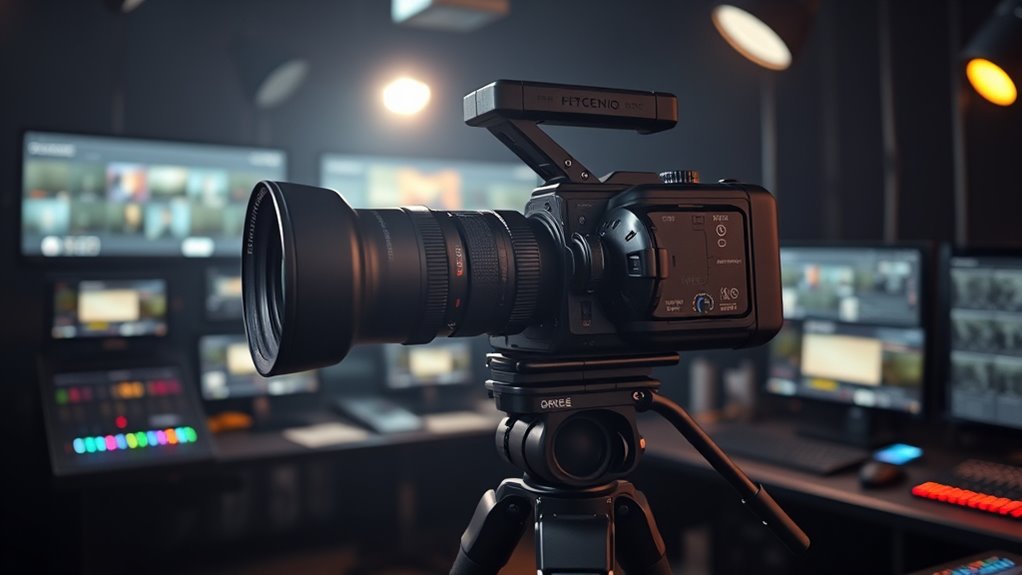

Choosing the right cinema camera can make or break a film project. The best models offer exceptional image quality, versatile features, and reliable performance, but often come with high costs and complex controls. The Blackmagic Design Pocket Cinema Camera 4K stands out for its affordability and cinematic image, while the Sony FX3 is praised for its full-frame sensor and compact design. The main challenge for buyers is balancing budget, ease of use, and technical capabilities. Continue reading for a detailed breakdown of the top cinema cameras in 2026, tailored to different filmmaking needs.

Get everyday essentials delivered free with Prime
- Fast, free delivery on millions of items
- Prime Video, Amazon Music and more included
- Member-only deals all year
Key Takeaways
- The top-ranked models emphasize a balance of image quality and usability for professional filmmaking.
- Full-frame sensors are favored for cinematic depth but often increase cost and complexity.
- Budget-conscious options like the Blackmagic Pocket Cinema Camera 4K still deliver impressive cinematic results.
- Compact, lightweight designs like the Sony FX3 appeal to filmmakers needing mobility.
- Choosing the right camera depends heavily on your specific production needs, from high-end features to affordability.
| Blackmagic Design Pocket Cinema Camera 4K |  | Best Overall for Versatile Cinema-Quality Handheld Filmmaking | Sensor: 4/3” CMOS | Resolution: 4096 x 2160 | Dynamic Range: 13 stops | VIEW ON AMAZON | See Our Full Breakdown |
| Sony FX30 Super 35 Camera (Renewed) |  | Best for Cinematic Control and Flexibility with an APS-C Sensor | Sensor: 20.1 MP Exmor R APS-C | Format: Super 35mm | Dynamic Range: 14+ stops | VIEW ON AMAZON | See Our Full Breakdown |
| Sony FX30 Cinema Line Super 35 Camera |  | Best for Advanced Cinematic Shooting with User Grading Support | Sensor: 20.1 MP Exmor R APS-C | Format: Super 35mm | Dynamic Range: Wide | VIEW ON AMAZON | See Our Full Breakdown |
| Canon EOS C80 6K Full-Frame Cinema Camera – Black |  | Best for High-Resolution Cinematics with Professional Autofocus | Sensor Type: CMOS | Sensor Resolution: 26.67 MP | Sensor Size: Full Frame (35mm) | VIEW ON AMAZON | See Our Full Breakdown |
| Nikon RED Z Cinema Camera with 24-50mm Zoom Lens |  | Best for High-Resolution Versatility with Extensive Dynamic Range | Sensor: 6K full-frame | Dynamic Range: 15+ stops | Color Science: REDCOLOR | VIEW ON AMAZON | See Our Full Breakdown |
| Canon EOS C50 Body |  | Best for High-Resolution Cinematic Flexibility | Sensor: 7K full-frame CMOS | Recording Modes: 4K 120P, RAW, 2K crop | Frame Rate: up to 120P | VIEW ON AMAZON | See Our Full Breakdown |
| Blackmagic Design Pocket Cinema Camera 4K Power Bundle |  | Best for Budget-Friendly 4K Cinematics with Extensive Accessories | Sensor: 4/3” image sensor | Resolution: 4096 x 2160 | Dynamic Range: 13 stops | VIEW ON AMAZON | See Our Full Breakdown |
| Nikon RED Z Cinema | ZR Cinema Camera | 6K Full-Frame Camera Body with 4″ DCI-P3 Monitor |  | Best for Portable 6K RAW Cinematics in a Compact Frame | Sensor Type: CMOS | Sensor Size: Full Frame (35mm) | Maximum Resolution: 24.5 MP | VIEW ON AMAZON | See Our Full Breakdown |
| Sony Alpha FX3 ILME-FX3A Full-Frame Cinema Line Camera |  | Best for Versatile 4K Cinematics in a Compact Design | Sensor: Full-Frame 4K | Max Video Resolution: 4K 120p | Color Profile: S-Cinetone | VIEW ON AMAZON | See Our Full Breakdown |
| Sony FX2 Full-Frame Cinema Camera Body Only, Gray |  | Best for High-Resolution Flexibility and Professional Use | Sensor Type: CMOS | Sensor Resolution: 33 MP | Maximum Aperture: 1.8 | VIEW ON AMAZON | See Our Full Breakdown |
| Sony ILME-FX6 Cinema Line Full-Frame Camera with SEL24105G |  | Best Overall Cinematic Power for Professional Filmmaking | Sensor Type: CMOS | Sensor Size: Full Frame (35mm) | Resolution: 10.2 MP | VIEW ON AMAZON | See Our Full Breakdown |
| Sony Alpha FX3 ILME-FX3 Full-frame Cinema Line Camera |  | Best Compact Choice for Solo Filmmakers and Run-and-Gun Shooters | Sensor Type: CMOS | Sensor Size: Full Frame (35mm) | Maximum Resolution: 10.2 MP | VIEW ON AMAZON | See Our Full Breakdown |
| cinema camera | Sensor | Dynamic Range |
|---|---|---|
| Blackmagic Design Pocket Cinem | 4/3” CMOS | 13 stops |
| Sony FX30 Super 35 Camera | 20.1 MP Exmor R APS-C | 14+ stops |
| Sony FX30 Cinema Line Super 35 | 20.1 MP Exmor R APS-C | Wide |
| Canon EOS C80 6K Full-Frame Ci | — | — |
| Nikon RED Z Cinema Camera with | 6K full-frame | 15+ stops |
| Canon EOS C50 Body | 7K full-frame CMOS | — |
| Blackmagic Design Pocket Cinem | 4/3” image sensor | 13 stops |
| Nikon RED Z Cinema | ZR Cinema | — | — |
| Sony Alpha FX3 ILME-FX3A Full- | Full-Frame 4K | 15+ stops |
| Sony FX2 Full-Frame Cinema Cam | — | — |
| Sony ILME-FX6 Cinema Line Full | — | — |
| Sony Alpha FX3 ILME-FX3 Full-f | — | — |
More Details on Our Top Picks
Blackmagic Design Pocket Cinema Camera 4K
This camera stands out for delivering professional 4K footage in a compact, lightweight package, making it ideal for handheld filmmakers seeking cinematic quality without the bulk of larger rigs. Its 4/3″ sensor offers excellent dynamic range, comparable to higher-end cinema cameras like the Nikon RED Z but at a fraction of the cost and size. The inclusion of DaVinci Resolve Studio simplifies post-production, adding value for editing workflows. However, its limited built-in microphones and complex array of ports can be drawbacks for those who want a plug-and-play setup. Compared to the Sony FX30, it lacks advanced internal recording features but compensates with a more straightforward design and better compatibility with a wide range of lenses, albeit with adapters required. This pick makes the most sense for indie filmmakers and content creators who need cinematic results in a portable form.
Pros:- High-quality 4K recording with 13 stops of dynamic range
- Supports multiple professional formats like Blackmagic RAW and ProRes
- Lightweight design with a large 5-inch LCD for easy monitoring
- Includes DaVinci Resolve Studio for seamless editing
Cons:- Adapters needed for different lens mounts, increasing complexity
- Limited built-in microphone options reduce onboard audio quality
- Connection ports may overwhelm new users
Best for: Indie filmmakers and content creators who prioritize mobility and professional image quality
Not ideal for: Large production crews or those requiring extensive built-in audio and accessory options
- Sensor:4/3” CMOS
- Resolution:4096 x 2160
- Dynamic Range:13 stops
- Native ISO:up to 25,600
- Recording Formats:Apple ProRes, Blackmagic RAW
- Display:5-inch LCD
- Lens Mount:Micro Four Thirds (MFT)
- Power Supply:30W with international adapters
- Included Software:DaVinci Resolve Studio
Our verdict“This camera is perfect for filmmakers needing cinematic quality in a portable, versatile package.”
Sony FX30 Super 35 Camera (Renewed)
The Sony FX30 excels at delivering cinematic visuals thanks to its 20.1 MP APS-C sensor and Cine S-Cinetone profile, making it a strong choice for serious filmmakers aiming for rich, film-like images. Its flexible ISO and Cine EI modes grant advanced control over exposure and grading, comparable to the Nikon RED Z in image quality but at a more accessible price point. However, being a renewed product, it may lack warranty security, and its weight of 2.7 pounds could challenge handheld comfort over long shoots. The complex feature set, while powerful, can be overwhelming for beginners, and it lacks built-in stabilization, which might require additional gear. Compared with the Sony FX30 Cinema Line, this model offers similar cinematic capabilities but with potentially less support for professional workflows. It’s best suited for experienced shooters who want cinematic control in a compact form.
Pros:- Cinematic S-Cinetone color profile for rich visuals
- Flexible ISO and Cine EI modes for creative control
- Supports user LUTs for custom grading workflows
- Wide dynamic range with 14+ stops
Cons:- Renewed status may limit warranty support
- Relatively heavy for handheld shooting at 2.7 pounds
- Features require advanced knowledge to operate effectively
Best for: Professional filmmakers and videographers with experience seeking cinematic flexibility
Not ideal for: Beginners or those needing simple, out-of-the-box operation
- Sensor:20.1 MP Exmor R APS-C
- Format:Super 35mm
- Dynamic Range:14+ stops
- Color Profile:S-Cinetone
- ISO:Flexible ISO, Cine EI, Dual Base ISO
- Stops Range:14+ stops
Our verdict“This camera suits experienced filmmakers who need cinematic versatility and control in a portable package.”
Sony FX30 Cinema Line Super 35 Camera
The Sony FX30 Cinema Line is designed for filmmakers who want to push cinematic boundaries, offering a 20.1 MP APS-C sensor with wide dynamic range and S-Cinetone, similar to the Nikon RED Z but in a more user-friendly package. Its flexible ISO, Cine EI modes, and support for user LUTs give shooters extensive control over their image, ideal for color grading workflows. Its wide stops range provides high-quality footage even in challenging lighting. However, it’s less approachable for beginners due to complex controls, and the absence of built-in stabilization can be a challenge for handheld use. Compared with the FX30 (Renewed), it offers similar features but may include improvements or updates. This camera is well-suited for professional shooters ready to handle more advanced features for cinematic storytelling.
Pros:- Cinematic S-Cinetone profile for vivid visuals
- Cine EI modes and flexible ISO for creative control
- Supports user LUTs for grading and monitoring
- Wide dynamic range for high-detail footage
Cons:- Complex operation not suited for beginners
- No built-in stabilization, requiring additional gear
- Potentially high cost for advanced features
Best for: Experienced filmmakers seeking maximum cinematic control and customization
Not ideal for: Novice users or casual videographers who prefer simple, auto settings
- Sensor:20.1 MP Exmor R APS-C
- Format:Super 35mm
- Dynamic Range:Wide
- Color Profile:S-Cinetone
- ISO:Flexible ISO, Cine EI, Dual Base ISO
- Stops Range:14+ stops
Our verdict“This camera is best for experienced cinematographers demanding granular control over their cinematic images.”
Canon EOS C80 6K Full-Frame Cinema Camera – Black
The Canon EOS C80 offers a compelling blend of high-resolution 6K RAW Light recording and advanced autofocus, making it a standout for filmmakers who need detailed, high-quality images with reliable focus tracking. Its 26.67 MP full-frame sensor produces rich, cinematic visuals, comparable to the Nikon RED Z in resolution but with easier operation. The C80’s versatile connectivity options support professional workflows, and its compact, lightweight design enhances mobility. Still, at 6.5 pounds, it’s somewhat heavy for long handheld sessions. Its complex features and lack of a built-in flash make it less suited for casual users or quick runs. Compared to the Nikon RED Z, it offers a more user-friendly experience with professional-grade autofocus. It’s ideal for professional crews that need high-res imagery and dependable autofocus in a portable form.
Pros:- High-resolution 6K RAW Light recording for detailed footage
- Advanced Dual Pixel CMOS AF II for accurate autofocus
- Versatile connectivity including Wi-Fi and Ethernet
- Compact and lightweight for a professional-grade camera
Cons:- Relatively heavy at 6.5 pounds for handheld use
- No built-in flash, limiting quick setup options
- Complex features may be overkill for casual shooters
Best for: Professional filmmakers and videographers requiring high-res, high-precision autofocus
Not ideal for: Amateur videographers or those needing a lightweight, simple camera
- Sensor Type:CMOS
- Sensor Resolution:26.67 MP
- Sensor Size:Full Frame (35mm)
- Maximum Shutter Speed:1/8000 seconds
- ISO Range:500-12800
- Video Resolution:6000×3164
- Connectivity:USB, Wi-Fi, Ethernet, SDI, HDMI
- Weight:6.5 pounds
Our verdict“This camera suits professionals who need high-res, reliable autofocus in a portable package for cinematic productions.”
Nikon RED Z Cinema Camera with 24-50mm Zoom Lens
The Nikon RED Z combines a 6K full-frame sensor with REDCOLOR science to produce stunning cinematic footage, making it a strong contender for feature filmmakers. Its 15+ stops of dynamic range rival higher-end cinema options like the Canon EOS C80, but with a more comprehensive color science that appeals to colorists. The included 24-50mm zoom lens adds convenience for versatile shots, and the 4-inch DCI-P3 touchscreen enables intuitive control. Its lightweight at just over 1 pound, it is highly portable and easy to rig. However, its complexity demands advanced operational knowledge, and battery life details remain limited, which could impact shooting schedules. Compared to the Sony FX30, it offers higher resolution and broader dynamic range at a higher price point, making it suitable for professional productions demanding maximum image quality.
Pros:- 6K full-frame sensor with 15+ stops of dynamic range
- Includes 24-50mm zoom lens for versatile framing
- Large, swiveling DCI-P3 touchscreen for monitoring
- Lightweight and rig-friendly for mobility
Cons:- Complex features require advanced operational skills
- Limited info on battery life for extended shoots
- Higher cost may be prohibitive for amateurs
Best for: Experienced cinematographers and feature filmmakers needing high resolution and dynamic range
Not ideal for: Beginners or casual videographers who prefer simple, user-friendly cameras
- Sensor:6K full-frame
- Dynamic Range:15+ stops
- Color Science:REDCOLOR
- Monitor:4-inch DCI-P3 touchscreen
- Lens:24-50mm f/4-6.3 zoom
- Weight:1.18 lbs
Our verdict“This camera is tailored for seasoned professionals who need high-resolution, cinematic-grade footage with extensive color and dynamic range.”
Canon EOS C50 Body
The Canon EOS C50 stands out for its advanced 7K full-frame CMOS sensor, which provides filmmakers with exceptional resolution and flexibility. Its support for 4K 120P high frame rate and internal RAW recording makes it suitable for capturing cinematic sequences with rich detail and slow-motion effects. Compared to the Sony FX3, which offers comparable cinematic features, the C50’s higher resolution sensor may be more appealing for projects demanding large-format quality. However, the C50’s detailed specs are less extensive, and its high-end features come with a steep price tag. It’s best suited for professionals who prioritize resolution and versatile recording modes over lightweight portability or simplified workflows.
Pros:- High-resolution 7K full-frame sensor for detailed images
- Supports high frame rate recording up to 120P for cinematic slow-motion
- Versatile recording modes, including RAW for post-production flexibility
Cons:- Limited detailed specifications may hinder quick decision-making
- Potentially high cost for advanced features and resolution
Best for: Experienced filmmakers needing high-resolution output and multiple recording options
Not ideal for: Budget-conscious indie filmmakers or those seeking a lightweight, easy-to-use camera
- Sensor:7K full-frame CMOS
- Recording Modes:4K 120P, RAW, 2K crop
- Frame Rate:up to 120P
- Sensor Modes:Full-frame 3:2, Dual Base ISO
Our verdict“Ideal for professionals demanding maximum resolution and cinematic flexibility despite the higher investment.”
Blackmagic Design Pocket Cinema Camera 4K Power Bundle
The Blackmagic Pocket Cinema Camera 4K Power Bundle offers impressive 4K image quality with 13 stops of dynamic range, making it a compelling choice for filmmakers on a budget. Its lightweight design and bright 5” LCD facilitate handheld shooting, while the included extras—batteries, charger, microfiber cloth—enhance usability for extended shoots. Compared to the Nikon RED Z Cinema, which captures 6K RAW footage, the BMPCC 4K’s lower resolution still provides cinematic quality suitable for most storytelling needs. However, it requires an external microphone for professional audio, and there’s a learning curve for those new to professional cinema cameras. This makes it ideal for indie filmmakers or content creators seeking quality without extensive investment.
Pros:- High-quality 4K capture with 13 stops of dynamic range
- Lightweight, portable, and user-friendly design
- Includes essential accessories like extra batteries and a dual charger
Cons:- Requires external microphone for optimal audio recording
- Steep learning curve for users unfamiliar with professional cameras
Best for: Indie filmmakers, content creators, and students seeking affordable cinema-grade 4K footage
Not ideal for: Pro shooters needing integrated audio solutions or higher resolution workflows
- Sensor:4/3” image sensor
- Resolution:4096 x 2160
- Dynamic Range:13 stops
- Display:5-inch LCD
Our verdict“Great for cost-conscious filmmakers who want professional 4K cinema images with a comprehensive accessory bundle.”
Nikon RED Z Cinema | ZR Cinema Camera | 6K Full-Frame Camera Body with 4″ DCI-P3 Monitor
The Nikon RED Z Cinema combines REDCODE RAW recording with a compact, lightweight design, making it ideal for on-the-go professional filmmaking. Its 6K RAW footage offers stunning detail, comparable to the Sony FX3, but in a package weighing just over a pound. Its 4-inch DCI-P3 touchscreen provides flexible framing, although it lacks a built-in viewfinder, which might be a drawback for some shooters. While its high price aligns with professional standards, the Z Cinema’s portability and RAW capabilities make it particularly suited for documentary or location work where mobility is key.
Pros:- Captures 6K RAW footage with high dynamic range
- Extremely lightweight and portable
- Large swiveling touchscreen for flexible framing
Cons:- No built-in viewfinder or flash
- High cost may be prohibitive for amateurs
Best for: Professionals needing a portable, high-quality 6K cinema camera for location shoots
Not ideal for: Amateurs or hobbyists who require built-in viewfinders or simplified controls
- Sensor Type:CMOS
- Sensor Size:Full Frame (35mm)
- Maximum Resolution:24.5 MP
- Video Resolution:6K
Our verdict“Best suited for professionals prioritizing mobility and high-resolution RAW recording in a compact form factor.”
Sony Alpha FX3 ILME-FX3A Full-Frame Cinema Line Camera
The Sony Alpha FX3 excels in delivering high-quality 4K video with over 15 stops of dynamic range, making it an excellent choice for cinematic storytelling. Its support for 4K 120p at 10-bit 4:2:2 offers flexibility for slow-motion and grading. Compared to the Sony FX2, which is more expandable and robust, the FX3’s compact, cage-free design prioritizes mobility and ease of use, ideal for solo shooters. It has in-body cooling, allowing extended recording, but its limited stabilization features could pose challenges for handheld work. It’s perfect for creators who need cinematic quality in a portable, easy-to-handle package.
Pros:- Exceptional 4K video with high dynamic range
- Supports high frame rates up to 120p
- Compact design with effective in-body cooling
Cons:- Limited built-in stabilization features
- May be costly for casual or hobbyist users
Best for: Filmmakers and content creators seeking a versatile, high-quality cinema camera for handheld or run-and-gun shooting
Not ideal for: Pro cinematographers requiring extensive built-in stabilization or heavy-duty rigging
- Sensor:Full-Frame 4K
- Max Video Resolution:4K 120p
- Color Profile:S-Cinetone
- Dynamic Range:15+ stops
Our verdict“A superb choice for versatile filmmakers needing cinematic quality in a small, portable body.”
Sony FX2 Full-Frame Cinema Camera Body Only, Gray
The Sony FX2 offers a 33MP full-frame CMOS sensor and a BIONZ XR processor, delivering high dynamic range and sharp, detailed images suitable for cinematic productions. Its flexible shooting modes, including Log and Cine EI, mirror the needs of professional filmmakers seeking maximum post-production control. Its lightweight, 1.3-pound body makes it ideal for solo operators, and the full-frame sensor ensures high-quality visuals. Compared with the Sony FX3, the FX2’s higher resolution sensor provides more detail, but it might lack some of the built-in features like cooling and stabilization. It’s best for experienced professionals who prioritize resolution and versatility in a compact form.
Pros:- High-resolution 33MP full-frame sensor for detailed images
- Flexible shooting modes, including Log and Cine EI
- Lightweight and compact for solo shooting
Cons:- Limited info on battery life and storage options
- High price may be a barrier for some users
Best for: Professional filmmakers requiring high-resolution images and flexible shooting modes
Not ideal for: Casual shooters or beginners who need simple, all-in-one solutions
- Sensor Type:CMOS
- Sensor Resolution:33 MP
- Maximum Aperture:1.8
- Video Resolution:4K UHD
Our verdict“Designed for professionals demanding high-resolution cinematic images in a portable, adaptable camera body.”
Sony ILME-FX6 Cinema Line Full-Frame Camera with SEL24105G
The Sony ILME-FX6 stands out for delivering exceptional 4K video at up to 120p, making it ideal for high-end cinematic productions. Its full-frame CMOS sensor offers superior image quality and low-light sensitivity, with ISO 409,600 enabling shooting in challenging lighting conditions—something the FX3 cannot match in terms of raw sensitivity. The inclusion of a built-in variable ND filter provides versatile exposure control, essential for cinematic lighting setups. While the FX6’s weight at 2 pounds and complex features may pose a learning curve for newcomers, it compensates with advanced autofocus, including Eye-AF, and robust connectivity options. Compared to the FX3, the FX6 is better suited to professional environments where control and image quality are paramount, but it comes at a higher price and greater size, which could limit handheld use.
Pros:- Exceptional 4K recording at 120p for cinematic slow-motion footage
- Outstanding low-light performance with ISO 409,600
- Advanced autofocus with Eye-AF for precise focus tracking
- Built-in variable ND filter for versatile exposure management
Cons:- Heavier weight at 2 pounds can reduce handheld comfort
- Steep learning curve for users unfamiliar with professional cinema features
Best for: professional filmmakers requiring high sensitivity, dynamic range, and cinematic flexibility in demanding environments
Not ideal for: solo videographers or those seeking a lightweight, budget-friendly camera due to its weight and complexity
- Sensor Type:CMOS
- Sensor Size:Full Frame (35mm)
- Resolution:10.2 MP
- Video Recording:4K at 120p, DCI 4K up to 60p, FHD 240p
- ISO Range:Up to 409,600
- ND Filter:Electronically controlled optical variable ND (1/4 to 1/128)
Our verdict“This camera is best suited for seasoned professionals demanding top-tier image quality and control in cinematic productions.”
Sony Alpha FX3 ILME-FX3 Full-frame Cinema Line Camera
The Sony Alpha FX3 excels as a portable, full-frame cinema camera tailored for solo creators and videographers on the move. Its compact design at approximately 1.5 kg makes it significantly lighter than the FX6, making handheld shooting and quick setups easier. The FX3 offers 4K 120p recording with 10-bit 4:2:2 color, rivaling the FX6’s cinematic capabilities but in a smaller form factor. Its in-body stabilization (sensor-shift) helps achieve steady footage without extra gear, which is a key advantage over bulkier options like the FX6. However, its feature set is more oriented toward individual shooters and may lack some of the extensive controls professionals prefer in multi-operator setups. While the FX3’s price is steep, it provides a balanced mix of high-end features and portability, ideal for versatile on-the-go filmmaking.
Pros:- Lightweight and portable at 1.5 kg, ideal for handheld and run-and-gun shooting
- High-quality 4K 120p with 10-bit color for cinematic look
- In-body image stabilization for steady footage without gimbals
- Professional features like XLR inputs and high ISO range
Cons:- Limited to professional users due to advanced features and cost
- No built-in flash or extensive multi-operator controls
- Higher price point may be prohibitive for casual or hobbyist filmmakers
Best for: solo filmmakers, documentary shooters, and content creators needing a lightweight, professional-grade cinema camera
Not ideal for: large production crews or those requiring extensive input/output options, as it lacks some professional connectivity features found in larger models
- Sensor Type:CMOS
- Sensor Size:Full Frame (35mm)
- Maximum Resolution:10.2 MP
- Maximum Shutter Speed:1/8000 seconds
- ISO Range:80-409,600
- Image Stabilization:Sensor-shift
- Video Resolution:4K at 120p
Our verdict“This camera offers a compelling balance of cinematic quality and portability, perfect for solo creators demanding mobility and professional features.”
How We Picked
This roundup is based on a comprehensive evaluation of each cinema camera’s performance, build quality, and usability. We prioritized image quality, sensor size, lens compatibility, and recording options, alongside ease of operation and durability. Cost-to-performance ratio was also a key factor, ensuring options for different budgets. Products were ranked by how well they serve professional filmmakers, content creators, and independent producers, emphasizing cinematic capabilities and value. Our selections reflect models that balance technical features with practical usability for various production environments.Factors to Consider When Choosing Cinema Cameras
When selecting a cinema camera, understanding your specific production needs is essential. Beyond raw specs, consider how the camera’s features align with your filmmaking style, budget, and workflow. The right choice balances image quality, ease of use, and future-proofing, helping you avoid costly mistakes and upgrades down the line.Sensor Size and Image Quality
The sensor size directly impacts the depth of field, low-light performance, and overall cinematic look. Full-frame sensors typically produce richer images with better background separation but come at higher costs and require compatible lenses. Super 35 sensors offer a good balance for many filmmakers, providing cinematic depth without the premium price of full-frame models. Consider your typical shooting scenarios and lens compatibility when evaluating sensor options.
Recording Formats and Resolution
High-resolution recording, such as 6K or higher, provides more flexibility in post-production and cropping. However, higher resolutions demand more powerful hardware for editing and larger storage solutions. Look for cameras offering RAW or ProRes recording to maximize post-production options. Keep in mind that not all cameras support these formats at high resolutions, so choose one that aligns with your editing workflow and delivery needs.
Ease of Use and Workflow
Cinematic cameras vary greatly in their interface and controls. Some models prioritize professional features with complex menus, suitable for experienced operators, while others aim for simplicity, ideal for solo creators or small teams. Features like touchscreen interfaces, built-in ND filters, and ergonomic design can streamline production. Consider how much time you’ll spend on setup and adjustments versus capturing footage, and select a camera that fits your workflow.
Build Quality and Durability
Filmmaking often involves challenging environments, so a robust build is vital. Metal chassis and weather sealing increase longevity and reliability on location shoots. Lightweight designs improve mobility but might compromise durability. Balance your need for portability with the wear and tear your camera will endure, especially if shooting on location or in unpredictable conditions.
Budget and Future-Proofing
Investing in a cinema camera is a significant decision; higher-end models often include advanced features like higher frame rates, better codecs, and future software updates. While a higher price tag can mean better quality and longevity, it’s important to match your investment with your current needs and growth plans. Sometimes, spending slightly more upfront on a versatile, well-supported model saves money on upgrades later.
Frequently Asked Questions
Do I need a full-frame cinema camera for professional work?
While full-frame cameras offer superior cinematic depth and low-light performance, they are not always necessary for every professional project. Super 35 models can deliver excellent results with a more manageable price and easier lens compatibility. Your choice should depend on your specific aesthetic goals, shooting conditions, and budget. For high-end cinematic productions, full-frame can be advantageous, but for many projects, a Super 35 sensor provides a perfect balance of quality and practicality.
Is 4K recording enough for cinematic filmmaking?
Yes, 4K recording is generally sufficient for most cinematic projects, especially with modern displays and streaming platforms. It provides high resolution for cropping and stabilization, with manageable file sizes. However, if you plan to do extensive post-production work, color grading, or future-proofing, opting for higher resolutions like 6K or 8K can offer additional flexibility. Always consider your editing hardware and storage capacity when choosing resolution levels.
Should I prioritize low-light performance or resolution in my cinema camera?
This depends on your typical shooting environment. If you often film in low-light conditions, prioritizing a camera with a larger sensor and good noise control makes sense. Conversely, if your primary focus is high-resolution images in well-lit settings, resolution might be more important. Many high-end cameras now balance both, but understanding your most common scenarios will guide you toward the best choice.
How important are lens options when choosing a cinema camera?
Lens compatibility and options are critical for achieving the cinematic look you desire. Some cameras have extensive native lens ecosystems, which can save time and money, while others may require adapters, limiting performance. Consider the availability of high-quality cine lenses for your chosen camera, as well as your ability to access fast, wide, and telephoto lenses that suit your shooting style.
Is it better to buy a camera with more features or a simpler model?
It depends on your experience level and project scope. More feature-rich cameras offer greater flexibility and future-proofing but can be overwhelming for beginners. Simpler models may be easier to operate and still produce cinematic results, especially for solo creators or small teams. Evaluate whether you need advanced controls and formats or if a straightforward setup aligns better with your current skills and needs.
Conclusion
For those seeking the best overall cinema camera, the Sony FX3 offers a full-frame sensor with excellent low-light performance and compact design—ideal for professional filmmakers. Budget-conscious creators should consider the Blackmagic Design Pocket Cinema Camera 4K, which provides impressive cinematic quality at a lower price. If you prioritize ease of use and future-proofing, the Sony FX6 stands out for its advanced features and durability. Beginners or solo shooters will find the Canon EOS C50 straightforward and capable, while high-end productions may lean toward the Canon EOS C80 for its 6K capabilities. Ultimately, your choice should align with your project requirements, budget, and experience level.
As an affiliate, we earn on qualifying purchases.Fall Picks
fall essentials