
When tackling different tasks, choosing the right hammer makes all the difference. For driving nails, a claw hammer is your go-to, while framing hammers handle larger nails in construction. For metalwork, use a ball peen or cross peen hammer, and for masonry, brick hammers are best. Heavy-duty jobs like demolition need sledgehammers, and specialized tools improve safety and results. Keep exploring to discover more about each type and perfect your technique.
Key Takeaways
- Select a claw hammer for driving and removing nails in woodworking and household projects.
- Use framing hammers for heavy-duty construction tasks involving large nails and framing.
- Choose brick or masonry hammers for shaping bricks, stones, or concrete surfaces.
- Opt for ball peen or cross peen hammers when shaping, riveting, or forging metalwork.
- Employ sledgehammers and breaker hammers for demolition, heavy striking, or large-scale material breaking.
Overview of General-Purpose Hammers
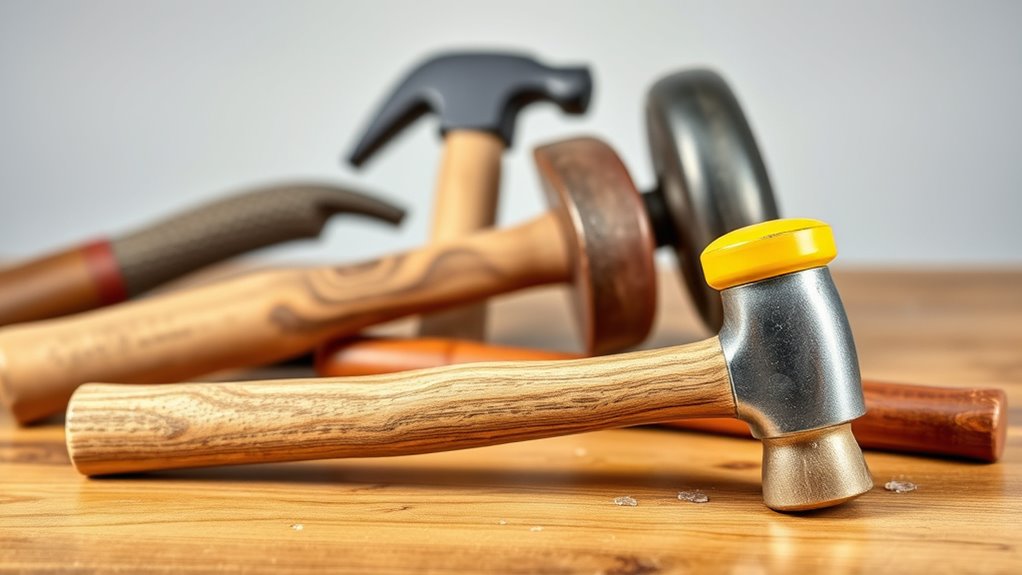
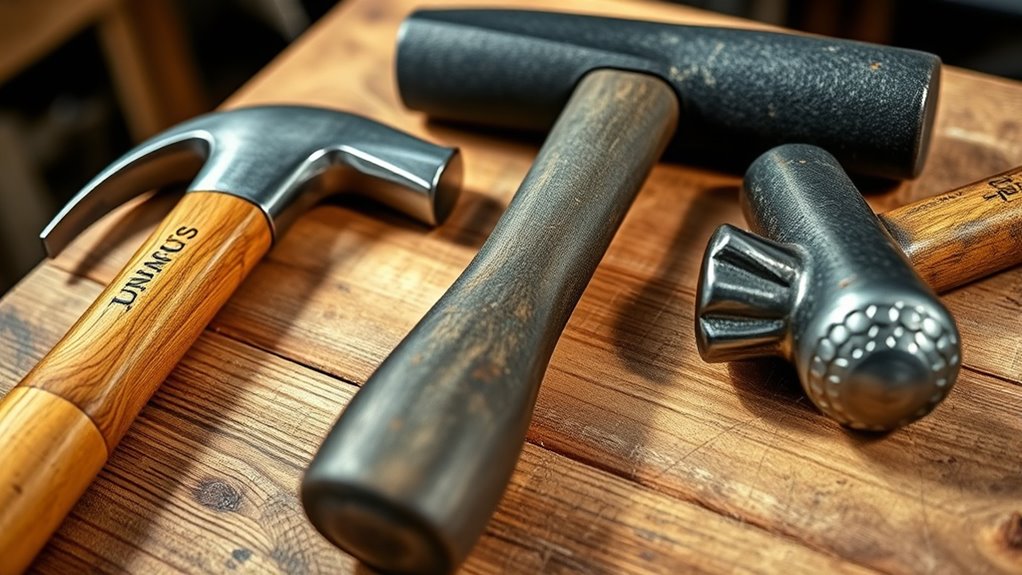
General-purpose hammers are versatile tools essential for a wide range of woodworking, carpentry, and household tasks. They come in various styles, each designed for specific functions. For example, a claw hammer is perfect for driving and pulling nails, making it a must-have for everyday repairs. Framing hammers are heavier and built for driving large nails in construction projects. The ball peen hammer is popular in metalworking, shaping, and riveting. Club hammers are compact and suited for demolition or masonry work. Tack hammers excel at precision tasks like upholstery and fine woodworking. These tools are reliable, easy to handle, and cover most basic hammering needs. Their adaptability makes them a fundamental part of any toolbox, whether you’re fixing furniture, framing a wall, or working on small DIY projects. [Modern hammers also incorporate AI technology] to enhance precision and user safety during use.
Specialized Hammers for Specific Tasks

When you need a tool tailored for specialized tasks, using the right hammer can make all the difference. For shaping bricks or masonry, a brick hammer with a chisel-like edge is essential. Metalworking tasks benefit from a cross peen or ball peen hammer, which shape and rivet metal without marring surfaces. When precision matters, a dead blow hammer minimizes rebound and surface damage, ideal for delicate assembly or adjustments. For assembly work, rubber mallets prevent surface marks while delivering controlled force. In woodworking, a carpenter’s mallet or wooden mallet provides gentle, accurate strikes without damaging the material. Each specialized hammer is designed to optimize performance for specific materials and tasks, helping you work efficiently and achieve professional results. Choose wisely to match your project’s needs. Application techniques are also important to ensure effective use of each hammer type.
Heavy-Duty and Metalworking Hammers

Heavy-duty and metalworking hammers are built to withstand demanding tasks that require maximum force and durability. When tackling heavy demolition, breaking concrete, or shaping metal, you need tools that can handle extreme impact without bending or breaking. Sledgehammers deliver powerful blows for demolition and driving stakes, thanks to their large heads and long handles. Masonry hammers are perfect for chipping away at stone and concrete, combining a chisel edge with a blunt face. Breaker hammers, often pneumatic or electric, are essential for large-scale demolition. Lump hammers strike a balance between power and control, suitable for masonry and light demolition. For metalworking, ball peen and cross peen hammers shape, rivet, and forge metals with precision. Heavy-duty tools are designed to endure the toughest conditions and extend the lifespan of your equipment. Using the correct heavy-duty tool can significantly improve both efficiency and safety on your project. Additionally, selecting tools with the appropriate material resilience ensures they can withstand prolonged use without failure. Proper maintenance and tool durability are crucial to maintaining their performance over time. Regular practice and proper technique can also enhance safety and effectiveness when using these specialized tools.
Frequently Asked Questions
How Do I Choose the Right Hammer Weight for My Project?
You should choose a hammer weight based on your project’s scale and the task’s precision. For light work like finishing or upholstery, go for a lightweight hammer around 8-16 oz. For general carpentry or framing, opt for a heavier one between 16-20 oz or even up to 32 oz. Heavy demolition tasks require a sledgehammer, which can weigh 8-16 lbs. Match the weight to your strength and the delicate or forceful nature of your work.
Can I Use a General-Purpose Hammer for Specialized Tasks?
You can’t expect a general-purpose hammer to be a magic wand for every task. Think of it as a Swiss Army knife—useful, but not perfect for everything. For delicate metal shaping, grab a ball peen; for heavy demolition, reach for a sledgehammer. Specialized hammers are like finely tuned instruments—designed to hit the right note without causing chaos. Using the right tool makes your work smoother, safer, and more satisfying.
What Safety Precautions Should I Take When Using Heavy Hammers?
When using heavy hammers, always wear safety goggles to protect your eyes from flying debris, and gloves to prevent hand injuries. Make certain the workpiece is secure to avoid slips, and check the hammer for cracks or damage before use. Maintain a firm grip, use controlled swings, and keep your body balanced. Clear the area of bystanders, and never overreach or rush, to prevent accidents and injuries.
Are Soft-Faced Hammers Suitable for All Delicate Surfaces?
Soft-faced hammers are great for delicate surfaces because they prevent damage and surface marks. However, they aren’t suitable for all delicate tasks, especially when precision or heavier force is needed. For softer materials, use them carefully and choose the right type of soft-faced hammer, like a rubber mallet, for gentle adjustments. Avoid using them on rigid surfaces or for tasks requiring more impact, as they may not provide enough force.
How Often Should I Maintain or Replace Hammer Heads?
Your hammer heads are the heart of your toolkit, so keep them in top shape. You should inspect them before each use for cracks, chips, or excessive wear. Replace or repair them when they show significant damage—usually every few months with frequent use. Regular maintenance, like cleaning and tightening, extends their life. Think of it as tuning your instrument; a well-maintuned hammer performs better and keeps you safe.
Conclusion
So, now you’re practically a hammer connoisseur—ready to conquer any project, from delicate nails to heavy-duty metalwork. Just remember, with great hammer knowledge comes great responsibility… or at least the chance to show off your shiny new tool. Whether you’re pounding, prying, or just impressing neighbors with your hammer collection, you’re now armed (pun intended) to tackle it all. Happy hammering—because who needs a toolbox when you have the right hammer?