To be prepared in your workshop, make certain you have the right fire extinguishers accessible and regularly maintained. Familiarize yourself with the PASS technique—Pull, Aim, Squeeze, Sweep—and always aim at the fire’s base. Check pressure gauges and inspect for damage monthly, scheduling professional inspections annually. Store extinguishers near hazards and ensure pins are secure. Staying proactive with maintenance and knowledge helps you respond confidently; exploring these tips further keeps you ready for emergencies.
Key Takeaways
- Place fire extinguishers near common fire hazards for quick access during emergencies.
- Regularly inspect extinguishers for pressure, damage, and tamper seals to ensure readiness.
- Familiarize yourself with the PASS technique—Pull, Aim, Squeeze, Sweep—for effective use.
- Choose the correct extinguisher type (ABC, foam, CO2, etc.) based on potential fire sources in your workshop.
- Schedule annual professional inspections and replace or service extinguishers as needed for safety.
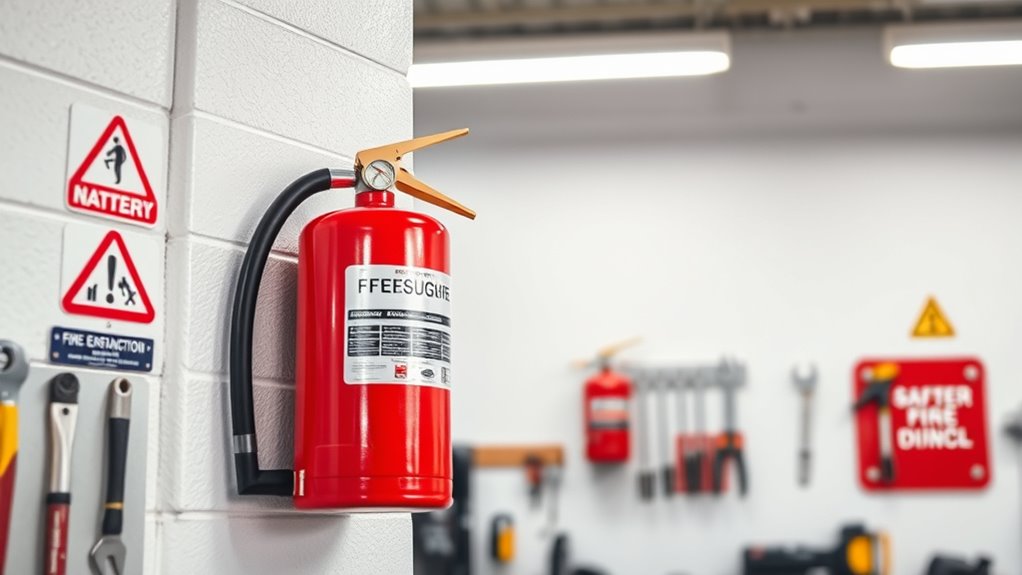
Have you ever wondered what types of fire extinguishers are available and how to use them effectively? Knowing your options is essential for safety in your workshop. There are several types of extinguishers, each designed for specific kinds of fires. For instance, ABC extinguishers are the most common—they’re versatile and can handle fires caused by ordinary combustibles, flammable liquids, and electrical equipment. If you’re working with flammable liquids like gasoline or oil, a foam extinguisher is effective because it smothers flames and prevents reignition. For fires involving electrical equipment or wiring, a CO2 extinguisher is ideal since it doesn’t leave a residue and conducts electricity poorly. Additionally, Class D extinguishers are specialized for combustible metals, which are less common but can be hazardous if ignited. Understanding these different types helps you choose the right extinguisher for your workshop’s specific needs.
Proper maintenance of your fire extinguisher is essential to guarantee it functions when you need it most. Start with regular visual inspections—check the pressure gauge to make sure it’s in the operable range, and look for any signs of damage or corrosion on the cylinder. Keep the extinguisher in a known, accessible location, and ensure the pin and tamper seal are intact. It’s a good idea to schedule annual professional inspections, where trained technicians can perform a thorough check and recharge if necessary. Remember, even if an extinguisher looks fine, it might have lost pressure over time, so periodic maintenance tips include checking the pressure gauge monthly and ensuring the pin is securely in place. Also, familiarize yourself with the type of extinguisher you have—know how to operate it correctly, typically using a PASS technique: Pull the pin, Aim at the base of the fire, Squeeze the handle, and Sweep from side to side. This knowledge can make the difference in an emergency situation.
Beyond just having the right extinguishers, keeping them well-maintained reassures you that they’ll work when needed. Regular maintenance doesn’t take much time but can save lives and property. Make a routine of inspecting your extinguishers monthly, and don’t forget to replace or service them as recommended by the manufacturer or after any use. Proper placement is equally important—store extinguishers near potential fire hazards but in accessible locations. By understanding the types of extinguishers and following maintenance tips, you’re taking key steps to protect your workshop, yourself, and others. Being prepared isn’t just about having equipment; it’s about knowing how to use it effectively and keeping it in top condition. Additionally, understanding the contrast ratio of your fire extinguisher can help you assess its effectiveness in different scenarios.
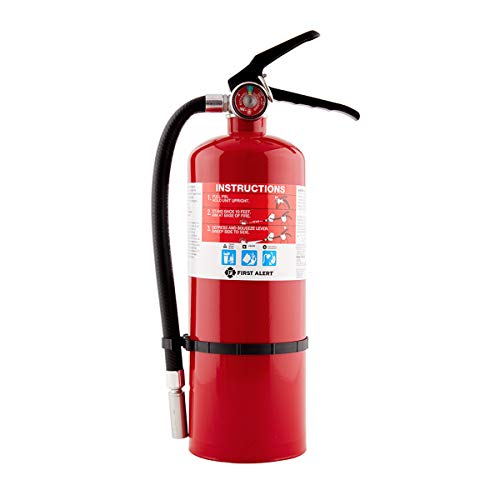
First Alert Fire Extinguisher for Home & Commercial Use, Heavy Duty Rechargeable Compliance Unit, UL RATED 2-A:10-B:C, HOME2PRO, Red, 1-Pack
The First Alert HOME2PRO Fire Extinguisher is UL rated 2-A: 10-B:C and meets minimum 2-A: 10-B:C code requirements;…
As an affiliate, we earn on qualifying purchases.
As an affiliate, we earn on qualifying purchases.
Frequently Asked Questions
How Often Should I Replace My Fire Extinguisher?
You should replace your fire extinguisher every 5 to 15 years, depending on its type and condition. Follow a regular maintenance schedule, including annual professional inspections, and check the pressure gauge monthly. If the extinguisher shows signs of damage, corrosion, or has been used, replace it immediately. Staying diligent with inspection frequency and maintenance guarantees your extinguisher remains reliable and ready in case of emergency.
Can I Use a Fire Extinguisher on Electrical Fires?
Like a knight in shining armor, you can indeed use a fire extinguisher on electrical fires, but only if it’s a class C extinguisher. Always prioritize electrical safety and make certain your extinguisher is properly maintained. Never use a water-based extinguisher on electrical fires, as it can cause electrocution. Regular extinguisher maintenance helps you stay prepared, so check your equipment frequently and understand its proper use.
What Types of Fire Extinguishers Are Best for Workshops?
For workshop safety, you should choose multipurpose fire extinguisher types like ABC extinguishers, as they handle common fires involving trash, liquids, and electrical equipment. Having these on hand guarantees you’re prepared for different hazards. Regularly check the pressure and accessibility of your fire extinguishers, and ensure everyone knows how to use them properly. This proactive approach helps keep your workshop safe and minimizes fire damage.
How Do I Properly Dispose of an Expired Extinguisher?
You should contact your local fire department or hazardous waste facility for proper disposal of an expired extinguisher. They will guide you through recycling options or safe disposal methods. Never puncture, burn, or throw it in the trash, as the contents can be hazardous. Proper disposal guarantees safety, protects the environment, and complies with regulations. Always seek professional advice to handle expired fire extinguishers responsibly and securely.
Are There Safety Certifications Required for Fire Extinguishers?
You don’t need specific safety certifications for fire extinguishers, but they must meet certification standards like UL or FM, guaranteeing safety compliance. When selecting extinguishers, check labels to confirm they adhere to these standards. Proper maintenance and regular inspections keep them effective and compliant. Always follow manufacturer guidelines and local regulations to ensure your fire safety equipment is reliable in emergencies.

Amerex 322 CO2 Class B C Fire Extinguisher, 5 lb.
Carbon dioxide, Class B:C Extinguisher
As an affiliate, we earn on qualifying purchases.
As an affiliate, we earn on qualifying purchases.
Conclusion
Now that you know the basics of fire extinguishers, you’re better equipped to handle unexpected sparks. Think of it as having a trusty sidekick ready to step in when needed. With a little knowledge and a quick reaction, you can keep your workshop safe and cozy. Remember, staying prepared isn’t just smart—it’s a small act that makes a big difference. Stay vigilant, and your workspace will remain a warm, welcoming place for all your projects.

Chunful Fire Extinguisher Inspection Tags Set Including 2025-2028 Maintenance Plastic Tamper Seals Fire Extinguisher Pull Pins Numbered Security Tags with Handheld Hole Puncher(151 Pieces)
Large Quantity: the package consists of 50 fire extinguisher tags, 50 disposable tamper seals, 50 fire extinguisher pins…
As an affiliate, we earn on qualifying purchases.
As an affiliate, we earn on qualifying purchases.

5PCS 100 PSI Pressure Gauge for Portable Water Fire Extinguishers Compatible with Amerex, Ansul, Badger, Stainless Steel Water Fire Extinguisher Replacement Part, 1/8" NPT Thread, Red Dial
Widely Applicable: This pressure gauge for portable water fire extinguishers is compatible with Amerex, Ansul, Badger, and most…
As an affiliate, we earn on qualifying purchases.
As an affiliate, we earn on qualifying purchases.