
Deciding whether to take on a home project yourself or hire a pro depends on your skills, safety, and the project’s complexity. If you’re confident, have the right tools, and the task is simple, DIY can save money and time. However, for electrical, plumbing, or major renovations, it’s safer and more cost-effective to call in experts to avoid costly mistakes. Want to know more? Keep exploring to make the best choice for your project.
Key Takeaways
- Assess your skill level and experience to determine if you can safely complete the project yourself.
- Consider the project’s complexity and whether it involves safety risks or requires adherence to regulations.
- Evaluate the total costs, including potential hidden expenses from mistakes or delays, before deciding.
- Determine if the project’s timeline is flexible or if a quick completion warrants hiring professionals.
- Prioritize safety, liability, and quality; hire experts for tasks beyond your expertise or with significant safety concerns.
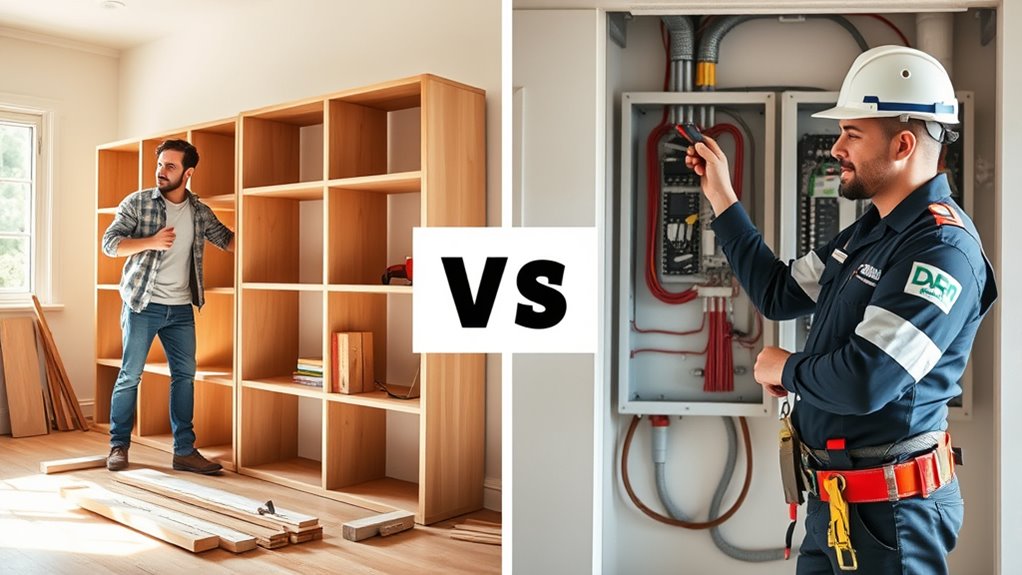
Deciding whether to tackle a project yourself or hire a professional can be challenging, especially when you want quality results without overspending. The first step is to do a thorough cost comparison. You need to evaluate not only the money you’ll spend on materials and tools but also the potential costs of mistakes, delays, or subpar work if you attempt it yourself. Sometimes, DIY might seem cheaper upfront, but hidden costs can add up quickly if you lack experience. On the other hand, hiring a professional often involves higher initial expenses, but they bring expertise that can save you time, reduce errors, and ensure a polished finish. Weighing these financial factors helps clarify which route makes sense for your project.
Evaluate costs, skills, and time to decide if DIY or professional help suits your project best.
Next, consider your skill assessment. Be honest about your abilities and experience with similar projects. If you’ve never handled electrical wiring before, for example, attempting it could pose safety risks and lead to costly errors. Conversely, if you have some skills, you might be comfortable handling simple tasks like painting or installing shelves. Recognizing your limits is essential because a mismatch between your skills and the project’s demands can lead to frustration, wasted money, or even safety hazards. If you’re unsure, seek out tutorials or advice from experienced DIYers to gauge whether you can confidently proceed or if a professional’s expertise is warranted.
Beyond costs and skills, think about the time commitment involved. DIY projects often take longer than expected, especially when interruptions or unforeseen issues arise. If you’re pressed for time or need a quick turnaround, hiring a professional might be the better choice. They usually have the resources and manpower to complete projects efficiently, freeing you up for other priorities. Also, consider the complexity of the task. Simple repairs or small upgrades are often perfect for DIY, but large-scale renovations, plumbing, or electrical work typically require licensed professionals to meet safety codes and regulations.
Finally, factor in your peace of mind. Some projects carry inherent risks, and if you’re worried about safety or liability, it’s smarter to hire a professional. They bring not only skills but also insurance and warranties that protect you from potential issues down the line. In the end, balancing the cost comparison, your skill assessment, time constraints, and comfort level will guide you toward the best decision—whether to roll up your sleeves or pick up the phone for professional help. Additionally, understanding the importance of home renovation regulations can help you decide when a professional’s expertise is necessary to ensure compliance.
Frequently Asked Questions
What Are the Risks of Attempting Complex DIY Projects?
Attempting complex DIY projects can pose safety hazards and result in costly mistakes. You might underestimate the project’s complexity, leading to accidents or damage. Without proper skills or tools, you risk structural issues or injury. If a project involves electrical, plumbing, or heavy machinery, it’s safer to call a professional. Recognizing your limits helps avoid safety hazards and guarantees the job’s done correctly and safely.
How Do I Determine if I Have Enough Skills for a Task?
You can determine if you have enough skills by doing a skill evaluation of your abilities and experience. Be honest about what you know and avoid overestimating yourself. Remember, safety precautions are essential—if a task involves electrical work or heavy lifting, it’s best to call a professional. If you feel confident and prepared after assessing your skills and safety measures, you’re more likely to succeed and stay safe.
What Tools Are Essential for DIY Home Repairs?
You need a basic toolkit with essentials like a hammer, screwdrivers, pliers, measuring tape, and a level for DIY home repairs. Don’t forget safety gear such as gloves, safety glasses, and a dust mask to protect yourself during projects. These tools help you handle common tasks confidently and safely. As you gain experience, you can expand your toolkit, but start with these basics for most repairs.
When Should I Consider Insurance Implications for DIY Work?
Have you thought about insurance considerations before starting your DIY project? If your work could cause damage or injury, you should consider liability issues and whether your homeowner’s policy covers DIY mishaps. Sometimes, mistakes can lead to costly repairs or insurance claims. To protect yourself, review your policy and consult with your insurer if you’re unsure. When in doubt, hiring a professional can help you avoid potential insurance pitfalls.
How Can I Find a Qualified Professional Quickly?
To find a qualified professional quickly, start with a cost comparison of local experts to guarantee affordability. Then, research their reputation through online reviews, referrals, and credentials to confirm quality. Contact multiple professionals to gauge availability and responsiveness. This approach helps you make an informed decision swiftly, saving you time and ensuring you hire someone reliable for your project.
Conclusion
Deciding whether to DIY or hire hinges on your hazard level, skill set, and time. When tackling tough tasks, think twice—professional help can prevent pricey problems. But for simple, satisfying solutions, your hands can do wonders. Weigh the risks and rewards, and remember: sometimes, saving a small sum is smarter than sacrificing safety. So, choose carefully, confidently, and comfortably—because knowing when to DIY or hire makes all the difference between a hassle and a masterpiece.