
When choosing sandpaper grit, consider your project phase: start with coarse grit (40-60) for removing paint or rough material, then switch to medium (80-120) to shape and smooth surfaces. Finishing touches require fine grit (150-220), and polishing needs extra-fine (240+) for a glossy finish. Matching the grit to the task guarantees better results and longer tool life. Keep exploring to discover the perfect grit for your specific project needs.
Key Takeaways
- Match abrasive type and grit to the material and finish desired, e.g., aluminum oxide for metal, silicon carbide for glass.
- Start with coarse grit for initial material removal, then progress to finer grits for smoothing and finishing.
- Use coarse (40-60) for rough work, medium (80-120) for shaping, and fine (150-220) for surface prep.
- For polishing or glossy finishes, switch to extra-fine grits (240+).
- Consult grit comparison guides to select the appropriate grit based on your project’s stage and surface requirements.

Have you ever wondered how to pick the right sandpaper for your project? It all begins with understanding abrasive types and how to make a proper grit comparison. Sandpaper isn’t just about roughness; it’s about selecting the correct abrasive material and grit size to efficiently achieve your desired finish. There are several abrasive types, such as aluminum oxide, silicon carbide, garnet, and zirconia alumina, each suited for specific tasks. Aluminum oxide is durable and versatile, making it great for woodworking and metalworking. Silicon carbide is harder and sharper, ideal for smooth finishes on glass, ceramic, or hard plastics. Garnet is softer and provides a more gentle abrasiveness, perfect for finishing soft woods. Zirconia alumina is tough and long-lasting, perfect for heavy-duty applications like grinding metal.
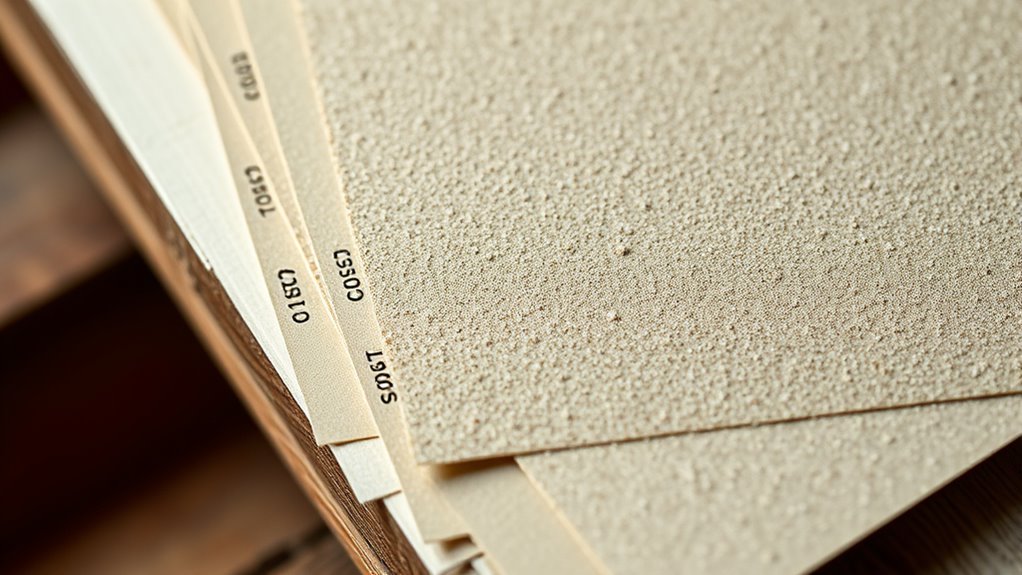
When choosing sandpaper, you also need to contemplate grit, which indicates the size of the abrasive particles. Grit comparison helps you determine how coarse or fine the sandpaper will be. Coarse grits, usually labeled around 40 to 60, are best for stripping paint or removing rough material quickly. Medium grits, like 80 to 120, work well for general sanding, shaping, or smoothing rough surfaces. Fine grits, from 150 to 220, are used for finishing and preparing surfaces for painting or staining. Extra-fine grits, 240 and above, are suited for polishing and achieving a smooth, glossy finish.
Choosing the right grit depends on the stage of your project. If you’re removing a lot of material or dealing with rough surfaces, start with a coarse grit to speed things up. As you progress, switch to finer grits for smoother results. For example, if you’re sanding wood before painting, begin with a medium grit to smooth out the surface and then move to a fine grit to eliminate scratches and prepare for finishing. Conversely, if you’re polishing metal, you might start with a coarse grit to shape the material and then use finer grits for polishing. Additionally, understanding Paint Sprayer Zone can help you optimize surface preparation for painting or finishing projects.
Frequently Asked Questions
Can I Reuse Sandpaper Multiple Times Without Losing Effectiveness?
You can recycle and reuse sandpaper, but its effectiveness decreases with each use. To maximize its lifespan, clean the sandpaper thoroughly after each project, removing dust and debris. Properly cleaning sandpaper helps you recycle it for multiple jobs, but eventually, the grit wears down and becomes less effective. Keep an eye on its condition, and replace it when it no longer sands smoothly or efficiently.
How Do I Dispose of Used Sandpaper Safely and Environmentally?
You should recycle or dispose of used sandpaper through eco-friendly methods. Check local recycling options, as some facilities accept metal-backed or paper-backed sandpaper. If recycling isn’t available, carefully dispose of it in your regular trash, ensuring it’s dry and free of debris. Avoid burning or dumping it in water to prevent environmental harm. By choosing eco-friendly disposal, you help reduce waste and protect the environment.
Are There Specific Sandpaper Types for Outdoor or Wet Conditions?
Yes, for outdoor or wet conditions, you should use moisture resistant abrasives like waterproof sanding paper. These types are specially designed to withstand moisture, preventing clogging and deterioration. Waterproof sanding paper is ideal for tasks involving water or high humidity, ensuring a smooth finish and longer lifespan. Always select the appropriate grit for your project and keep the surface clean and dry for peak results.
How Does Sandpaper Grit Relate to the Speed of Material Removal?
Grit guides how quickly you can grind, gouge, and get the job done. A coarser grit, like 60 or 80, boosts abrasive efficiency by increasing the grit abrasion rate, which means faster material removal. Conversely, finer grits, such as 220 or higher, slow down the process but produce a smoother finish. So, pick a lower grit for speed and a higher grit for a polished, pristine surface.
What Are the Signs That It’s Time to Replace My Sandpaper?
You should replace your sandpaper when it becomes clogged, torn, or loses its abrasive power, indicating the end of its lifespan. You’ll notice it’s less effective, and sanding takes more effort. For reusability tips, clean the grit with a brush or compressed air if possible, but don’t push it past reuse. Once it’s worn out or damaged, swapping it out guarantees smooth, efficient work.
Conclusion
Choosing the right sandpaper is like finding the perfect key to open your project’s potential. When you match the grit to your task, you make the process smoother and more effective. Don’t rush; each grit level is a step on your journey to a polished finish. With the right choice, you’ll turn rough material into a masterpiece, just like a sculptor reveals beauty hidden within the stone. Trust your instincts and sand your way to success.