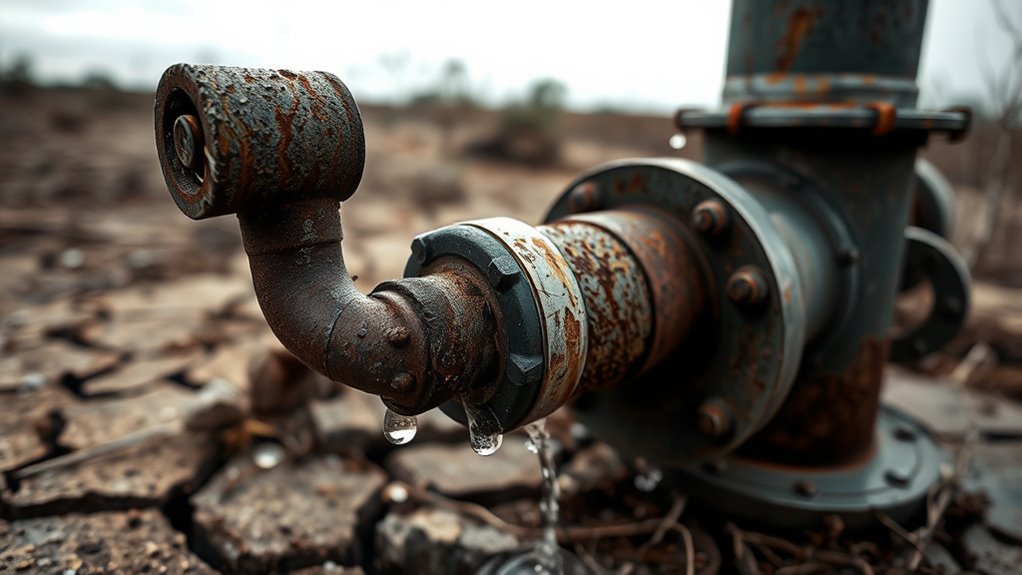

If you notice a sudden drop in water pressure, complete loss of flow, strange noises, or fluctuating pressure, your well pump might be failing. You could also see increased energy bills or hear banging sounds from the system. Inconsistent water flow and shorter pump lifespan are signs of problems too. Addressing these signs early can prevent costly repairs. Keep exploring to learn more about what causes these issues and how to fix them effectively.
Key Takeaways
- Noticeable drop or loss of water pressure indicates potential pump failure.
- Unusual noises like banging or humming suggest issues with the pump’s operation.
- Fluctuating water flow or inconsistent supply signals possible well or pump problems.
- Increased energy bills may result from the pump working harder due to malfunction.
- Frequent pressure fluctuations and system noise often point to a failing well pump.
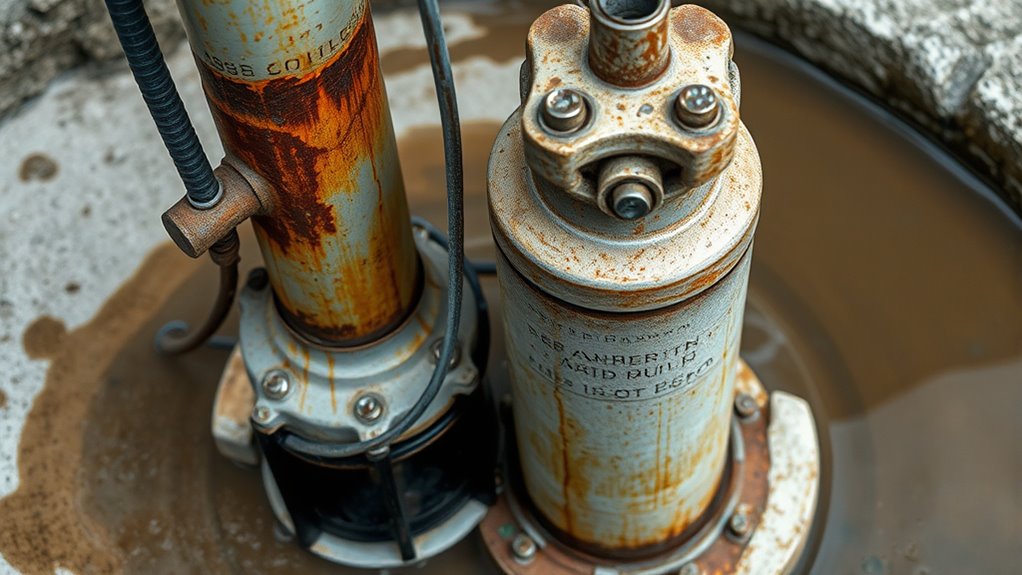
Have you ever experienced a sudden drop in water pressure or a complete loss of water from your well? If so, you might be dealing with a failing well pump. These issues can be frustrating, especially when you rely on your well for daily household needs. One of the first signs is inconsistent water flow, which can make showers less satisfying and appliances less effective. Often, these problems are linked to underlying causes like drilling challenges that affected your well’s construction or water quality issues that have compromised the pump’s performance. Understanding these factors can help you identify the root of the problem early on.
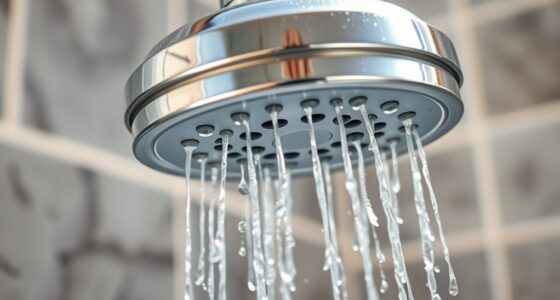
A drop in water pressure often signals a failing well pump or underlying well issues.
Drilling challenges during well installation can lead to future pump failures. For example, if the well was drilled in rocky or uneven terrain, the pump may struggle to draw water efficiently. Poorly drilled wells can also cause the pump to work harder than necessary, accelerating wear and tear. Additionally, if the well casing wasn’t properly installed or if debris entered the well during drilling, it can clog the pump or damage its components. These issues often result in the pump running excessively or failing prematurely. Water quality issues further complicate the situation; high mineral content, sediment, or biological contaminants can clog filters and damage the pump’s internal parts. Over time, this reduces the pump’s ability to pull water effectively, leading to pressure drops or total failure.
You might also notice strange noises from the pump, such as banging or humming, which indicate it’s struggling to operate normally. A sudden increase in energy bills can be another clue—your pump may be working harder than it should to compensate for blockages or inefficiencies. If your water pressure fluctuates frequently, it suggests the pump is losing its prime or that there’s a leak in the system. These symptoms often point to a failing pump, but they can also be signs of underlying issues like corrosion or electrical problems. Regular well maintenance and inspections can help catch these problems early, but if you experience persistent issues, it’s wise to have a professional assess your well system. Addressing drilling challenges and water quality issues promptly can extend the lifespan of your pump and ensure reliable water supply. Ultimately, recognizing the signs of a failing well pump and understanding their causes can save you time and money, preventing complete system failures and ensuring your well continues to serve your household efficiently.
Frequently Asked Questions
How Often Should I Have My Well Pump Inspected?
You should have your well pump inspected at least once a year to maintain peak performance. An inspection schedule ensures early detection of issues and helps prevent costly repairs. Regular maintenance frequency, including checking for leaks, pressure drops, or unusual noises, keeps your pump running smoothly. Don’t wait for signs of failure—schedule annual inspections with a professional to keep your water supply reliable and your system in top shape.
Can a Failing Well Pump Cause Water Discoloration?
Yes, a failing well pump can cause water discoloration. When your well water isn’t flowing properly due to pump issues, sediments and minerals may accumulate, leading to murky or discolored water. Regular pump maintenance helps prevent this problem by ensuring your pump functions efficiently and sediments stay in check. If you notice water discoloration, it’s a sign you should have your well pump inspected and maintained promptly to keep your water clear.
What Is the Typical Lifespan of a Well Pump?
A stitch in time saves nine, so knowing your well pump’s lifespan helps you prevent costly repairs. Typically, a well pump lasts about 8 to 15 years, but maintenance plays a vital role. Regular pump maintenance, including checking for corrosion and ensuring proper operation, can extend its lifespan. Factors like water quality, usage frequency, and power surges influence how long your pump will serve you reliably.
Are There DIY Ways to Troubleshoot Well Pump Issues?
Yes, you can try DIY troubleshooting for well pump issues. Start with pump inspection tips like checking the power supply, inspecting the circuit breaker, and listening for unusual noises. confirm the pressure tank isn’t empty and look for leaks or corrosion. Turn off the pump before inspecting components. If issues persist, consider calling a professional, but these steps can help you identify basic problems early on.
When Should I Replace My Well Pump Instead of Repairing It?
When the signs of wear and tear become too loud or frequent, it’s time for well pump replacement. You should opt to replace instead of repair when repairs cost over half the price of a new pump, or if your pump is over ten years old. Remember, repair vs. replace isn’t just about cost—it’s about ensuring reliable water flow. Don’t delay; a failing pump can lead to bigger, costlier issues.
Conclusion
When your well pump starts acting up, it’s like a car struggling to run—you know something’s wrong before it stalls completely. Catching signs early can save you from a full breakdown and costly repairs. Keep an eye out for changes in water pressure, strange noises, or inconsistent flow. Addressing issues promptly is like giving your well a tune-up, ensuring it keeps serving you reliably. Don’t wait for it to hit a dead end—stay proactive and keep your water flowing smoothly.