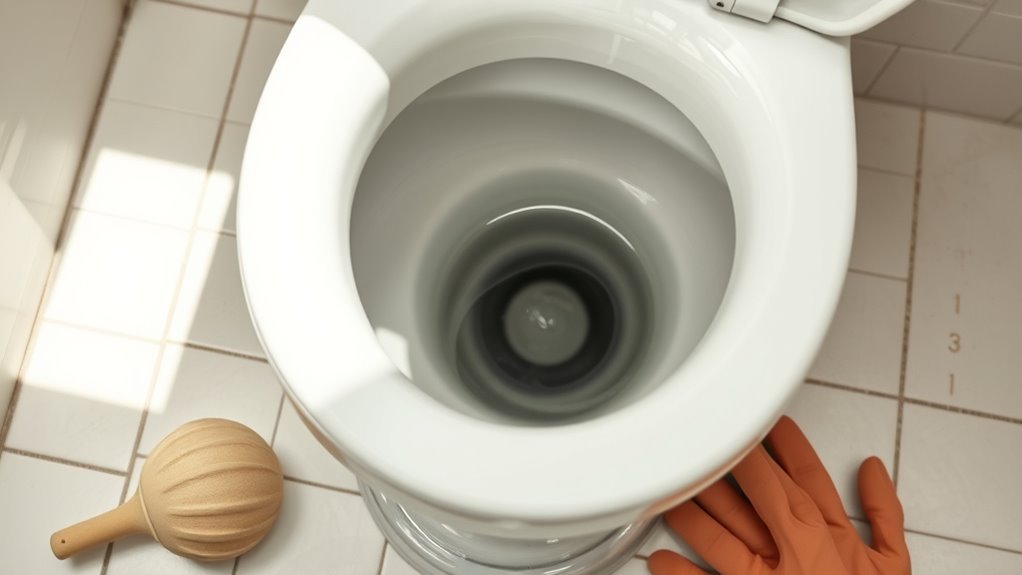
When your toilet clogs, stay calm and start with a plunger, making sure there’s enough water in the bowl before plunging firmly and repeatedly. If that doesn’t work, try using a drain auger or snake to break up the blockage. You can also attempt natural methods like pouring dish soap with hot water or a baking soda and vinegar mix. Want to know more effective tips? Keep going to discover how to clear the clog quickly.
Key Takeaways
- Use a plunger with firm, consistent thrusts to create pressure and dislodge the clog.
- Insert a plumber’s snake or auger into the toilet drain, turning clockwise to break up stubborn blockages.
- Pour dish soap followed by hot (not boiling) water to lubricate and loosen minor clogs naturally.
- Try a baking soda and vinegar mixture, wait 30 minutes, then flush to dissolve organic buildup.
- Prevent future clogs by avoiding flushing non-flushable items and using drain screens regularly.

A clogged toilet can quickly turn into a frustrating emergency, but you don’t always need a plumber to fix it. Understanding some plumbing basics and practicing regular toilet maintenance can save you time, money, and stress. The first step is to stay calm and assess the situation. Often, a simple plunger can do the trick if you act quickly and correctly. Make sure there’s enough water in the bowl to cover the rubber part of the plunger, then position it firmly over the drain opening. Use an aggressive, consistent thrust to create pressure, and then pull back sharply. Repeat this a few times, and you’ll often see the water start to drain. If it doesn’t, don’t force it—pushing too hard can damage your toilet or pipes.
A plunger and patience often solve toilet clogs without calling a plumber.
If plunging doesn’t work, you can try using a plumbing snake or auger. Insert the auger into the drain and turn the handle clockwise, pushing it gently until you feel resistance. Continue rotating and pushing until the blockage breaks free or you feel it clear. This method requires some patience but is effective for more stubborn clogs. Remember, regular toilet maintenance helps prevent such issues. Avoid flushing non-flushable items like wipes, paper towels, or feminine hygiene products, which can cause clogs over time. Also, keep an eye on what you flush and consider using a drain screen to catch debris. Proper drain clearance techniques can help prevent future blockages and keep your plumbing system running smoothly.
Another approach is to use hot water and dish soap. Pour a generous amount of dish soap into the toilet bowl, then follow with hot (not boiling) water. Let it sit for 10-15 minutes. The soap lubricates the drain, and the hot water helps loosen the clog’s grip, making it easier to flush away. This method works best for minor blockages caused by grease or buildup. If all else fails, a mixture of baking soda and vinegar can sometimes break apart organic clogs. Pour a cup of baking soda into the bowl, followed by a cup of vinegar. Wait for about 30 minutes, then try flushing again.
Additionally, understanding the importance of contrast ratio can help in troubleshooting and ensuring your home appliances operate optimally, just like choosing the right tools for unclogging. In many cases, simple tools and some basic know-how can clear a clog without calling in professionals. Regular toilet maintenance—like avoiding flushables that don’t belong and performing periodic checks—can keep your toilet functioning smoothly. Remember, understanding plumbing basics helps you troubleshoot common problems confidently. With a few straightforward steps and some preventive habits, you can handle most toilet clogs yourself and avoid emergency calls to the plumber.
Frequently Asked Questions
Can I Use Chemical Drain Cleaners Safely on a Clogged Toilet?
You can use chemical drain cleaners on a clogged toilet, but you should prioritize chemical safety. Always follow the instructions carefully, wear gloves, and avoid mixing chemicals. However, consider drain cleaner alternatives like a plunger or a mixture of baking soda and vinegar, which are safer for your plumbing and environment. If you choose chemicals, use them sparingly and only as a last resort to prevent damage or health risks.
How Do I Prevent My Toilet From Clogging Again?
Preventing your toilet from clogging again requires proactive toilet maintenance and clog prevention strategies. Avoid flushing non-flushable items like wipes or sanitary products, and don’t overload the bowl with too much toilet paper. Regularly check for leaks or slow drains, and consider using a drain screen to catch debris. These simple steps help maintain proper flow, reduce buildup, and keep your toilet functioning smoothly, preventing future clogs.
When Should I Call a Professional Plumber?
You should call a professional plumber if DIY tips don’t resolve the issue or if you encounter emergency situations like a persistent clog, foul odors, or overflowing water. Don’t keep trying to fix it yourself when the problem worsens or seems beyond your control. A plumber has the tools and expertise to handle tricky clogs safely, preventing potential water damage or plumbing damage, especially during urgent situations.
Is It Safe to Use a Drain Snake Without Experience?
Using a drain snake without experience isn’t entirely safe, but it’s manageable if you follow DIY plumbing safety precautions. Make sure you wear gloves, keep a firm grip, and proceed gently to avoid damaging your pipes. If you’re unsure or resistant to risk, it’s best to call a professional plumber. Taking these steps helps prevent injury and costly repairs, ensuring your DIY plumbing project stays safe and effective.
What Tools Are Best for Unclogging Toilets?
When tackling a stubborn clog, a sturdy plunger is your best tool—use proper plunger techniques for maximum effect. If that doesn’t work, consider inspecting the vent pipe for blockages, which can cause drainage issues. A flange plunger is often more effective for toilets than a standard cup one. Avoid harsh chemicals; instead, rely on these simple tools to restore your toilet’s flow effortlessly.
Conclusion
Don’t despair if your toilet’s acting up. With these simple, savvy solutions, you’ll swiftly solve the standoff and restore your bathroom’s balance. Remember, patience and perseverance are your best pals—plungers, pipes, and patience. Don’t let a clogged commode cause chaos; conquer it confidently with these clever tips. Now, go get that gear, grasp the problem, and gleefully get your toilet back in tip-top shape!