If your toilet keeps running, the most common cause is a faulty flapper or an improperly adjusted fill valve. Start by inspecting the flapper for cracks, warping, or leaks, and replace it if needed. Then, check the fill valve—adjust the float to the correct water level, about an inch below the overflow tube. Ensuring these parts are working properly will stop the constant running. Keep exploring for more tips to fix this issue and save water.
Key Takeaways
- Inspect and replace a damaged or warped flapper to stop water leakage into the bowl.
- Adjust the fill valve’s float to ensure the water level stays about an inch below the overflow tube.
- Turn off the water supply, drain the tank, and clean the fill valve to remove debris and mineral buildup.
- Check for misaligned or faulty fill valves and replace if necessary to prevent continuous refilling.
- Regularly maintain and monitor components to prevent future running issues and extend toilet lifespan.
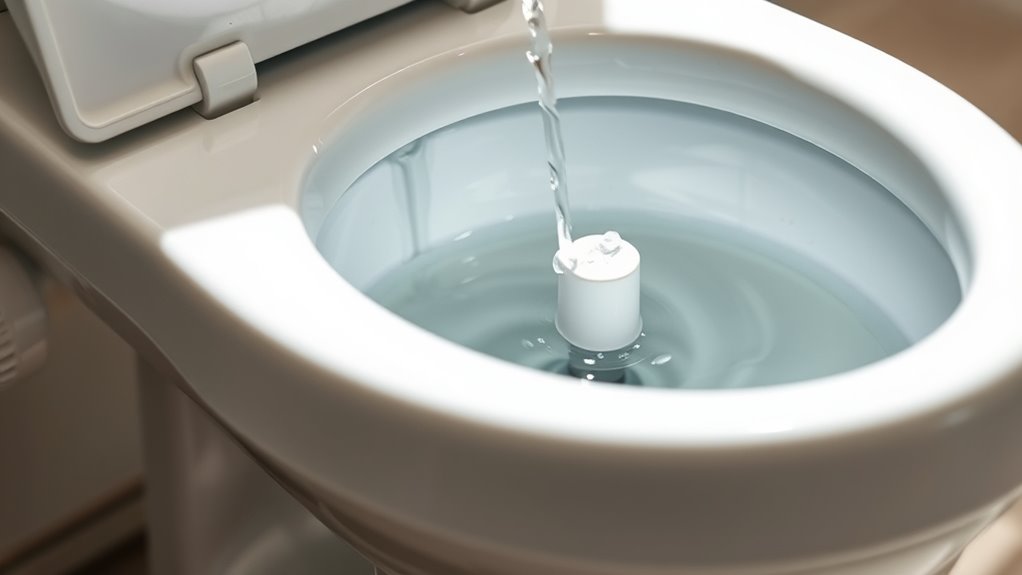
If your toilet keeps running nonstop, it can be both frustrating and wasteful. Luckily, fixing this common problem usually doesn’t require a plumber, just a bit of troubleshooting and the right tools. The first step is to identify whether the issue stems from a faulty flapper or an improperly adjusted fill valve. These are the main culprits that cause a toilet to run continuously.
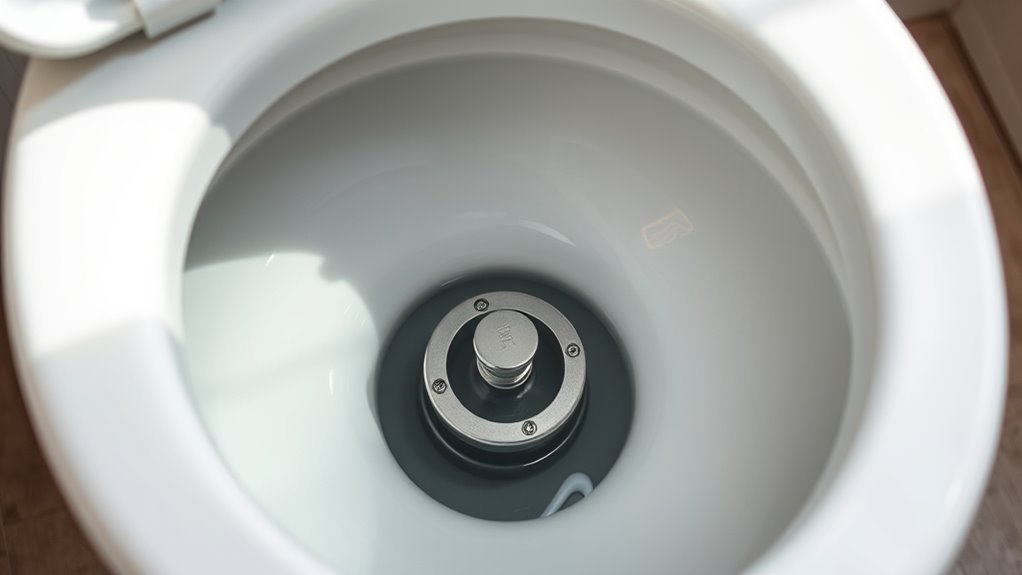
Start by inspecting the flapper. Remove the tank lid and flush the toilet. When you lift the flapper, watch it closely. If it’s cracked, warped, or doesn’t seal properly, water will leak from the tank into the bowl, causing the fill valve to keep running to refill the tank. In this case, a simple flapper replacement can solve the problem. You can find a new flapper at any hardware store. Turn off the water supply, drain the tank, and remove the old flapper. Install the new one, making sure it’s seated correctly and creates a tight seal. Once replaced, turn the water back on and flush to see if the running stops. If it does, you’ve fixed it.
Inspect the flapper for cracks or leaks and replace it to stop the toilet from running nonstop.
If the flapper is in good shape, then the issue might be with the fill valve. The fill valve controls water flow into the tank and can sometimes get misaligned or clogged. Adjusting the fill valve is straightforward. Look for the adjustment screw or arm—most modern fill valves have a float that can be raised or lowered to control water level. Turn the adjustment screw clockwise or counterclockwise to set the correct water level, usually about an inch below the overflow tube. If you find that the water level is too high, it can cause the float to constantly trigger the fill valve, leading to continuous running. Making the proper adjustment can stop this.
Sometimes, debris or mineral buildup can clog the fill valve, causing it to malfunction. If simple adjustments don’t work, shut off the water supply, remove the fill valve cap, and clean out any deposits. Reassemble, turn the water back on, and check if the issue persists. Regular maintenance and timely repairs can prevent future problems. Additionally, understanding the contrast ratio and other components of your toilet’s inner workings can help in troubleshooting more complex issues. Being aware of common toilet parts and their functions can help you identify issues more quickly. Moreover, consulting professional guidance can be beneficial if basic troubleshooting doesn’t resolve the problem. For example, proper maintenance can extend the lifespan of your toilet’s components and avoid costly repairs later on. Checking for wear and tear can also save you from unexpected breakdowns and ensure efficient operation.
Frequently Asked Questions
How Can I Tell if My Flapper Needs Replacing?
You can tell if your flapper needs replacing by inspecting the toilet anatomy. Lift the lid and observe the flapper at the tank’s bottom. If it’s warped, cracked, or doesn’t seal properly, it’s time for a replacement. Also, consider water pressure—if the tank refills slowly or keeps running, your flapper might be the culprit. Replacing it is simple and can stop your toilet from constantly running.
Is It Safe to Fix a Running Toilet Myself?
Fixing a running toilet yourself is generally safe if you follow proper plumbing safety guidelines. It’s like handling a delicate art project—you just need to be cautious. Turn off the water supply, use the right tools, and avoid forcing parts. DIY plumbing can save you money and time, but if you’re unsure or uncomfortable, don’t hesitate to call a professional. Always prioritize safety to prevent any accidents.
How Often Should I Perform Maintenance on My Toilet?
You should perform toilet maintenance every six months to keep it running smoothly, ensuring thorough toilet cleaning and preventing issues like leaks. Regular upkeep helps conserve water by fixing minor problems early, reducing wastage. Check for leaks, clean the flapper, and inspect the fill valve during these sessions. Staying consistent with maintenance not only prolongs your toilet’s lifespan but also promotes water conservation and a cleaner bathroom environment.
What Tools Are Needed to Fix a Running Toilet?
Did you know that over 10% of households face ongoing toilet repair issues? To fix a running toilet, you’ll need basic tools like a wrench, screwdriver, pliers, and a replacement flapper or fill valve. These tools make DIY plumbing easier and faster. Gather them before you start, and you’ll be able to identify the problem and fix your toilet efficiently, saving money and preventing further water waste.
When Should I Call a Professional Plumber Instead?
You should call a professional plumber if you encounter emergency repairs or plumbing emergencies, such as persistent leaks or if your toilet keeps running despite your efforts. If you’re unsure about diagnosing the problem or if the fix involves complex parts, it’s best to seek expert help. Don’t delay when facing serious issues to prevent water damage or further complications, ensuring your home’s plumbing stays in good shape.
Conclusion
Once you fix that running toilet, it’s like stopping a leaky faucet before it floods your whole house. Imagine trying to ignore a dripping tap—it might seem small at first, but over time, it wastes gallons of water and racks up your bill. Just like that, a quick fix saves you money and hassle. So, don’t wait—take action now, and enjoy a quieter, more efficient bathroom that won’t run away from you!