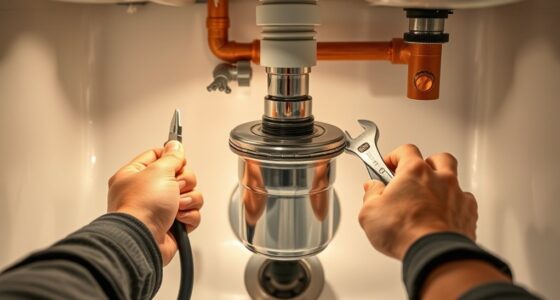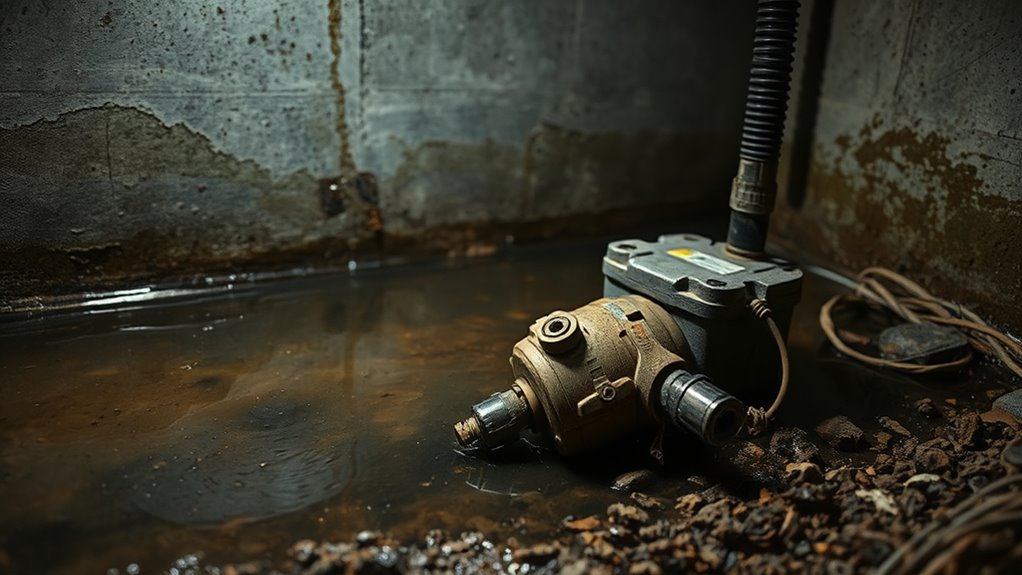

If your sump pump isn’t working, start by checking the power supply and circuit breaker to make certain the outlet has power, then test the backup battery if you have one. Inspect the float switch for obstructions or sticking, and clean the inlet screen and impeller of debris. Regular maintenance and testing can prevent future issues. For more detailed steps and tips on avoiding flooding, keep exploring these troubleshooting strategies.
Key Takeaways
- Check the power supply, outlet, and circuit breaker to ensure the pump is receiving electricity.
- Inspect the float switch for obstructions or sticking, and test its movement regularly.
- Verify the backup battery is charged and functioning properly to maintain operation during outages.
- Clear any debris or clogs from the inlet screen and impeller to ensure optimal water flow.
- Perform routine testing and maintenance to identify and fix issues before heavy rain seasons.

A sump pump is essential for preventing flooding and water damage in your basement, but when it stops working, it can cause serious problems. One common issue is that the pump fails to activate during heavy rain or rising groundwater levels. To prevent this, confirm your sump pump has a reliable battery backup system. A battery backup provides power if the main electrical supply fails, such as during a storm or power outage, giving you peace of mind that your sump pump will operate when needed most. Regularly check the battery backup to verify it’s charged and functioning properly, especially before the rainy season. If your backup is old or not holding a charge, consider replacing it to maintain reliable protection.
Another critical component is the float switch, which signals the pump to turn on when water reaches a certain level. If the float switch becomes stuck, obstructed, or malfunctions, your sump pump won’t activate, risking flooding. Inspect the float switch regularly to ensure it moves freely and isn’t tangled or blocked by debris. If it’s stuck, gently free it from obstructions, and make sure it’s properly positioned so it can respond to rising water levels. Sometimes, float switches can become faulty over time and need replacement. Installing a new float switch can resolve issues related to false triggers or failure to activate. Additionally, testing the pump’s operation regularly can help identify potential problems before they become emergencies. It’s also beneficial to review the sump pump’s installation to ensure it’s set up correctly for optimal performance. Routine inspections can help catch small issues before they lead to significant problems.
Beyond these parts, you should also verify that the sump pump’s power cord is plugged in securely, and that the circuit breaker hasn’t tripped. Sometimes, the problem isn’t with the pump itself but with the power supply. Testing the outlet with another device can confirm it’s working. If the outlet is dead, resetting the circuit breaker or replacing the fuse might restore power. Additionally, inspect the pump’s inlet screen or impeller for clogs or debris that could impede water flow. Clearing out any obstructions ensures the pump can operate efficiently. Proper maintenance practices are essential for extending the lifespan of your sump pump and ensuring it functions reliably during heavy rains. Addressing problems early can save you from costly repairs and water damage. Ensuring your sump pump’s components like the float switch and battery backup are in good shape guarantees reliable operation, giving you confidence that your basement remains dry during storms. Regularly performing system checks can further enhance the pump’s dependability when it’s needed most.
Frequently Asked Questions
How Often Should I Test My Sump Pump?
You should test your sump pump at least once a month to make certain it’s working properly. During these tests, check the battery backups and perform pump maintenance to prevent failures during heavy rain. Regular testing helps you catch issues early and keeps your system ready. Don’t forget to inspect the float switch and clean any debris, so your sump pump can operate efficiently when needed most.
Can Power Outages Affect Sump Pump Operation?
Oh, your sump pump loves a power outage, right? Not at all! It can’t operate without electricity, leaving you vulnerable to flooding. That’s why you need backup solutions like a battery-powered sump pump or generator. Don’t wait until the water’s rising; plan ahead. Power outages happen unexpectedly, so having these backups guarantees your sump pump keeps working, even when the grid doesn’t.
What Are Signs My Sump Pump Is Failing?
You’ll notice signs your sump pump is failing if it makes strange noises, runs constantly, or if your basement floods during heavy rain. Regular sump pump maintenance helps catch issues early and extends its lifespan. If it’s old or repeatedly malfunctions, consider sump pump replacement to prevent future flooding. Addressing problems promptly guarantees your sump pump works efficiently when you need it most, protecting your home from water damage.
Is Professional Inspection Necessary for Sump Pump Issues?
Yes, a professional inspection is necessary if you’re experiencing sump pump issues. Regular sump pump maintenance by a trained technician helps identify problems early, ensuring your system functions properly when needed most. A professional inspection can check for electrical issues, debris blockages, or mechanical failures that might not be obvious. Investing in expert maintenance extends your sump pump’s lifespan and provides peace of mind during heavy rains or flooding risks.
How Do I Prevent Debris From Clogging My Sump Pump?
Picture your sump pump as a vigilant guardian, guarding your basement from water’s sneak attack. To keep debris from clogging it, regularly perform sump pump maintenance—clean the basin and check the inlet screen. Consider alternative sump pump types like submersible or pedestal models, which often have better debris resistance. Protect your pump’s flow, and it’ll stand sentinel against clogs, ensuring your basement stays dry and safe.
Conclusion
If your sump pump isn’t quite up to snuff, a little gentle attention can often help it regain its rhythm. Regular checks and simple fixes might just keep your basement dry and your worries at bay. Think of it as giving your pump a quick tune-up—preventing small hiccups from turning into bigger surprises. With a little care, you can keep everything flowing smoothly, letting you relax and enjoy the peace of a flood-free home.