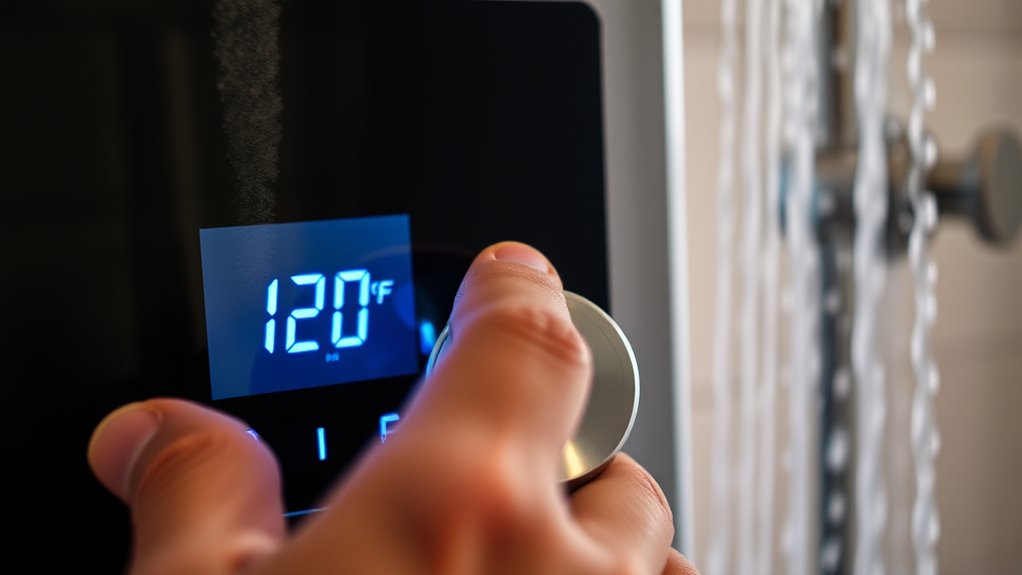

If your shower isn’t hot enough, start by turning off the power to your water heater for safety. Locate the thermostat, usually a dial on the unit, and check its current setting. Adjust it gradually—usually in 5°F increments—toward 120°F for ideal safety and comfort. After making changes, turn the power back on and test the water temperature. For more tips on fine-tuning your water heater, explore the full process below.
Key Takeaways
- Turn off power and locate the thermostat on your water heater before making adjustments.
- Increase the temperature setting gradually, aiming for around 120°F for optimal hot water.
- Check water temperature at the tap after adjustments to ensure it’s sufficiently hot.
- Ensure the thermostat is functioning correctly and not obstructed or damaged.
- Regularly maintain your water heater and avoid setting the temperature too low to prevent bacterial growth.

If your shower water isn’t warm enough or is too hot, adjusting your water heater can quickly fix the problem. The right temperature not only ensures comfort but also plays a crucial role in temperature safety and the water heater’s lifespan. Setting the correct temperature helps prevent scalding and reduces the risk of accidents, especially if children or elderly family members use the shower. At the same time, maintaining an ideal temperature can extend your water heater’s life by minimizing the stress caused by extreme temperature fluctuations or excessive heat.
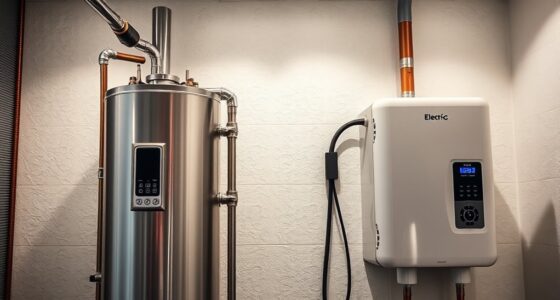
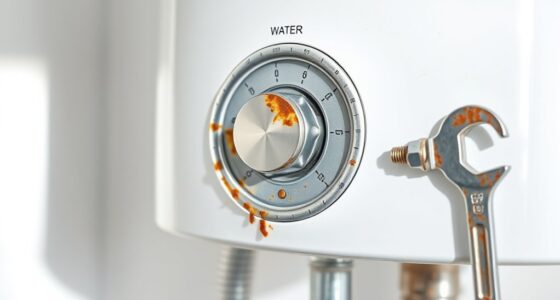
Most water heaters have a temperature dial or a thermostat, usually located on the unit itself. Before making adjustments, turn off the power supply to the water heater for safety, especially if you have a model that requires manual access to the thermostat. Once you locate the thermostat, check the current setting. If your water is consistently not hot enough, increase the temperature gradually, typically in increments of 5 degrees Fahrenheit. Conversely, if the water is dangerously hot, lower the temperature to prevent burns and conserve energy. A common recommended setting is around 120°F (49°C), which balances safety, energy efficiency, and comfort.
Adjust your water heater thermostat carefully, typically in 5°F increments, for safety, efficiency, and comfort.
Adjusting the temperature isn’t just about immediate comfort; it also impacts your water heater’s longevity. Running the heater at excessively high temperatures can cause unnecessary stress on its components, leading to faster wear and potential failure. Conversely, setting it too low might cause mineral buildup or bacterial growth over time, especially if you have a tank-type heater. Finding that middle ground—around 120°F—helps prolong the lifespan of your water heater by reducing strain and preventing corrosion caused by overheating or stagnant water at lower temperatures.
Additionally, awareness of temperature safety guidelines can help you make informed adjustments that protect your household. After adjusting the thermostat, turn the power back on and give the system some time to stabilize. Test the water temperature at the tap, and if it’s still not right, fine-tune the setting slightly until you reach your desired comfort level. Remember, if you’re unsure or uncomfortable accessing the thermostat yourself, it’s best to call a professional. Regular maintenance and proper temperature settings will not only enhance safety and comfort but also preserve your water heater’s performance over the years. Properly setting the temperature is a simple yet effective step toward ensuring your shower remains a relaxing experience without risking damage to your equipment or safety.
Frequently Asked Questions
How Often Should I Check My Water Heater Temperature?
You should check your water heater temperature at least once every six months to guarantee proper operation. Regular maintenance routines include temperature monitoring to prevent overheating or scalding, and to keep energy costs low. If you notice inconsistent water temperature, it’s a sign to adjust the thermostat or call a professional. Staying proactive with these checks helps extend your water heater’s lifespan and maintains safe, reliable hot water supply.
Can Adjusting the Thermostat Affect My Energy Bills?
Adjusting your thermostat can considerably impact your energy bills. When you lower the temperature, you reduce energy consumption, leading to energy savings. Proper thermostat calibration ensures your water heater maintains the right temperature without wasting energy. By setting your thermostat correctly—around 120°F—you optimize efficiency and save money. Remember, small adjustments can make a big difference in your energy costs over time.
Is It Safe to Set My Water Heater to Maximum Temperature?
Sure, setting your water heater to maximum temperature might seem like a great idea for endless hot showers, but safety concerns say otherwise. High temperature settings increase the risk of scalds and burns, especially for children and seniors. It’s best to keep the thermostat around 120°F (49°C), balancing comfort with safety. Always check your water heater’s safety guidelines before cranking it up to avoid unintended injuries.
What Should I Do if the Water Heater Isn’t Heating at All?
If your water heater isn’t heating at all, start with water heater troubleshooting by checking the power supply and circuit breaker. If it’s a gas heater, verify the pilot light is on. For urgent issues, consider emergency repairs like resetting the unit or calling a professional. Turn off the power or gas if you notice leaks or strange noises. Addressing these steps quickly prevents further damage and restores hot water efficiently.
How Do I Know if My Water Heater Needs Replacement?
Imagine your shower suddenly turns ice-cold, even after adjusting the temperature. This could be a sign your water heater’s lifespan is nearing its end, typically 8-12 years. Look for signs of replacement like rust-colored water, strange noises, or inconsistent hot water. If these issues persist, it’s time to contemplate a new unit to ensure reliable hot water and avoid costly breakdowns.
Conclusion
Adjusting your water heater isn’t just about comfort—it’s about taking control of your daily routine. Think of it like tuning a musical instrument; a small twist can make everything sound just right. I once struggled with lukewarm showers until I realized a simple temperature tweak made all the difference. Now, you’re equipped to fix your hot water issues confidently. Remember, a quick adjustment can turn a chilly shower into a warm, satisfying one—so don’t hesitate to give it a try.