If you’re experiencing low water pressure, start by checking your filters for clogs or debris and clean or replace them if needed. Make sure your pressure regulator isn’t malfunctioning by inspecting it for issues. Confirm that your main shut-off valve is fully open and look for any leaks or damaged pipes. External municipal supply problems could also be at play. For more tips to restore full flow, explore additional solutions that could help solve the issue.
Key Takeaways
- Check and clean or replace clogged filters in your filtration system regularly.
- Inspect and adjust or replace the pressure regulator if it’s malfunctioning.
- Ensure the main shut-off valve is fully open to prevent flow restrictions.
- Look for leaks or damaged pipes that could be reducing water pressure.
- Confirm there are no external municipal supply issues affecting your area.
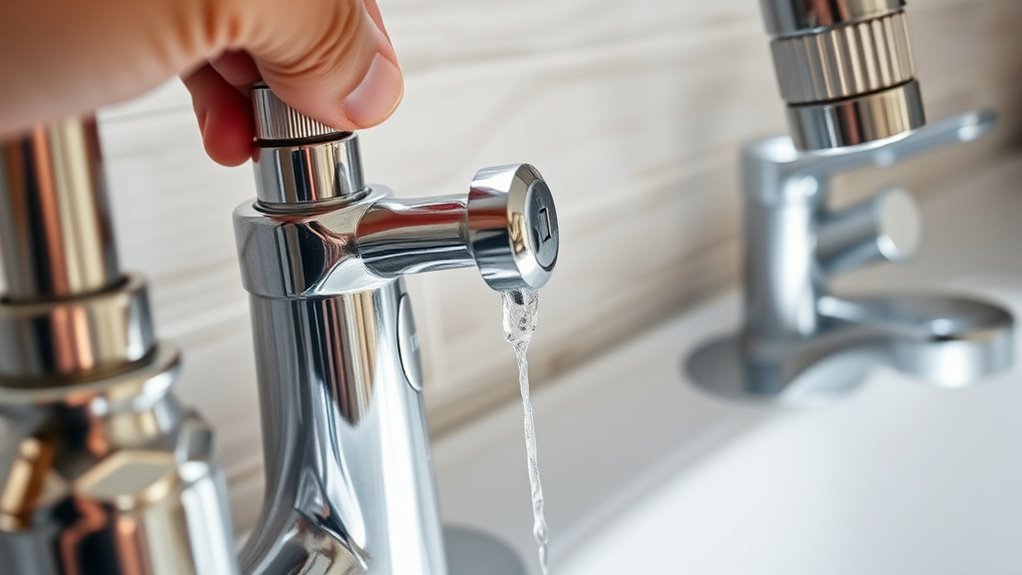
If you’re experiencing low water pressure in your home, it can be frustrating and disruptive. You rely on steady water flow for everything from showering to washing dishes, so when pressure drops, it feels like your daily routine is thrown off. One common cause of reduced water pressure is issues related to your home’s filtration system or pressure regulators. Understanding how these components work can help you troubleshoot effectively.
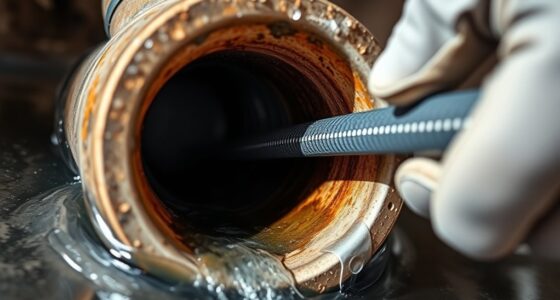
Home filtration systems are designed to improve water quality by removing impurities, but sometimes, they can become clogged or dirty over time. When filters are clogged, they restrict water flow, leading to lower pressure throughout your house. If you suspect your home filtration system is the culprit, start by inspecting the filters. Most systems have a sediment or carbon filter that can be easily accessed and cleaned or replaced. Regular maintenance ensures your filtration system functions properly and prevents pressure drops caused by debris buildup.
Regularly inspecting and cleaning filters keeps your water pressure steady.
Pressure regulators are another key component affecting water pressure. These devices are installed on the main water line to control and maintain consistent pressure throughout your home. If your pressure regulator malfunctions or becomes faulty, it can cause the water pressure to drop considerably. To check if your pressure regulator is the issue, look for signs like fluctuating pressure or a sudden drop in flow rate. If you notice these symptoms, consider testing the pressure regulator or having a professional inspect it. Replacing a faulty pressure regulator is often straightforward and can restore normal water pressure quickly.
Besides inspecting filters and pressure regulators, ensure that your home’s main shut-off valve is fully open. Sometimes, valves can be partially closed, limiting water flow. You should also check for any visible leaks or damaged pipes, as leaks can reduce pressure and affect water flow. If your plumbing has multiple fixtures with low pressure, the problem might be within the main line rather than individual fixtures. Regular maintenance of plumbing components** and prompt repairs are key to ensuring consistent water pressure, so you can enjoy reliable water flow whenever you need it. Additionally, understanding water pressure regulation can help you better manage and troubleshoot pressure issues effectively. Moreover, being aware of possible municipal supply problems can help determine if the issue is external to your plumbing system. Performing routine system checks** can further prevent unexpected drops in pressure and ensure your entire plumbing setup stays in optimal condition.
Frequently Asked Questions
Can Sediment Buildup Cause Low Water Pressure?
Sediment buildup can definitely cause low water pressure. When sediment accumulates in pipes or fixtures, it leads to clogging issues that restrict water flow. Over time, this buildup narrows the passageways, reducing pressure and flow rate. To fix this, you might need to flush your pipes or replace affected fixtures. Regular maintenance helps prevent excessive sediment accumulation and keeps your water pressure consistent.
How Often Should I Flush My Water Heater?
You should flush your water heater once a year to maintain peak water heater performance and prevent sediment buildup. Regular water heater maintenance involves sediment removal, which helps improve efficiency and extend its lifespan. If you notice reduced water pressure or inconsistent hot water, it’s a good sign that it’s time for a flush. Staying consistent with this routine ensures your system runs smoothly and prevents potential issues caused by sediment accumulation.
Is Low Pressure Permanent or Temporary?
Low water pressure can be temporary or permanent, depending on the cause. If you notice pressure fluctuations, it’s often a sign of a temporary issue like sediment buildup or a leak. However, if the low pressure persists despite troubleshooting, it could indicate a permanent problem such as a faulty pressure regulator or pipe damage. Regularly check your system and consult a professional if the issue remains unresolved to prevent further damage.
Can My Water Pressure Be Affected by Nearby Construction?
Think of your water pressure like a garden hose; nearby construction noise and water flow disruption can temporarily pinch the hose, reducing pressure. When construction happens close by, it often involves plumbing work or heavy machinery that affects water lines, causing pressure drops. You might notice weaker water flow during noisy, active construction days. These effects usually subside once construction wraps up, restoring your water pressure to normal.
What Tools Do I Need to Fix Low Water Pressure?
To fix low water pressure, you’ll need a pipe wrench to loosen or tighten fittings and a plunger to clear clogs in drains or fixtures. You might also want a pressure gauge to measure water pressure and a bucket to catch leaks. Always turn off the main water supply before working on pipes. These tools help you diagnose issues and restore proper pressure effectively.
Conclusion
Don’t let low water pressure feel like a sinking ship. Imagine the frustration of trying to rinse away soap or wash your hands, only to be met with a weak stream. By checking for clogs, inspecting your aerators, and ensuring your main supply is clear, you can restore that steady flow. Think of your pipes as a garden hose—when everything’s in place, water bursts out with purpose, not hesitation. Fix the pressure, and enjoy strong, reliable water again.