To improve HVAC airflow and balance your ductwork, start by inspecting ducts for leaks or gaps, especially in attics and crawl spaces. Seal these areas with mastic sealant or metal foil tape to prevent conditioned air from escaping. Make certain all duct connections are secure, and consider adjusting vents to balance airflow in each room. Proper sealing and adjustment can boost efficiency and comfort—keep exploring for more tips to optimize your home’s HVAC system.
Key Takeaways
- Inspect ducts for leaks, gaps, or disconnected sections, especially in attics or crawl spaces.
- Seal all visible joints and connections using mastic sealant or metal foil tape to prevent air loss.
- Ensure ducts are properly insulated to maintain airflow efficiency and temperature consistency.
- Use a duct blaster or pressure test to identify and address unsealed or leaking areas.
- Balance airflow by adjusting dampers or vents, and consider consulting professionals for complex ductwork issues.
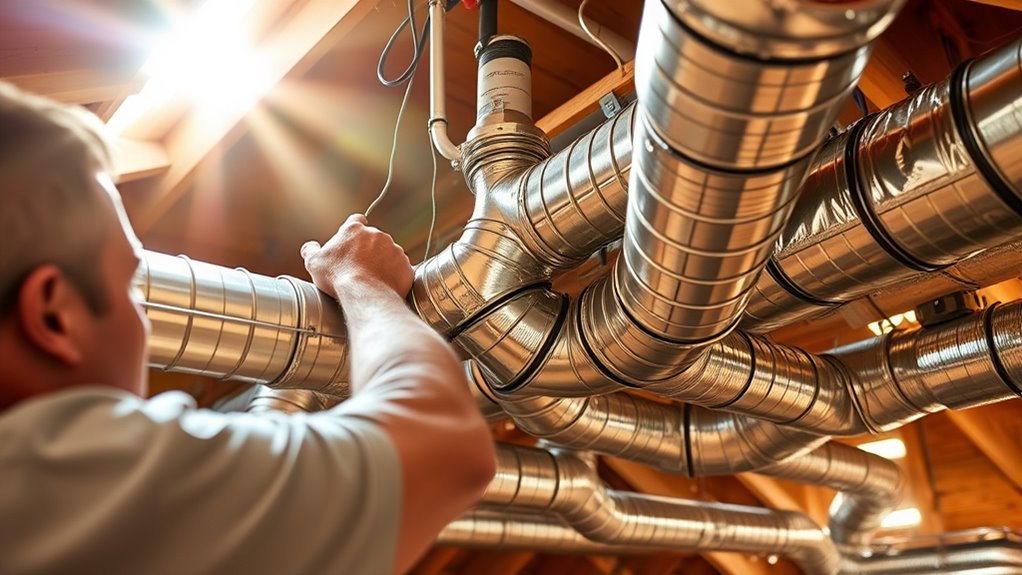
Another common cause of poor airflow is duct leaks or gaps. Duct sealing is an essential step in improving your system’s efficiency. When ducts are leaky, conditioned air escapes before reaching its destination, leading to uneven temperatures and increased energy consumption. Sealing these leaks helps ensure that the air reaching each room is at the proper temperature and volume. Use mastic sealant or metal foil tape designed for HVAC ducts to seal any visible gaps and joints. Pay particular attention to areas where ducts run through unconditioned spaces like attics or crawl spaces, as these are most prone to leaks. Proper duct sealing not only improves airflow but also reduces your energy costs and extends the lifespan of your HVAC system. Proper duct sealing can also help prevent airflow imbalances caused by poorly connected or disconnected duct sections.
Frequently Asked Questions
How Often Should I Schedule Duct Inspections?
You should schedule duct inspections at least every 3 to 5 years to guarantee ideal airflow and energy efficiency. Regular maintenance scheduling helps catch issues like leaks or blockages early, saving you money and improving comfort. If you notice uneven heating or cooling, strange noises, or increased energy bills, consider more frequent inspections. Staying proactive with duct inspection frequency keeps your HVAC system running smoothly and maintains balanced airflow throughout your home.
Can DIY Duct Balancing Cause System Damage?
Yes, DIY duct balancing can cause system damage if you’re not careful. Improper balancing might lead to uneven airflow, putting extra strain on your HVAC system. This can result in increased wear and tear, reducing system lifespan or even causing breakdowns. To avoid damaging your system, it’s best to have a professional handle duct adjustments, ensuring proper airflow without risking damage from improper balancing.
What Signs Indicate Uneven Airflow in My Home?
You might notice uneven airflow when some rooms feel too hot or cold, while others are comfortable. You could also hear unusual noises like whistling or banging, which indicate pressure imbalances. Airflow irregularities can cause drafts or stuffy areas, signaling that your ductwork isn’t balanced. These signs point to pressure imbalances, and addressing them can improve comfort and efficiency in your home’s HVAC system.
Does Duct Sealing Improve Airflow Efficiency?
Yes, duct sealing improves airflow efficiency by preventing leaks and reducing air loss in your duct system. When you seal leaks with mastic or foil tape, you guarantee conditioned air reaches its intended spaces, enhancing comfort and reducing energy bills. Proper duct sealing minimizes pressure drops and uneven airflow, helping your HVAC system operate more effectively. Regularly inspecting and sealing your ducts is a simple step to optimize overall airflow efficiency in your home.
Are There Specific Tools to Measure Airflow Balance?
Sure, airflow balance is so precise that you’ll need specialized tools. Anemometers, especially those with proper anemometer calibration, are essential for measuring airflow accurately. These airflow measurement tools help you identify uneven duct pressure and airflow issues. You might think balancing ductwork is easy, but without the right instruments, you’re just guessing. Invest in quality anemometers to guarantee your HVAC system delivers proper airflow and comfort throughout your home.
Conclusion
By balancing your ductwork, you boost your home’s comfort, cut costs, and create consistent coolness or cozy warmth. Take the time to troubleshoot, tweak, and tighten your system for smoother, stronger airflow. Remember, small steps make significant strides, so stay steady, simplify your setup, and enjoy the seamless, satisfying sensation of a superbly balanced HVAC system. With a bit of effort, you’ll create a cozy, cool, and cost-conscious climate all year round.