
If your garbage disposal is jammed, turn off the power immediately to prevent injury. Use a flashlight to locate the cause of the blockage, often food debris or foreign objects. Insert a hex wrench into the bottom socket and gently turn it back and forth to free the jam. If you’re unsure or the blockage persists, there are additional steps and safety tips to explore that can help you resolve the issue safely and effectively.
Key Takeaways
- Turn off power completely before inspecting or attempting to remove jammed objects.
- Shine a flashlight into the disposal to locate and identify lodged items causing the jam.
- Use a hex wrench or Allen key to manually rotate the blades via the bottom reset socket.
- Carefully remove any visible objects or debris using long-handled tools or tongs.
- Regular maintenance and cleaning help prevent future jams and ensure safe disposal operation.
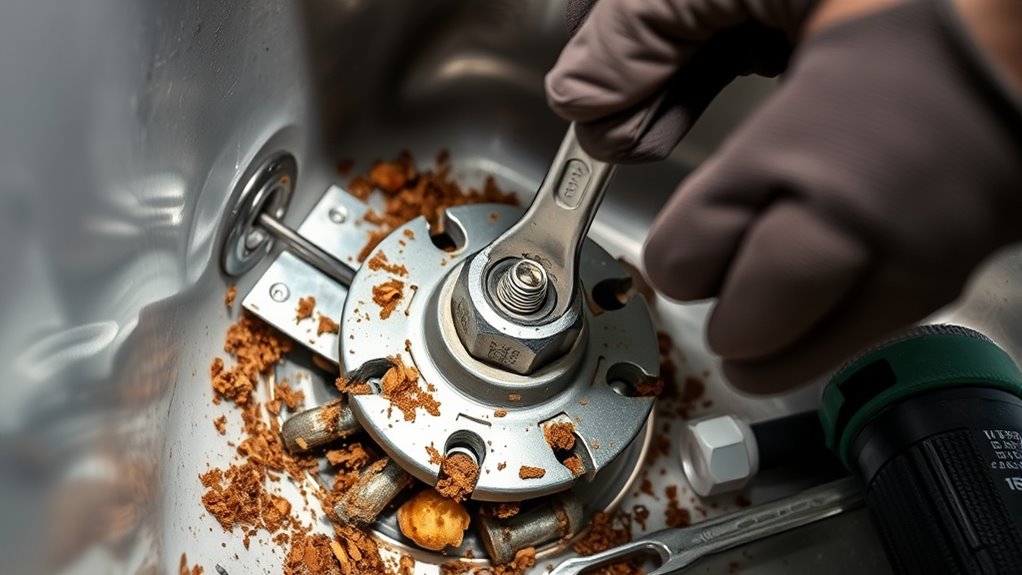
Have you ever tried to run your garbage disposal only to find it completely jammed? It’s frustrating, especially when you’re in a hurry to clear out your sink. Before you panic, take a deep breath and remember that addressing a jam is often straightforward, provided you prioritize plumbing safety and proper disposal maintenance. First, turn off the power to the unit completely. Unplug it from the outlet or switch off the circuit breaker to avoid any accidental activation while you’re working. Never stick your hand down the disposal, no matter how tempting it might be; this can lead to serious injuries. Instead, use a long-handled tool or tongs if needed, and always work with safety in mind.
Once the power is off, grab a flashlight and shine it into the disposal to see what’s causing the jam. Common culprits include forks, small utensils, or tough food debris that have become lodged. Many jams are caused by objects that don’t belong in the disposal, so it’s essential to identify and remove these blockages carefully. Using a hex wrench or Allen key, which usually comes with the unit, insert it into the bottom of the disposal’s reset button or socket. Turn it back and forth gently to free any stuck objects. If you don’t have this tool, you can try to manually turn the blades with a broomstick or similar long, sturdy object, but only after confirming the power is disconnected. Regular disposal maintenance can help prevent future jams, such as inspecting and cleaning your unit periodically, ensuring it stays in good working order.
Remember, proper disposal maintenance not only keeps your garbage disposal functioning efficiently but also enhances plumbing safety by reducing the risk of clogs or leaks that can occur from neglect. If you manage to dislodge the jam but still notice strange noises or sluggish operation afterward, it’s wise to call a professional plumber to check your system.
In many cases, a quick manual intervention solves the problem, but don’t forget that safety always comes first. Never force anything, and if you feel unsure at any point, seek expert help. Taking these steps can save you time, money, and potential injury, ensuring your garbage disposal remains a safe and reliable part of your kitchen. Proper maintenance and safety precautions go a long way in preventing future jams and keeping your plumbing system in top shape.
Frequently Asked Questions
Can I Fix a Jammed Disposal Without Turning off the Power?
You shouldn’t attempt to fix a jammed disposal without turning off the power first, as disposal safety is essential. Turning off the power prevents accidental activation and reduces injury risk. If you’re unsure, follow emergency procedures by unplugging the unit or shutting off the breaker. Always prioritize safety, and avoid sticking objects into the disposal while it’s powered, even if you think you can fix it without turning off the power.
How Do I Prevent My Garbage Disposal From Jamming Again?
To prevent your garbage disposal from jamming again, prioritize regular disposal maintenance and adopt preventive measures. Run cold water before, during, and after use to flush debris, avoid putting hard or fibrous materials down the drain, and grind small ice cubes to clean blades. Schedule routine inspections, tighten loose components, and stay attentive to unusual noises. Consistent care and mindful usage guarantee smooth operation and reduce future jams.
Is It Safe to Use Chemical Drain Cleaners on a Jammed Disposal?
It’s not safe to use chemical drain cleaners on a jammed disposal. These products can damage the disposal’s components and pose chemical safety risks. Instead, turn off the power and try manual methods like using an Allen wrench to free the blades. Avoid pouring harsh chemicals into your disposal, as they can worsen the problem or cause dangerous fumes. Always opt for mechanical solutions to fix a jam safely.
What Tools Are Best for Unjamming a Garbage Disposal?
Ever wonder what tools you need to unjam a garbage disposal? You should grab a hex wrench or Allen key, which are common plumber tools, to manually turn the disposal and free the jam. Household gadgets like pliers or a screwdriver can also help loosen or remove obstructions. These tools are simple, effective, and readily available, making fixing your disposal straightforward without calling a plumber.
When Should I Call a Professional Plumber for Disposal Issues?
You should call a professional plumber if you experience plumbing emergencies, like persistent leaks or severe clogs, or if your disposal needs replacement. Attempting DIY fixes for complex issues can worsen the problem or cause injury. A licensed plumber can quickly diagnose whether your disposal just needs repair or a full replacement, ensuring safe, effective repairs and preventing further damage to your plumbing system.
Conclusion
So, next time your garbage disposal jams unexpectedly, remember that a simple tool and a little patience can often fix the problem. Sometimes, it’s as if the universe aligns, revealing just the right trick at the right moment. You might find that clearing the jam not only restores your sink’s flow but also sparks a quiet confidence in handling small mishaps. After all, life’s little coincidences often remind us we’re more capable than we think.