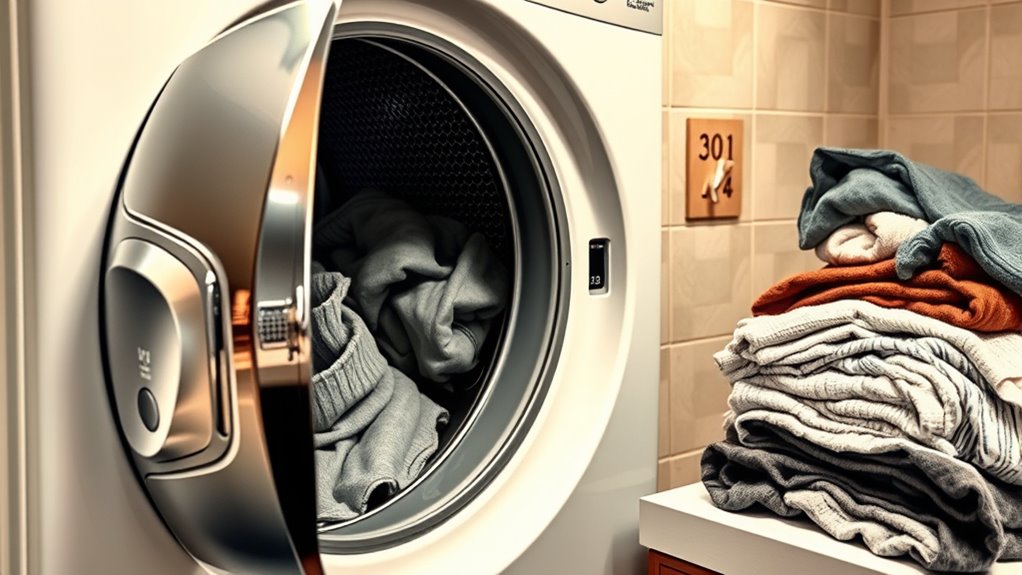

If your dryer isn’t drying clothes well, start by checking the vent hose for lint buildup, kinks, or blockages that restrict airflow. Make sure you clean the lint trap after each load, and inspect the heating element for proper function. Overloading the dryer or uneven placement can also hinder drying, along with dirty moisture sensors. Tackling these issues can boost performance, and if you keep exploring, you’ll find tips to keep your dryer running efficiently.
Key Takeaways
- Ensure the vent hose is free of kinks, blockages, and lint buildup to maintain proper airflow.
- Clean the lint trap after every load and wash it regularly to prevent airflow restrictions.
- Check the heating element for proper operation; a malfunctioning element reduces heat and drying efficiency.
- Avoid overloading the dryer and leave enough space for clothes to tumble freely.
- Clean the moisture sensor and verify the dryer is level to ensure accurate drying cycles.
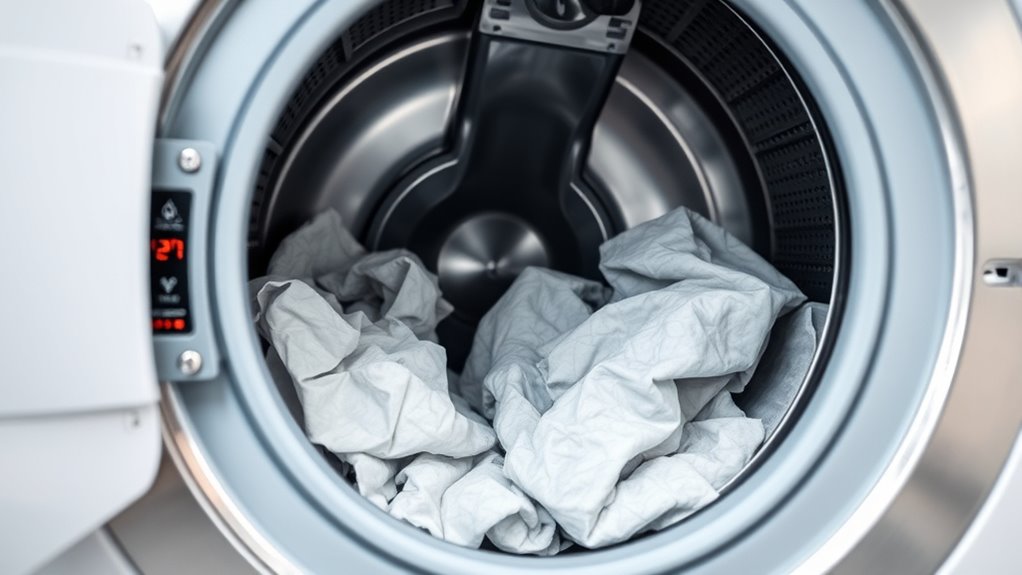
If your dryer isn’t drying clothes properly, it can be frustrating and inconvenient. One common cause is ventilation issues, which prevent hot air from circulating effectively and can leave your clothes damp. Over time, lint and debris can accumulate in the vent system, blocking airflow and reducing your dryer’s efficiency. To fix this, start by inspecting the vent hose behind your dryer; ensure it’s not kinked, crushed, or clogged. If you notice any obstructions, disconnect the vent and clear out any lint buildup. Regularly cleaning the vent system helps maintain proper airflow, so make this a routine part of your dryer maintenance.
Another key factor impacting drying performance is the lint trap. A clogged lint trap restricts airflow within the dryer itself, making it harder for heat to reach your clothes and removing moisture. Always clean the lint trap after each load to keep airflow unobstructed. If you notice lint buildup on the trap or inside the filter housing, remove and wash it thoroughly with warm, soapy water. A clean lint trap improves efficiency and reduces the risk of fire hazards. Neglecting this simple step can markedly extend drying times and strain your appliance.
Beyond ventilation issues and a dirty lint trap, other factors could be at play. For example, if your dryer’s heating element is malfunctioning, it won’t produce enough heat to dry clothes thoroughly. You might feel the dryer tumbling but still see dampness at the end of the cycle. In such cases, testing the heating element or consulting a technician might be necessary. Similarly, overloading the dryer can hinder proper airflow, trapping moisture inside. Be sure not to overload your machine, and give clothes enough space to tumble freely.
It’s also worth checking the moisture sensor, if your dryer has one. Sometimes, these sensors become coated with residue, causing the dryer to prematurely think clothes are dry and shut off before they’re fully dry. Cleaning the sensor with a soft cloth and mild detergent can often solve this problem. Additionally, verify that your dryer is level and stable; if it’s tilted, it can impact how evenly clothes dry. Regular maintenance and checking appliance components can help prevent drying issues and extend your dryer’s lifespan.
Frequently Asked Questions
How Often Should I Clean My Dryer’s Lint Filter?
You should clean your dryer’s lint filter after every load to prevent lint buildup, which can cause drying issues. Maintaining a regular cleaning schedule guarantees your dryer runs efficiently and reduces fire hazards. By removing lint consistently, you improve airflow and drying performance. Don’t skip this simple task—making it part of your routine keeps your dryer functioning at its best and extends its lifespan.
Can Overloading the Dryer Cause It Not to Dry Clothes?
Overloading your dryer can indeed cause clothes not to dry properly. When you pack it too full, lint buildup and restricted airflow can prevent the heating element from working efficiently. This reduces heat circulation, prolonging drying times or leaving clothes damp. To fix this, load fewer items, clean the lint filter regularly, and make certain airflow isn’t blocked. Doing so helps your dryer dry clothes faster and prevents damage.
What Is the Average Lifespan of a Dryer?
Your dryer typically lasts about 10-13 years, but neglecting regular maintenance can shorten this lifespan. If you skip cleaning the lint filter or vent, your dryer works harder, reducing energy efficiency and increasing the risk of breakdowns. Keep up with routine dryer maintenance to extend its life and maintain peak energy efficiency. Don’t wait for it to fail—proactive care ensures your appliance runs smoothly for years to come.
How Do I Reset a Tripped Circuit Breaker for My Dryer?
To reset a tripped circuit breaker for your dryer, locate your breaker box and find the circuit labeled for the dryer. Flip the breaker switch off, then back on to complete the reset procedure. You should feel it click into place. If the breaker trips again, it might indicate an electrical issue or overload. Always make sure your dryer is unplugged before working on the circuit breaker for safety.
Is It Safe to Use a Dryer With a Broken Vent Hose?
Is it safe to use a dryer with a broken vent hose? Probably not. A damaged vent can cause lint buildup, overheating, and even fires. Regular vent cleaning is essential for dryer safety and efficiency. Using a dryer with a broken vent hose risks carbon monoxide buildup and damage to your appliance. Always repair or replace the vent hose promptly to keep your laundry routine safe and effective.
Conclusion
So, next time your dryer isn’t drying clothes, remember these common issues. It’s like finding a missing sock in a laundry pile—small problems can cause big delays. Checking the lint trap or thermostat might seem simple, but it can make a huge difference. Just like spotting a loose wire or a clogged vent, these fixes can restore your dryer’s efficiency. With a little troubleshooting, your laundry day can go from frustrating to smooth sailing again.