
If you’re new to gardening, start with easy vegetables like radishes, lettuce, green beans, carrots, spinach, zucchini, cucumbers, radicchio, snap peas, and radicchio. These grow quickly, require minimal skill, and are forgiving for beginners. Keep your garden simple, use containers or raised beds, and add compost for healthy soil. As you gain confidence, you can expand and try more challenging crops—there’s plenty to learn along the way to a successful harvest.
Key Takeaways
- Choose quick-growing, forgiving vegetables like radishes, lettuce, and green beans to build confidence.
- Start with simple garden layouts using containers or raised beds for easier maintenance.
- Focus on vegetables that require minimal care and thrive in full sun and well-drained soil.
- Incorporate composting to improve soil health and support healthy plant growth.
- Gradually expand your garden as skills develop, adding more challenging crops over time.
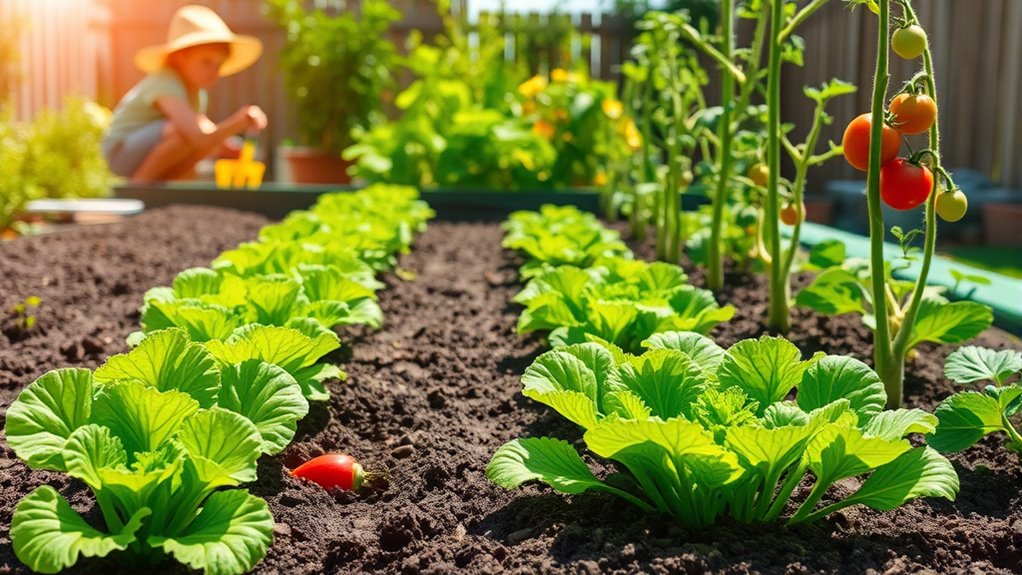
Starting your gardening journey can be exciting, especially when you choose vegetables that are easy to grow and forgiving for beginners. The key to a successful start is planning your garden design carefully. You want to select a spot that gets plenty of sunlight—at least six hours a day—and has good drainage. Keep the layout simple; for example, dedicate a small section of your yard or even containers on a balcony for your first vegetables. Use raised beds or garden boxes to make planting and maintenance easier. Incorporate companion planting principles to maximize space and deter pests naturally. For instance, planting basil near tomatoes can improve flavor and health.
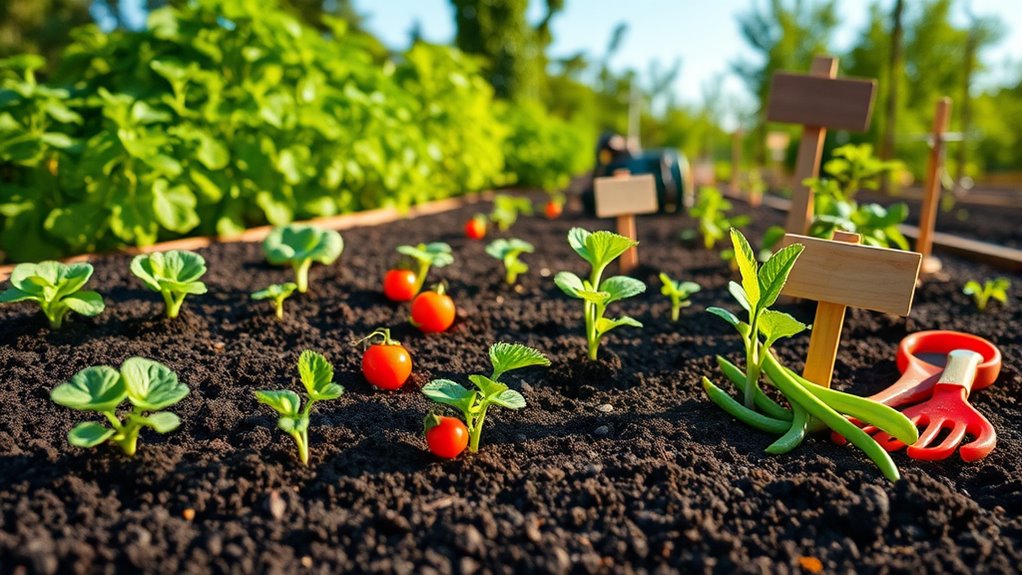
Choose a sunny, well-drained spot and keep your garden simple with containers and raised beds for easy gardening.
When designing your garden, consider accessibility and ease of maintenance. Group similar plants together to streamline watering and weeding. You’ll find that choosing vegetables like radishes, lettuce, and green beans makes your garden more manageable and provides quick rewards. These easy vegetables grow rapidly, so you stay motivated and gain confidence early on. Remember, a well-thought-out garden design minimizes your effort and maximizes your harvest, making the experience more enjoyable.
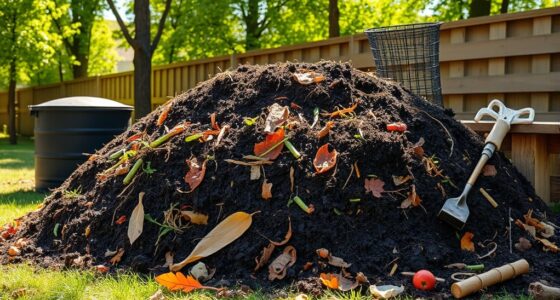
A vital part of successful gardening that often gets overlooked is composting tips. Composting enriches your soil naturally, which is especially important when you’re just starting out. Use kitchen scraps like vegetable peels and coffee grounds, along with yard waste such as grass clippings and leaves. Avoid adding meat or dairy, as they can attract pests. Keep your compost pile moist but not soggy, and turn it regularly to aerate. This encourages decomposition and speeds up the process. Over time, your compost will become dark, crumbly, and earthy-smelling, perfect for nourishing your vegetables. Incorporating soil health practices can further improve plant growth and resilience.
In addition, understanding the importance of contrast ratio can help you select the best lighting conditions and placement to optimize plant growth and visibility in your garden. Proper garden layout can minimize pest problems and improve airflow, which is crucial for healthy plants. Integrating composting tips into your garden design not only boosts plant growth but also reduces waste. Place your compost bin in a convenient spot within your garden layout, ensuring easy access for regular turning and maintenance. This way, you’ll have an ongoing supply of nutrient-rich compost to help your vegetables thrive. Plus, composting teaches patience and responsibility, both valuable lessons for new gardeners. Additionally, learning about garden design principles can further enhance your overall success and enjoyment.
Starting with easy vegetables allows you to focus on developing your skills without feeling overwhelmed. Keep your garden design simple, and don’t forget the importance of composting tips for healthy soil. As you gain experience, you can expand your garden and experiment with more challenging crops. For now, enjoy the process, learn as you go, and relish the satisfaction of growing your own fresh vegetables. Gardening is a rewarding journey, and with these basics, you’re well on your way to success.
Frequently Asked Questions
What Is the Best Time of Year to Start Beginner Vegetables?
You should start planting beginner vegetables during the early spring or late summer, depending on your local climate. This timing allows for seasonal planting, giving your plants the best chance to thrive. Before planting, make sure to prepare your soil by enriching it with compost or organic matter. This helps your vegetables grow strong and healthy, ensuring a successful gardening experience from the very beginning.
How Much Space Do I Need for Easy Vegetables?
Imagine a cozy corner in your yard or balcony, where sunlight dances on your garden bed. For easy vegetables, a 4×4 foot garden bed or a few containers with 12-inch diameter suffice. You don’t need vast space—just enough room to let your plants breathe and grow. With this setup, you’ll enjoy fresh produce without feeling overwhelmed, turning even small areas into lush, productive vegetable patches.
Do I Need Special Tools or Equipment?
You don’t need many special tools to start your garden. Basic items like a trowel and watering can will do. Make sure your garden soil is rich and well-draining, as healthy soil promotes strong vegetable growth. Gardening gloves are helpful to protect your hands from dirt and thorns. As you gain experience, you can add more tools, but initially, simple equipment and good soil are all you need to get started.
How Often Should I Water My Beginner Vegetables?
Think of your garden as a delicate dance, where timing is everything. You should water your beginner vegetables when the soil moisture levels drop, usually about 2-3 times a week, depending on weather conditions. Stick to a consistent watering schedule, making sure the soil stays moist but not waterlogged. Checking soil moisture regularly helps you maintain the perfect balance, giving your plants the hydration they need to thrive.
What Common Pests Should I Watch Out For?
You should watch out for common pests like aphids, beetles, and caterpillars. Practice pest identification to spot issues early. When you notice pests, use organic control methods such as neem oil, insecticidal soap, or handpicking to keep your garden healthy. Regularly inspect your plants, and address pest problems promptly to prevent damage. Staying vigilant and using natural remedies helps protect your vegetables without harming beneficial insects.
Conclusion
So, starting your gardening journey is simple and satisfying. With these ten tasty, easy-to-grow vegetables, you’ll quickly see your skills blossom. Don’t doubt your dedication—dive into dirt, discover delightful yields, and enjoy the journey. Remember, patience and perseverance produce plentiful produce. Gardening is a gratifying game of growth, giving you green thumbs and garden glee. Get your gloves on, gather your greens, and watch your gardening goals grow grandly!