
To start your backyard compost pile, choose a flat, well-drained spot with partial sunlight away from fences and neighbors. Gather brown materials like leaves and straw, and green scraps such as vegetable peels and coffee grounds, chopping large items for faster breakdown. Layer browns and greens, keeping the pile moist but not soggy. Turn it regularly to aerate, monitor temperature, and keep odors at bay. If you keep at it, you’ll discover how to transform waste into rich soil.
Key Takeaways
- Choose a flat, well-drained spot with partial sunlight, away from fences and neighbors.
- Gather brown (carbon-rich) materials and green (nitrogen-rich) kitchen scraps, shredding large items for faster decay.
- Build the pile in layers, starting with coarse browns, alternating with greens, maintaining a balance of moisture and airflow.
- Regularly turn the compost to introduce oxygen, monitor moisture levels, and prevent odors and pests.
- Wait until the compost is dark, crumbly, earthy-smelling, and temperature drops before applying it to your garden.
Choosing the Perfect Location for Your Compost Bin

Choosing the right spot for your compost bin is essential to guarantee efficient decomposition and minimize odors. Look for a location with good drainage to prevent water buildup and soggy compost. Partial sunlight helps keep the pile warm, speeding up microbial activity. Make sure the site is accessible year-round for easy maintenance and turning. Avoid placing your bin against fences or too close to neighbors to reduce potential smells and pests. Select a flat, stable surface to keep the bin steady. Consider using a shaded spot if you live in a hot climate to prevent overheating. Also, ensure there’s enough space around the bin for airflow and easy access for turning and harvesting compost. Proper placement improves odor control, decomposition rate, and overall composting success. Additionally, choosing a location with proper ventilation can help maintain optimal conditions for compost breakdown. Adequate airflow is crucial for aerobic decomposition, which speeds up the process and reduces unpleasant odors. Incorporating proper site selection can further enhance compost efficiency by reducing environmental impact and encouraging healthy microbial activity. Ensuring good air circulation around the compost pile helps prevent anaerobic conditions that can cause foul smells. Maintaining the right microbial environment is also vital for efficient composting and avoiding pests or odors.
Gathering and Preparing Your Materials
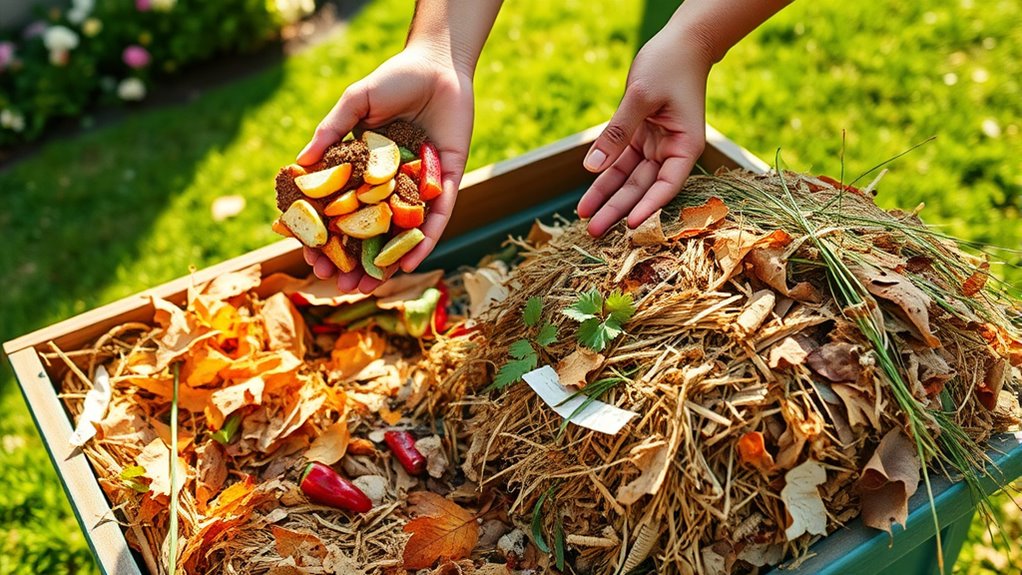
Start by gathering suitable materials like brown leaves, straw, and green kitchen scraps. Prepare your items by shredding or chopping large pieces to speed up decomposition. Properly prepared materials will help create a balanced, efficient compost pile. Additionally, incorporating natural filtration systems can enhance the composting process by maintaining optimal conditions. Using energy-efficient tools can also reduce environmental impact during the composting process. Being aware of the weight of compost bins can help you choose appropriate containers and ensure safe handling during setup. Incorporating proper aeration techniques can further improve compost breakdown and reduce odors. Implementing moisture control methods can optimize microbial activity and accelerate composting.
Collecting Suitable Materials
Gathering suitable materials is a essential first step in creating a successful compost pile. Your goal is to collect a balance of brown and green materials that decompose efficiently. First, gather dry leaves, straw, or shredded paper—these are rich in carbon. Second, collect kitchen scraps like vegetable peels, coffee grounds, or fruit leftovers—these provide nitrogen. Third, add bulky brown materials such as small branches or wood chips to improve aeration. Fourth, chop or tear large items to increase surface area, speeding up decomposition. Fifth, maintaining proper moisture levels is crucial for microbial activity and decomposition speed. Properly managing oxygen supply is also essential for preventing odors and encouraging aerobic decomposition. Adequate air circulation helps maintain optimal conditions for microbial life, ensuring faster composting. Regularly turning the pile can help distribute oxygen evenly and prevent compaction, which is vital for microbial health. Aim for a mix that maintains moisture and airflow, with a good ratio of browns to greens. Incorporating visual and auditory cues can help monitor the compost’s progress and ensure optimal conditions. Avoid adding meat, fats, or pet waste, as these can cause odors or attract pests. Properly selected materials set the foundation for a thriving compost pile.
Preparing and Shredding Items
Preparing your materials properly can make a big difference in how quickly and effectively your compost decomposes. Shredding or chopping large or coarse items increases their surface area, helping microbes break them down faster. Use scissors or a garden shredder for thick branches, tough leaves, or vegetable stems. Smaller pieces encourage better aeration and moisture absorption, which speeds up the composting process. Avoid adding whole fruits, large branches, or bulky materials without preparation, as they take longer to decompose and can cause odors. Confirm green kitchen scraps are chopped into manageable bits, and dry leaves or straw are crumbled up. Properly prepared materials balance moisture, airflow, and microbial activity, making your compost pile work more efficiently from the start. Effective composting techniques involve understanding how material size impacts microbial activity and decomposition rates.
Building Your Compost Pile Step-by-Step
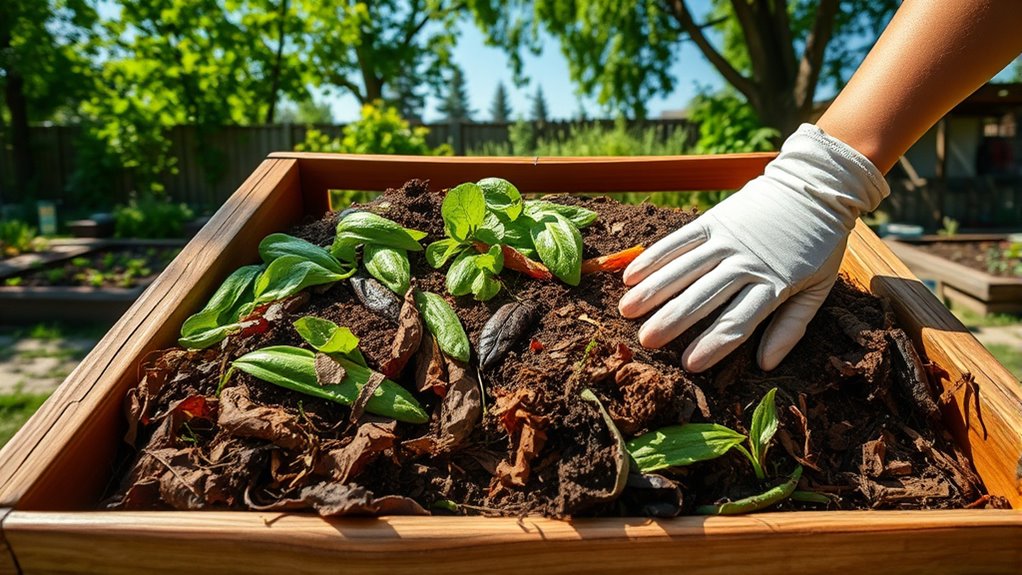
Start by laying down a 4-6 inch base of coarse brown materials to guarantee good airflow. Then, add alternating layers of browns and greens, keeping green layers no thicker than a few inches to prevent excess moisture. Throughout the process, water the pile lightly to keep it damp and turn it regularly to maintain proper airflow. Remember to monitor the temperature of your compost to ensure optimal decomposition conditions. Incorporating simple, routine maintenance helps keep your compost pile functioning efficiently and prevents issues like odors or pests. Additionally, understanding the roles of different compost materials can improve your results. Regularly checking the composition of your pile can help you adjust layers as needed for better composting efficiency. Learning about air circulation techniques can further enhance the speed of compost breakdown and prevent anaerobic conditions.
Prepare the Base Layer
To create a stable foundation for your compost pile, begin by laying down a 4-6 inch layer of coarse, bulky brown materials such as twigs, small branches, or wood chips. This base promotes aeration and drainage, preventing compaction. As you build, picture:
- A thick, textured blanket of dry leaves, straw, or shredded paper spreading evenly.
- A scattering of chopped or shredded woody materials creating air pockets.
- The contrast between the rough brown layer and the smoother green layers to come.
- A moist, crumbly surface that feels slightly damp to the touch, ready to support the next layers.
- Ensuring the proper airflow and moisture levels at this stage will help maintain an active composting process.
- Remember, maintaining the right balance of brown and green materials is essential for efficient decomposition, supporting a thriving compost environment.
This base guarantees your compost has proper airflow and moisture levels, setting the stage for efficient decomposition.
Layer Browns and Greens
After laying down the base layer, you’ll begin adding the main bulk of your compost pile by layering browns and greens. Start with a 3-6 inch layer of brown materials like leaves, straw, or wood chips. These provide carbon and help absorb excess moisture. Next, add a thinner 2-4 inch layer of green materials such as kitchen scraps, grass clippings, or vegetable trimmings, which supply nitrogen. Aim to keep brown layers about twice as thick as green layers to balance airflow and moisture. Shred or chop larger items for faster decomposition. Avoid adding large amounts of wet or smelly greens at once to prevent odors. Continue alternating brown and green layers until your pile reaches the desired size, ensuring no food or scraps are exposed to pests.
Maintain Moisture and Airflow
Maintaining proper moisture and airflow is essential for efficient composting. Without the right balance, your pile won’t heat up or decompose properly. To keep things on track, consider these steps:
- Imagine squeezing a damp sponge—your compost should feel moist but not soggy.
- Picture turning the pile with a pitchfork, mixing materials to create pockets of air.
- Envision a breeze flowing through the pile, providing fresh oxygen for microbes.
- Visualize adding water sparingly, just enough to keep the materials slightly damp, avoiding excess moisture that can cause odors.
Managing Moisture and Aeration for Optimal Decomposition
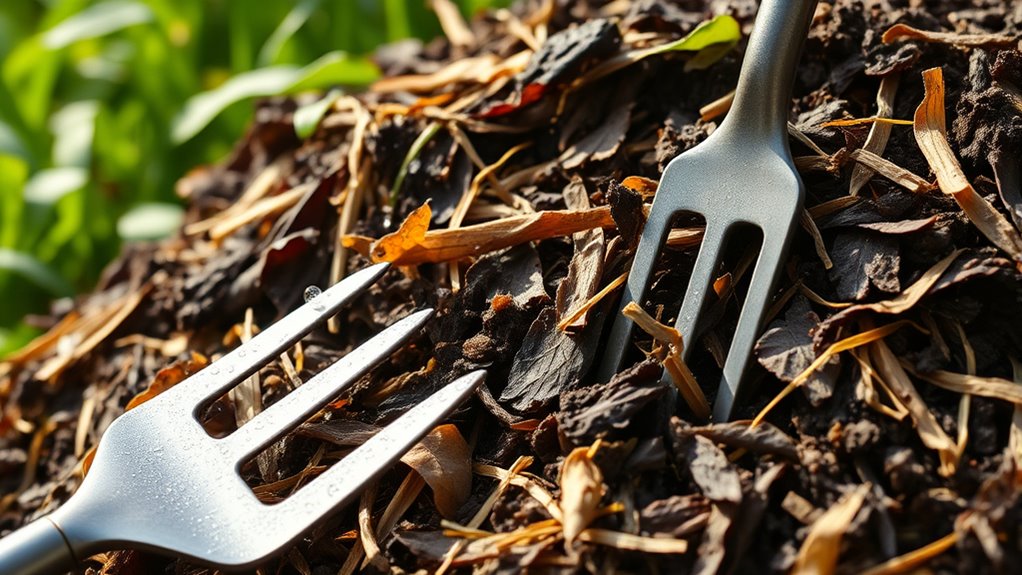
Proper moisture and aeration are essential for keeping your compost pile active and odor-free. Without enough air, beneficial microbes can’t thrive, and excess moisture leads to foul smells. To maintain balance, monitor your pile regularly. Add water if it feels dry, aiming for a dampness like a wrung-out sponge. If it’s too wet, turn the pile to introduce oxygen and spread out moisture. Use this table to help you understand the impact of moisture and aeration:
| Too Dry | Just Right | Too Wet | Needs Turning |
|---|---|---|---|
| Microbes slow | Microbial activity peaks | Odors develop | Oxygen enters the pile |
| Slower decomposition | Efficient breakdown | Pests attracted | Reduces smell |
| Add water | Maintain moisture | Drain excess water | Reintroduce air |
Balancing moisture and airflow keeps your compost thriving.
Turning and Maintaining Your Compost Regularly

Turning your compost regularly is essential to keep it active and odor-free. It introduces oxygen, speeds up decomposition, and prevents foul smells. To do this effectively, follow these steps:
- Use a pitchfork or shovel to lift and flip the layers, mixing brown and green materials.
- Break apart clumps and shredded large items to expose more surface area.
- Check moisture levels; add water if the pile feels dry, but avoid making it soggy.
- Monitor temperature; a healthy pile should stay between 130°F and 160°F, indicating active microbial activity.
Recognizing When Your Compost Is Ready for Use
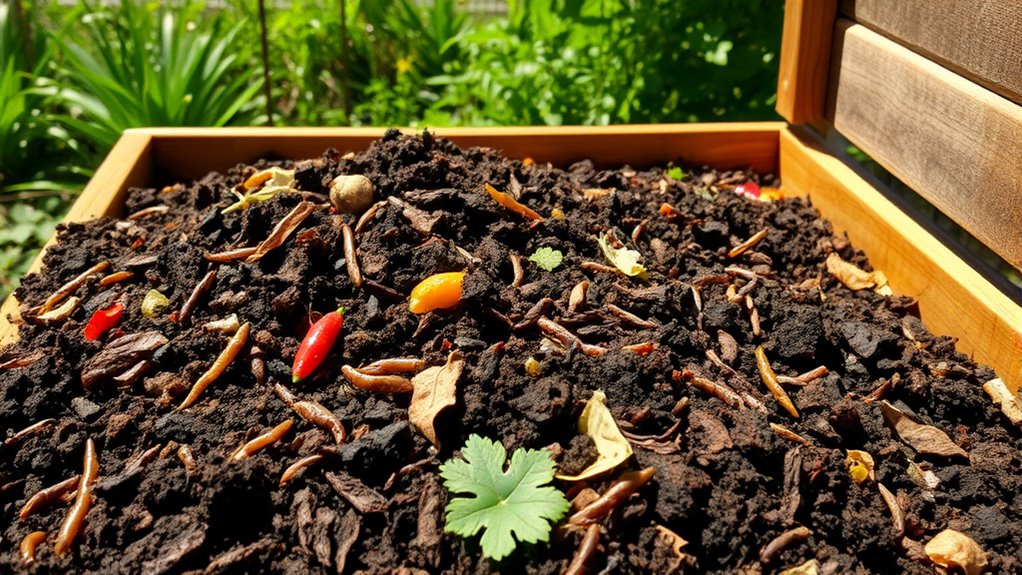
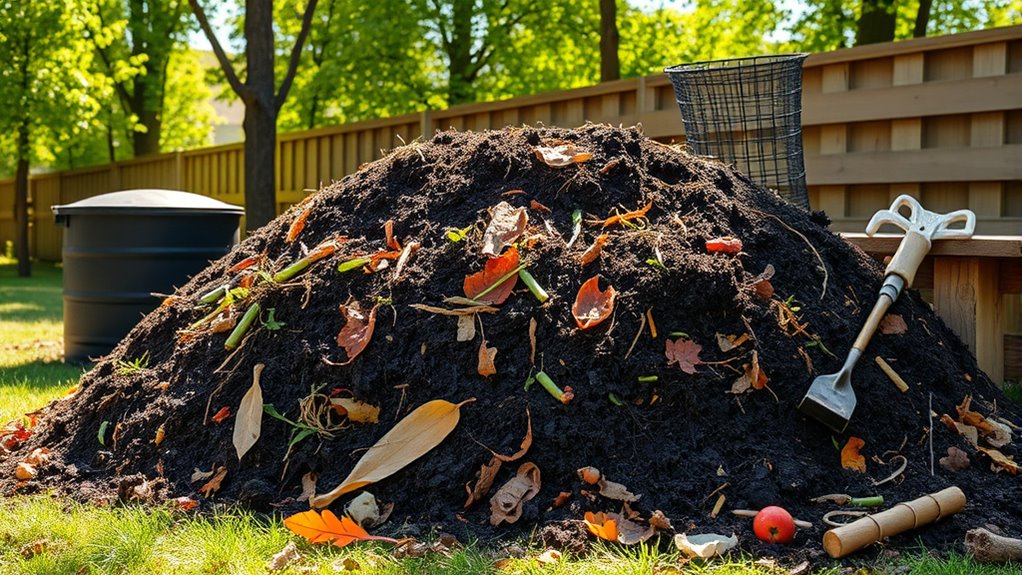
Knowing when your compost is ready to use makes all your effort worthwhile. You’ll recognize finished compost by its dark, rich color and crumbly texture, similar to garden soil. It should have an earthy smell, not an odor of rot or ammonia. Look for uniformity—no large chunks of food, leaves, or other recognizable materials. The original ingredients should be broken down completely. If you sift through the pile, you shouldn’t find any recognizable scraps. The temperature will have dropped to ambient levels, indicating microbial activity has slowed. Finished compost should be moist but not soggy, resembling a damp sponge. When you see these signs, it’s time to harvest and use your compost to enrich your garden soil, providing nutrients and improving soil structure.
Applying Finished Compost to Your Garden
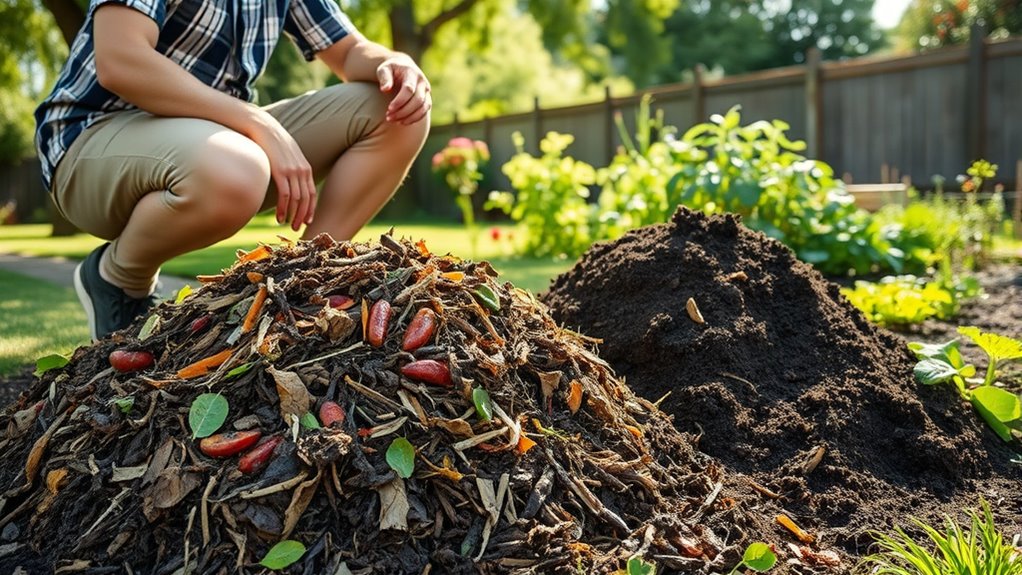
Once your compost has turned dark, crumbly, and earthy-smelling, it’s ready to be applied to your garden. Visualize spreading this rich material over your soil to boost plant health. Here’s how to do it effectively:
- Scatter about half an inch of compost evenly across the soil surface, imagining a fine, dark blanket covering your garden beds.
- Use a rake or hoe to gently work the compost into the top 6 inches of soil, like mixing chocolate chips into cookie dough.
- Mulch around your plants with a layer of compost to conserve moisture and suppress weeds.
- Water thoroughly, ensuring the compost integrates well and helps roots access nutrients.
This process revitalizes your garden, encouraging vibrant growth and healthy harvests.
Frequently Asked Questions
How Long Does It Typically Take for Compost to Be Ready?
It usually takes about three to six months for your compost to be ready, depending on factors like temperature, moisture, and how often you turn it. If you manage the pile well, keep it moist, aerate regularly, and maintain the right balance of browns and greens, you’ll see the compost darken, smell earthy, and become crumbly. Patience is key—good compost improves your garden soil and promotes healthy plant growth.
Can I Compost in Winter or Cold Climates?
Yes, you can compost in winter or cold climates. To keep your compost active, choose a sheltered, well-drained spot and insulate the pile with straw, leaves, or composting blankets. Keep it moist, and consider using a tumbling bin for easier turning and temperature control. Adding more browns can help retain heat, and maintaining some warmth encourages microbial activity, ensuring your compost continues to break down even in freezing temperatures.
What Should I Do if My Compost Smells Bad?
If your compost smells bad, it likely has too much green material or moisture, causing anaerobic conditions. To fix this, add more brown materials like dry leaves or straw to balance the nitrogen. Turn the pile to increase oxygen flow, and make certain it’s not too wet—add dry materials if needed. Maintaining proper layering and moisture levels will help eliminate odors and promote healthy decomposition.
How Do I Prevent Pests From Accessing My Compost?
To prevent pests from accessing your compost, keep it well-managed by layering browns and greens properly, with browns being two to three times thicker. Cover food scraps with a thick layer of browns and avoid adding meat, dairy, or fats. Maintain moisture levels, turn the pile regularly to aerate, and consider using enclosed bins or tumblers. Placing the pile away from structures and sealing any openings also helps keep pests out.
Is It Necessary to Add Compost Activators or Microbes?
You don’t need to add compost activators or microbes because your pile naturally attracts them as you layer browns and greens. When you combine organic materials, microbes already present in the environment will do the work, especially if you maintain proper moisture and aeration. So, focus on balancing your layers and turning the pile regularly—your compost will develop rich, healthy soil without extra additives.
Conclusion
Starting a compost pile is a simple way to reduce waste and enrich your garden. Did you know that composting can cut household waste by up to 30%? By following these steps, you’ll turn kitchen scraps and yard waste into nutrient-rich soil in just a few months. Stay consistent with your maintenance, and you’ll enjoy healthier plants and a greener backyard in no time. Happy composting!