To grow a lush lawn, water early in the morning between 6-10 a.m. for deep soaking and minimal evaporation. Mow when your grass reaches about 2.5 to 3 inches, ensuring you never cut more than one-third of the blade at once. Regular watering and proper mowing help develop resilient, vibrant grass. Keep practicing these techniques consistently, and you’ll discover even more tips for achieving that perfect, healthy lawn you’re after.

Get everyday essentials delivered free with Prime
- Fast, free delivery on millions of items
- Prime Video, Amazon Music and more included
- Member-only deals all year
Key Takeaways
- Water early in the morning between 6-10 a.m. to maximize absorption and minimize evaporation.
- Water twice a week during hot months, adjusting based on rainfall and soil moisture levels.
- Mow grass at 2.5 to 3 inches, avoiding cutting more than one-third of the blade at once for healthy growth.
- Mow regularly, about once a week, using sharp blades to promote a dense, even lawn.
- Tailor watering and mowing practices to your grass type and season for optimal lawn health.
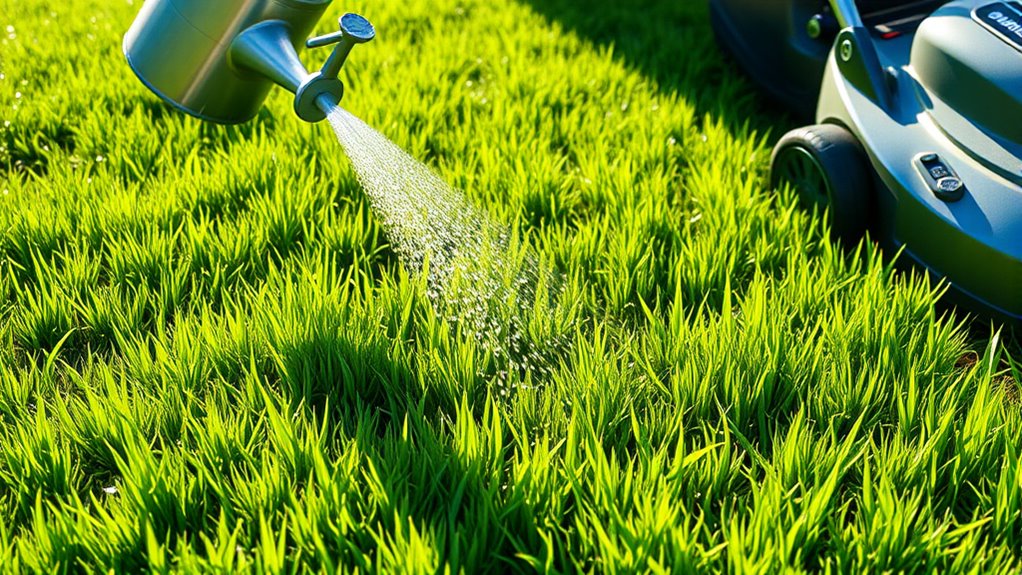
Are you wondering how to achieve a lush, green lawn that stands out in your neighborhood? The secret lies in understanding the right watering schedule and mowing height. It’s not just about watering frequently or cutting short—it’s about timing and precision. When it comes to watering, you want to establish a schedule that encourages deep root growth without overwatering. Typically, you should water your lawn early in the morning, ideally between 6 and 10 a.m., when the sun is gentle and the wind is calmer. This helps minimize evaporation, ensuring your grass gets enough moisture to stay healthy and vibrant. During hot summer months, you might need to water twice a week, but always tailor this based on rainfall and soil type. Overwatering can lead to shallow roots and fungal problems, so it’s essential to monitor your lawn’s response. Using a soil moisture gauge can help you determine when it’s time to water again, keeping your schedule efficient and effective. Proper watering techniques are crucial for fostering resilient and healthy grass.
When it comes to mowing, setting the right mowing height is equally important for a lush lawn. Cutting your grass too short can stress the plants, weaken the root system, and make your lawn more susceptible to pests and disease. On the other hand, mowing too high can encourage thatch buildup and reduce sunlight penetration. The ideal mowing height depends on the grass type, but a good rule of thumb is to keep it around 2.5 to 3 inches for most cool-season grasses, and slightly higher for warm-season varieties. Always keep your mower blades sharp to guarantee a clean cut, which reduces stress and promotes healthy growth. Regular mowing—about once a week, or more during peak growing seasons—helps maintain an even, dense lawn. Remember to never remove more than one-third of the grass blade length at once; this prevents shock and allows your grass to recover quickly.
As an affiliate, we earn on qualifying purchases.
Frequently Asked Questions
How Can I Identify When My Lawn Needs Watering?
You can tell your lawn needs watering when the color turns dull or pale green, indicating stress. Check soil moisture levels by sticking a finger or a soil moisture meter into the ground; if it feels dry a few inches down, it’s time to water. Consistent signs like footprints that remain visible or grass that’s not springy also suggest your lawn needs hydration to stay healthy.
What Types of Grass Are Most Tolerant to Drought?
Drought-resistant grasses, drought-tolerant grasses, and grasses with high tolerance to drought stand out as top choices for dry conditions. These grasses, like buffalo, Bermuda, and zoysia, excel in conserving water, thriving with less frequent watering, and enduring hot, dry climates. By selecting these types, you guarantee your lawn remains lush and healthy even during droughts, maximizing grass tolerance and reducing water dependency efficiently.
How Does Soil Type Affect Watering and Mowing Schedules?
Your soil type greatly influences your watering and mowing routines. If your soil has high clay content, it retains water longer, so you should water less frequently but deeply, and mow higher to protect the grass roots. Sandy soils drain quickly, requiring more frequent watering. For peak health, consider soil composition and drainage efficiency, adjusting your schedule accordingly to prevent overwatering or dehydration, ensuring your lawn stays lush and healthy.
Can Overwatering Harm My Lawn’s Health?
Ironically, overwatering your lawn might seem like the best way to keep it lush, but it actually invites lawn disease and pests. Too much water suffocates roots, weakening your grass and making it vulnerable to issues. Instead, stick to proper watering and mowing schedules, and focus on pest control to maintain a healthy, vibrant lawn. Overwatering does more harm than good—trust me, it’s not your lawn’s friend.
What Are Eco-Friendly Lawn Watering and Mowing Practices?
You can practice eco-friendly maintenance by adopting sustainable lawn care methods like watering early mornings or late evenings to reduce evaporation and conserve water. Use mulching mowers to recycle grass clippings and retain soil moisture, and opt for organic fertilizers. These eco-friendly practices promote a healthy, lush lawn while reducing environmental impact, making your yard an eco-conscious space that benefits both the environment and your garden’s importance.
As an affiliate, we earn on qualifying purchases.
Conclusion
Think of your lawn as a living garden that thrives with just the right care. When you water early in the morning and mow at the right height, you’re nurturing it like a gentle gardener tending delicate flowers. I once saw a neighbor’s grass turn green again after consistent watering and proper mowing—like a miracle. Remember, a healthy lawn isn’t built overnight, but with patience and the right timing, your yard will flourish like a well-tended masterpiece.
As an affiliate, we earn on qualifying purchases.
As an affiliate, we earn on qualifying purchases.
Halloween Picks
halloween
As an affiliate, we earn on qualifying purchases.