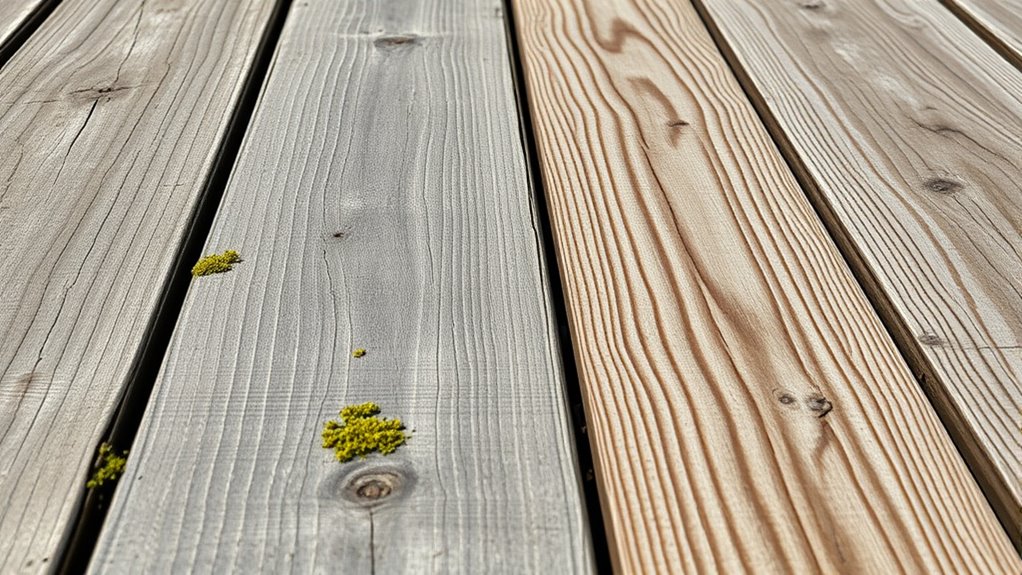

To refresh a dull deck, start by evaluating its condition and cleaning materials. Remove debris, wet the surface, and use a suitable cleaner based on your deck’s material, whether wood or composite. Use a stiff brush or low-pressure power washer, and guarantee the surface is thoroughly cleaned and dry. Once clean, apply a stain or sealant evenly that matches your style, and follow maintenance tips to keep it looking fresh. Continuing will reveal more expert steps.
Key Takeaways
- Remove debris and dirt with sweeping or blowing before cleaning to prevent surface scratches.
- Choose appropriate cleaners based on deck material (wood, composite, concrete) for effective stain removal.
- Use low-pressure washing or gentle scrubbing with a brush and mild soap to clean thoroughly without damage.
- Allow the deck to dry completely, then test stain on a small area before full application for even color.
- Reapply stain or sealant every 2-3 years to restore appearance and protect against dullness.
Assessing Your Deck’s Condition and Materials
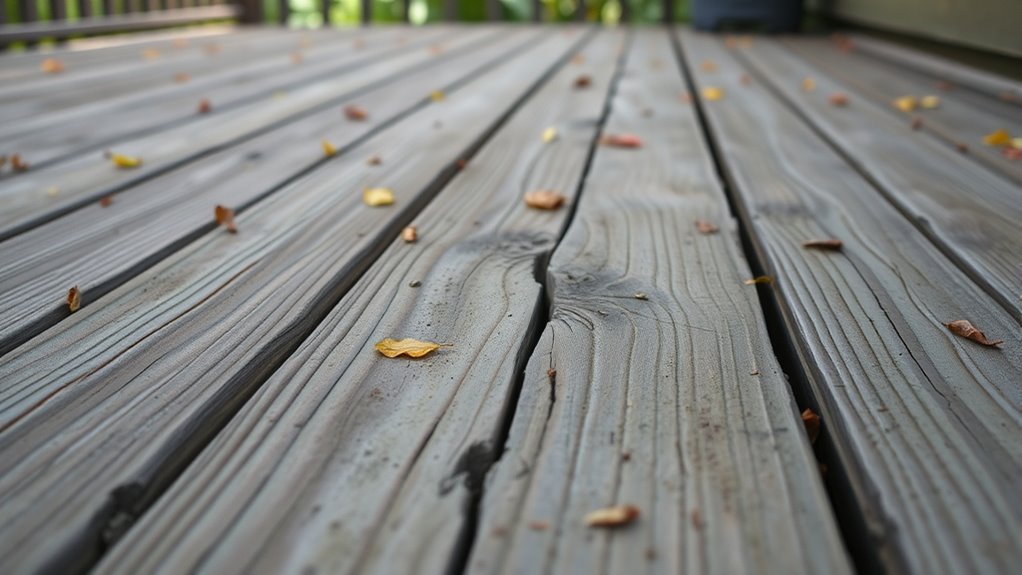
Before beginning any cleaning or staining project, it’s essential to evaluate your deck’s condition and materials. Check for signs of rot, loose boards, splintering, or insect damage. These issues affect how you’ll approach cleaning and whether repairs are needed first. Determine the decking material—wood, composite, or a mix—as each requires different cleaning methods and products. Look for mold, mildew, or stains that may need special treatment. Consider the age of your deck and previous maintenance history, which influence its overall health. Identifying the type of wood or composite helps choose the right cleaners and stains. Also, inspect for areas with peeling or flaking finish, as these will need extra attention. Proper assessment ensures you select the best cleaning approach and products for a successful project.
Properly Preparing Your Deck for Cleaning
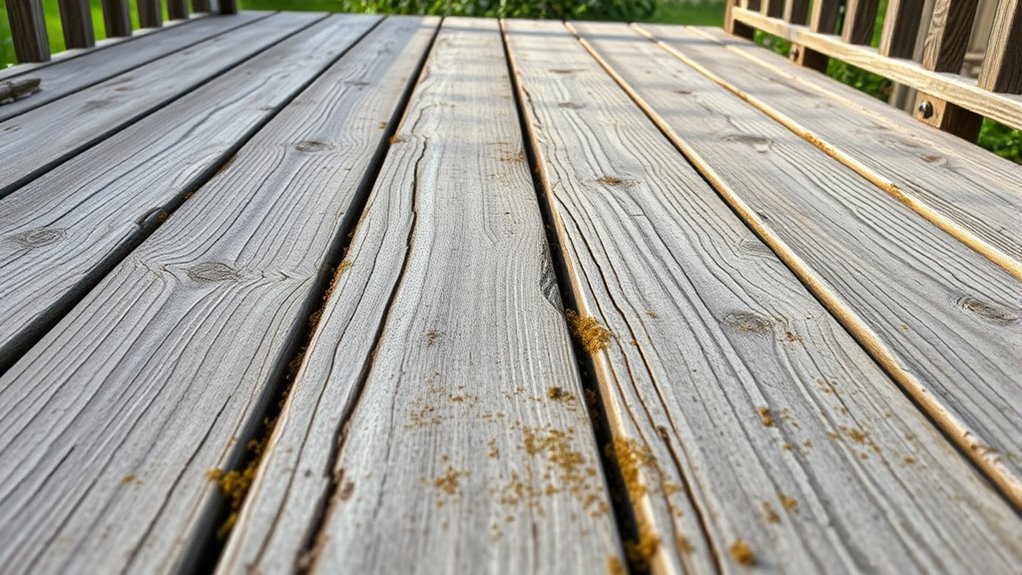
Properly preparing your deck for cleaning guarantees the process is effective and minimizes potential damage. First, remove loose debris like leaves and dirt with a broom or blower. Wet the surface with water to help cleaners penetrate and work better. Understanding the contrast ratio helps in selecting cleaning methods that prevent surface damage while maintaining visual quality. Additionally, knowing the material compatibility of cleaning agents ensures you choose the safest options for your deck’s surface. Recognizing the importance of contingency plans can also prepare you for unexpected issues during cleaning or staining projects. Here’s a quick guide:
| Step | Tool/Method | Purpose |
|---|---|---|
| Remove debris | Broom or leaf blower | Prevent scratching |
| Wet the surface | Garden hose | Enhance cleaner absorption |
| Section the deck | Tape or markers | Facilitate targeted cleaning |
| Choose cleaner | Manufacturer’s product | Protect material integrity |
| Final inspection | Visual check | Ensure readiness for cleaning |
Furthermore, understanding water-resistant materials can help you select the most appropriate cleaning techniques to preserve your deck’s durability.
Effective Techniques for Cleaning Different Deck Types
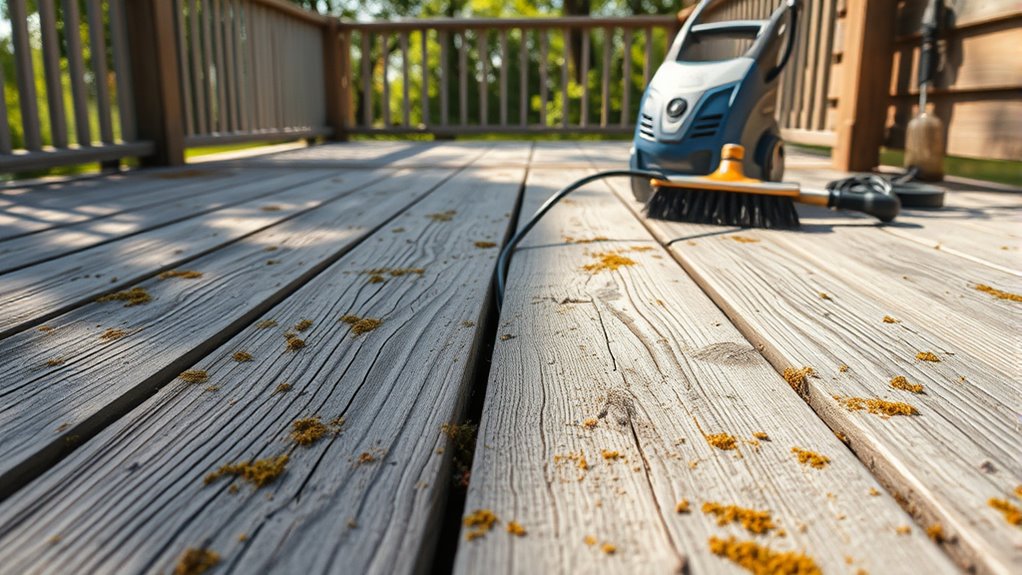
Different types of decks require tailored cleaning techniques to guarantee effective results without causing damage. For wooden decks, use a stiff-bristled brush and mild soap, scrubbing along the grain to avoid splintering. Regular maintenance prevents buildup and prolongs cabinet life. For composite decks, opt for manufacturer-approved cleaners and scrub gently with nylon brushes, working into the textured surface. Redoing a pressure wash with low pressure (under 1200 psi) helps clean concrete or stone decks without surface damage. Mildew or stains on cedar or redwood decks respond well to oxygen bleach mixed with water, applied carefully. Always rinse thoroughly, avoiding high-pressure jets that could harm delicate surfaces. Understanding Free Floating concepts can help in planning maintenance routines that preserve your deck’s natural beauty over time, especially when considering sauna and cold plunge systems that may influence outdoor environments. Incorporating knowledge of surface preservation techniques ensures your deck remains durable and visually appealing for years to come, and being aware of material-specific cleaning methods can prevent unintended damage. Additionally, using eco-friendly cleaning products can further protect the environment while maintaining your deck’s appearance.
Tips for Staining and Protecting Your Deck’s Surface
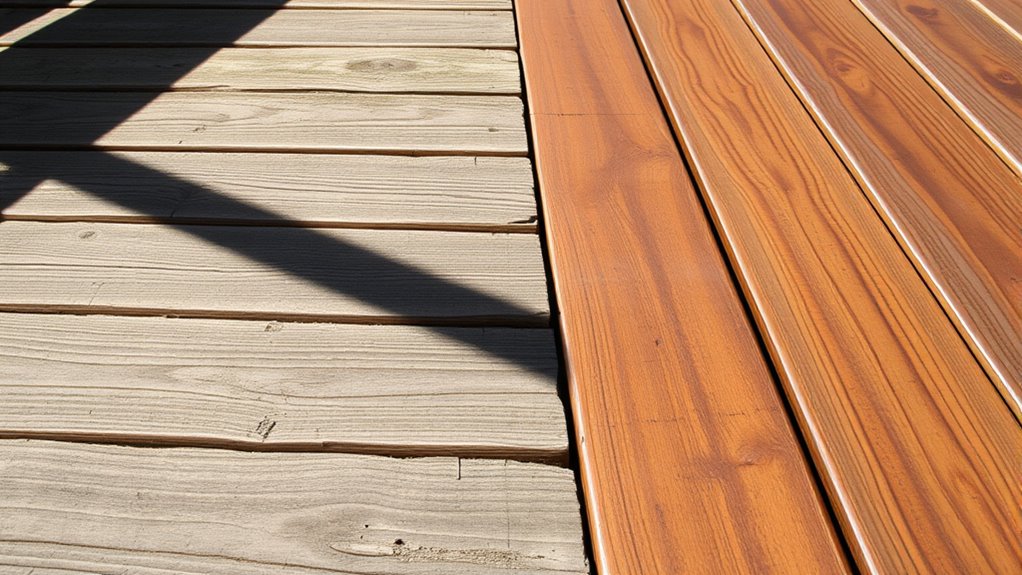
Staining your deck enhances its appearance and provides essential protection against the elements. To get the best results, make sure the surface is completely clean and dry, waiting 2-3 days after cleaning. Test your stain on a small area first to check color and absorption. Apply the stain evenly using a brush, roller, or sprayer suited for decks, working it into the wood grain for uniform coverage. Avoid pooling or thick coats, which can lead to uneven drying. Follow the manufacturer’s instructions for drying times and the number of coats needed. Regularly inspect your deck for signs of wear or damage, and reapply stain or sealant every 2-3 years to maintain protection. Proper application prolongs your deck’s lifespan and keeps it looking fresh. Incorporating energy-efficient staining products can also contribute to a more sustainable outdoor space. Additionally, choosing appropriate finishes can help ensure your deck remains protected and visually appealing over time. Using proper application techniques can further improve the longevity and appearance of your stained deck, ensuring a smooth, even finish. Paying attention to long-term maintenance can help you keep your deck looking new for years to come.
Maintenance Strategies to Keep Your Deck Looking Fresh

Regular maintenance is essential to keep your deck looking fresh and prevent costly repairs. Consistent care extends its lifespan and maintains its appearance. To do this effectively, consider these strategies:
- Sweep regularly to remove debris that can cause mold and decay.
- Rinse with water periodically to wash away surface dirt and prevent stains.
- Reapply sealant or stain every 2-3 years based on exposure and material type.
- Avoid excessive power washing, which can damage fibers.
- Conduct seasonal inspections to identify and address potential issues early, ensuring your deck stays in top condition.
- Incorporate regular cleaning routines into your maintenance plan to sustain the deck’s appearance and integrity over time.
- Using the right cleaning products and methods can also help preserve the natural material integrity of your deck.
- Consider the climate exposure when planning your maintenance schedule, as different weather conditions can impact the deck’s condition and required care.
- Adjust your maintenance approach based on weather patterns to optimize the longevity and appearance of your deck.
Frequently Asked Questions
Can I Clean My Deck During Rainy or Humid Weather?
You shouldn’t clean your deck during rainy or humid weather. Rain can wash away cleaning solutions before they work effectively, and high humidity slows drying, encouraging mold and mildew growth. Wait for a dry, sunny day with low humidity to make certain of proper cleaning and drying. This way, your deck will thoroughly clean, and the stain or sealant will adhere better, giving you a longer-lasting, beautiful finish.
What Are the Signs My Deck Needs Professional Cleaning or Repair?
If your deck shows persistent mold, deep stains, or warped boards, it’s time to call in professionals. Cracks, splintering, or loose boards also signal repair needs. If cleaning doesn’t restore its appearance or structural integrity, a professional can assess and fix issues safely. Don’t delay repairs, as neglect can cause further damage, making repairs more costly and compromising deck safety.
How Do I Choose the Right Stain Color for My Deck?
Choosing the right stain color transforms your deck from ordinary to extraordinary. You want a hue that complements your home’s style and landscape, making it pop or blend seamlessly. Consider testing small samples in different lighting to see how they look at various times of day. Think about your desired ambiance—warm tones for coziness or cool shades for modern elegance—and trust your gut to pick the perfect finish.
Is It Safe to Use Household Bleach for Cleaning My Deck?
Using household bleach on your deck isn’t recommended because it can damage the wood or composite surface. Instead, opt for oxygen bleach mixed with warm water, which is safer and effective for removing stains and mildew. It cleans without harming the material and helps restore your deck’s natural appearance. Always follow the product instructions and test in a small area before full application to guarantee safety and effectiveness.
How Long Should I Wait After Staining Before Using My Deck?
You should wait 2-3 days after staining before using your deck. For example, if you stain your deck on Saturday, plan to walk on it no earlier than Monday or Tuesday. This allows the stain to dry and cure properly, preventing marks or damage. During this time, keep foot traffic to a minimum and avoid exposing the surface to rain or heavy use to guarantee a smooth, durable finish.
Conclusion
Regular cleaning and staining can extend your deck’s lifespan by up to 30%. Did you know that a well-maintained deck not only looks better but also resists damage more effectively? By evaluating its condition, preparing properly, and choosing the right cleaning and staining methods, you’ll keep your outdoor space inviting for years to come. Stay consistent with maintenance, and your deck will remain a beautiful, functional spot for relaxing and entertaining.