
To build your own fire pit in a weekend, start by choosing a flat, open site away from structures and overhanging branches. Mark out a circle, then clear and level the area before laying gravel and sand for a stable foundation. Stack stones or bricks to form the fire ring, ensuring they’re level and secure. Add a steel liner, fill with gravel or lava rocks, and check safety measures. If you keep going, you’ll learn more tips for a durable, safe fire pit.
Key Takeaways
- Select a level, open site at least 10 ft from structures, marking a 36–44 inch diameter circle with stakes and string.
- Excavate the area, then lay a stable foundation using gravel and sand, ensuring proper drainage and levelness.
- Build the fire ring with stacked stones or bricks, staggering seams, and using fire-rated mortar for joints.
- Install a steel fire ring inside, fill with gravel or lava rocks, and ensure proper airflow and safety features.
- Fill the fire pit with gravel and sand, check for drainage issues, and establish regular maintenance and safety practices.
Selecting the Perfect Site for Your Fire Pit
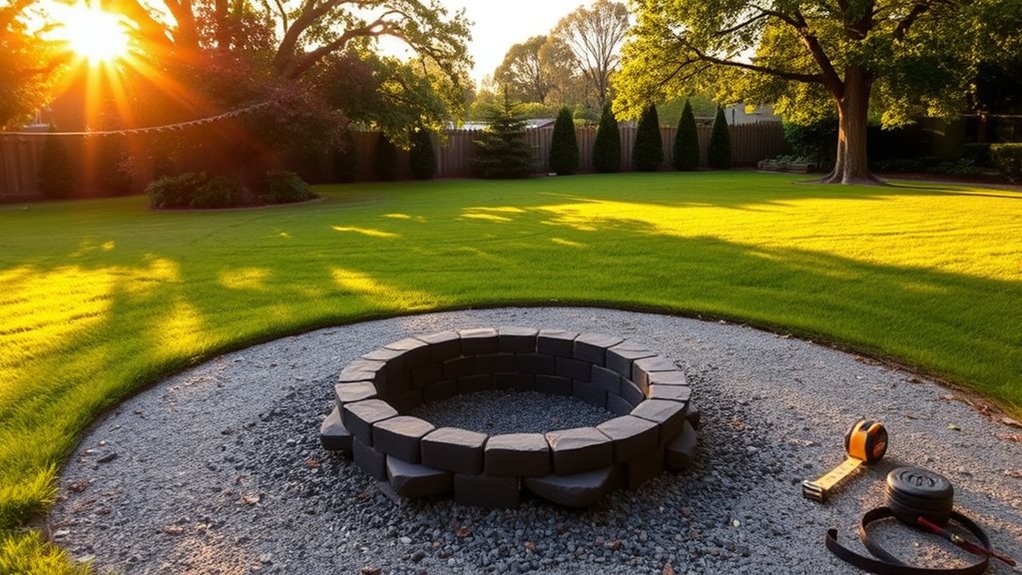
Choosing the right site for your fire pit is essential for safety and enjoyment. You want a flat, open area at least 10 feet away from your house, fences, and trees to prevent fire hazards. Keep a minimum of 15 feet from neighboring residences and 10 feet from property lines to avoid causing discomfort or safety issues. Avoid spots under overhanging branches or near flammable materials like dry grass or wooden structures. Check local regulations for any specific rules or permits required. Make sure the location has easy access for setup and safe pathways for fire pit use. Taking these precautions guarantees your fire pit will be safe, functional, and enjoyable for everyone. Proper site selection also considers fire safety regulations to ensure compliance and safety standards are met. Additionally, selecting a site with good drainage prevents water accumulation that could damage the fire pit or create safety hazards during wet conditions. Ensuring proper ventilation around the area can also help disperse smoke and prevent buildup, enhancing safety and comfort during use. To further improve safety, consider adding a fire ring or border to contain the fire and protect the surrounding area. Incorporating adequate clearance around the fire pit promotes proper airflow and reduces the risk of accidental fires.
Marking and Outlining Your Fire Pit Layout

Start by choosing the right spot for your fire pit, ensuring it’s flat and far from structures. Use spray paint and a string to mark the exact circle, making sure your measurements are precise. Double-check your outline to confirm it’s level and the size you want before moving on. Incorporating proper site selection helps prevent safety hazards and ensures your fire pit functions well. Additionally, considering landscaping can enhance the overall aesthetic and blend your fire pit seamlessly into your backyard. Proper site selection also involves considering drainage, which is crucial to prevent water accumulation that could damage the fire pit or create safety issues. Ensuring good soil stability can further support your fire pit’s foundation and longevity. Taking into account European cloud innovation can also inspire environmentally conscious design choices that improve the sustainability of your outdoor space.
Selecting the Right Location
To guarantee your fire pit is safe and functional, you need to carefully mark and outline its layout before digging. First, select a flat, open space at least 10 feet from structures, fences, and trees. Second, make certain the site is at least 15 feet from residences and 10 feet from property lines for safety and compliance. Third, avoid areas under overhanging branches or near flammable materials that could ignite. Use spray paint to outline your desired circumference, typically 36–44 inches in diameter. Drive a stake at the center and stretch a string to mark the circle precisely. Finally, lay stones or bricks along the outline to visualize the final shape, making adjustments for level ground, especially on slopes.
Using Proper Marking Tools
Using proper marking tools is essential to guarantee your fire pit has a precise and safe layout. Start by choosing spray paint or marking chalk to outline the fire pit’s circumference clearly. Drive a stake into the center of your chosen spot, then tie a string to it, measuring out the radius for your desired diameter—typically 36 to 44 inches. Keep the string taut and rotate around the stake to mark a perfect circle. Use the spray paint or chalk to trace along the string, creating a clear, visible outline. This precise marking ensures your stones or bricks will sit evenly and the fire pit will be symmetrical. Double-check the markings before proceeding to excavation or building to avoid costly adjustments later.
Ensuring Accurate Measurements
Accurate measurements are the foundation of a well-built fire pit. To guarantee your layout is precise, follow these steps:
- Use spray paint to outline the desired fire pit circumference, keeping within the recommended 36–44 inch diameter.
- Drive a stake into the center of your marked circle, then tie a length of string to it. Use the string to trace the circle accurately around the stake.
- Lay stones or bricks along the marked line, adjusting as needed for level ground, especially on slopes.
Double-check your measurements before starting excavation. Proper outlining prevents misalignment and ensures your fire pit is both functional and visually appealing. Accurate measurements save time and effort during construction.
Preparing the Excavation Area

Start by finding a flat, open spot that’s clear of obstacles and debris. Use a level or straightedge to make sure the ground is even, making your excavation more stable. Mark the area carefully so you know exactly where to dig, keeping safety and accessibility in mind. Ensure that your chosen location is compliant with local regulations and best practices for safe outdoor construction regulations and safety. Incorporating ventilation considerations in your planning can help create a space that is comfortable and functional for all users. Additionally, understanding power supply safety principles can help prevent hazards during construction and future use. Being aware of fire safety guidelines can further ensure your fire pit remains a safe feature in your backyard.
Clear and Level Ground
Have you considered how uneven ground can compromise the stability and safety of your fire pit? An uneven surface can cause the stones to shift or wobble, increasing the risk of accidents. To guarantee a solid foundation, focus on these key steps:
- Remove all grass, roots, and large rocks from the excavation area to create a clean, stable base.
- Use a level and a straight edge to check for high spots and low spots, filling in or removing soil as needed.
- Compact the soil thoroughly with a tamper or plate compactor to prevent settling over time and to keep your fire pit secure.
- Ensuring proper ground preparation helps maintain the longevity and safety of your fire pit.
- Consider using soil stabilization techniques to further enhance the stability of the excavated area. Additionally, consulting with geotechnical experts can provide tailored solutions for complex soil conditions.
- Proper drainage is also essential to prevent water accumulation that could undermine your fire pit’s foundation.
- Incorporating moisture control methods can help prevent soil erosion and shifting that may compromise your fire pit’s stability over time.
Marking the Excavation Area
Before digging, clearly mark the area where you’ll excavate to guarantee your fire pit is properly positioned. Use spray paint to draw a circle with your desired diameter, typically between 36 and 44 inches. Drive a stake at the center of your marked circle and tie a length of string to it. Keep the string taut and walk around the stake, marking the perimeter with spray paint or chalk. This will create a precise outline to follow during excavation. Double-check the measurements and placement to ensure the fire pit is centered and correctly sized. Clear any debris, grass, or obstacles within the marked area. Proper marking helps you stay accurate during excavation, making the entire project smoother and ensuring your fire pit fits perfectly in your chosen space. Accurate measurement is crucial to ensure your fire pit is both functional and aesthetically pleasing.
Laying the Foundation With Gravel and Sand
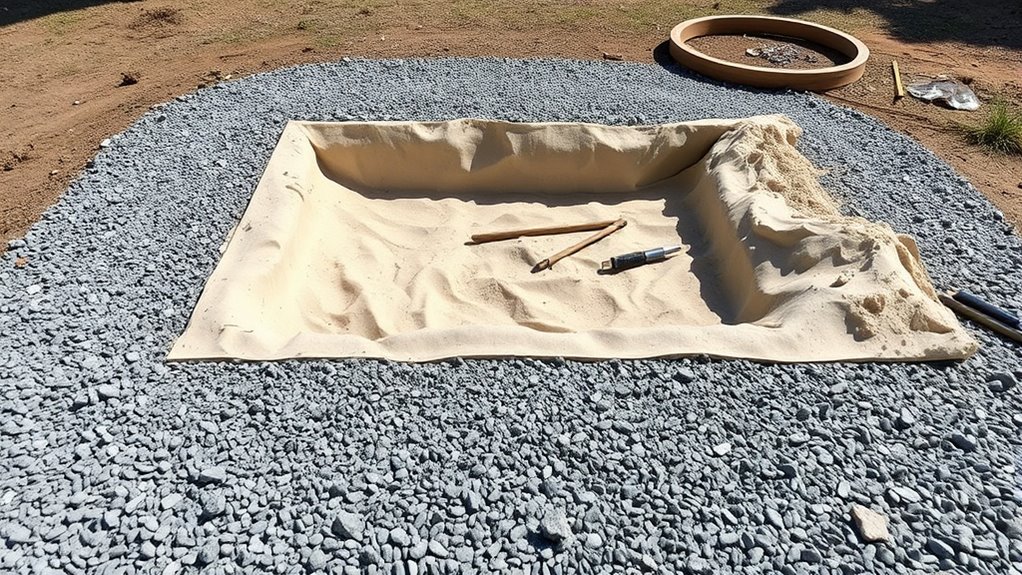
Laying the foundation with gravel and sand is vital for creating a stable and well-drained fire pit. It guarantees proper drainage, preventing water from pooling and damaging the structure. To do this effectively:
- Spread a 2–4 inch layer of gravel or crushed stone evenly across the excavated bottom. Use a rake to level it.
- Pour a thin layer of sand over the gravel, then spread it smoothly. This creates a firm, level surface.
- Compact both layers with a tamper or the back of a shovel to solidify the base, reducing shifting and settling over time.
This foundation provides stability, promotes drainage, and prepares a solid base for stacking stones or bricks. Properly laying gravel and sand is vital for your fire pit’s longevity and safety.
Stacking Stones or Bricks for the Fire Ring

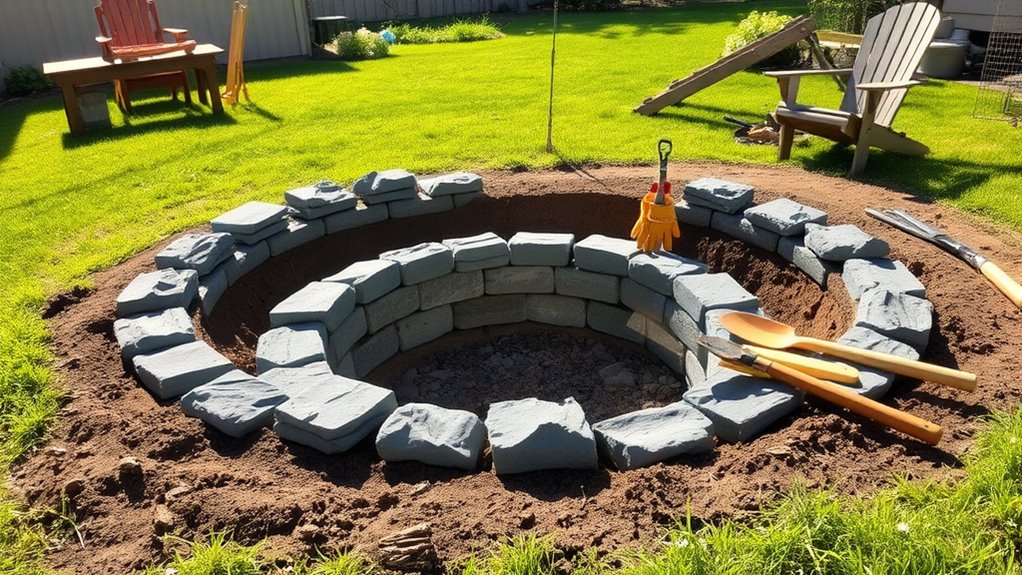
To guarantee your fire pit is sturdy and safe, start stacking stones or bricks around the perimeter carefully. Place each stone or brick firmly against the base, using a rubber mallet to level and secure them. Stagger seams between layers for added strength, similar to running bonds in masonry. Use fire-rated mortar for joints exposed to heat, and leave small gaps for airflow and expansion. Properly aligned, this creates a stable, durable wall. Ensure the ring is level and consistent in height, checking frequently as you build. Here’s a quick reminder:
| Key Point | Tip | Importance |
|---|---|---|
| Stagger seams | Offset each layer by half a brick | Strength and stability |
| Use mortar | Apply heat-resistant mortar | Prevents cracks and damage |
| Leave gaps | Small spaces between stones | Airflow and expansion |
Careful stacking results in a safe, long-lasting fire ring.
Installing a Protective Fire Ring and Finishing Touches
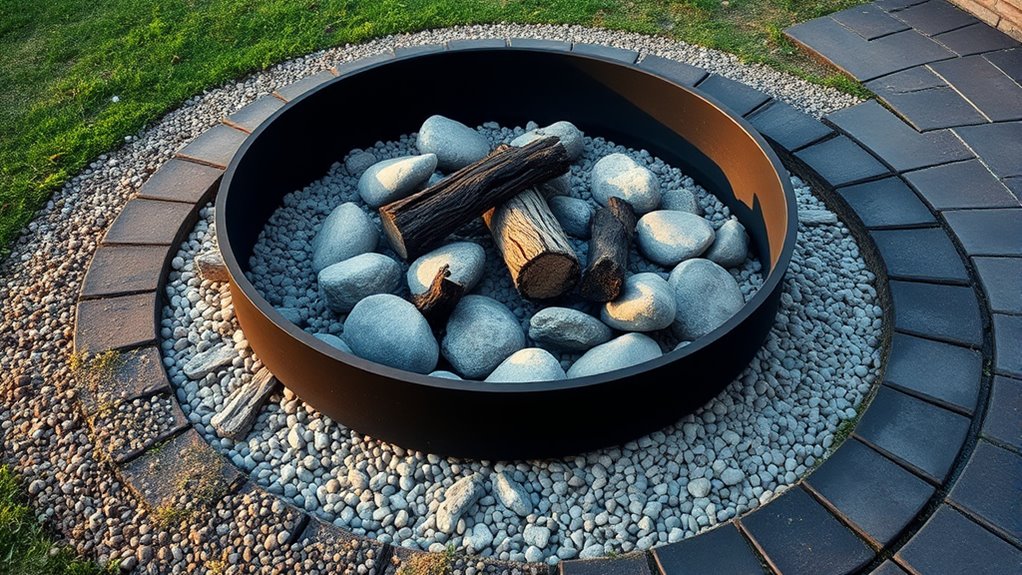
Once you’ve stacked your stones or bricks to form a sturdy fire ring, it’s time to add protective features and finishing touches that enhance safety and durability. Here are three key steps:
- Install a steel fire ring inside the stone wall to contain the fire and prevent damage to the stones.
- Fill the interior with gravel or lava rocks to create a stable, heat-resistant base that improves airflow.
- Inspect and secure the stones regularly, checking for cracks or loose pieces, and remove any flammable debris from the surrounding area.
These steps ensure your fire pit stays safe, durable, and ready for use. Keep safety in mind, and your DIY project will last for years to come.
Filling the Pit and Ensuring Proper Drainage
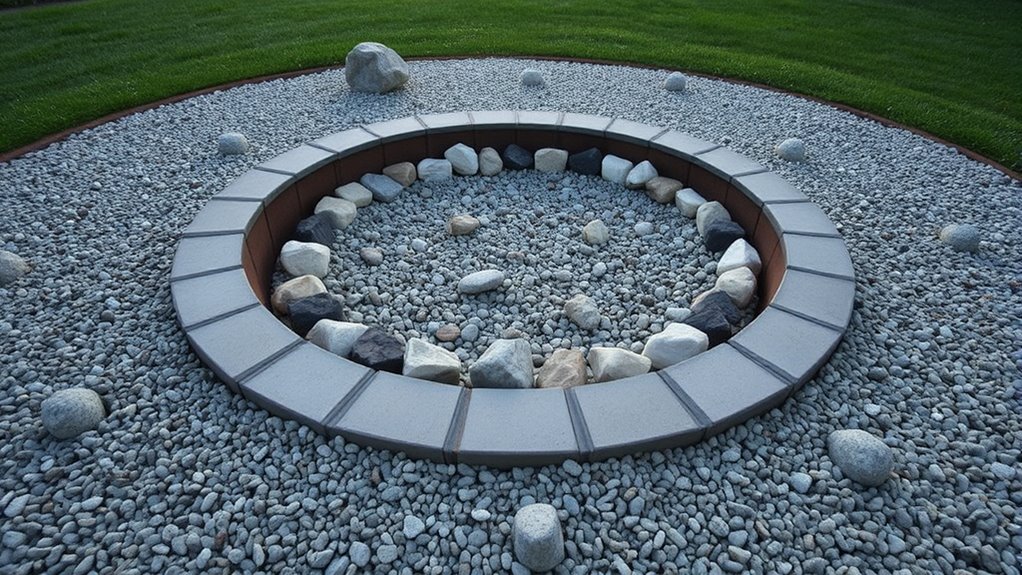
Filling the fire pit with gravel or lava rocks is vital for creating a stable, heat-resistant base that promotes proper airflow. This layer prevents water buildup and helps keep the fire burning efficiently. After adding the gravel or lava rocks, spread a layer of sand over them and compact it thoroughly. This creates a smooth, level surface for your fire ring and stones. Proper drainage is essential to avoid water pooling, which can damage the structure or cause safety issues. The table below highlights the importance of drainage versus stability:
| Drainage Focus | Stability Focus |
|---|---|
| Prevents water pooling | Supports weight of stones and fire |
| Avoids erosion | Ensures a firm foundation |
| Promotes airflow | Keeps the fire consistent |
| Reduces rot or rust | Maintains structural integrity |
Conducting Safety Checks and Maintenance Tips

Regular safety checks are essential to keep your fire pit functioning safely and effectively. You should inspect your fire pit regularly to catch issues early. Here are three key maintenance tips:
- Check for Cracks or Loose Stones: Look for any damage or shifting in the stones or bricks, and repair or replace as needed to prevent collapse.
- Ensure Proper Drainage: Clear out any debris or blockages that could hinder water runoff, which can cause water accumulation and damage.
- Remove Ashes and Debris: After each use, clear out ashes and leftover debris to prevent buildup, which can cause unsafe flare-ups or hinder airflow.
Performing these simple checks keeps your fire pit safe, extends its lifespan, and ensures a worry-free experience.
Tips for Enjoying Your New Fire Pit Safely
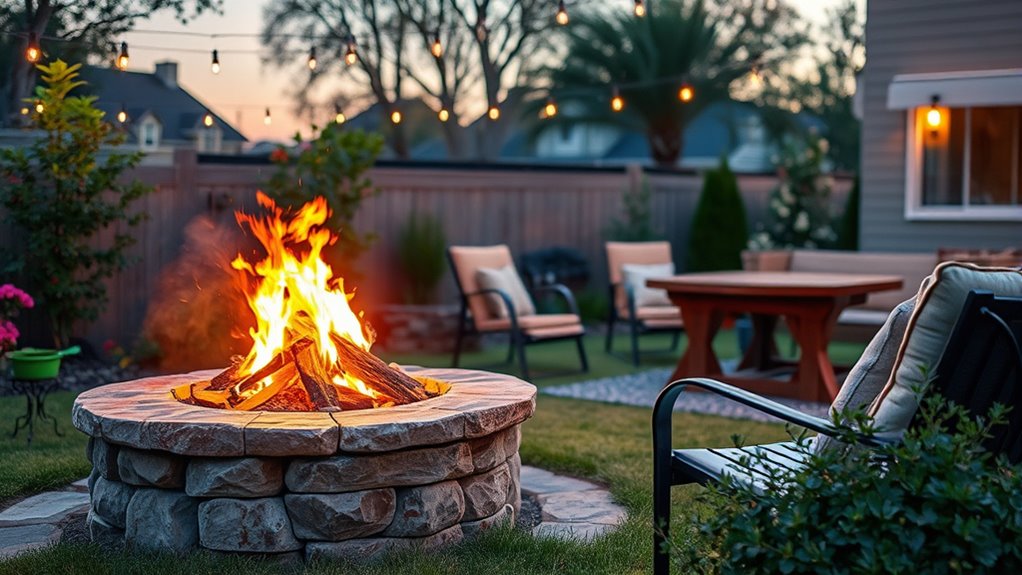
To enjoy your new fire pit safely, always follow basic precautions before lighting a fire. Check that the area is clear of flammable materials like leaves, paper, or outdoor furniture. Keep a fire extinguisher, garden hose, or bucket of water nearby in case of emergencies. Never leave the fire unattended, and ensure it’s completely out before leaving the area. Use appropriate fire starters and avoid using gasoline or other accelerants. Keep children and pets at a safe distance, and establish a clear safety zone around the fire pit. When not in use, cover the pit or store fire-resistant materials nearby. Regularly inspect the pit for cracks, loose stones, or debris that could ignite unexpectedly. Following these tips keeps your fire pit fun and safe for everyone.
Frequently Asked Questions
Can I Build a Fire Pit on a Slope or Uneven Ground?
Yes, you can build a fire pit on a slope or uneven ground. You should excavate deeper on the downhill side to create a level base, ensuring stability. Use leveling tools to check your work frequently, and consider installing a retaining wall or additional drainage if needed. By adjusting your excavation and foundation, you’ll make sure your fire pit remains safe, level, and functional regardless of the terrain.
What Type of Stones or Bricks Are Best for Fire Pits?
You should use fire-rated stones or bricks designed to withstand high temperatures. Fire bricks, volcanic or lava rocks, and concrete pavers labeled as fire-safe are your best options. These materials resist cracking and spalling from heat, ensuring safety and durability. Avoid regular concrete or natural stones that aren’t rated for high temperatures, as they can crack or break over time, potentially causing safety hazards.
How Do I Obtain Permits or Check Local Regulations?
Think of your fire pit as a guest arriving—before welcoming it, you need an invitation. Check your local government’s website or contact the city’s building department to find out about permits and regulations. Visit the municipal office if needed. Look for zoning rules, fire codes, or any restrictions. This guarantees your project stays within the law and avoids surprises, making your fire pit a safe and legal gathering spot.
What Safety Equipment Should I Have During Construction?
During construction, you should wear safety glasses to protect your eyes from debris, gloves to shield your hands from sharp stones and rough materials, and sturdy footwear to prevent injuries from falling objects or uneven ground. Additionally, consider ear protection if you’re using loud tools, and keep a fire extinguisher nearby in case of emergencies. Always work in a well-ventilated area and stay alert to avoid accidents.
How Do I Maintain and Clean My Fire Pit Regularly?
To keep your fire pit in good shape, clean out ashes and debris after each use, and remove any loose stones or debris regularly. Use a wire brush to scrub away soot and residue from the stones or bricks. Check for cracks or loose parts and tighten or repair as needed. Cover your fire pit when not in use to prevent dirt buildup and protect it from the elements.
Conclusion
Now that you’ve built your fire pit, you’re opening the door to countless cozy nights and unforgettable memories. With a little effort, you’ve created a gathering spot that feels like the heart of your home. Remember, safety and maintenance keep the flame alive for years to come. So go ahead, light that first fire—your backyard’s new centerpiece is ready to turn chilly evenings into warm, glowing stories.