
To install low-voltage landscape lighting, plan which features to highlight and choose energy-efficient fixtures suited to your layout. Bury the underground wires carefully, connecting lights to a central transformer for safety. Place solar lights in sunny spots for better performance, and aim upward to emphasize trees or architectural details. Layer your lighting by placing fixtures at different heights for depth and safety. Keep experimenting with placement and systems; more tips are ahead to help you create a stunning nightscape.

Get everyday essentials delivered free — and shop member deals
- Fast, free delivery on millions of items
- Access to Prime Big Deal Days deals on October 6–7
- Prime Video, Amazon Music and more included
Key Takeaways
- Choose energy-efficient low-voltage lighting systems for safety and ease of installation.
- Identify key landscape features to highlight and plan fixture placement accordingly.
- Install fixtures along pathways, trees, and architectural elements for layered, balanced illumination.
- Bury low-voltage cables underground, avoiding foot traffic and sharp objects to prevent damage.
- Ensure solar fixtures are placed in areas with maximum sunlight exposure for optimal performance.

Installing landscape lighting can transform your outdoor space, making it more inviting and functional after dark. With the right approach, you can create a warm, inviting atmosphere that highlights your yard’s best features and improves safety. Low-voltage lighting systems are perfect for this purpose because they’re energy-efficient, easy to install, and safer to handle than high-voltage options. When planning your landscape lighting, consider using solar power fixtures to reduce wiring and electricity costs. Solar-powered lights harness sunlight during the day and automatically illuminate at night, making installation simpler and more eco-friendly. They’re ideal for areas where running electrical wiring might be difficult or undesirable.
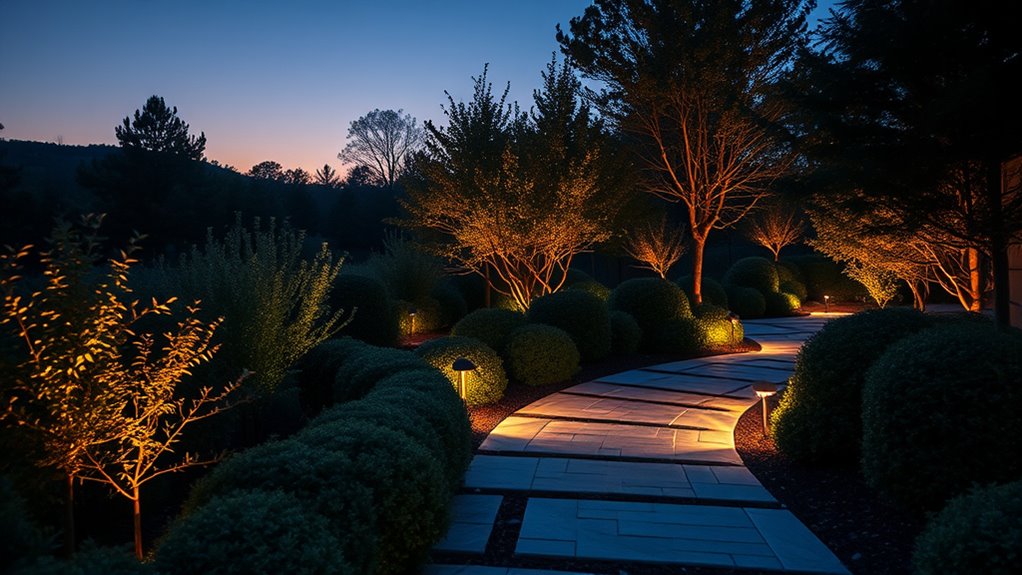
The key to a successful landscape lighting setup is thoughtful fixture placement. Start by identifying the features you want to highlight, such as trees, pathways, water features, or architectural details. For pathways, place fixtures along the edges, ensuring they’re spaced evenly to create a balanced glow and guide visitors safely. When positioning lights around trees or shrubs, aim the fixtures upward to emphasize their height and texture, but avoid shining directly into eyes or windows. For architectural elements like columns or walls, install fixtures at the base or top to cast dramatic shadows and add depth to your yard’s appearance.
When using solar power fixtures, pay attention to their placement because their effectiveness depends on sunlight exposure. Make sure they’re installed in areas that receive direct sunlight for most of the day, free from shade from nearby trees or structures. Proper fixture placement ensures these lights charge sufficiently during the day and provide bright, consistent illumination after sunset. Keep in mind that some solar lights have adjustable panels, allowing you to optimize sun exposure and maximize their performance.
For low-voltage wiring, you’ll need to plan your layout carefully. Bury the cables underground, avoiding areas with heavy foot traffic or sharp objects that could damage them. Connect the fixtures to a central transformer, which steps down the voltage from your main power source. When placing fixtures, think about creating layers of light—foreground, midground, and background—to add depth and dimension to your landscape. This approach not only enhances the aesthetic appeal but also improves safety by illuminating potential hazards. Additionally, using energy-efficient European cloud solutions can help manage your landscape lighting system more sustainably and securely.
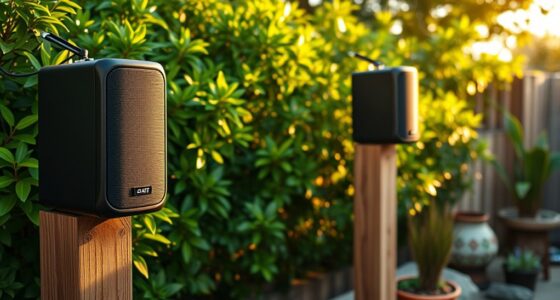
low voltage landscape lighting fixtures
As an affiliate, we earn on qualifying purchases.
As an affiliate, we earn on qualifying purchases.
Frequently Asked Questions
Can I Install Landscape Lighting Myself Without Professional Help?
Yes, you can do a DIY installation of landscape lighting, but it requires some basic tool requirements like wire strippers, a shovel, and a voltage tester. Make sure to plan your layout carefully and follow safety guidelines to avoid electrical hazards. If you’re comfortable with electrical work and have patience, this project is doable. However, if you’re unsure, it’s best to consult a professional for a safe, reliable setup.
What Are the Best Low-Voltage Lights for Residential Landscapes?
You should choose LED bulbs for energy efficiency and longevity, making them ideal for residential landscapes. Solar options are great if you want easy installation and eco-friendly lighting without wiring. Look for low-voltage lights that offer durability, adjustable brightness, and a variety of styles to highlight pathways, gardens, or trees. Combining LED and solar lights lets you create a versatile, cost-effective outdoor ambiance that’s simple to maintain and install yourself.
How Do I Maintain and Troubleshoot Landscape Lighting Systems?
You’ll want to regularly inspect your landscape lighting system for flickering bulbs or dim lights—these clues signal trouble. Check wiring connections to make sure they’re secure and free of corrosion, which can disrupt the flow. Keep bulbs within their lifespan to prevent frequent replacements. When troubleshooting, test individual lights and connections, and replace damaged wiring or bulbs promptly. A little maintenance now keeps your landscape glowing beautifully and avoids surprises later.
Are There Energy-Efficient Options for Landscape Lighting?
Yes, you can choose energy-efficient landscape lighting options like solar-powered lights and LED technology. Solar lights harness sunlight during the day, reducing electricity use, while LED bulbs consume less energy and last longer than traditional bulbs. By switching to these options, you save on energy costs and minimize your environmental impact. Plus, they offer versatile and low-maintenance solutions to beautifully illuminate your landscape sustainably.
What Safety Precautions Should I Follow During Installation?
Imagine you’re installing your landscape lighting on a rainy evening. To stay safe, always turn off the power before wiring and double-check connections to prevent shocks. Use weatherproof connectors to protect wiring from moisture, which could cause short circuits. Keep your work area dry, wear insulated gloves, and follow manufacturer instructions. These precautions guarantee wiring safety and weather protection, making your installation both safe and durable.
As an affiliate, we earn on qualifying purchases.
Conclusion
Now that you know how to install low-voltage landscape lighting, you can transform your outdoor space into a stunning, inviting haven. Did you know that properly lit landscapes can increase your home’s curb appeal by up to 20%? With the right placement and fixtures, you’ll enjoy safer pathways, enhanced security, and a beautiful ambiance for evenings. So, get started today, and watch your outdoor area come alive with warmth and charm.
outdoor LED landscape spotlights
As an affiliate, we earn on qualifying purchases.
As an affiliate, we earn on qualifying purchases.
outdoor landscape lighting transformer
As an affiliate, we earn on qualifying purchases.
As an affiliate, we earn on qualifying purchases.
Halloween Picks
halloween
As an affiliate, we earn on qualifying purchases.