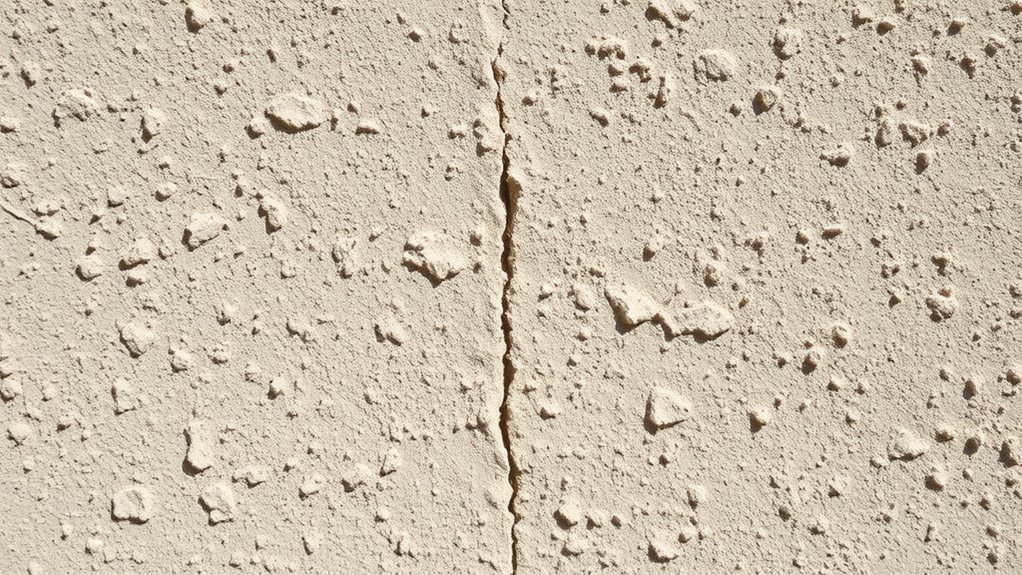

To fix small cracks in stucco walls, start by cleaning out the crack with a wire brush or small chisel to remove debris. Apply a bonding agent to guarantee a solid bond, then mix your stucco or use a ready-made patch with added color to match your wall. Press the patch into the crack smoothly, feather the edges, and let it dry. To ensure a seamless look and longer-lasting repair, there’s more you can do to get it just right.
Key Takeaways
- Clean out cracks thoroughly with a wire brush or chisel to ensure proper adhesion.
- Apply a bonding agent inside the crack to reinforce the repair and prevent future widening.
- Mix and apply stucco or a compatible patching compound, pressing firmly and feathering edges for seamless blending.
- Allow the patch to dry completely, then sand lightly for a smooth finish if needed.
- Match the color with existing stucco using colorant and consider sealing or painting for added durability.
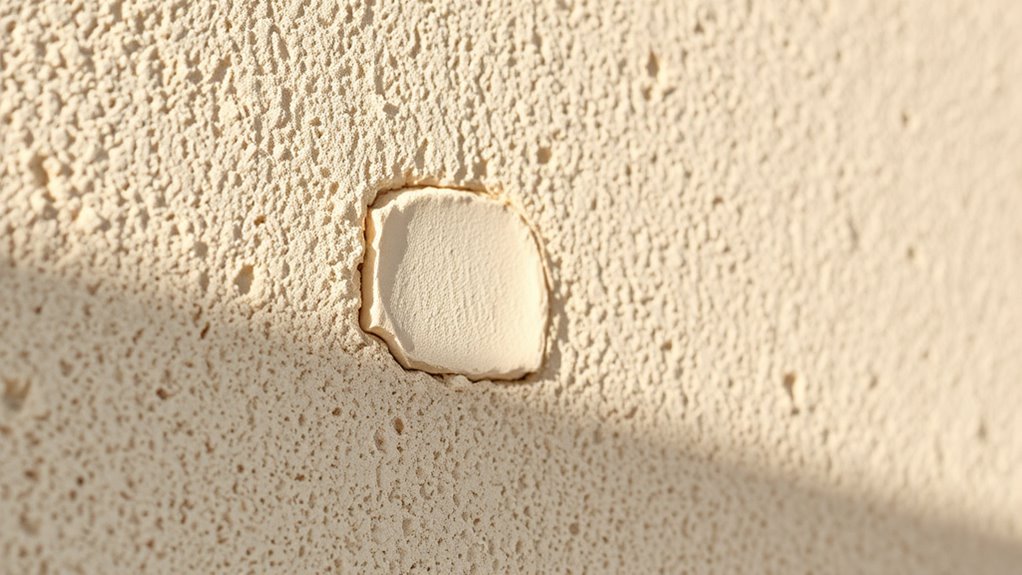
Stucco repair is vital for maintaining the appearance and integrity of your home’s exterior. Small cracks might seem minor at first, but if left unchecked, they can lead to bigger problems like water intrusion and structural damage. Addressing these cracks promptly not only preserves your home’s aesthetic appeal but also prevents costly repairs down the line. When repairing small cracks, one key aspect is color matching. You want the patch to blend seamlessly with the existing stucco, so it’s essential to select the right color or mix your own to match the original finish. Proper color matching ensures your repairs are discreet, maintaining your home’s curb appeal and avoiding the patchwork look that can detract from its overall appearance.
Proper color matching in stucco repair keeps your home looking seamless and beautiful.
To successfully repair small cracks, start by cleaning out the crack thoroughly. Use a wire brush or a small chisel to remove loose debris, dirt, or crumbling stucco. This step ensures the patch adheres properly, creating a solid bond that lasts longer. Once cleaned, apply a bonding agent to the crack, which helps prevent future cracking by improving adhesion. The bonding agent acts as a barrier that enhances crack prevention, reducing the likelihood of the crack widening or reappearing over time.
Next, prepare your stucco patch material. You can use ready-mixed stucco or make your own mix by combining cement, sand, and water. Add a colorant to match your existing stucco, ensuring the repair is as inconspicuous as possible. Mix thoroughly until you get a uniform color and consistency. When applying the patch, press it firmly into the crack with a putty knife or trowel, smoothing it out to match the surrounding surface. Feather the edges to blend seamlessly with the existing wall, which helps maintain a uniform appearance after the repair is finished.
Once the patch has dried, typically within 24 to 48 hours depending on the product and weather conditions, lightly sand the area if necessary to smooth out any unevenness. Follow up with a coat of paint or sealant that matches your home’s exterior to further protect the repair and enhance color consistency. Regular maintenance, like inspecting your stucco for new cracks and addressing them early, goes a long way in crack prevention. By taking these steps, you guarantee your stucco walls stay durable, attractive, and well-preserved for years to come.
Frequently Asked Questions
How Long Does Stucco Repair Typically Last?
Stucco repair typically lasts 5 to 10 years, depending on factors like quality and climate. You can maximize stucco longevity by ensuring proper application and timely maintenance. The repair durability relies on using the right materials and techniques, so if you address cracks early, your fix can stay intact longer. Regular inspections and touch-ups will help extend the life of your stucco, keeping it strong and visually appealing.
Can I Repair Stucco Myself Without Professional Help?
You can definitely repair stucco yourself, especially if those cracks are small and manageable. DIY options work well if you have some handy skills and patience, but remember, for larger or more complex issues, professional assistance might save you time and ensure a durable fix. Coincidences happen—like discovering a crack just before a big event—so evaluating your skills honestly helps decide whether to tackle it yourself or call in pros.
What Tools Are Essential for Small Stucco Crack Repairs?
You’ll need a few essential tools for small stucco crack repairs. Start with a reliable trowel selection to apply and smooth the patching material effectively. Use mixing tools, like a drill with a paddle attachment, to blend the stucco compound thoroughly. A putty knife helps to fill cracks precisely, while a brush or sponge can clean up edges. These tools guarantee a professional-looking repair without extra hassle.
Is It Necessary to Remove Old Stucco Before Patching?
Is removing old stucco always necessary? Not necessarily, but proper surface preparation is key. If the existing stucco is loose, cracked, or deteriorated, you should eliminate it to ensure good stucco adhesion of the patch. For minor cracks on solid, sound surfaces, cleaning and lightly roughening the area can be enough. Always assess the condition of the existing stucco to determine the best approach for a durable repair.
How Do Weather Conditions Affect Stucco Repair Durability?
Weather impact plays a vital role in stucco repair durability. If you don’t consider moisture effects, your repair might crack or deteriorate faster. Rain and high humidity can weaken new patches, so avoid working in wet conditions. Ideally, you should repair stucco during dry, mild weather to guarantee proper curing and adhesion. Proper planning based on weather conditions helps your repair last longer and keeps your walls protected.
Conclusion
Now that you’ve learned to mend those tiny cracks, your stucco wall can stand tall like a fortress again. Think of each repair as stitching a delicate thread into a tapestry, restoring strength and beauty. With patience and care, you’ll turn a minor flaw into a demonstration of your craftsmanship. Soon, your wall will whisper stories of resilience, shining like a polished gem in the sunlight—proof that even small fixes can create a masterpiece.