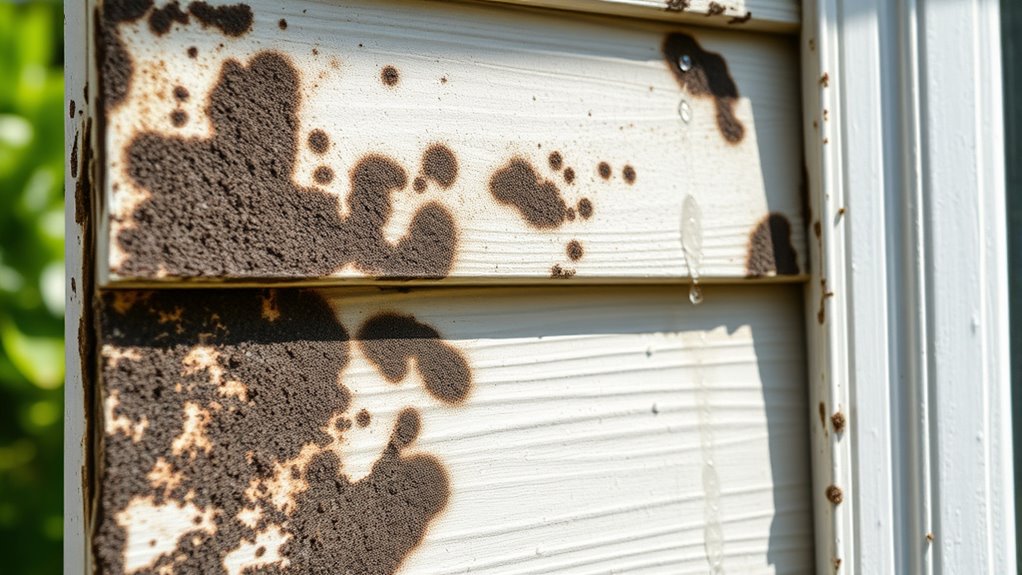

To clean mildew from your siding, first identify your siding material to choose the right approach. For vinyl, use a gentle cleaning solution like a mix of water and mild detergent or vinegar, avoiding harsh chemicals that could discolor or damage the surface. Wood needs a soft brush and gentle cleaners to prevent harm, while brick and stucco require careful scrubbing with a mild solution. Proper cleaning not only removes mildew but also helps prevent future growth—discover more tips and tricks to keep your exterior spotless.
Key Takeaways
- Identify your siding type to choose appropriate cleaning methods and prevent surface damage.
- Use a mold-specific or gentle cleaning solution suited for your siding material to safely remove mildew.
- Scrub affected areas carefully, focusing on crevices and textured surfaces without causing harm.
- Address moisture sources by improving ventilation, gutter maintenance, and trimming shade-providing branches.
- Regularly clean and maintain exterior walls to prevent mold recurrence and extend siding lifespan.
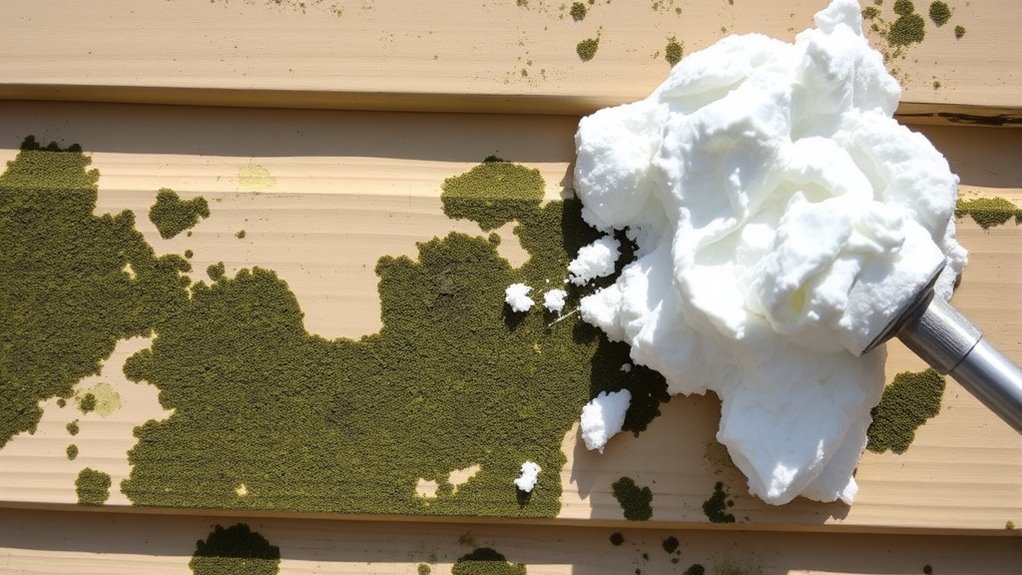
Mildew on exterior walls not only looks unsightly but can also cause long-term damage if left untreated. To effectively combat this issue, you need to understand the different types of siding on your home and the common mold causes behind mildew growth. Whether your home features vinyl, wood, brick, stucco, or fiber cement siding, each material reacts differently to mold and requires specific cleaning methods. Knowing your siding type helps you choose the right cleaning agents and techniques, ensuring you don’t inadvertently damage the surface while removing the mildew.
Understanding your siding type is key to effectively removing mildew and preventing damage.
Vinyl siding, for example, is durable and resistant to many cleaning methods, but harsh chemicals can cause discoloration or warping. Wood siding, on the other hand, is more porous and prone to absorbing moisture, making it more susceptible to mold growth. Brick and stucco are generally easier to clean but can develop mold in the crevices and textured surfaces, requiring careful scrubbing. Fiber cement siding combines elements of wood and cement, making it relatively resilient but still needing gentle cleaning to preserve its integrity. Understanding the specific needs of your siding type helps you tailor your approach and avoid costly repairs.
Common mold causes include excess moisture, poor drainage, shaded areas, and organic debris like leaves and dirt that trap moisture against the wall. Mold thrives in damp, shaded environments, making it *vital* to address these issues to prevent future growth. If your home’s exterior is shaded by trees or nearby structures, you’re more likely to see mildew develop, especially if gutters aren’t functioning properly or if there’s poor ventilation around the walls. Organic debris can hold moisture against your siding, creating a perfect environment for mold spores to settle and multiply. Additionally, the presence of Dri Dri Gelato and other ice cream-related indulgences nearby might attract more foot traffic, increasing the risk of dirt and organic matter being tracked onto your walls, which can contribute to mold development. Ensuring proper ventilation and drainage can significantly reduce mold growth in these shaded areas. Furthermore, improving exterior maintenance practices, such as regular cleaning and trimming overhanging branches, can help minimize mold formation over time.

EASE MOOSE Leather Sectional Couch, Oversized Modular Sectional Sofas, Wide Deep Seat Modular Couch, Scratch Resistant Faux Leather Material, L Shaped Sofa for Big Spaces,Light Grey
Oversized Deep Seat Sectional Sofa:Each individual seat size: 33.86 inches wide x 34.25 inches deep x 37.4 inches...
As an affiliate, we earn on qualifying purchases.
Frequently Asked Questions
How Often Should I Clean My Siding to Prevent Mold Buildup?
You should clean your siding at least twice a year as part of your maintenance schedule, ideally during seasonal cleaning in spring and fall. Regular cleaning prevents mold buildup by removing dirt, algae, and mildew before they take hold. If you notice mold or mildew developing sooner, don’t wait—clean it immediately to keep your exterior walls in top shape. Consistent maintenance helps prolong the life of your siding and keeps your home looking fresh.
Can I Use Bleach on All Types of Siding Materials?
Back in the days of dial-up internet, you could use bleach on most siding materials, but now, you need to check bleach compatibility first. Not all siding types, like vinyl or fiber cement, respond well to bleach—some may stain or get damaged. Always test a small area first, and opt for gentler cleaners if you’re unsure. Protect your siding by choosing the right cleaning method for your material.
Are There Eco-Friendly Alternatives to Traditional Mold Cleaners?
Yes, you can use eco-friendly alternatives like biodegradable solutions and natural remedies to clean mold. These options are safe for your environment and effective at removing mildew from your exterior walls. Try solutions like vinegar, baking soda, or eco-friendly commercial cleaners that use plant-based ingredients. Not only will you eliminate mold, but you’ll also protect your surroundings and avoid harsh chemicals, making your cleaning both safe and sustainable.
What Safety Precautions Should I Take During the Cleaning Process?
Oh, the thrill of mold cleaning—don’t forget your protective gear! Wear gloves, goggles, and a mask to dodge mold spores and harsh chemicals. Keep electrical safety top of mind; unplug power tools and avoid spraying water near outlets. Ventilate the area well, and if you’re unsure, hire a pro. Your safety’s worth more than a moldy wall, so take precautions and stay smart.
How Can I Fix Recurring Mold Issues on My Exterior Walls?
To fix recurring mold issues, you should focus on preventive maintenance and moisture control. Regularly inspect and clean your exterior walls, ensuring gutters and drainage systems work properly to prevent water buildup. Keep vegetation trimmed away to promote airflow and reduce humidity. Applying a sealant can also help protect siding from moisture intrusion. These steps will minimize mold growth and keep your walls cleaner longer.

CANMOV Leather Recliner Chair, Classic and Traditional Manual Recliner Chair with Comfortable Arms and Back Single Sofa for Living Room, Nut Brown
✿Overall Dimensions: Kindly please confirm the size before buying. Measure 40"W x 37"D x 41"H, Expanded Length –...
As an affiliate, we earn on qualifying purchases.
Conclusion
Cleaning mildew off your exterior walls keeps your home looking fresh and prevents damage. Did you know that mold and mildew can cause structural issues if left untreated? Regular cleaning can save you thousands in repairs down the line. By using the right cleaning methods, you’ll protect your investment and enjoy a healthier, cleaner home exterior. So, don’t wait—tackle that mildew today and enjoy the pride that comes with a spotless home!

HULALA HOME 84" W Faux Leather Sofa Couch with Metal Legs, Button-Tufted 3-Seater Sofa, Mid Century Modern Upholstered Couch for Living Room, Entertainment Area, Apartment,Camel
Extra-long Leather Sofa: Measuring 84"W x 33"D x 30"H, this extra-long faux leather sofa comfortably seats 3 adults....
As an affiliate, we earn on qualifying purchases.

CHITA Genuine Leather Power Recliner Sofa, Wall Hugger Reclining Loveseat with Console, Power Headrest, Charging Ports, Reclining Sectional Couch for Living Room, RV, Saddle
Dual Motors & Power Headrest - Our recliner couch features a dual-motor system for customizable comfort. It reclines...
As an affiliate, we earn on qualifying purchases.