
To add a dog door to your home, start by choosing the right size based on your pet’s measurements and selecting the ideal location, like an exterior door, wall, or window. Carefully mark the outline, drill pilot holes, and cut out the opening with a jigsaw or saw, ensuring a snug fit. Secure the frame with screws, check the flap moves freely, and test your dog’s access. Keep going to discover all the tips for a smooth installation.
Key Takeaways
- Measure your pet’s size and select a door that provides easy access while maintaining security.
- Choose the appropriate location, such as an exterior door, wall, or window, for installation.
- Mark the opening outline at the correct height and drill pilot holes before cutting.
- Carefully cut the opening using a jigsaw or saw, ensuring a snug fit for the pet door.
- Secure the pet door frame, check its movement, and test your pet’s ability to pass comfortably.
Installing a pet door can be a straightforward project that gives your furry friend the freedom to come and go as they please. Whether you’re adding a dog door to your back door, wall, or even a window, the process involves a few key steps that, with some preparation, can be completed efficiently. Dog door installation is a popular choice for pet owners who want to create seamless pet entryways, eliminating the need to constantly open the door for your dog and giving them independence. Before you start, consider your pet’s size and behavior to choose the right type and size of the door, making certain they can move comfortably through it without difficulty.
First, select a suitable location for the pet entryway. Most often, homeowners install dog doors in exterior doors or walls, but you might also consider window-mounted options if more convenient. Once you’ve decided, measure your dog carefully, noting their shoulder height and width. This ensures you pick a pet door that’s large enough for easy passage but not so big that it compromises security or insulation. When you’re ready to proceed with dog door installation, gather all necessary tools: a drill, saw, measuring tape, pencil, level, and possibly a jigsaw or hole saw, depending on the type of door or wall you’re working with.
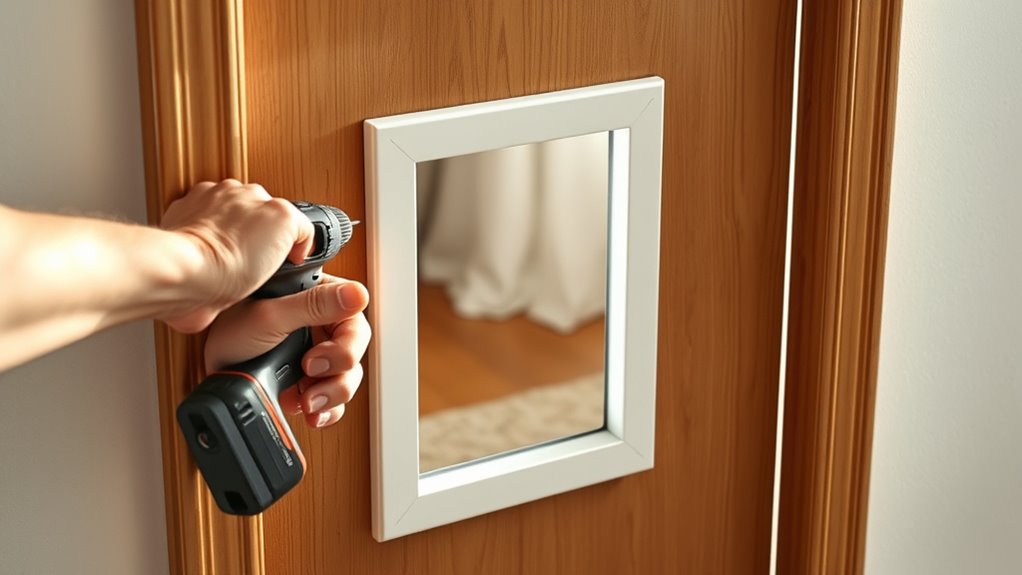
For door-mounted pet entryways, the installation process is relatively simple. Mark the outline of the pet door on the door surface, making sure it’s at the correct height for your dog. Drill pilot holes at the corners of your markings, then use a jigsaw or saw to cut out the opening. Be careful to stay within your markings and work slowly to avoid splintering. If you’re installing in a wall, the process is similar but may require additional tools and reinforcement, especially if the wall is insulated or made of a harder material. In all cases, follow the manufacturer’s instructions carefully to make certain a snug fit and proper sealing. Additionally, integrating smart‑home solutions such as automatic locking or sensors can enhance security and convenience.
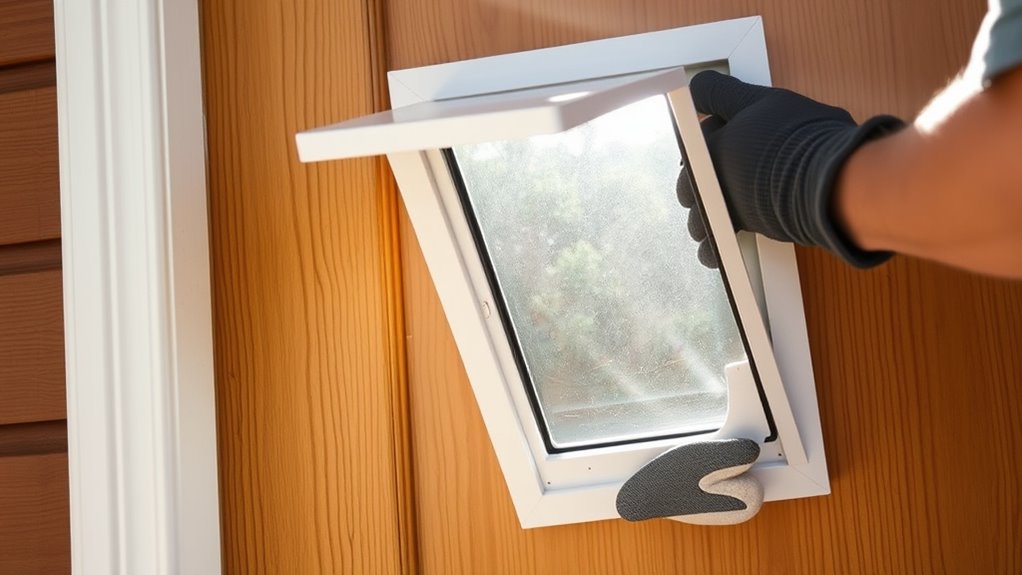
Once the hole is cut, insert the pet door frame and secure it with screws or fasteners provided. Check that the flap swings freely and seals tightly when closed, providing insulation and security. Test your dog’s ability to pass through comfortably, adjusting if necessary. Installing a pet door might seem daunting at first, but with patience and proper planning, you’ll have a functional, safe pet entryway that enhances your pet’s independence and your convenience. Proper dog door installation not only improves your pet’s quality of life but also keeps your home secure and energy-efficient.

PetSafe Plastic Pet Door – Easy Install for Wood, PVC Metal & Paneled Doors – Rust-Free Plastic Frame – Flap Dimensions 8 1/4" W x 12 1/4" H – for Medium Dogs Weighing Up to 40 lb
Easy DIY Installation: The PetSafe Plastic Pet Door is easy to install in wood, PVC, metal, or paneled…
As an affiliate, we earn on qualifying purchases.
As an affiliate, we earn on qualifying purchases.
Frequently Asked Questions
What Is the Best Location for Installing a Dog Door?
You should place the dog door at a convenient door placement that your pet can easily access without causing drafts or security issues. For seamless door placement, consider installing it in a lower section of an exterior door or a window installation where your pet can comfortably pass through. Make certain the area is sturdy, clear of obstructions, and easy for your dog to navigate, making the transition smooth and safe.
How Do I Train My Pet to Use the New Door?
To train your pet to use the new door, start with a gradual introduction by encouraging curiosity with treats and praise. Use positive reinforcement every time your dog approaches or attempts to go through the door. Gently guide them through initially, then gradually increase their independence. Be patient and consistent, offering lots of encouragement. Over time, your pet will learn to use the door confidently and comfortably.
Are There Different Types of Pet Doors for Various Breeds?
Yes, there are different types of pet doors for various breeds. You should consider material options like plastic, aluminum, or weatherproof vinyl to suit your pet’s needs. Size considerations are essential—choose a door that comfortably fits your breed’s size without being too large or small. Measure your pet carefully, ensuring the opening allows easy access while preventing drafts or security issues. This way, your pet feels comfortable and safe using the door.
How Secure Is a Pet Door Against Intruders?
A pet door is like a tiny gate, but it can be surprisingly secure. You can choose models with locking mechanisms, electronic sensors, or insulated flaps that help prevent intrusion. While no door is completely foolproof, these features considerably boost security concerns, making it harder for intruders to exploit. Proper placement and sturdy materials also enhance intrusion prevention, giving you peace of mind when your pet comes and goes.
Can I Install a Pet Door on a Wall Instead of a Door?
Yes, you can install a pet door on a wall instead of a door. Wall installation is a great alternative if you don’t have a door or want a more discreet entry point. You’ll need to cut an opening in the wall, use a specialized pet door designed for wall installation, and guarantee proper insulation and sealing. This option offers a clean look and easy access for your pet.

Automatic Sliding Glass Dog Door with Collar Sensor,Large Electric Doggy Door for Sliding Glass Door, Adjustable 76" to 80-11/16" Slider Height,Custom Scheduling & Anti-Pinch,Fit Dog Up to 100 Lbs (L)
Automatic Sliding Glass Dog Door: Aiday large electric doggy door comes with 2 exclusive sensor collars—only your pet…
As an affiliate, we earn on qualifying purchases.
As an affiliate, we earn on qualifying purchases.
Conclusion
Adding a pet door makes life easier, giving your furry friend freedom and independence. Sure, you might worry about security or weather, but with the right insulation and a sturdy flap, you can keep your home safe and cozy. Imagine your dog happily coming and going as they please, without scratching at the door or waiting for you. It’s a simple upgrade that adds convenience and happiness for both you and your pet.

PetSafe Wall Entry Pet Door – Rust-Free Telescoping Frame – Easy Install for Interior & Exterior Walls 4 3/4" – 7" Thick – Large – for Pets Up to 100 Lb
Wall-Mounted Pet Access: the PetSafe Wall Entry Pet Door installs in interior or exterior walls 4¾"–7¼" thick, ideal…
As an affiliate, we earn on qualifying purchases.
As an affiliate, we earn on qualifying purchases.
PetSafe Plastic Pet Door – Easy Install for Wood, PVC Metal & Paneled Doors – Rust-Free Plastic Frame – Flap Dimensions 8 1/4" W x 12 1/4" H – for Medium Dogs Weighing Up to 40 lb
Easy DIY Installation: The PetSafe Plastic Pet Door is easy to install in wood, PVC, metal, or paneled…
As an affiliate, we earn on qualifying purchases.
As an affiliate, we earn on qualifying purchases.