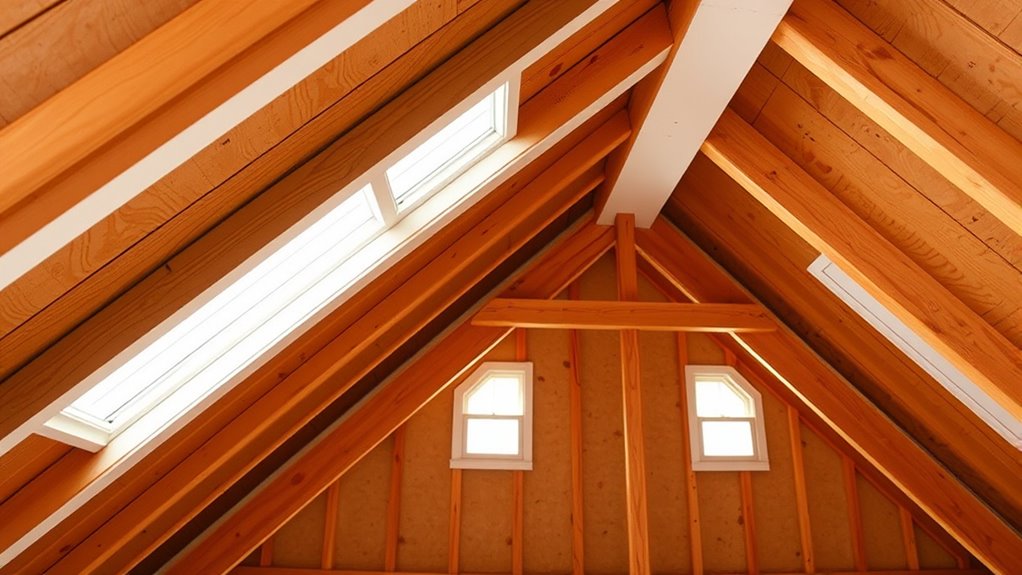

Proper attic ventilation is key to preventing mold and ice dams. Make sure you have good airflow by installing intake vents at the soffits and exhaust vents near the roof ridge. This continuous airflow helps regulate moisture and temperature levels in your attic, reducing condensation and melting snow on the roof. Using the right insulation alongside ventilation also keeps warm air out of your attic. Keep these tips in mind to protect your home—more guidance awaits to help you succeed.
Key Takeaways
- Ensure proper intake vents at soffits and exhaust vents near the roof ridge to promote continuous airflow.
- Maintain balanced insulation and ventilation to prevent warm, moist air from trapping in the attic.
- Regularly inspect and clean vents to prevent blockages that hinder airflow.
- Use vapor barriers and moisture-resistant insulation to reduce humidity and mold growth.
- Address roof leaks promptly to prevent excess moisture from contributing to mold and ice dam formation.
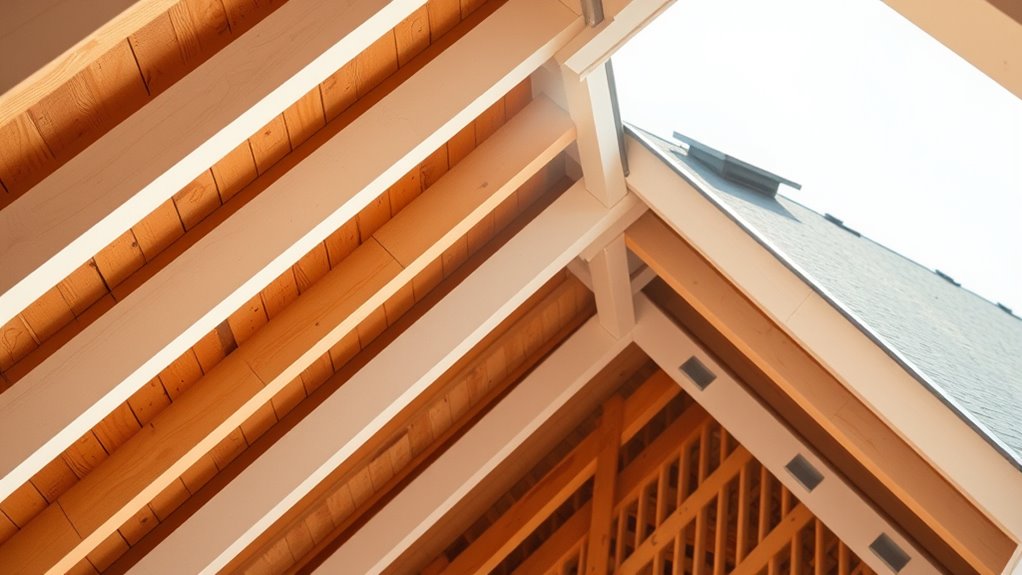
Have you ever wondered why proper attic ventilation is vital for your home? The answer lies in how it helps regulate temperature and moisture levels, preventing costly issues like mold growth and ice dams. When your attic isn’t ventilated correctly, warm, moist air from your living spaces rises and gets trapped, creating an environment conducive to mold. Additionally, without proper airflow, the temperature in your attic can fluctuate dramatically, especially during winter, leading to the formation of ice dams on your roof. These problems can damage your roofing materials and compromise your home’s structural integrity. Proper airflow management is essential for maintaining a healthy attic environment and preventing these issues.
Understanding insulation types plays a significant role in maintaining a balanced attic environment. Different insulation materials, such as fiberglass, cellulose, or spray foam, have varying R-values and moisture resistance qualities. Proper insulation helps keep the indoor temperature consistent, reducing the amount of warm air that escapes to the attic. When combined with adequate ventilation, insulation types work synergistically to prevent heat buildup and moisture accumulation. This not only reduces energy costs but also minimizes the risk of mold, which thrives in damp, poorly ventilated spaces.
Proper insulation and ventilation work together to prevent mold and heat buildup in your attic.
The ventilation benefits extend beyond temperature regulation. An effectively ventilated attic allows for continuous airflow, which helps carry away excess moisture and prevents condensation from forming on rafters and insulation. This airflow also discourages the growth of mold spores that can cause health problems for your family. Proper ventilation can be achieved through intake vents at the soffits and exhaust vents near the roof ridge, creating a natural airflow cycle. This setup ensures fresh air enters at the lower levels and warm, moist air exits at the top, maintaining a dry and healthy attic environment.
Moreover, good attic ventilation can extend the lifespan of your roof by reducing the thermal stress caused by heat buildup. It also helps in maintaining the overall energy efficiency of your home, as less heat escapes through the roof in winter and less heat enters during summer. This reduces your heating and cooling bills. When you invest in the right insulation types along with a well-designed ventilation system, you’re not just protecting your attic — you’re safeguarding your entire home. Proper attic ventilation acts as a vital barrier against mold growth and ice dams, ensuring your living space remains safe, healthy, and energy-efficient year-round.

10 Inch Galvanized Sheet Spraying Automatic Exhaust Shutter Louver Vent (No Fan Blades and Motor) for Home Attics, Workshops, Barn, Greenhouse
- Material: High-grade galvanized sheet for durability
- Operation: Automatic gravity shutter for ventilation control
- Weather Resistance: Fully closes to block rain and dust
As an affiliate, we earn on qualifying purchases.
As an affiliate, we earn on qualifying purchases.
Frequently Asked Questions
How Often Should Attic Vents Be Cleaned or Inspected?
You should inspect your attic vents at least once a year and clean them as needed to maintain proper ventilation. Regular ventilation cleaning helps prevent dust buildup and ensures airflow isn’t obstructed. If you notice debris, mold, or blockages, do a more thorough inspection and clean more frequently. Keeping vents in good condition reduces the risk of mold growth and ice dams, safeguarding your attic’s integrity.
Can Attic Ventilation Improve Indoor Air Quality?
You might think attic ventilation doesn’t impact indoor air quality, but it actually can. Proper ventilation benefits your home by reducing humidity and removing pollutants, leading to air quality improvement. When your attic breathes well, it prevents mold growth and stale air buildup, creating a healthier environment. So, ensuring good attic ventilation directly supports better indoor air quality, making your living space more comfortable and safer.
What Is the Ideal Ventilation Ratio for Attics?
You should aim for a ventilation ratio of roughly 1:300, meaning one square foot of vent per 300 square feet of attic floor. This balance ensures ideal ventilation efficiency and insulation compatibility. Proper ratio prevents moisture buildup and ice dams, while maintaining energy efficiency. Regularly check your vents and insulations to keep this ratio in line, and adjust if you notice issues like condensation or uneven temperatures.
How Does Attic Insulation Affect Ventilation?
Think of attic insulation and ventilation as dance partners, each needing to move in harmony. Proper insulation affects ventilation by creating an insulation-ventilation interaction that guarantees efficient thermal regulation. If insulation is too thick or uneven, it can block airflow, leading to moisture buildup and ice dams. Conversely, good ventilation helps maintain consistent temperatures, preventing mold growth and ice damage, so balance is key for a healthy, well-regulated attic.
Are There Eco-Friendly Options for Attic Ventilation?
Yes, you have eco-friendly options for attic ventilation. You can install solar-powered fans, which use renewable energy and reduce your carbon footprint. Green ventilation methods include ridge vents and soffit vents that optimize natural airflow without relying on electricity. These environmentally conscious choices help prevent mold and ice dams while being sustainable, energy-efficient, and good for the planet.

Master Flow GAF 1000 CFM Black Power Roof Mount Attic Vent: Efficient Ventilation and High Airflow Capacity at the rate of 1,000 cubic feet per minute for attic spaces upto 1,600 square feet
- Efficient Attic Ventilation: Removes hot, humid air quickly
- Cost-Effective Operation: Uses up to 55% less electricity
- High Airflow Capacity: Moves up to 1,000 CFM
As an affiliate, we earn on qualifying purchases.
As an affiliate, we earn on qualifying purchases.
Conclusion
Proper attic ventilation keeps your home safe and energy-efficient. For example, imagine a homeowner who installed ridge vents and soffit vents, reducing moisture buildup and preventing ice dams. Now, their attic stays dry, mold-free, and ice-free during winter. By investing in good ventilation, you protect your roof, save on heating costs, and avoid costly repairs. Don’t overlook this simple upgrade—it’s a smart step toward a healthier, more comfortable home all year round.

LEMOONE Attic Door Insulation Cover 25"x54"x11", Energy Saving Tent Attic Stairs Cover Ladder Pull Down Insulator, R-Value 15.5 Thicken Aluminum Foil Stairway Insulation with Zipper Fireproof
- All-Year Airtight Seal: Prevents dust, moisture, and air exchange
- High R-Value Insulation: R-Value of 15.5 with aluminum foil
- Durable Fireproof Material: Waterproof, fire-resistant construction
As an affiliate, we earn on qualifying purchases.
As an affiliate, we earn on qualifying purchases.

ZXQDRE Sauna Foil Vapor Barrier, 4FT x 125FT 500 sqft Aluminum Insulation
- High Reflectivity: Reflects up to 96% of radiant heat
- Moisture Barrier: Prevents steam and condensation buildup
- Easy to Install: Cuts easily, staples securely, DIY friendly
As an affiliate, we earn on qualifying purchases.
As an affiliate, we earn on qualifying purchases.