To safely upgrade ungrounded outlets to grounded ones, first turn off the power and verify the circuit is dead. Check if your wiring includes a grounding wire; if it does, attach it securely to the green screw on the new outlet. If your wiring lacks grounding, consider installing GFCI outlets instead for safety. If you’re unsure about your wiring or comfort level, consulting a licensed electrician guarantees a secure upgrade—learn more to do it right.
Key Takeaways
- Turn off power at the main breaker and verify the outlet is dead before starting work.
- Check if wiring includes a grounding wire (bare copper or green) to determine compatibility.
- Connect the grounding wire securely to the green screw on the new grounded outlet.
- If no grounding wire exists, consider installing GFCI outlets for safety without grounding.
- Consult a licensed electrician if wiring is incompatible or if unsure about the upgrade process.
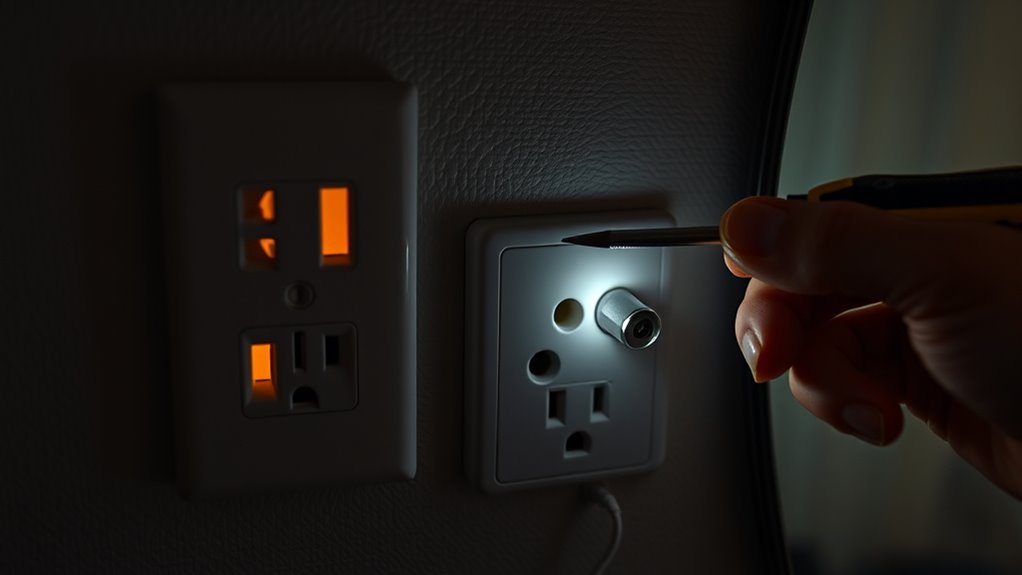
Have you ever wondered if your electrical outlets are properly grounded? Many homes still have ungrounded outlets, which can pose safety risks like electric shocks and damage to connected devices. Upgrading to grounded outlets is a smart step toward enhancing your electrical safety. Before you begin, it’s important to understand circuit compatibility. Not all electrical systems are set up to support grounded outlets, especially in older homes. You’ll need to verify that your circuit wiring includes a grounding wire, typically a bare copper or green insulated wire. If your wiring lacks a grounding wire, installing a grounded outlet becomes more complicated and may require additional modifications or professional assessment.
Check if your home’s wiring includes a grounding wire before upgrading outlets for safety.
Once you’ve confirmed circuit compatibility, you can proceed with outlet replacement procedures. First, turn off the power at your main breaker to eliminate any risk of shock. Use a voltage tester to double-check that the outlet is dead before removing it. Carefully unscrew the faceplate and then loosen the outlet from the electrical box. As you pull the outlet out, note how the wires are connected. Usually, the grounding wire is attached to a green screw on the outlet, but if your current outlet is ungrounded, there won’t be a grounding wire present. In this case, you’ll need to add a grounding path, which might involve installing a grounding wire or using a grounding clip if permitted by local electrical codes.
Next, disconnect the wires from the old outlet. If your wiring includes a grounding wire, attach it securely to the green grounding screw on your new grounded outlet. Ensure that all connections are tight and that the wires are properly secured to prevent loose contacts. When installing the new outlet into the electrical box, make sure it fits snugly and that the faceplate is aligned correctly. Afterward, turn the power back on at the breaker and test the outlet with a receptacle tester to confirm proper grounding and circuit function. Grounding techniques are essential to ensure a safe and reliable electrical system.
If you find that your existing wiring doesn’t support grounding, you might consider safer alternatives like installing GFCI outlets, which don’t require grounding but still provide protection. Keep in mind, electrical work can be dangerous, and if you’re unsure about circuit compatibility or outlet replacement procedures, it’s best to consult a licensed electrician. Upgrading your outlets to grounded ones isn’t just about convenience—it’s about ensuring your home’s electrical system is as safe as possible for you and your loved ones.
Frequently Asked Questions
Can I Upgrade Outlets Myself or Should I Hire an Electrician?
You can attempt to upgrade outlets yourself, but DIY risks include electrical shocks and code violations. If you’re comfortable with basic wiring and follow safety guidelines, you might manage it. However, hiring a professional electrician offers significant benefits: ensuring proper grounding, compliance with local codes, and peace of mind. For safety and long-term reliability, it’s often best to leave electrical upgrades to licensed experts.
Are There Any Electrical Code Requirements for Grounding Outlets?
Your electrical setup must follow grounding standards and outlet regulations that are more vital than you think—ignoring them could lead to serious hazards. Yes, there are specific code requirements for grounding outlets, including proper grounding methods and outlet types. Always check local electrical codes before upgrading, and consider hiring a professional if you’re unsure. Following these standards keeps your home safe and compliant with the law.
How Do I Identify if My Home’s Wiring Is Grounded?
You can identify if your home’s wiring is grounded by performing a wiring inspection with grounding indicators. Use a multimeter or outlet tester designed for grounding tests. Plug the tester into the outlet, and check for proper grounding signals. If unsure, consider consulting a licensed electrician to guarantee accurate assessment and safe upgrades. Proper grounding is essential for safety and compliance with electrical codes.
What Safety Precautions Should I Take Before Replacing Outlets?
Your safety is your top priority, so don’t underestimate it—think of it as protecting your home’s backbone! Before replacing outlets, turn off the power at the circuit breaker, then perform circuit testing and insulation checks with a voltage tester. Wear rubber gloves, use insulated tools, and double-check the circuit is dead. These precautions prevent shocks and make certain a safe upgrade to grounded outlets.
Will Upgrading to Grounded Outlets Improve My Home’s Electrical Safety?
Upgrading to grounded outlets greatly improves your home’s electrical safety by providing a safe path for stray current, reducing the risk of shocks. The grounding benefits help protect you and your appliances from electrical faults. By installing grounded outlets, you enhance outlet safety and minimize potential fire hazards. This upgrade is a smart move to ensure your home’s electrical system is safer and compliant with modern safety standards.
Conclusion
Upgrading to grounded outlets is like giving your home a safety upgrade—think of it as adding seat belts to your car. I once helped a neighbor who avoided this change until a small shock reminded him of the importance. Remember, a grounded outlet protects you from electrical mishaps and keeps your home safe. Don’t wait for a wake-up call—make the upgrade today and enjoy peace of mind, knowing you’re better protected.