A power strip mainly offers extra outlets to plug in multiple devices, while a surge protector adds the ability to shield your electronics from voltage spikes. Surge protectors contain components like MOVs that divert excess voltage, preventing damage, especially to sensitive equipment like computers. Power strips don’t usually offer this feature and are better for simple expansion. To make the safest choice, it’s helpful to understand the key differences and what each device provides—more details await if you continue exploring.
Key Takeaways
- Power strips increase the number of outlets but typically lack surge protection features.
- Surge protectors include components like MOVs to shield devices from voltage spikes.
- Use power strips for basic expansion; use surge protectors for sensitive electronics needing protection.
- Surge protectors often have indicator lights and higher Joule ratings for better safety.
- Choosing the right device depends on whether you need extra outlets or protection against power surges.
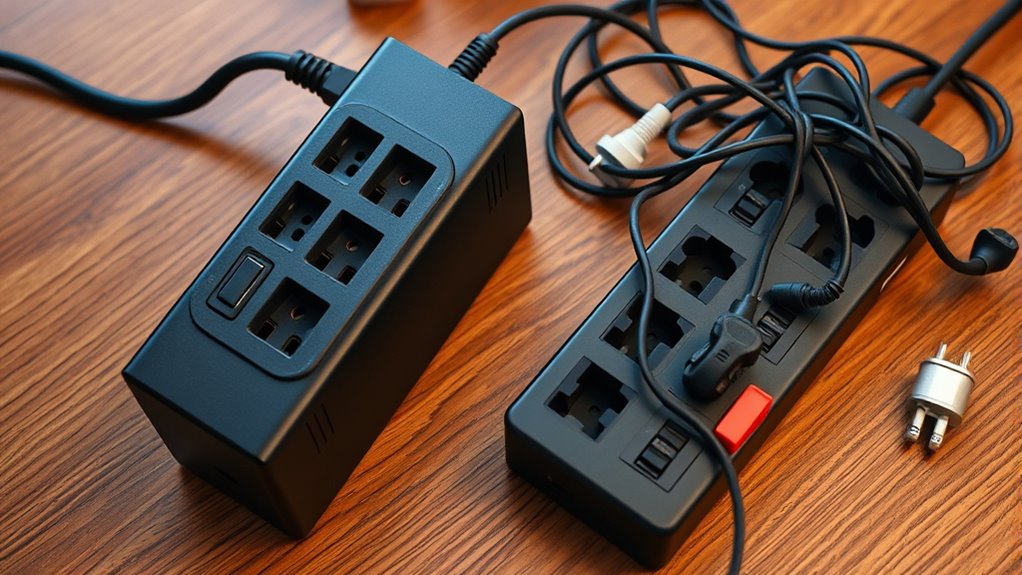
When it comes to expanding your power outlets, understanding the difference between surge protectors and power strips is essential. Both devices allow you to plug in multiple devices, but they serve different purposes and offer distinct levels of protection. Knowing which one is right for your needs can enhance electrical safety and ensure your devices stay protected. A power strip is simply a block of multiple outlets connected to a single power source. It gives you more plugs in tight spaces, making it convenient for computers, chargers, or other low-risk electronics. However, standard power strips typically don’t include surge protection, which means they won’t guard your devices against power fluctuations or lightning strikes. If you’re plugging in sensitive electronics like computers or home entertainment systems, relying solely on a basic power strip could put your equipment at risk.
Surge protectors, on the other hand, are designed with built-in components to shield your devices from voltage spikes. They contain metal-oxide varistors (MOVs) that divert excess voltage away from your electronics, preventing damage caused by power surges. When choosing a surge protector, you need to factor in device compatibility—making sure it can handle the total wattage of your connected devices and the number of outlets you need. Surge protectors often come with energy ratings or Joule ratings, indicating how much energy they can absorb before failing, which helps you assess their effectiveness over time. Additionally, surge protectors typically include features like indicator lights to show whether protection is active, giving you peace of mind that your devices are safeguarded. Properly understanding these differences can help you select the right device for your setup and avoid potential electrical hazards.
Electrical safety is a critical concern when dealing with any electrical device, especially if you’re connecting expensive or sensitive equipment. Surge protectors provide an added layer of safety by preventing voltage spikes from damaging your electronics or causing electrical fires. When selecting between a power strip and a surge protector, consider what’s more important for your setup. For general use with low-risk devices, a quality power strip may suffice. But if you want to safeguard your valuable electronics from unpredictable power surges, investing in a dedicated surge protector is the smarter choice. Remember, not all power strips are surge protectors, so always check the specifications before plugging in your costly devices. Properly understanding these differences ensures you make an informed decision that promotes electrical safety and device longevity. Additionally, choosing a surge protector with a high contrast ratio can better protect your devices from sudden voltage changes, ensuring consistent performance over time.

Power Strip,SUPERDANNY 5000 Joules Surge Protector with 13 AC Outlets 2 USB-A & 2 USB-C PD 20W Fast Charging Heavy Duty 14AWG/3C Industrial Grade Extension Cord for Workbench Home Office Black
Heavy Duty Power Strip: SUPERDANNY 15A/1875W heavy duty power strip features 13 widely-spaced outlets and 4 fast-charging USB…
As an affiliate, we earn on qualifying purchases.
As an affiliate, we earn on qualifying purchases.
Frequently Asked Questions
Can a Power Strip Ever Be a Substitute for a Surge Protector?
A power strip can’t replace a surge protector because of its limitations. Power strips simply extend outlets, but they lack surge protector features like voltage regulation and surge suppression. If you want to protect your electronics from power spikes, you need a surge protector. Relying on a power strip alone leaves your devices vulnerable to damage from power surges and electrical fluctuations. Investing in a surge protector is a smarter choice for safety.
Are All Surge Protectors Equally Effective?
Think of surge protectors like shields in a battle—some are stronger than others. Not all surge protectors are equally effective because their power rating and surge capacity vary. A high-quality protector offers better defense against voltage spikes, safeguarding your devices. Lower-quality ones might look similar but could fail during a big surge. Always check the specifications to guarantee you’re getting a protector that truly shields your equipment.
How Long Do Surge Protectors Typically Last?
A surge protector’s lifespan typically ranges from 3 to 5 years, but it depends on how often it experiences power surges. You should consider replacing it if it has absorbed multiple surges, or if the indicator light suggests it’s no longer providing protection. Following the manufacturer’s replacement recommendations helps guarantee your devices stay safe. Regularly check your surge protector to maintain peak protection and prevent potential damage.
Can I Connect Multiple Surge Protectors Together?
Did you know that daisy chaining multiple surge protectors can increase overload risks by over 50%? You shouldn’t connect surge protectors together because it can cause overheating, damage, or even fire hazards. Instead, plug your devices directly into a single surge protector that has enough outlets and a high joule rating. This approach keeps your electronics safe and prevents dangerous overloads. Always follow manufacturer guidelines for safe use.
Do Surge Protectors Protect Against All Types of Electrical Surges?
Surge protectors mainly guard against voltage spikes, but they don’t protect against all types of electrical surges, like those caused by electrical fires or power instability. You should understand that sudden power fluctuations or fires can bypass surge protection. To keep your devices safe, consider using a combination of surge protectors and other safety measures, like circuit breakers, especially during power instability episodes, to prevent damage and electrical fires.

6Ft Power Strip Surge Protector – Yintar Extension Cord with 6 AC Outlets and 3 USB Ports for for Home, Office, Dorm Essentials, 1680 Joules, ETL Listed, (Black)
Power Strip with 6 Outlets & 3USB Ports: 6 AC Surge protector outlets(1680 Joules) including 1 Widely Spaced…
As an affiliate, we earn on qualifying purchases.
As an affiliate, we earn on qualifying purchases.
Conclusion
Now that you know the key differences between surge protectors and power strips, the choice might seem straightforward. But here’s the twist—what if a seemingly simple power strip could actually put your devices at risk? The decision isn’t just about convenience; it’s about safety and security. So, before you plug in that next device, consider what’s really protecting your valuable electronics. The right choice could make all the difference when it really counts.

Anker Power Strip with 2100J Surge Protector, Outlet Extender, 5ft Extension Cord with Multiple Outlets, 12 AC, 2 USB A,1 USB C Port for 20W, Home Office, Dorm Room Essentials, TUV Listed
All the Power You Need: Features 12 AC outlets, 1 USB-C port, and 2 USB-A ports to give…
As an affiliate, we earn on qualifying purchases.
As an affiliate, we earn on qualifying purchases.

Shiningwell Wall Outlet Extender with Shelf and Night Light, Surge Protector with 3 USB Ports (2A+1C) and 6 AC Outlets, Multi Plug Power Strip Electric Outlet Splitter for Home and Office Use, White
9 IN 1 OUTLET EXTENDER: Expand your power options with 6 AC outlets (15A/125V/1875W total) and 3 smart…
As an affiliate, we earn on qualifying purchases.
As an affiliate, we earn on qualifying purchases.