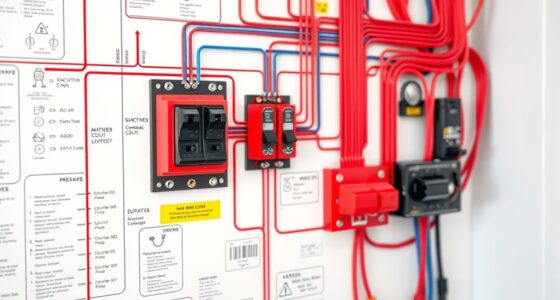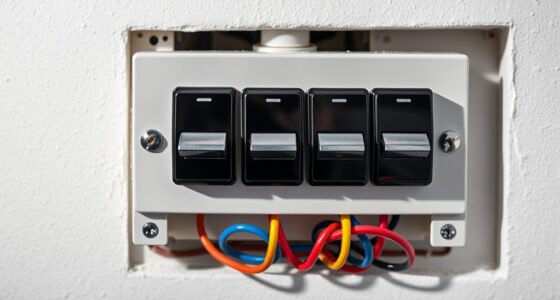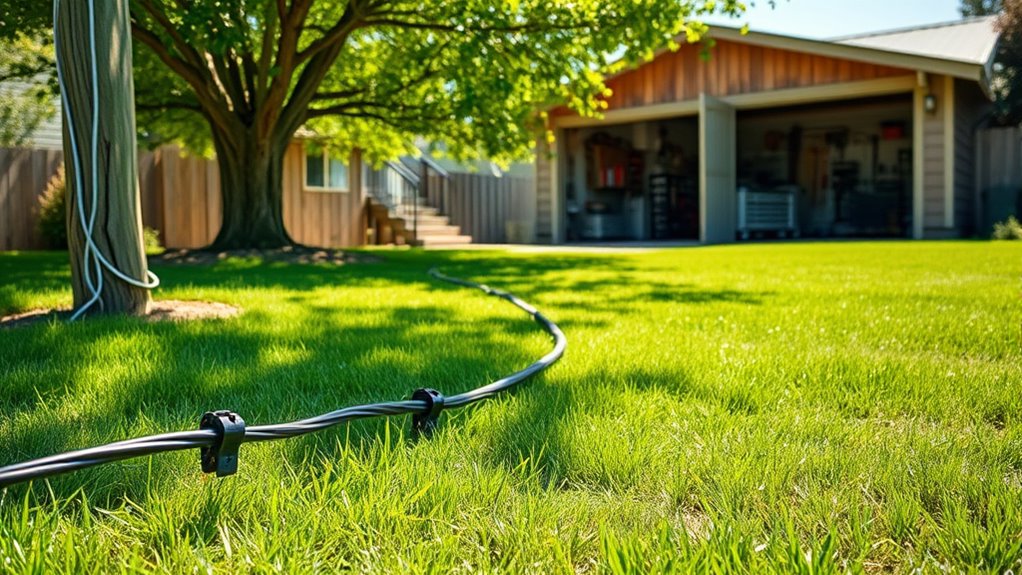

To safely power your shed or garage outdoors, start by selecting weather-resistant conduit, like PVC or metal, and dig a trench at least 18 inches deep to meet codes. Carefully lay the conduit in the trench, avoiding sharp bends, and secure it properly. Use outdoor-rated wiring, connect with weatherproof connectors, and seal all joints. Installing a GFCI outlet and proper grounding enhances safety. Keep following steps to make certain a secure, code-compliant setup.
Key Takeaways
- Use weather-resistant conduit, like PVC or metal, buried at least 18 inches deep to protect outdoor wiring.
- Ensure all wiring is rated for outdoor use and suitable for direct burial to prevent damage.
- Install a proper grounding system and consider GFCI outlets for added safety at outdoor connection points.
- Seal all connections with weatherproof connectors and dielectric grease to prevent water ingress.
- Turn off power, verify de-energization, and follow local electrical codes before beginning outdoor wiring.
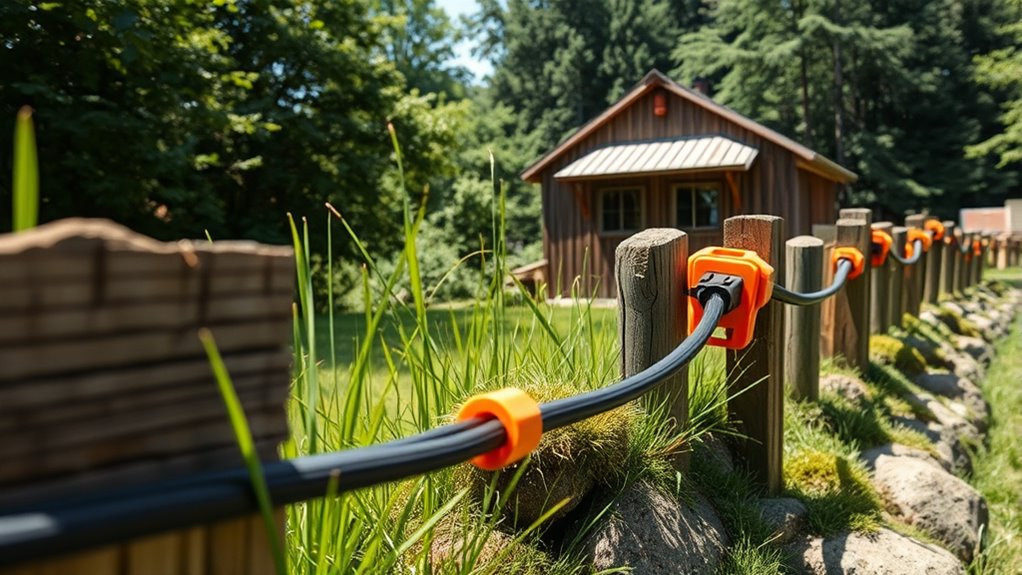
Running wire outdoors requires careful planning to guarantee safety and durability. You’ll need to think about how to protect the cables from the elements and prevent potential hazards. One of the best ways to do this is by using an underground conduit. An underground conduit acts as a protective sleeve for your wiring, shielding it from moisture, soil pressure, and physical damage. When installing, make sure to choose a conduit made from durable, weather-resistant material like PVC or metal, which can withstand the outdoor environment. Dig a trench deep enough to meet local code requirements—usually at least 18 inches—and lay the conduit securely, avoiding sharp bends that could damage the cable over time.
Use durable, weather-resistant underground conduit installed at least 18 inches deep for outdoor wiring safety.
Once the conduit is in place, you’ll want to pull your wire through it carefully. Make sure you’re using a wire rated for outdoor use and suitable for direct burial if it’s going underground. As you connect the wire to your power source and the shed or garage, use weatherproof connectors to ensure a tight, waterproof seal. Weatherproof connectors are essential for preventing moisture ingress, which can cause shorts and corrosion. Always follow the manufacturer’s instructions for installation, making sure to seal every connection correctly. Using dielectric grease inside the connectors can add an extra layer of protection against water intrusion.
When working outdoors, it’s crucial to keep safety at the forefront. Turn off power at the main breaker before starting any wiring project. Verify that your circuit is de-energized with a tester before touching any wires. Once your wiring is run through the underground conduit and connected with weatherproof connectors, double-check all connections. Use electrical tape or additional sealing methods around the connectors if needed, especially where the wire exits the conduit. This extra step helps prevent water from seeping in during heavy rain or snow.
Remember to install a proper grounding system for your outdoor wiring. This reduces the risk of electrical shock and protects your equipment. Also, consider installing a GFCI outlet at the connection point, especially if you plan to use the power outdoors or near water sources. This safety device quickly shuts off power if it detects a ground fault, adding an important layer of protection. Additionally, understanding electrical codes and guidelines is essential to ensure your installation is compliant and safe.
In short, running wire outdoors securely involves using an underground conduit and weatherproof connectors, planning your trench carefully, and following safety protocols. Proper installation ensures your shed or garage gets reliable power while minimizing risks from weather, pests, or accidental damage. Taking these steps makes your outdoor wiring project safe, durable, and compliant with electrical codes.
Frequently Asked Questions
Can I Use Standard Indoor Wiring Outdoors?
You shouldn’t use indoor wiring outdoors because indoor wiring isn’t designed for outdoor conditions. Indoor wiring typically lacks proper wiring insulation needed to withstand moisture, UV rays, and temperature changes. Using it outdoors could lead to electrical shorts or fires. Always opt for outdoor-rated wiring with weatherproof insulation, such as UF (Underground Feeder) cable, to guarantee safety and durability when powering a shed or garage.
How Deep Should Underground Wiring Be Buried?
You should bury underground wiring at least 18 inches deep to guarantee underground safety. Statistically, hitting underground utility lines occurs in about 2,000 incidents annually, highlighting the importance of proper burial depth. By maintaining this depth for your wiring, you protect it from accidental damage and weather, reducing hazards. Always check local codes and use appropriate conduit to ensure your underground wiring remains safe and durable over time.
What Outdoor Conduit Types Are Best for Wiring?
You should choose rigid metal conduit or PVC conduit for outdoor wiring, as they’re durable and weather-resistant. Use rigid metal conduit for a secure, long-lasting installation, especially in exposed areas, and PVC conduit for easier, cost-effective setups under ground or in protected spaces. Follow proper installation techniques by securely connecting sections, sealing joints to prevent moisture entry, and burying conduit at the correct depth to guarantee safety and code compliance.
Are There Specific Weatherproof Outlets for Outdoor Use?
Like a sturdy shield protecting a knight, weatherproof outlets keep your outdoor connections safe. Yes, there are specific outdoor receptacles designed for harsh weather conditions. These weatherproof outlets feature sealed covers and durable materials, ensuring they resist moisture and dirt. When installing, choose UL-listed outdoor receptacles and use proper weatherproof conduit to maintain safety. This setup guarantees your power supply stays reliable and protected, rain or shine.
How Often Should Outdoor Wiring Be Inspected?
You should inspect your outdoor wiring at least once a year to guarantee safety and functionality. An inspection schedule helps you spot issues like corrosion, damage, or loose connections early. Follow maintenance tips like checking weatherproof outlets, securing wires properly, and clearing debris around the wiring. Regular inspections and maintenance keep your outdoor electrical system safe, reliable, and compliant with safety standards, preventing potential hazards or costly repairs.
Conclusion
Running wire outdoors isn’t just about connecting power; it’s about safeguarding your dreams and projects. Think of the wire as a bridge—symbolizing trust and security—linking your home to your shed or garage. When you follow safety rules, you’re building a strong foundation for your future. Remember, a well-installed wire is like a steady heartbeat, keeping your workspace alive and thriving. Power up wisely, and let your outdoor haven flourish with confidence and care.