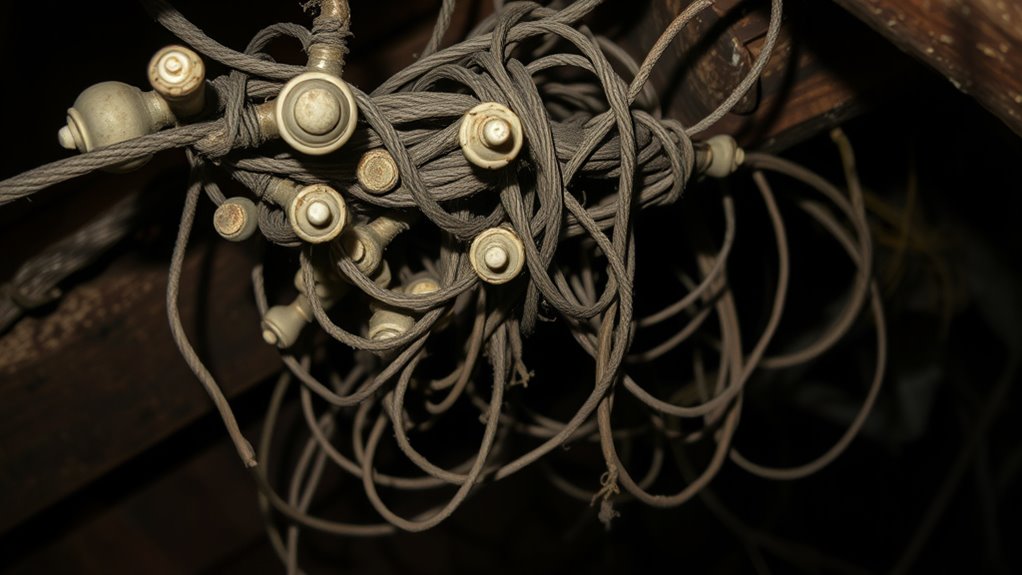

Knob-and-tube wiring is an old electrical system from the late 1800s and early 1900s that uses ceramic knobs and tubes to run wires through walls and ceilings. It was innovative back then but is now outdated and lacks grounding, insulation, and safety features. Over time, deterioration of components can cause exposure to live wires, increasing the risk of fires and shocks. If you want to learn how to address these issues safely, keep exploring.
Key Takeaways
- Knob-and-tube wiring is an outdated electrical system using ceramic knobs and tubes for wiring installation, common from the late 1800s to early 1900s.
- It lacks grounding and insulation, increasing risks of electrical fires and shocks as it deteriorates over time.
- Signs include frequent circuit trips, flickering lights, visible insulation damage, and the presence of ceramic components.
- Replacing knob-and-tube wiring with modern systems enhances safety, meets current standards, and supports higher electrical loads.
- Consulting a licensed electrician is essential to assess your wiring and determine if replacement is necessary.

Have you ever wondered if your home’s outdated wiring is putting you at risk? If your house still has knob-and-tube wiring, it’s time to take a closer look. This old wiring system was common from the late 1800s to the early 1900s but isn’t up to today’s safety standards. Knob-and-tube wiring uses ceramic knobs and tubes to route individual wires through walls and ceilings. While it was innovative for its time, it lacks grounding and insulation, making it a safety hazard today. Over time, the insulation can deteriorate, exposing live wires and increasing the risk of electrical fires or shocks. If you’re experiencing frequent circuit trips or flickering lights, these could be signs your wiring isn’t handling modern electrical loads properly.
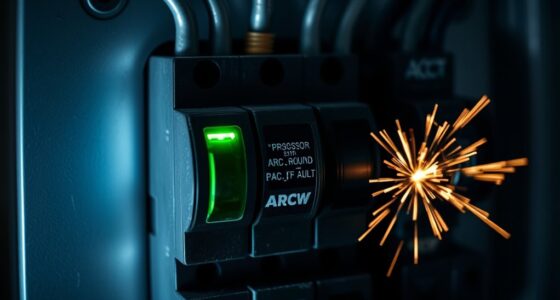
Upgrading your electrical system is essential, and that starts with understanding your options for fuse box upgrades and circuit breaker types. Fuse boxes, once standard, are now outdated and less reliable than modern circuit breaker panels. Replacing a fuse box with a new breaker panel not only increases safety but also makes it easier to identify and cut off power in an emergency. Circuit breaker types vary, with standard single-pole breakers for regular circuits and double-pole breakers for larger appliances or higher-voltage needs. Modern circuit breakers include AFCI (Arc Fault Circuit Interrupters) and GFCI (Ground Fault Circuit Interrupters), which add extra layers of protection against electrical fires and shocks. Upgrading to these breaker types is a smart move if your home’s wiring is old or has seen significant wear.
Consulting a licensed electrician to assess the condition of your wiring and ensure compliance with current safety standards is highly recommended, especially considering the safety hazards associated with outdated systems.
Frequently Asked Questions
How Long Does Knob-And-Tube Wiring Typically Last?
Knob-and-tube wiring can last around 70 to 100 years if well-maintained, but its electrical lifespan varies based on age, exposure to elements, and usage. You should regularly inspect it for cracks, deterioration, or damage. Over time, this wiring becomes less reliable and more prone to hazards, so even if it’s still functioning, consider replacing it to guarantee safety and meet modern electrical standards.
Can I Upgrade My Electrical System Without Removing Knob-And-Tube Wiring?
Think of your home’s electrical system as a delicate dance—upgrading without removing knob-and-tube wiring is possible with careful choreography. You can perform electrical upgrades by focusing on wiring compatibility and adding modern components alongside existing wiring. However, this requires expert assessment to guarantee safety. While it’s a feasible short-term fix, consider long-term solutions for maximum safety and efficiency, as older wiring may still pose risks over time.
Is Knob-And-Tube Wiring Safe for Modern Appliances?
Knob-and-tube wiring isn’t safe for modern appliances because it often has grounding issues, which can cause electrical shocks or damage. Additionally, the insulation wears out over time, increasing fire hazards. You should avoid plugging in high-demand appliances or relying on it for everyday use. To guarantee safety, consider upgrading your wiring to meet current standards, reducing risks of electrical failures or fires.
What Are the Costs Involved in Replacing Knob-And-Tube Wiring?
You’re looking at a repair bill that can make your eyes water, with replacement expenses typically ranging from $3,000 to $8,000 depending on your home’s size and complexity. A detailed cost estimate considers labor, materials, and permit fees, so it’s wise to get multiple quotes. While it’s an investment upfront, replacing knob-and-tube wiring enhances safety and supports your modern appliances. Think of it as giving your home a fresh start.
Are There Any Incentives or Rebates for Replacing Old Wiring?
You might qualify for rebate programs or financial incentives when replacing old wiring like knob-and-tube. Many local, state, or federal initiatives aim to improve home safety and energy efficiency, offering money back or discounts. Check with your utility company or local government to see what’s available in your area. Taking advantage of these programs can considerably offset your wiring replacement costs and make the upgrade more affordable.
Conclusion
Old knob-and-tube wiring is like a fragile, ancient vine clinging to your home’s foundation—beautiful but vulnerable. Replacing it is like pruning dead branches to let new growth flourish, ensuring your home’s electrical system stays strong and safe. Don’t let outdated wiring be the rusted gears in your home’s machinery; upgrade now to keep the heartbeat of your house steady and secure. Your home’s future is brighter when you clear out the shadows of the past.