
To install a Level 2 EV charger at home, you should choose a convenient spot near your parking area and close to your electrical panel. Make sure your electrical system can handle the charger’s power needs, and consider upgrading your panel if necessary. Proper wiring and professional installation are essential for safety and efficiency. If you keep exploring, you’ll discover how to evaluate your home’s setup and optimize your charging experience.
Key Takeaways
- Choose a convenient, sheltered location near your parking spot and electrical panel for easier wiring and accessibility.
- Ensure your home’s electrical system supports a 240V Level 2 charger; upgrade your panel if needed.
- Select the appropriate amperage (30A, 40A, 50A) based on your vehicle’s charging capacity and wiring capacity.
- Minimize wiring length by placing the charger close to the parking space to reduce installation costs and improve performance.
- Hire a licensed electrician for proper assessment, installation, and to ensure compliance with local electrical codes.
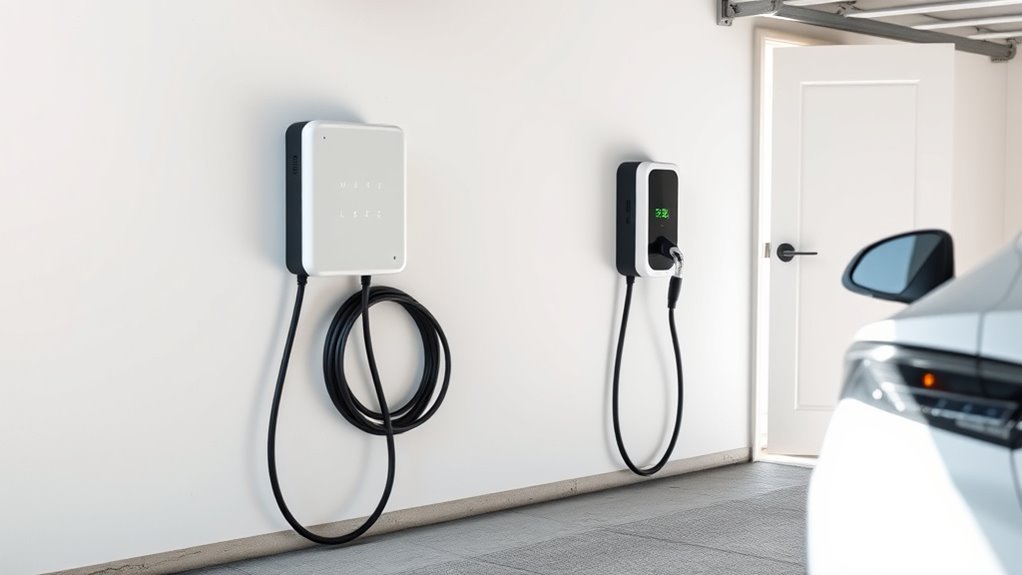
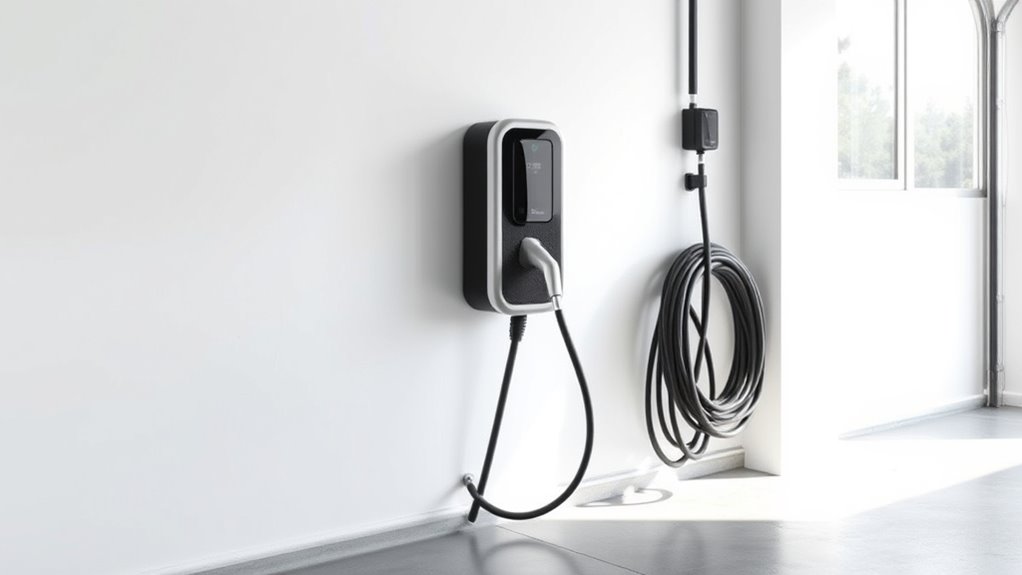
Installing an EV charger at home makes charging your electric vehicle convenient and efficient. When considering a Level 2 charger, one of the first steps is figuring out the best charging station placement. You want to position it in a spot that’s easily accessible and close to your parking space, ideally near your existing electrical panel. This minimizes the length of wiring needed and reduces installation costs. Think about how you usually park your vehicle—if you park in a garage, that’s the obvious choice. If you park outside, you might need to consider weatherproof options and a location that provides protection from the elements. The placement should also allow you to connect your vehicle comfortably without stretching cords or contorting awkwardly.
Optimal EV charger placement: near your parking spot and electrical panel for convenience and efficiency.
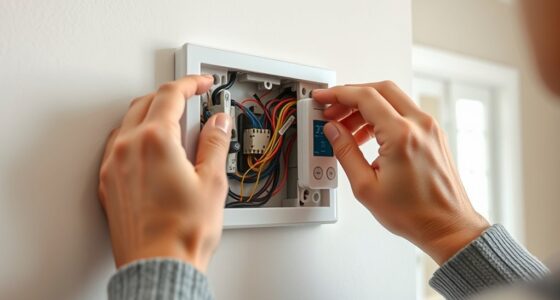
Next, you need to understand the power supply requirements. A Level 2 charger typically operates at 240 volts, similar to a household dryer or oven. Before installation, it’s vital to evaluate whether your home’s electrical system can support this. Most homes have a dedicated circuit for high-power appliances, but you might need to upgrade your electrical panel if it’s outdated or lacks sufficient capacity. This upgrade ensures your home can handle the additional load without tripping breakers or causing power fluctuations. A licensed electrician can assess your current system and determine if you need a new circuit or a panel upgrade. Additionally, understanding your home’s electrical capacity helps you plan for a safe and effective installation.
You’ll also need to consider the amperage of your charger. Common options include 30 amps, 40 amps, or even 50 amps, depending on your vehicle’s charging capacity and your home’s wiring. Higher amperage units charge faster but require more robust wiring and a capable power supply. Your electrician will check your existing wiring and advise on the best setup to optimize safety and performance. It’s essential to meet local electrical codes and standards, which might involve permits and inspections, ensuring your installation is both safe and compliant.
Finally, remember that the placement of your charging station and the power supply requirements are interconnected. Proper placement minimizes wiring length, reduces installation costs, and makes daily use more convenient. Meanwhile, understanding your home’s power capabilities helps prevent future electrical issues and guarantees you get the most out of your Level 2 charger. Investing in professional advice and installation guarantees your charging station is safe, efficient, and tailored to your specific needs. With the right placement and power setup, charging your EV at home becomes an effortless part of your daily routine, saving you time and hassle.
Frequently Asked Questions
What Is the Average Cost of Installing a Level 2 Charger at Home?
The average cost of installing a Level 2 charger at home ranges from $500 to $2,500, depending on various cost factors and installation expenses. Factors like your electrical system’s capacity, the charger’s power level, and whether you need electrical upgrades influence the total cost. You might also pay for permits and professional installation. To get an accurate estimate, consult a licensed electrician who can evaluate your home’s electrical setup.
How Long Does It Typically Take to Install a Home EV Charger?
Imagine you’re planning to install a Level 2 charger—typically, the installation timeline takes about one to two days. You’ll need to coordinate with an electrician, who usually schedules the work within a week. The process involves running wiring and installing the unit, so your electrician might also need a few hours for permits or inspections. Overall, expect the entire process to take roughly a week from scheduling to completion.
Are There Any Incentives or Rebates Available for Home Charger Installation?
You can find government incentives and rebate programs that make installing a home EV charger more affordable. Many local, state, and federal programs offer rebates or tax credits when you purchase and install a Level 2 charger. To take advantage, check your area’s specific incentives online or consult your installer. These programs can substantially reduce your upfront costs, making it easier and more economical to upgrade your home charging setup.
Can I Install a Level 2 Charger Myself, or Should I Hire a Professional?
You should hire a professional for installing a Level 2 charger, as DIY safety risks are significant—over 60% of electrical accidents involve home projects. While you might be tempted to do it yourself, professional installation guarantees compliance with electrical codes and safety standards. Experts have the necessary tools and experience, reducing the risk of fire or shock. Prioritize safety and reliability by trusting licensed electricians for this essential task.
What Maintenance Is Required for a Home EV Charging Station?
You should regularly inspect your home EV charging station for charger durability issues like frayed wires or corrosion. Keep the area clean and dry to prevent damage. Check the power management system to make sure it’s operating correctly, which helps prevent overloads and prolongs your charger’s lifespan. Schedule an annual professional inspection to verify electrical connections and maintain peak performance. Proper maintenance ensures your charger stays safe, reliable, and efficient for years to come.
Conclusion
Installing a Level 2 charger at home transforms your daily routine into a seamless, empowering experience. Picture coming home each evening, your car gently humming as it charges quietly in your driveway, ready for tomorrow’s adventures. With this setup, you’re not just saving time—you’re embracing a greener, more sustainable lifestyle. Feel the pride in knowing you’ve taken a step toward a cleaner planet, turning your home into a haven of innovation and hope for the future.