If your circuit breaker keeps tripping, start by unplugging all devices on that circuit and then reset the breaker to see if it trips immediately. Check for signs of power surges, loose or damaged wiring, or overloaded circuits. If it trips again, inspect for faulty wiring or a faulty breaker itself, and consider redistributing your appliances or upgrading the breaker. For persistent issues, professional help guarantees safety and a proper fix—keep exploring for more detailed guidance.
Key Takeaways
- Unplug all devices, reset the breaker, and observe if it trips immediately to identify overload or fault issues.
- Inspect wiring for loose, burnt, or damaged connections that may cause shorts or arcing.
- Check for signs of power surges like flickering lights or appliance damage, and consult an electrician if needed.
- Redistribute appliances across circuits or upgrade to a higher-capacity breaker to prevent overload.
- Regularly inspect electrical components, ensure proper grounding, and replace faulty breakers for safety.
Troubleshooting a circuit breaker can seem intimidating, but identifying the problem is often straightforward with a systematic approach. When your breaker keeps tripping, the first step is to understand why it’s happening. Most of the time, it’s due to power surges or wiring issues. Power surges occur when there’s a sudden spike in electrical voltage, often caused by lightning strikes, faulty appliances, or issues with the power grid. These surges can overload your circuit, prompting the breaker to trip as a safety measure. Wiring issues, on the other hand, involve loose connections, damaged wires, or improper grounding, which can cause shorts or overloads that trip the breaker repeatedly. Recognizing these common causes is key to resolving the problem quickly.
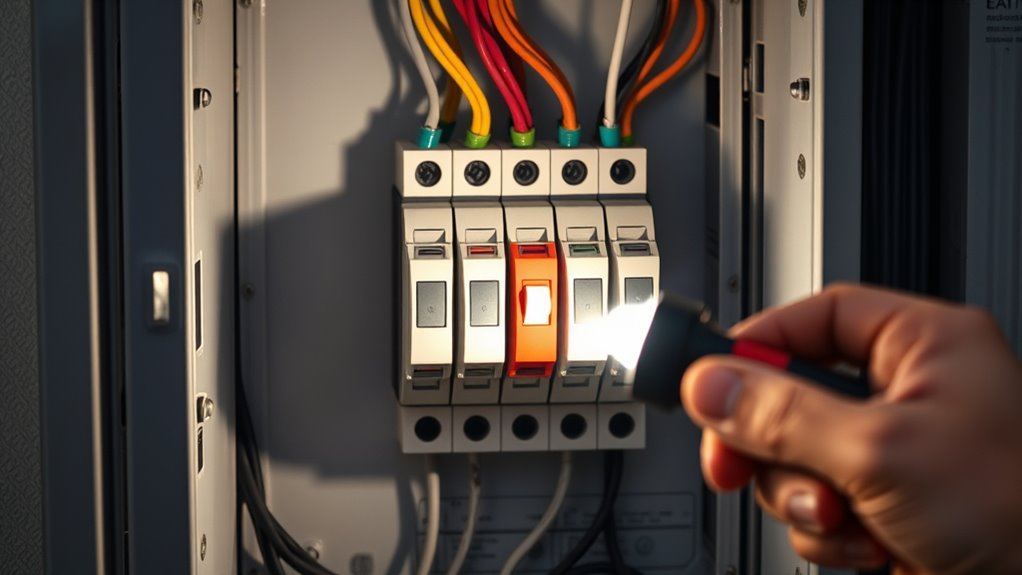
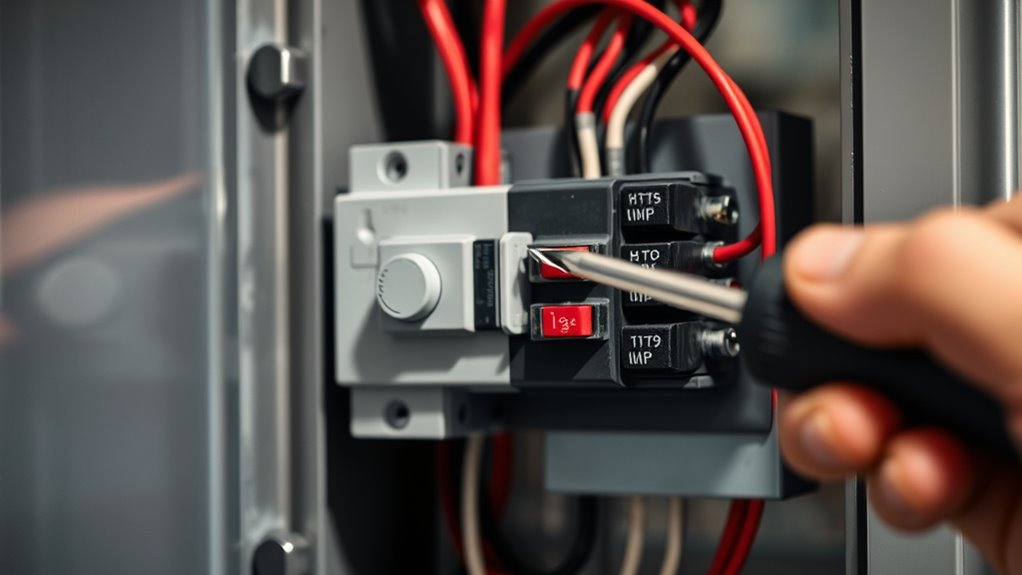
Start by unplugging all devices connected to the circuit. Reset the breaker and see if it holds. If it trips immediately, the issue likely lies within the circuit itself. Check for power surges by inspecting your electrical system for signs of recent voltage spikes, such as flickering lights or appliances that turn on and off unexpectedly. If you notice these signs, it’s wise to call in a professional electrician, as surges can damage your wiring and appliances over time. Next, examine the wiring if you’re comfortable doing so. Turn off the main power supply before opening the breaker panel. Look for loose or burnt wires, discolored insulation, or signs of corrosion. Loose connections can cause arcing, which triggers the breaker to trip for safety. Damaged wires should be replaced immediately to prevent further issues. Additionally, understanding the navigation and mapping of your electrical system can help identify hidden issues, such as improperly wired circuits or outdated components.
If wiring appears intact, consider whether an overloaded circuit might be the culprit. Overloading happens when too many appliances draw power from a single circuit, exceeding its capacity. In such cases, you’ll need to redistribute the load across different circuits or upgrade to a higher capacity breaker. Sometimes, the breaker itself may be faulty, especially if it trips even when the load is minimal. Testing or replacing the breaker can resolve this, but it’s best handled by a qualified electrician to ensure safety and compliance with electrical codes. Recognizing the importance of proper circuit design can also prevent future problems and improve overall electrical safety.
Frequently Asked Questions
Can a Tripped Circuit Breaker Cause Electrical Fires?
Yes, a tripped circuit breaker can lead to electrical fire hazards if it repeatedly trips or isn’t reset properly. This indicates underlying issues like overloaded circuits or faulty wiring, which increase fire risk. To prevent this, follow breaker maintenance tips—regularly inspect and replace damaged breakers, avoid overloading outlets, and seek professional help when needed. Proper maintenance keeps your electrical system safe and minimizes fire hazards.
How Often Should I Replace a Faulty Circuit Breaker?
You should replace a faulty circuit breaker if it shows signs of wear or if it’s past its typical lifespan, which is usually around 30 to 40 years. Regularly check for issues like frequent tripping or damage, and follow recommended replacement intervals to guarantee safety. Don’t wait until it fails—timely replacement keeps your electrical system safe and efficient. Always consult a professional electrician for proper inspection and replacement.
Is It Safe to Reset a Breaker Multiple Times?
It’s tempting to think you can reset your breaker endlessly, but it’s not exactly the best idea. Repeatedly resetting the breaker in your electrical panel without addressing the root cause can be dangerous. Follow proper reset procedures and only do so when necessary. If it trips again, it’s a sign to consult a professional. Overdoing it risks overheating wires or causing a fire, so play it safe and know when to call in an expert.
What Tools Do I Need to Troubleshoot Breaker Trips?
To troubleshoot breaker trips, you’ll need a circuit tester to check for voltage and verify connections. Also, grab screwdrivers—preferably insulated ones—to safely remove panel covers and examine wiring. Use the tester to identify faulty outlets or switches causing overloads, and tighten any loose connections. Always turn off the main power before working inside your breaker panel, and if you’re unsure, consider consulting a professional electrician for safety.
Why Does My Breaker Trip Only at Night?
Your breaker trips only at night because of nighttime power surges or temperature fluctuations. As electrical demand increases in the evening, surges can overload your system, causing trips. Cooler nighttime temperatures can also influence wiring and circuit components, leading to trips. To fix this, consider installing surge protectors, checking for faulty wiring, or consulting an electrician to assess your system’s capacity and ensure it handles nighttime fluctuations safely.
Conclusion
Think of your circuit breaker as a vigilant guard, constantly watching over your home’s electrical system. When it trips, it’s like it’s sounding the alarm to protect you from danger. By identifying the cause—whether overloaded circuits, faulty appliances, or wiring issues—you can restore safety and prevent future trips. Regular checks and cautious use keep your home’s electrical health in check. Remember, a well-maintained circuit breaker is the silent hero keeping your home safe and sound.