
To reduce dust everywhere in your home, start by using high-quality HEPA air purifiers and keep filters clean. Clean surfaces and floors regularly with sealed HEPA vacuums, and launder bedding weekly. Control humidity levels between 30-50% to prevent dust mites, and improve ventilation with fresh air and exhaust fans. Minimize indoor pollution and target high-dust areas with focused cleaning. Staying proactive with air quality monitors and smart devices can make a big difference—learn more to get dust-free air.
Key Takeaways
- Use high-quality HEPA air purifiers and ensure proper placement and regular filter maintenance.
- Implement frequent cleaning routines with sealed HEPA vacuums and damp wiping of surfaces.
- Control indoor humidity levels between 30-50% to inhibit dust mites and mold growth.
- Improve ventilation by opening windows, using exhaust fans, and installing mechanical systems with filters.
- Reduce indoor pollution by laundering bedding weekly, sealing mold-prone areas, and avoiding indoor smoking.

MOOKA Air Purifiers for Home Large Room up to 1076ft², H13 True HEPA Air Filter Cleaner, Odor Eliminator, Remove Smoke Dust Pollen Pet Dander, Night Light, B-D02L White
MOOKA B-D02L AIR PURIFIER FOR LARGE ROOM: With the high-efficiency filtration system, the air purifier covers an area…
As an affiliate, we earn on qualifying purchases.
As an affiliate, we earn on qualifying purchases.
Use High-Quality Air Purifiers With HEPA Filters
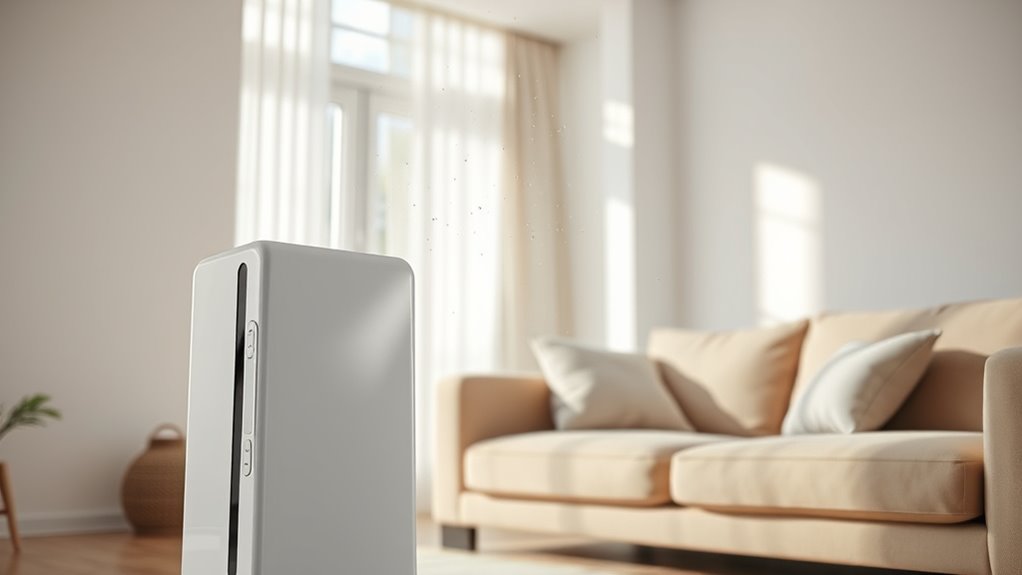
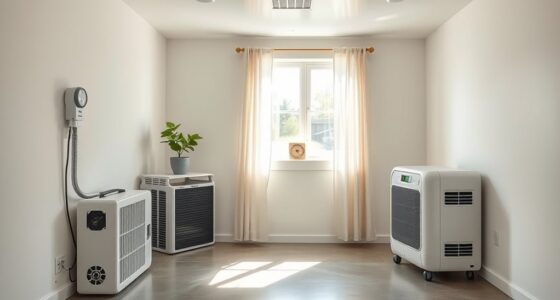
Using high-quality air purifiers with HEPA filters is one of the most effective ways to reduce dust and improve indoor air quality. HEPA filters can trap particles as small as 0.3 microns, including dust mites, pollen, pet dander, and microscopic dust. This substantially lowers airborne dust levels, making the air safer to breathe. To maximize their benefits, choose a unit with a high CADR (Clean Air Delivery Rate) and ensure it’s appropriately sized for your room. Regularly replace or clean the filters according to the manufacturer’s instructions to maintain peak performance. Position the purifier in high-traffic or dust-prone areas, such as living rooms and bedrooms. Using these devices consistently can dramatically reduce dust buildup and create a healthier indoor environment. Incorporating air quality monitoring can also help you track the effectiveness of your air purification efforts. Additionally, maintaining proper ventilation can further reduce indoor dust levels by promoting better airflow and reducing stagnation. Proper filter maintenance is crucial to sustain the purifier’s efficiency and overall air quality. Implementing regular cleaning routines, including vacuuming with HEPA-filtered vacuums and dusting surfaces, will further enhance dust reduction efforts.

Shark NV352 Navigator Lift Away Upright Vacuum, Hepa Filter, Anti-Allergen Technology, Swivel Steering, Ideal for Carpet, Stairs, & Bare Floors, with Wide Upholstery & Crevice Tools, Lavender
LIFT-AWAY FUNCTIONALITY: lift away the detachable pod and easily clean above-floor areas like stairs, furniture, and more.
As an affiliate, we earn on qualifying purchases.
As an affiliate, we earn on qualifying purchases.
Implement Regular Surface and Floor Cleaning Routines
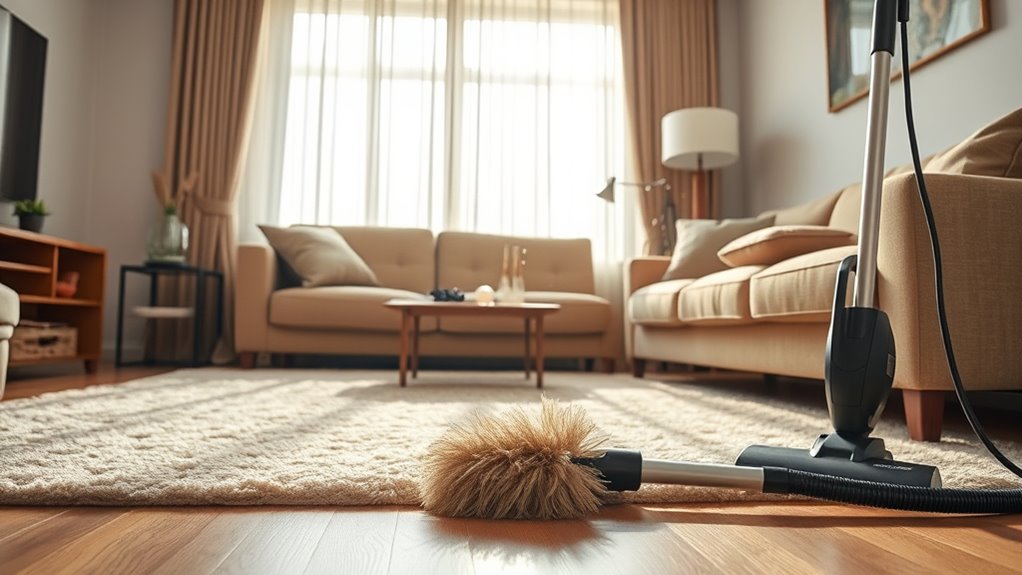
You should regularly wipe down surfaces and vacuum floors to keep dust levels low. Using sealed HEPA vacuums prevents dust from resuspending into the air, making your cleaning more effective. Don’t forget to launder bedding weekly to reduce dust mites and allergens that settle in textiles. Incorporating air filtration devices can further improve indoor air quality by capturing airborne particles. Monitoring air quality can help you identify if dust or other pollutants are accumulating faster than your cleaning routine can handle. Implementing specialized cleaning techniques, such as damp dusting, can also help trap dust more effectively and prevent it from becoming airborne again. Additionally, choosing dog-friendly cleaning products can ensure safety for your pets while maintaining a dust-free environment. Employing proper ventilation strategies can also aid in reducing indoor dust buildup by promoting better airflow and particle removal.
Use Sealed HEPA Vacuums
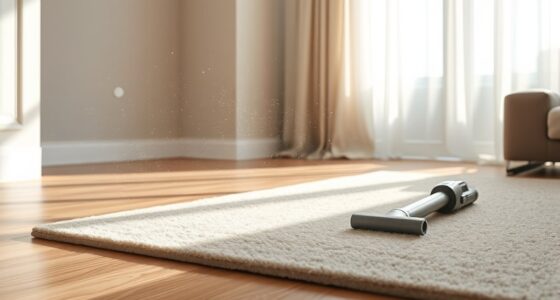
Sealed HEPA vacuums are essential tools for effective dust control because they prevent dust particles from resuspending into the air during cleaning. When you vacuum with a sealed HEPA unit, dust is captured and contained, reducing airborne allergens and microscopic particles. Unlike traditional vacuums that may release trapped dust, sealed HEPA models guarantee that particles stay inside the filter and don’t escape back into your home. You should regularly check and replace filters to maintain peak performance. Use the vacuum on carpets, rugs, and hard floors, paying special attention to high-traffic areas and corners where dust accumulates. Properly sealing the vacuum’s compartments and attachments keeps dust contained, making your cleaning routine more effective and healthier for everyone in your home. Additionally, choosing a vacuum with vetted filtration systems ensures maximum dust retention and improved indoor air quality. Incorporating effective filtration into your cleaning routine can significantly reduce dust buildup over time, especially when combined with regular maintenance and consistent cleaning practices, which further minimizes dust re-entrainment and promotes a healthier living environment. Implementing improved filtration technology further enhances dust capture efficiency, leading to cleaner indoor air and a healthier space.
Wipe Surfaces Frequently
Regular surface wiping and floor cleaning are effective ways to keep dust levels down and prevent buildup. You should dust high-traffic areas, furniture, and flat surfaces weekly using a microfiber cloth or damp rag, which traps dust instead of dispersing it. Don’t forget to wipe down shelves, baseboards, and vents regularly. Vacuum or sweep floors daily, especially in rooms with carpets or rugs, to remove loose dust particles. Use a sealed HEPA vacuum cleaner to prevent resuspension during cleaning. Pay special attention to corners and hidden spots where dust tends to accumulate. Incorporating proper cleaning tools and techniques ensures that dust is effectively removed without dispersing it into the air. Consistent cleaning routines help reduce dust in the air and on surfaces, making your home healthier and more comfortable. Additionally, implementing air filtration techniques such as air purifiers with HEPA filters can further improve indoor air quality by capturing airborne dust particles. Regularly replacing or cleaning your air filters is also crucial for maintaining optimal filtration performance. Keeping surfaces clean is a simple yet powerful step toward better indoor air quality, especially when combined with regular maintenance of air filters.
Launder Bedding Weekly
Laundering bedding weekly is an effective way to reduce dust mite populations and remove accumulated dust fibers. Regular washing with hot water (above 130°F) kills dust mites and loosens dust buildup. Use allergen-proof covers on pillows and mattresses to block dust mite entry. Dry bedding thoroughly to prevent mold growth. Incorporate the following practices to enhance dust control:
| Action | Frequency | Benefits |
|---|---|---|
| Wash sheets and pillowcases | Weekly | Removes dust, mites, and allergens |
| Launder comforters and blankets | Monthly or as needed | Keeps dust levels low, maintains hygiene |
| Use allergen-proof covers | Always | Creates a barrier against dust mites |
Consistent laundering keeps dust at bay, improving air quality and reducing allergy symptoms. Additionally, maintaining a regular cleaning routine helps prevent dust accumulation on surfaces and floors. Being aware of air filtration options can further enhance dust reduction efforts.

16 in 1 Air Quality Monitor Indoor 7" Large Display 9 AQI+7 Alerts, CO2 Monitor Air Quality Tester for CO2, TVOC, PM2.5 PM1.0 PM10, HCHO Temperature Humidity AQI & Time Air Quality Meter for Home
【16-in-1 Air Quality Monitor Indoor】Experience the ultimate indoor air quality monitoring with our 16-in-1 Air Quality Monitor, offering…
As an affiliate, we earn on qualifying purchases.
As an affiliate, we earn on qualifying purchases.
Control Indoor Humidity to Limit Dust Mite Growth

Controlling indoor humidity is essential for limiting dust mite growth, since these tiny pests thrive in moist environments. Keep humidity levels between 30% and 50% using a dehumidifier or air conditioner. This reduces the moisture that dust mites need to survive and reproduce. Avoid excess moisture by fixing leaks, sealing windows, and ensuring proper ventilation. Using exhaust fans in bathrooms and kitchens helps vent humid air outside. Maintaining lower humidity not only hampers dust mites but also minimizes mold growth and reduces dust accumulation. Regularly monitoring indoor humidity with a hygrometer allows you to make timely adjustments. Staying within the ideal humidity range creates an inhospitable environment for dust mites, leading to cleaner air and fewer allergic reactions.

Tenergy Sorbi 1000ml Air Dehumidifier w/Purifying Function, True HEPA Filter, Auto Shutoff, Touch Control Adjustable Air Speed, Ultra-Quiet, Ideal for Closets & Bathrooms
Reduce excess moisture and make your living space more comfortable with a home dehumidifier.
As an affiliate, we earn on qualifying purchases.
As an affiliate, we earn on qualifying purchases.
Eliminate or Reduce Indoor Pollution Sources
Reducing indoor pollution sources is a highly effective way to lower dust and improve air quality. You can start by identifying and removing common pollutants, such as asbestos, mold, and volatile organic compounds (VOCs). Ventilate well when using chemical products, and switch to natural or low-emission alternatives. Avoid smoking indoors, since tobacco smoke adds to dust and toxins. Keep an eye on appliances like gas stoves and heaters, ensuring they are properly maintained to prevent emissions. Additionally, implement these practices:
- Remove or seal old asbestos and mold-prone materials
- Use low-VOC paints and cleaning supplies
- Regularly maintain and vent gas appliances
- Limit use of aerosol sprays and air fresheners
- Keep indoor humidity in check to prevent mold growth
These steps help cut sources of indoor pollution, reducing dust buildup over time.
Improve Ventilation and Fresh Air Intake

Have you considered how improving ventilation and increasing fresh air intake can substantially reduce indoor dust levels? Better airflow helps dilute indoor pollutants, including dust particles. By opening windows regularly, you introduce cleaner outdoor air, reducing the concentration of dust and allergens inside. Using exhaust fans in kitchens and bathrooms removes humid air and airborne dust from high-traffic areas. Installing mechanical ventilation systems with filters ensures continuous airflow and dust removal. Properly balanced ventilation prevents stale air buildup and discourages dust settling.
| Ventilation Method | Benefits |
|---|---|
| Opening windows | Natural airflow, easy to do |
| Exhaust fans | Remove moisture and dust from key areas |
| Mechanical systems | Consistent, filtered fresh air |
| Ceiling vents | Improve overall air circulation |
Employ Wet Dust Suppression and Extraction Methods
Employing wet dust suppression and extraction methods offers an effective way to minimize airborne dust particles, especially in industrial, occupational, and high-dust environments. Using water or moisture-based techniques prevents dust from becoming airborne during activities like grinding, cutting, or sweeping. Wet suppression involves applying water directly to dust sources, reducing the amount released into the air. Extraction methods remove dust at the source, capturing particles before they spread.
- Use water sprays or misters on dusty surfaces before cleaning
- Attach wet scrubbers to machinery for continuous dust control
- Employ damp cloths or mop floors instead of dry sweeping
- Install local exhaust ventilation with water-based filters
- Regularly maintain and clean extraction equipment to ensure efficiency
Utilize Smart Home Technology for Air Quality Monitoring
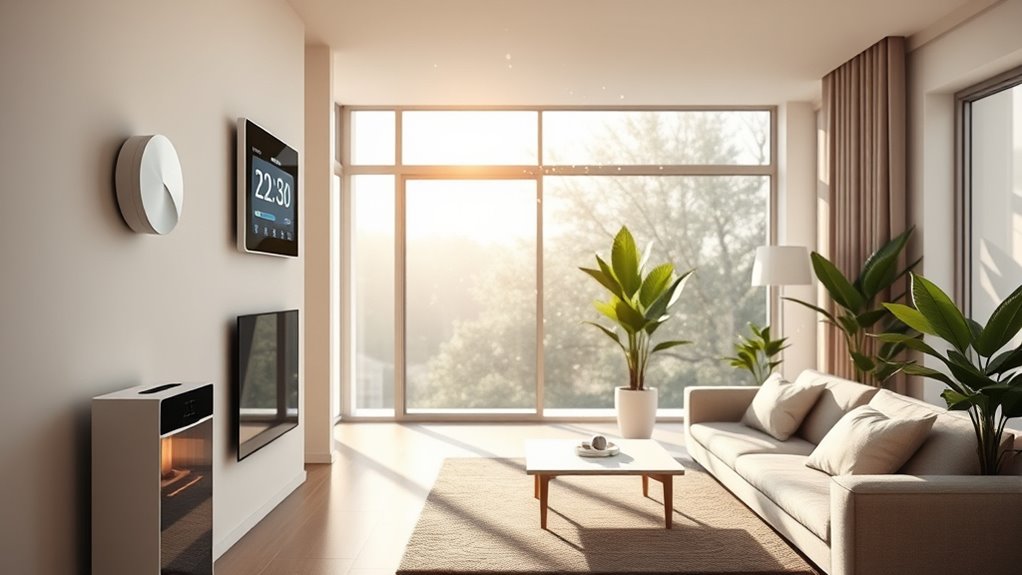
Smart home technology offers a proactive approach to maintaining clean indoor air by continuously monitoring air quality levels. With smart sensors, you can track dust, particulate matter, humidity, and pollutants in real time. These devices send alerts to your smartphone, letting you know when air quality drops or reaches unhealthy levels. Many smart air purifiers automatically adjust their filtration speed based on sensor data, optimizing dust removal without wasting energy. Automated humidity controls prevent conditions that promote dust mites and mold growth. By integrating these systems, you stay ahead of dust buildup, ensuring your home remains healthier and more comfortable. Plus, remote control features allow you to activate or modify settings from anywhere, keeping dust levels in check effortlessly.
Manage High-Dust Areas With Targeted Cleaning Strategies

To effectively manage high-dust areas, you should prioritize frequent dusting and focus on high-traffic zones like entryways and living rooms. Using sealed HEPA equipment ensures dust is captured without resuspension, keeping these areas cleaner. By targeting these spots with targeted cleaning strategies, you’ll substantially reduce indoor dust buildup.
Prioritize Frequent Dusting
Focusing on high-dust areas is essential for effective indoor dust management, as these spots tend to accumulate dirt more quickly and contribute substantially to overall indoor air pollution. To keep dust levels low, prioritize frequent dusting in key spots like shelves, window sills, vents, and behind furniture. Use microfiber cloths or damp dusters to trap dust instead of spreading it around. Consider these targeted strategies:
- Dust surfaces at least twice a week
- Pay special attention to vents, baseboards, and light fixtures
- Use a damp cloth or microfiber duster for better dust pickup
- Avoid dry dusting that can resuspend particles
- Incorporate a regular schedule for high-traffic zones
Consistent, focused dusting reduces dust buildup and improves indoor air quality, making your home healthier.
Focus on High-Traffic Zones
High-traffic zones like entryways, living rooms, and kitchens tend to accumulate dust more quickly than other areas, making targeted cleaning in these spots essential for maintaining indoor air quality. Focus on vacuuming carpets and rugs frequently, using a HEPA-filter vacuum to prevent dust resuspension. Wipe down surfaces daily with a damp cloth to trap dust particles. Pay special attention to furniture, light switches, and countertops, which gather dust from frequent contact. Keep shoes at the door to reduce tracked-in dirt. Regularly clean or replace doormats and consider using slipcovers that are easy to wash. These focused efforts prevent dust buildup, improve air quality, and create a healthier living environment in your busiest areas.
Use Sealed HEPA Equipment
Ever wondered how to effectively control dust in your most cluttered areas? Using sealed HEPA equipment is your best bet. It traps microscopic dust particles, preventing resuspension during cleaning. When selecting HEPA devices, consider these key points:
- Ensure vacuum cleaners have sealed HEPA filters to contain dust.
- Use portable HEPA air purifiers in high-dust zones for continuous filtration.
- Seal vents and door gaps to keep dust from spreading.
- Regularly replace or clean HEPA filters for optimal performance.
- Combine HEPA equipment with targeted cleaning routines for maximum effect.
Use Sealed Vacuum Cleaners With HEPA Filtration
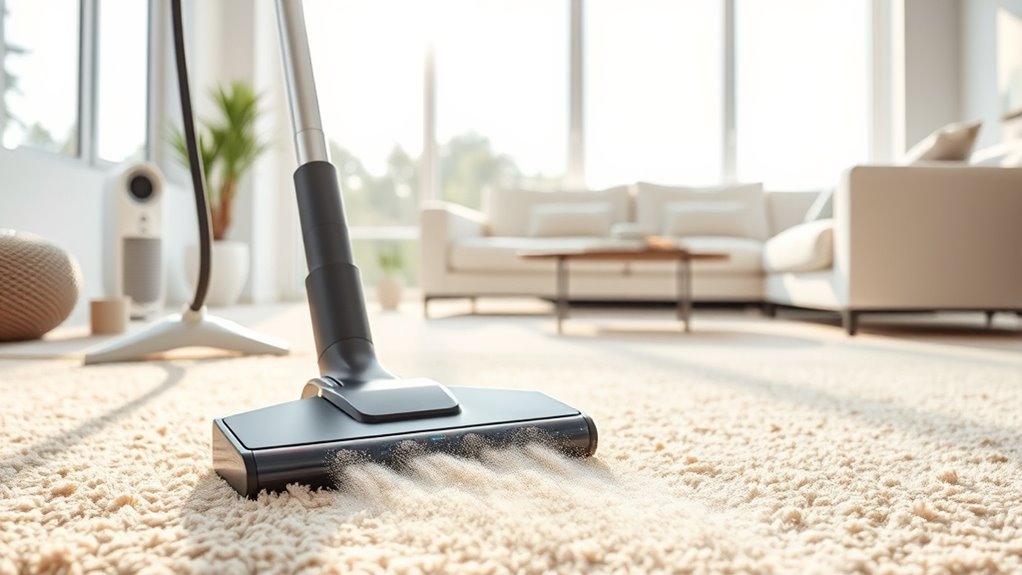
Using sealed vacuum cleaners equipped with HEPA filters is one of the most effective ways to reduce indoor dust. These vacuums prevent dust particles from escaping back into the air during cleaning, guaranteeing you capture even microscopic dust. Their high-efficiency filters trap particles as small as 0.3 microns, markedly improving air quality. Regular use decreases dust buildup on surfaces and prevents resuspension caused by traditional vacuums. To maximize effectiveness, choose a sealed vacuum with a HEPA filter and seal all gaps to prevent leaks. Maintain your vacuum by cleaning filters and replacing parts as needed. Here’s a quick comparison:
| Feature | Benefits |
|---|---|
| Sealed Design | Prevents dust leaks during cleaning |
| HEPA Filter | Captures tiny dust particles |
| Bag vs. Bagless | Bagged vacuums reduce dust escape |
| Maintenance | Ensures consistent performance |
| Suitability | Ideal for allergy-sensitive homes |
Engage Community and Monitor Dust Levels Continuously
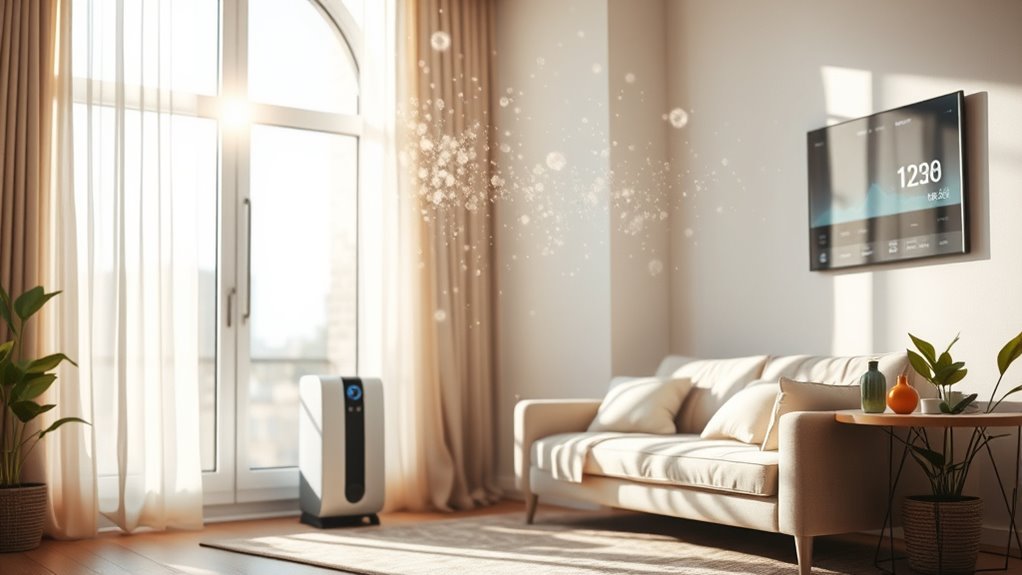
Engaging your community and monitoring dust levels continuously guarantees a thorough approach to indoor air quality management. You can identify problem areas, track dust sources, and respond promptly to changes. By involving others, you gain insights and support for effective dust control. Regular monitoring tools and surveys help you stay aware of dust build-up and exposure risks.
Consider these strategies:
- Using air quality sensors to detect dust spikes in real time
- Conducting routine dust assessments with occupant feedback
- Implementing dispersion models to predict dust movement
- Sharing findings with community members for collective action
- Adjusting cleaning and ventilation strategies based on data
Staying proactive and collaborative ensures you maintain a healthier, dust-free environment for everyone.
Frequently Asked Questions
How Do I Choose the Best Air Purifier for Dust Removal?
To select the best air purifier for dust removal, look for models with HEPA filters, which capture particles as tiny as 0.3 microns effectively. Consider the room size and opt for a unit with a high CADR rating for dust. Make certain it’s easy to maintain, replace filters regularly, and has smart features like real-time air quality monitoring. This way, you guarantee ideal dust reduction and fresh indoor air.
Can Adjusting Humidity Levels Really Reduce Dust Mites Effectively?
Absolutely, adjusting humidity levels can dramatically cut down dust mites—sometimes by up to 80%! When you keep humidity between 30-50%, you make your home a hostile environment for these tiny pests, preventing their reproduction and reducing dust. You’ll notice less allergy flare-ups and cleaner surfaces. So, don’t overlook the power of humidity control; it’s like turning your home into a dust mite fortress!
What Are the Most Effective Methods for Controlling Dust in High-Traffic Areas?
To control dust in high-traffic areas, you should regularly vacuum with a HEPA filter, focusing on carpets and rugs. Wipe surfaces frequently to prevent dust buildup, and use sealed air purifiers to filter airborne particles. Keep furniture and floors clean, and encourage family members to remove shoes at the door. Managing humidity levels also helps, as it reduces dust mites and minimizes dust resuspension during busy times.
How Often Should I Replace Filters in My HEPA Vacuum or Air Purifier?
You should replace your HEPA vacuum filters and air purifier filters every 6 to 12 months, depending on usage and air quality. While it’s tempting to wait longer, neglecting timely replacements can reduce filtration efficiency and allow dust to circulate freely. Regularly check manufacturer recommendations, and consider more frequent changes if you notice decreased performance or increased dust buildup, ensuring your home stays cleaner and healthier.
Are Smart Home Devices Worth Investing in for Dust and Air Quality Management?
Yes, smart home devices are worth investing in for dust and air quality management. They allow you to monitor air quality in real-time, adjust air purifiers automatically, and control devices remotely, ensuring consistent dust reduction. Plus, features like automated humidity control and UV-C sterilization enhance air cleanliness. Over time, these devices save you effort and improve your home’s air quality, making your environment healthier and more comfortable.
Conclusion
By following these top tips, you can keep dust at bay and breathe easier at home. Regular cleaning, good ventilation, and quality air purifiers make a big difference. Control indoor humidity and eliminate pollution sources to prevent dust buildup. Remember, a clean home is a happy home—an ounce of prevention is worth a pound of cure. Stay proactive, stay healthy, and enjoy a fresher, dust-free space every day.