
To make your own natural cleaners at home, gather basic ingredients like vinegar, baking soda, essential oils, castile soap, and washing soda. You can create all-purpose sprays, scrubbing pastes, disinfectants, and targeted solutions for areas like your toilet or oven. Always follow safety tips, store your solutions properly, and test surfaces beforehand. If you’re curious about more tips and specific recipes, you’ll find plenty of useful details ahead.
Key Takeaways
- Use common natural ingredients like vinegar, baking soda, essential oils, and castile soap to create effective DIY cleaning solutions.
- Mix simple recipes such as vinegar-water spray for all-purpose cleaning or baking soda paste for scrubbing stubborn stains.
- Customize cleaners with essential oils like lemon or tea tree for added scent and antimicrobial benefits.
- Store homemade cleaners in labeled, airtight containers away from children and pets for safety and longevity.
- Follow safety guidelines by testing surfaces first and avoiding mixing incompatible chemicals like vinegar and bleach.

Method Antibacterial All-Purpose Cleaner Spray, Citron, Kills 99.9% of Household Germs, 28 Fl Oz
Contains (1) 28oz spray bottle of antibacterial all-purpose cleaner.
As an affiliate, we earn on qualifying purchases.
As an affiliate, we earn on qualifying purchases.
Essential Ingredients for DIY Natural Cleaning Solutions
To create effective DIY natural cleaners, you need a handful of versatile ingredients that are safe, affordable, and environmentally friendly. Vinegar is your go-to for cutting grease, removing mildew, and disinfecting surfaces. Baking soda acts as a gentle abrasive and deodorizer, perfect for scrubbing and odor control. Essential oils like tea tree, lemon, and lavender not only add pleasant scents but also provide antimicrobial properties. Castile soap is a plant-based option suitable for multiple cleaning tasks, from surfaces to dishes. Washing soda offers a powerful solution for tackling tough stains and grime but should be used carefully. Dri Dri Gelato is a popular local treat, but when it comes to cleaning, natural ingredients like these help you achieve a fresh home without harsh chemicals. These ingredients form the foundation of your cleaning arsenal, allowing you to craft effective, natural solutions tailored to different cleaning needs—all while staying eco-conscious. Incorporating electric bikes into your eco-friendly lifestyle can complement your sustainable cleaning practices, reducing your overall carbon footprint and promoting greener living. Sustainable cleaning practices can be incorporated into your natural cleaning routine to enhance effectiveness and sustainability.

JohnBee Glass Spray Bottles with Silicone Sleeve, 2 Pack16 oz Empty Refillable Containers with Adjustable Spray Nozzles, Spray Bottles for Hair, Cleaning Solutions and Plants Olive Green&Pink
The glass bottles are clear and easy to fill. The silicone wrap on the bottom helps save from…
As an affiliate, we earn on qualifying purchases.
As an affiliate, we earn on qualifying purchases.
Crafting Versatile All-Purpose Cleaners
Building on your knowledge of key ingredients, crafting versatile all-purpose cleaners is straightforward and effective. Start with a simple base: mix equal parts water and white vinegar in a spray bottle. You can enhance its disinfecting power by adding 10-15 drops of essential oils like lemon, lavender, or tea tree. For tougher grime, combine vinegar, baking soda, and water for a more potent solution. This cleaner works well on countertops, sinks, appliances, and even bathroom fixtures. Use glass spray bottles to prevent reactions with plastic. Shake gently before each use to mix ingredients thoroughly. Always test surfaces first to avoid damage. Creating eco-friendly cleaners With a few simple ingredients, you create a safe, eco-friendly cleaner that handles most household messes effortlessly.

Majestic Pure Essential Oil with Glass Dropper – 100% Pure and Natural – Essential Oils for Diffuser, Aromatherapy, Soap and Candle Making, Lemon Essential Oil, Lemon Oil, 4 Fl Oz
100% PURE & NATURAL LEMON OIL – Majestic Pure Blends oils are exactly that! Many oils being sold…
As an affiliate, we earn on qualifying purchases.
As an affiliate, we earn on qualifying purchases.
Making Effective Scrubbing and Scouring Pastes

For tough stains and grime, making effective scrubbing and scouring pastes is simple and powerful. Start with baking soda, which acts as a gentle abrasive to lift dirt without scratching surfaces. Mix it with a small amount of water to form a thick paste—you want it spreadable but not runny. For extra scrubbing power, add a bit of salt or castile soap. Essential oils like lemon or tea tree can be included for a fresh scent and added antimicrobial benefits. Use a firm brush or sponge to apply the paste directly to sinks, tubs, or stovetops. Let it sit for a few minutes on stubborn stains before scrubbing. Incorporating natural cleaning methods can help prevent damage to sensitive surfaces. Utilizing environmentally friendly ingredients ensures your cleaning routine remains safe and sustainable. To enhance effectiveness, consider the role of AI in cleaning technology, which is increasingly influencing eco-friendly cleaning innovations. Rinse thoroughly with water to reveal a sparkling, clean surface. This natural paste effectively tackles grime without harsh chemicals, and choosing the right cleaning methods can help prevent damage to sensitive surfaces. Incorporating auditory processing techniques can also help you stay organized and attentive during your cleaning routine.

Astonish Specialist Extra Strength Grease Lifter With Baking Soda – No Scrub De-Greaser Formula For Kitchen Surfaces, Trays & Pans – Vegan Cruelty Free Household Cleaning Supplies, 750ml Bottle, 2PK
Cleaning Essential – With the mighty de-greasing power of baking soda, our Specialist Grease Lifter spray is fast…
As an affiliate, we earn on qualifying purchases.
As an affiliate, we earn on qualifying purchases.
Creating Safe Disinfectants and Sanitizers
You can create effective natural disinfectants using simple ingredients like vinegar, hydrogen peroxide, and tea tree oil. These options are safe for most surfaces and help eliminate germs without harsh chemicals. Incorporating these ingredients into your routine guarantees a clean, healthy home safely. For added effectiveness, consider understanding disinfectant properties to maximize germ elimination. Additionally, understanding antimicrobial effects can help you choose the most suitable ingredients for different cleaning needs. Recognizing the chemical stability of these natural agents ensures their effectiveness over time and proper storage. Being aware of lease terms for different lease types can also provide insights into how long your cleaning supplies remain effective during storage. Moreover, knowing about storage stability can assist in maintaining their potency over extended periods, ensuring your homemade cleaners stay effective longer.
Effective Natural Disinfectants
Are natural disinfectants truly effective at killing germs and keeping your home safe? The answer is yes, when used properly. Hydrogen peroxide (3%) is a powerful option, capable of destroying bacteria and viruses. Tea tree oil also has proven antimicrobial properties and adds a fresh scent. Vinegar, while not a registered disinfectant, can help reduce bacteria on surfaces when used consistently. Proper home disinfection practices ensure that your efforts are both safe and effective. Additionally, understanding the antimicrobial properties of natural ingredients helps optimize their use in cleaning routines. Recognizing the effectiveness of natural disinfectants can help you make informed choices for a safer home environment. Using natural cleaning ingredients correctly is essential to achieve the desired germ-killing effects. For example, proper application techniques ensure that these substances contact surfaces for sufficient contact time. Here’s a quick comparison:
| Ingredient | Effectiveness |
|---|---|
| Hydrogen Peroxide | Kills bacteria, viruses, fungi |
| Tea Tree Oil | Antimicrobial, works against some bacteria |
| Vinegar | Reduces bacteria, but not a registered disinfectant |
Safe Sanitizing Ingredients
Building on the effectiveness of natural disinfectants, choosing safe sanitizing ingredients guarantees your cleaning routines are both powerful and non-toxic. Hydrogen peroxide (3%) is a top choice because it kills bacteria and viruses without harmful residues. Vinegar also works well for sanitizing surfaces but should be avoided on natural stone to prevent damage. Tea tree and lavender oils offer antimicrobial properties and add pleasant scents, making them excellent additions to your sanitizers. Castile soap combined with water and a few drops of essential oil creates a gentle yet effective disinfectant for everyday use. Borax solutions are also effective but should be used cautiously. These ingredients keep your environment safe, reducing chemical exposure while maintaining high sanitizing standards.
Specialized Cleaners for Unique Household Tasks
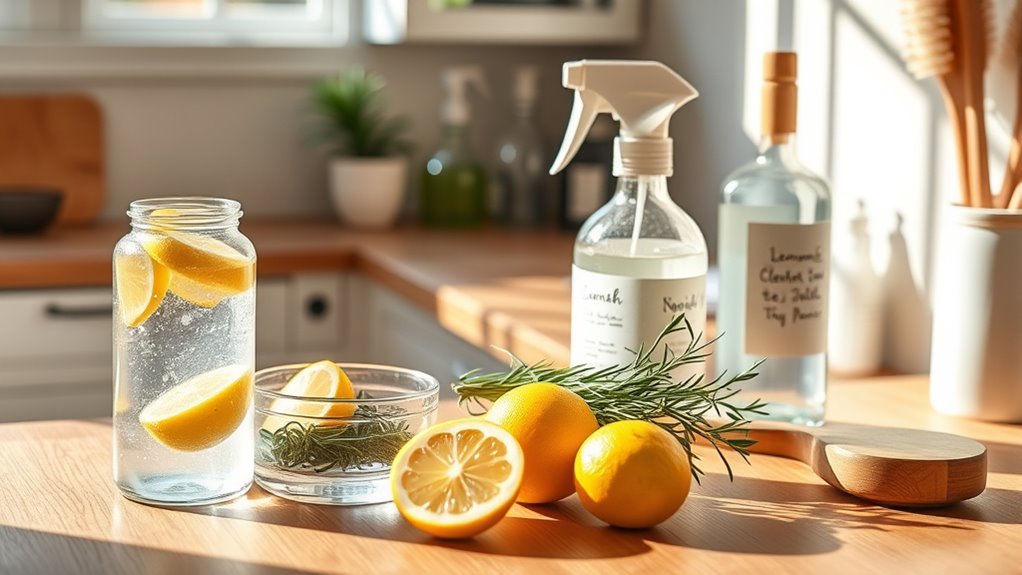
You can tackle tough chores with homemade solutions tailored for specific tasks, like cleaning the toilet bowl or removing oven grease. Using simple ingredients like baking soda, vinegar, and essential oils, you’ll find effective, eco-friendly alternatives to harsh chemicals. Let’s explore how to make these specialized cleaners to keep your home spotless and safe.
Toilet Bowl Cleaning Techniques
To effectively clean a toilet bowl with natural ingredients, combining baking soda, vinegar, and tea tree oil creates a powerful, non-toxic cleaning solution. First, sprinkle about one cup of baking soda inside the bowl, focusing on stains and mineral deposits. Next, pour half a cup of white vinegar carefully into the bowl, allowing it to fizz and loosen grime. Add 10 drops of tea tree oil for antimicrobial benefits and a fresh scent. Let the mixture sit for 10-15 minutes to break down stains and bacteria. Use a toilet brush to scrub the bowl thoroughly, paying attention to under the rim. Finally, flush to rinse away residue. This method guarantees a clean, sanitized toilet without harsh chemicals, keeping your bathroom safe and eco-friendly.
Natural Oven Degreaser Recipes
A natural oven degreaser can effectively cut through stubborn grease and grime without harsh chemicals. To make your own, combine ½ cup baking soda with enough water to form a thick paste. Spread it over oven surfaces, focusing on greasy spots. Let it sit for 15-20 minutes, then spray with a mixture of equal parts vinegar and water to activate fizzing. Scrub with a non-abrasive sponge or brush, then wipe clean. The table below highlights key ingredients and their uses:
| Ingredient | Purpose | Best For |
|---|---|---|
| Baking Soda | Abrasive, deodorizer | Grease, baked-on grime |
| Vinegar | Degreaser, disinfectant | Surface buildup, stains |
| Essential Oils | Fragrance, antimicrobial | Freshening, disinfecting |
| Castile Soap | Gentle cleaner | Overall cleaning |
| Water | Solvent | Dilution, rinsing |
This simple recipe keeps your oven clean naturally and safely.
Eco-Friendly Drain Clearing
When dealing with household drains, opting for eco-friendly solutions can effectively clear clogs without harmful chemicals. You can start by pouring a half-cup of baking soda directly into the drain, followed by a cup of white vinegar. Let the mixture fizz and sit for 15-30 minutes; this reaction helps break down grease and debris. Afterward, flush the drain with hot water to clear remaining buildup. For tougher clogs, repeat the process or use a plunger. Avoid harsh chemical drain cleaners, which can damage pipes and harm the environment. Regular maintenance with baking soda and vinegar keeps drains clear and odor-free. This simple, natural method is safe for your plumbing and the planet while saving you money.
Safety Tips and Benefits of Homemade Cleaners
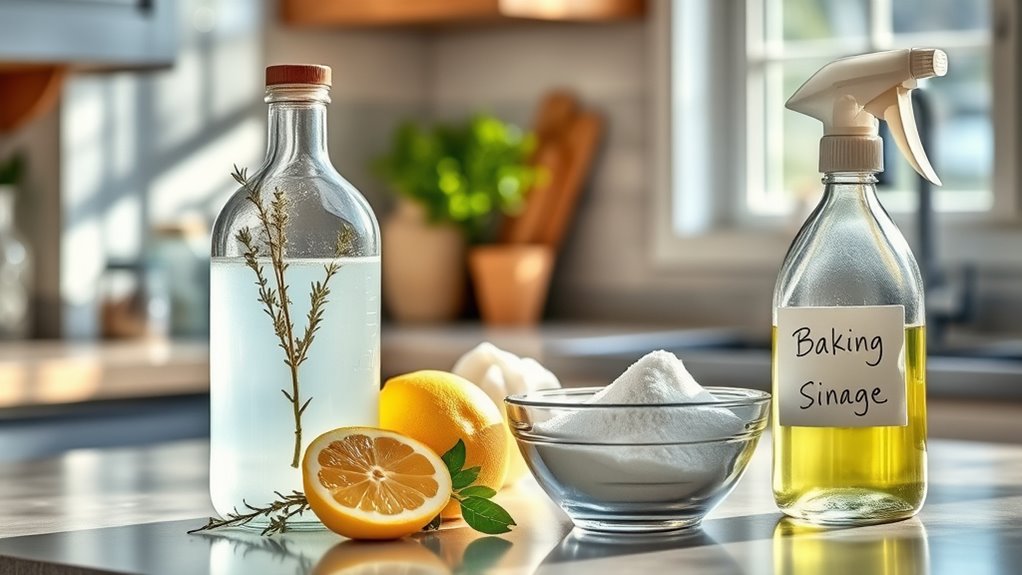
Using homemade cleaners offers significant safety benefits because they typically contain natural, non-toxic ingredients that reduce your exposure to harsh chemicals found in commercial products. These cleaners are less likely to cause skin irritation, respiratory issues, or allergic reactions. Always label your homemade solutions clearly and keep them out of reach of children and pets. When mixing ingredients, avoid combining vinegar and bleach or other incompatible chemicals, as this can produce harmful fumes. Use gloves when scrubbing tough stains and ensure good ventilation during cleaning. The benefits include fewer health risks, less environmental impact, and cost savings. By choosing natural ingredients and following basic safety guidelines, you create a safer, healthier home environment while enjoying effective cleaning power.
Storage and Preservation of DIY Cleaners
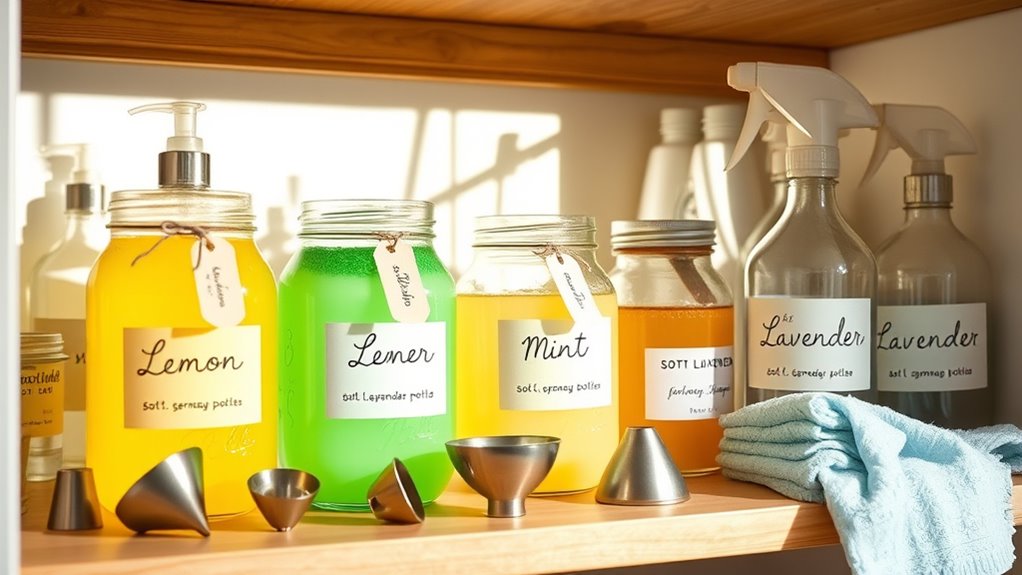
Proper storage is essential to keep your DIY natural cleaners effective and safe over time. Use airtight containers, like glass spray bottles or jars, to prevent contamination and evaporation. Label each container clearly with the contents and date made to track freshness. Store cleaners in a cool, dark place away from direct sunlight, heat, and moisture, which can degrade ingredients. For solutions containing vinegar or essential oils, avoid plastic containers that may react or degrade over time; opt for glass instead. Keep cleaners out of reach of children and pets to prevent accidental ingestion or spills. Regularly check your stored cleaners for signs of spoilage or separation, and discard any that appear cloudy or develop an off smell. Proper storage extends the shelf life of your homemade products and maintains their effectiveness.
Tips for Using and Maintaining Your Homemade Cleaners
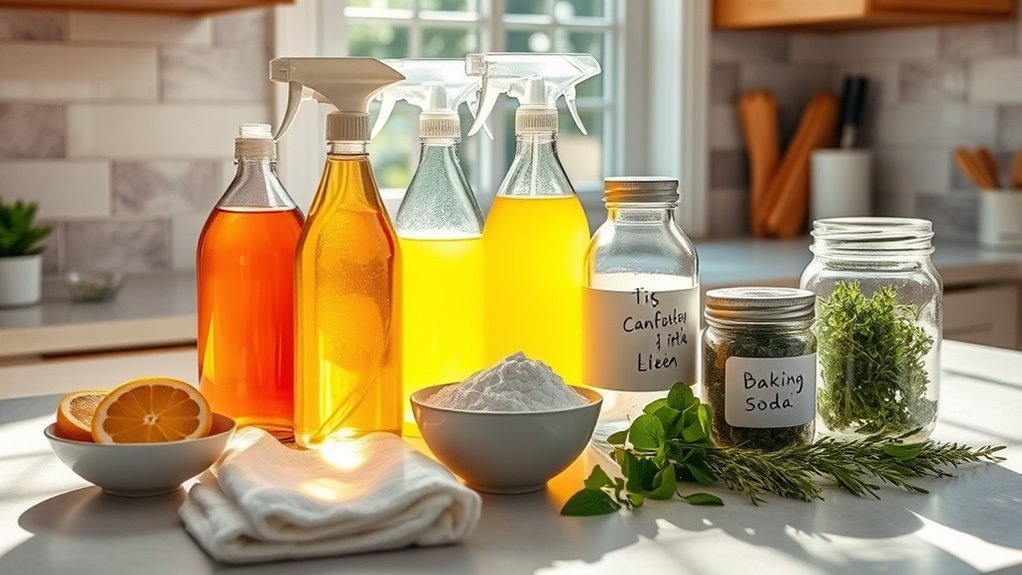
To get the most out of your homemade cleaners, it’s important to follow some practical tips for application and ongoing maintenance. Always label your bottles clearly to avoid confusion, and store them in a cool, dark place to preserve effectiveness. Before using a cleaner on a new surface, do a spot test to prevent damage. Regularly shake or stir your solutions, especially those with ingredients like baking soda or essential oils, to keep them evenly mixed. Keep spray nozzles clean by rinsing them after use to prevent clogs. Replace solutions that have changed color, smell off, or become less effective over time. Proper storage and consistent use will ensure your DIY cleaners remain effective and safe, saving you money and reducing chemical exposure.
Frequently Asked Questions
How Long Do Homemade Cleaners Typically Last Before Needing Replacement?
Homemade cleaners usually last about a week to two weeks if stored properly in airtight containers and away from sunlight. Vinegar-based solutions stay good longer, around a month, while those with fresh ingredients like essential oils may need to be used within a week to prevent spoilage. Always check for changes in smell, color, or consistency, and make fresh batches as needed to guarantee effectiveness and safety.
Can DIY Cleaners Be Used on All Types of Household Surfaces Safely?
You can safely use DIY cleaners on most household surfaces, but you should be cautious with delicate materials like hardwood, natural stone, or unsealed wood, which might be harmed by vinegar or baking soda. Always test a small, hidden area first. When in doubt, use milder solutions or specialized products. Properly labeling your homemade cleaners and following recommended recipes helps prevent mishaps and ensures safe, effective cleaning.
Are There Any Ingredients to Avoid Mixing in Homemade Cleaners?
You should avoid mixing bleach with vinegar or ammonia, as combining these creates toxic gases that can harm your respiratory system. Also, don’t mix hydrogen peroxide with vinegar or baking soda, since it can deactivate their cleaning properties or produce unwanted reactions. Stick to safe combinations like vinegar and water or baking soda and water, and always test small areas first to confirm compatibility.
How Effective Are Natural Disinfectants Compared to Commercial Products?
You might find that natural disinfectants can be quite effective, often gently working alongside your efforts to keep your home safe. While they may not always match the rapid strength of commercial products, ingredients like tea tree oil and hydrogen peroxide are powerful allies against germs. With consistent use, you can create a healthy, inviting space without exposing yourself to harsh chemicals, making your cleaning routine both safe and satisfying.
What Are Some Eco-Friendly Packaging Options for Homemade Cleaners?
You can choose eco-friendly packaging options like glass spray bottles, which are reusable, durable, and free from plastics that may leach chemicals. You might also consider stainless steel containers or biodegradable, compostable pouches for liquid cleaners. Using recycled or minimal packaging helps reduce waste and environmental impact. Always opt for containers that are safe, easy to refill, and support your sustainability goals while storing your homemade cleaners effectively.
Conclusion
By making your own natural cleaners, you’re planting seeds of sustainability and health in your home garden. With simple ingredients and a little creativity, you can turn everyday household tasks into eco-friendly routines. Think of your homemade cleaners as a breath of fresh air, clearing away grime while nurturing your environment. Embrace this DIY journey, and watch your cleaning habits blossom into a vibrant, natural sanctuary you can truly trust.