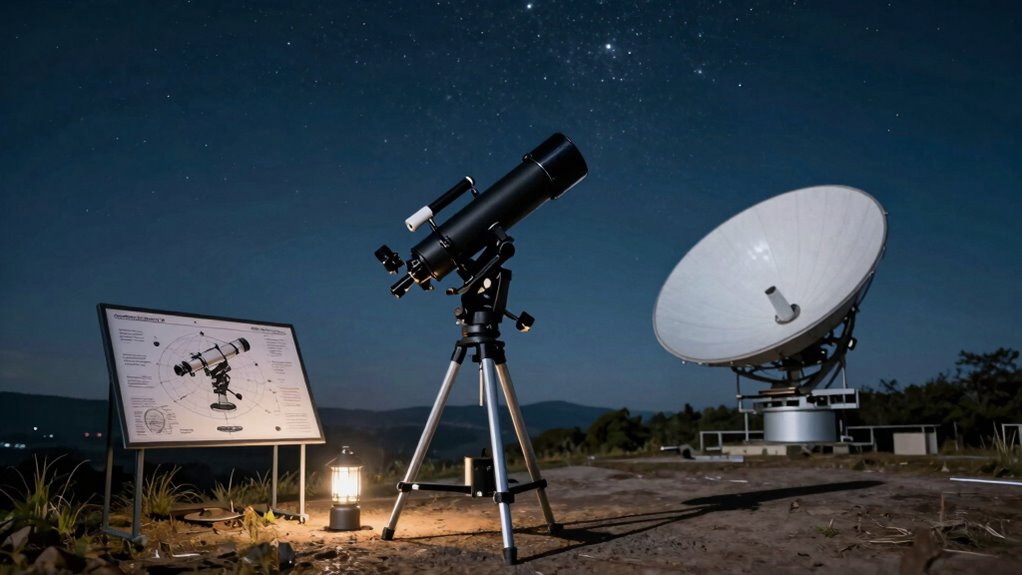

When comparing telescopes without feeling overwhelmed, start by focusing on your main observing goals—whether it’s planets, deep-sky, or casual viewing. Think about how important portability is for you and whether you’ll prefer a simple altazimuth or more advanced equatorial mount for long-term use. Pay attention to optical quality and focal length to match what you want to see clearly. Balancing these practical factors helps you choose confidently—if you keep exploring, you’ll learn even more.

Get everyday essentials delivered free with Prime
- Fast, free delivery on millions of items
- Prime Video, Amazon Music and more included
- Member-only deals all year
Key Takeaways
- Focus on your observing goals to prioritize features like optical quality or portability.
- Break down specifications into simple categories such as mounting type, optical quality, and size.
- Use side-by-side comparisons to understand differences without getting lost in technical details.
- Consider your experience level—beginner models are often easier to handle and set up.
- Identify which features matter most for your lifestyle and avoid overloading on unnecessary options.
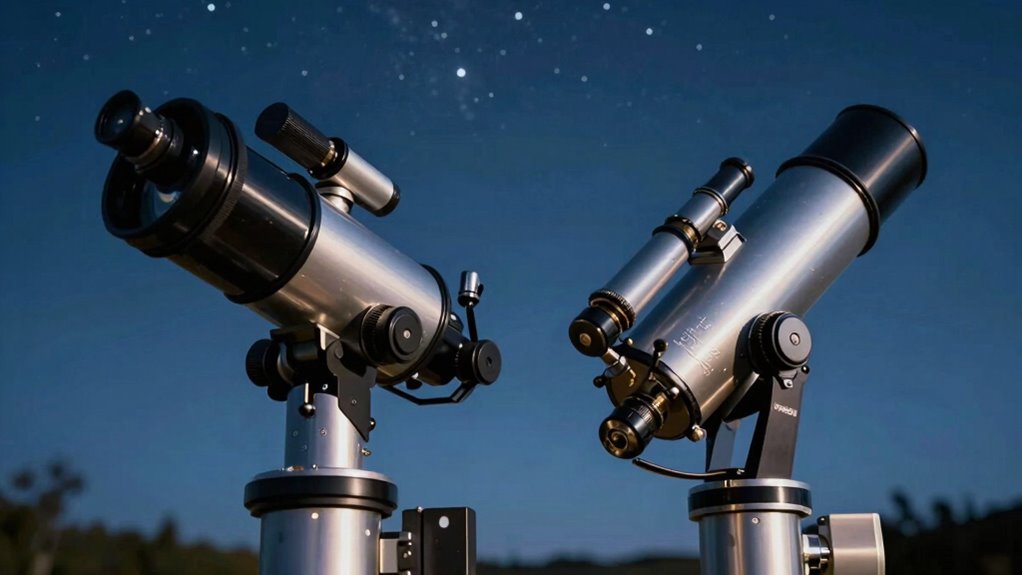
Choosing the right telescope can feel overwhelming, but understanding the key features to compare makes the process much easier. One of the first things to contemplate is the mounting options. The mount is what keeps your telescope steady and allows you to aim it accurately. There are two main types: altazimuth and equatorial mounts. Altazimuth mounts move up and down, side to side, and are generally simpler to use. They’re ideal if you’ll mainly be observing the moon or planets and want straightforward operation. Equatorial mounts, on the other hand, are more complex but excel at tracking objects as they move across the sky, which is especially helpful for astrophotography or long viewing sessions. Think about whether you prefer a setup that’s easy to handle or one that offers more precise control for detailed observations. Also, check if the mount is sturdy enough to support the weight of your telescope and if it’s compatible with accessories you might want to add later. Additionally, airless paint sprayers often feature adjustable pressure controls which can help you tailor the experience to your specific needs, much like choosing the right mount for your telescope. Considering the learning curve associated with different mount types can also influence your decision, especially if you’re a beginner. A good understanding of optical quality and how it impacts image clarity can further aid in selecting a suitable model. Moreover, understanding the different types of lenses and their focal lengths can help you determine the level of detail you wish to observe, which is essential in choosing the right telescope.
Portability considerations are equally important, especially if you plan to take your telescope to different locations or have limited storage space. Some telescopes are designed to be lightweight and compact, making them easier to carry and set up, while others are larger and more cumbersome. If you’re often on the go or have a small car, opting for a smaller, more portable model can save you frustration. Consider whether the telescope comes with a carrying case or bag, as that can make transportation much smoother. Additionally, think about the weight of the telescope itself—if it’s too heavy, you might avoid taking it out often, defeating the purpose of portability. Conversely, larger telescopes usually provide better views but require more effort to move and set up, which can be a drawback if you’re frequently traveling or have limited space.
Ultimately, balancing your needs for mounting options and portability considerations helps narrow down your choices. If you want quick, easy setup and frequent portability, look for lightweight models with simple mounts. If your focus is on detailed, long-term observations and you don’t mind a little extra effort, a sturdier telescope with an advanced mount might be better. Comparing these features side by side ensures you pick a telescope that fits your lifestyle and your sky-watching goals. Taking the time to evaluate how you’ll use your telescope most often will make your choice clearer and make the entire process less overwhelming.
beginner telescope with altazimuth mount
As an affiliate, we earn on qualifying purchases.
As an affiliate, we earn on qualifying purchases.
Frequently Asked Questions
What Is the Best Beginner Telescope for Astronomy Novices?
For astronomy novices, the best beginner telescope is a refractor or a simple reflector with easy telescope ergonomics. Look for models that are lightweight and straightforward to set up, so you can focus on choosing accessories like a sturdy mount and good eyepieces. Avoid overly complex features; instead, prioritize user-friendly designs that help you quickly locate planets and stars, making your first stargazing experiences enjoyable and rewarding.
How Important Is Brand Reputation When Choosing a Telescope?
Think of brand reputation as the sturdy sail guiding your telescope journey. Brand reliability matters because it guarantees you’re investing in quality gear that won’t let you down when spotting distant galaxies. While reputation importance varies, a well-known brand often signals better customer support and durability. So, don’t just chase the shiny labels; prioritize trusted names that promise a smooth voyage through the stars, making your stargazing adventures truly stellar.
Can I Upgrade or Modify My Telescope Later?
Yes, you can upgrade or modify your telescope later. Many telescopes support customization, allowing you to upgrade components like the eyepiece, mount, or finderscope for better performance. If you’re interested in telescope customization, check compatibility before purchasing. Upgrading telescope components can enhance your viewing experience, but remember to research each upgrade to verify it fits your specific model and goals.
What Accessories Are Essential for a New Telescope Owner?
Think of your telescope as a musical instrument; essential accessories tune your experience. Start with a quality eyepiece to enhance optical quality and guarantee accessory compatibility for seamless upgrades. A sturdy, adjustable tripod stabilizes your view, while a star map app guides your celestial journey. These basics open the universe’s symphony, making your stargazing more immersive and enjoyable from the very first night.
How Do I Maintain and Clean My Telescope Properly?
To sustain and clean your telescope properly, use gentle cleaning techniques like soft brushes or microfiber cloths to remove dust and smudges. Regular maintenance tips include keeping lenses covered when not in use, storing your telescope in a dry, dust-free area, and checking for loose parts. Avoid harsh chemicals, and always handle delicate components carefully to guarantee your telescope stays in top condition for clear, sharp views.
portable astrophotography telescope
As an affiliate, we earn on qualifying purchases.
As an affiliate, we earn on qualifying purchases.
Conclusion
By understanding your needs and focusing on key features, you can confidently compare telescopes without feeling overwhelmed. Remember, the right telescope isn’t about the biggest or most expensive—it’s about what suits your interests and budget. Did you know that nearly 60% of beginners give up within the first year due to choosing the wrong equipment? So take your time, do your research, and enjoy exploring the stars with a telescope that truly fits your passion and lifestyle.
telescope with sturdy mount for deep sky viewing
As an affiliate, we earn on qualifying purchases.
As an affiliate, we earn on qualifying purchases.
compact lightweight telescope for stargazing
As an affiliate, we earn on qualifying purchases.
As an affiliate, we earn on qualifying purchases.
Halloween Picks
halloween
As an affiliate, we earn on qualifying purchases.