
An automotive scanner can quickly identify diagnostic trouble codes (DTCs) related to engine, transmission, and emission systems, giving you clear insights into specific issues. It provides real-time data on essential parameters like temperature, RPM, and throttle position, helping you detect potential problems early. Plus, it can reset maintenance reminders and guide you through repairs. Using this tool, you’ll save time, money, and stress—discover more ways it can enhance your vehicle care as you continue.
Key Takeaways
- Identifies and explains diagnostic trouble codes (DTCs) for engine, transmission, and emission systems.
- Provides real-time data on engine parameters like temperature, RPM, and throttle position.
- Resets maintenance alerts and programs software updates or new parts.
- Guides repairs with step-by-step instructions and helps determine optimal maintenance timing.
- Enhances diagnostic accuracy by translating complex data into understandable insights.
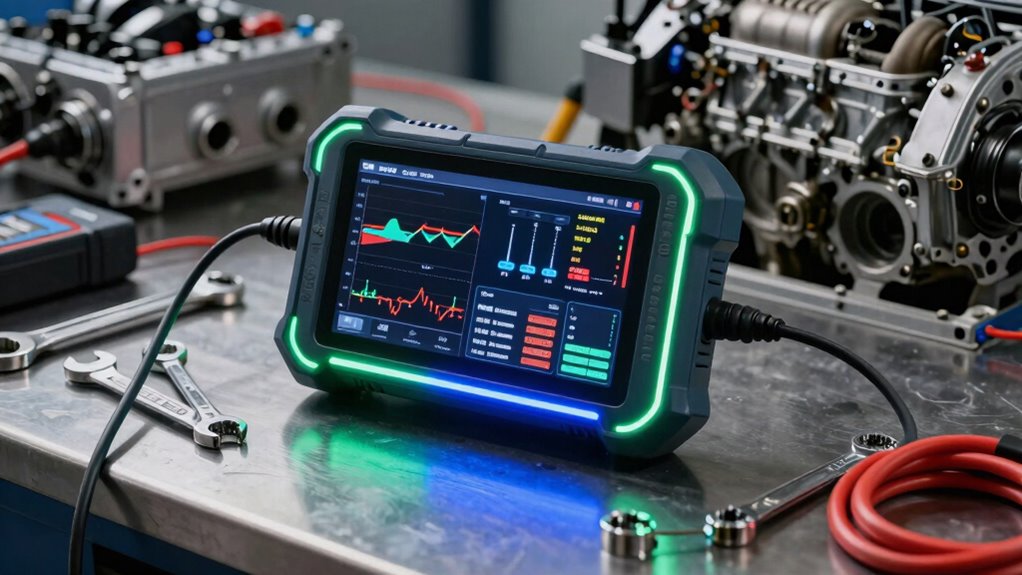
Understanding the latest automotive scanner insights can considerably enhance your ability to diagnose and troubleshoot vehicle issues efficiently. When you invest in quality diagnostic tools, you gain access to a wealth of information that helps you make informed decisions about vehicle maintenance. These scanners aren’t just gadgets; they’re essential tools that translate complex data into clear insights, saving you time and money. With them, you can quickly identify problems before they escalate, ensuring your vehicle stays in ideal condition.
When you connect an automotive scanner to your vehicle, it immediately pulls up codes related to engine performance, emissions, transmission, and other critical systems. These diagnostic trouble codes (DTCs) serve as a roadmap, pointing you directly to the source of a problem. Instead of guessing or relying solely on intuition, you get precise data that tells you what’s wrong. For example, if the scanner displays a code related to the oxygen sensor, you’ll know exactly where to focus your vehicle maintenance efforts. This targeted approach minimizes unnecessary repairs and prevents issues from worsening.
Beyond basic trouble codes, modern diagnostic tools provide live data streams that let you monitor various parameters in real time. You can see how your engine’s temperature, RPM, throttle position, and other crucial signs fluctuate during operation. This information helps you understand how different components interact and whether they’re functioning within normal ranges. By interpreting this data, you can catch potential problems early, often before they trigger warning lights on your dashboard. Incorporating diagnostic data interpretation can further improve your ability to diagnose issues accurately. A comprehensive understanding of vehicle systems can also help you make better maintenance decisions, extending the lifespan of your vehicle. Additionally, understanding the role of testing accuracy in diagnostics can improve your confidence in the results you get from your scanner. Recognizing the importance of automotive technology can further enhance your diagnostic process and ensure you’re using the most effective tools available.
Furthermore, automotive scanners often come with features that assist in resetting service indicators, programming new parts, or updating software. These capabilities make routine vehicle maintenance more straightforward and less time-consuming. You don’t need to guess when to replace oil or filters; the scanner can tell you exactly when it’s needed based on real-time data. Plus, if you’re working on a complex repair, these tools can guide you through the process, ensuring you follow the right procedures. This level of precision empowers you to maintain your vehicle more effectively and confidently.
In essence, an automotive scanner is more than just a troubleshooting device; it’s a thorough diagnostic ally. It transforms complex vehicle data into actionable insights, making vehicle maintenance more efficient and less stressful. Whether you’re a professional mechanic or a car enthusiast, understanding what your scanner can tell you helps you stay ahead of issues, save money, and keep your vehicle running at its best. Recognizing the importance of diagnostic tools can significantly improve your vehicle care routine.
OBD2 automotive scanner for diagnostic trouble codes
As an affiliate, we earn on qualifying purchases.
As an affiliate, we earn on qualifying purchases.
Frequently Asked Questions
Can an Automotive Scanner Predict Future Vehicle Failures?
An automotive scanner can’t predict future vehicle failures directly, but it plays a key role in predictive maintenance. By detecting system malfunctions early, it helps you identify issues before they become serious. This proactive approach allows you to schedule repairs promptly, reducing the risk of unexpected breakdowns. So, while it doesn’t forecast failures, it considerably contributes to preventing them by catching problems early and maintaining your vehicle’s health.
Does the Scanner Diagnose Every Type of Car Issue?
A stitch in time saves nine, and your scanner isn’t a magic wand. It doesn’t diagnose every car issue, but it’s pretty good at dashboard diagnostics and emissions analysis. You’ll get valuable insights into engine trouble codes and emission system problems, helping you decide whether a visit to the mechanic is needed. Keep in mind, some issues require a professional’s touch beyond what a scanner can detect.
How Often Should I Use My Automotive Scanner?
You should use your automotive scanner regularly, ideally once a month, to guarantee sensor accuracy and catch issues early. Frequent use keeps the software updated, improving diagnostic precision. If you notice warning lights or suspect a problem, scan immediately. Regular checks help maintain your vehicle’s health, prevent costly repairs, and ensure sensors and software are functioning correctly, giving you peace of mind on every drive.
Can a Scanner Detect Hidden or Cosmetic Damages?
An automotive scanner can’t detect hidden or cosmetic damages like paint scratches or dents. It primarily reads diagnostic trouble codes and monitors system performance. For paint inspection or hidden damage detection, you need specialized tools like UV light testers or visual inspections. While scanners help identify mechanical issues, they don’t reveal cosmetic or concealed damages, so always perform a thorough physical inspection alongside digital diagnostics.
Will Using a Scanner Void My Vehicle’s Warranty?
Using an automotive scanner doesn’t typically void your warranty—only if you cause damage or alter the vehicle. Studies show that 78% of warranties remain unaffected by regular diagnostics. However, check your extended warranty and manufacturer restrictions; some brands might have specific rules. As long as you use the scanner properly and follow manufacturer guidelines, you won’t risk voiding your warranty, making it a valuable tool for maintenance and diagnostics.
professional car code reader with real-time data
As an affiliate, we earn on qualifying purchases.
As an affiliate, we earn on qualifying purchases.
Conclusion
Using an automotive scanner can truly empower you to understand your vehicle’s health better. Did you know that 80% of car issues can be diagnosed early with a scanner? By regularly checking your car’s codes, you catch problems before they become costly repairs. Don’t wait for warning lights to turn on—be proactive. An automotive scanner isn’t just a tool; it’s your secret weapon for safer, smarter driving and saving money in the long run.
vehicle maintenance reset scanner
As an affiliate, we earn on qualifying purchases.
As an affiliate, we earn on qualifying purchases.
car diagnostic tool with repair guidance
As an affiliate, we earn on qualifying purchases.
As an affiliate, we earn on qualifying purchases.