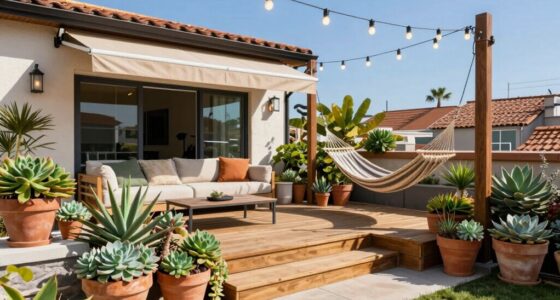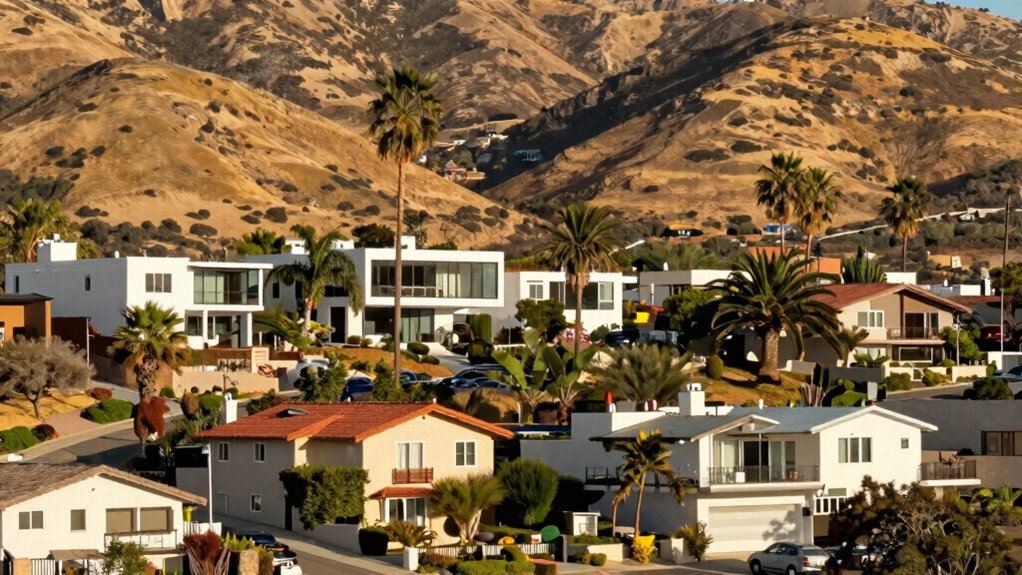

California homes are designed to adapt to their specific climate, geography, and daily routines. Coastal houses maximize ocean breezes and natural light with large windows, while inland homes focus on insulation and shading to stay cool. Builders use sustainable, weather-resistant materials to handle local challenges like salt or moisture. Features like solar panels and smart technology make homes more eco-friendly and efficient. Keep exploring to discover how these innovative designs blend comfort, sustainability, and environment seamlessly.

Get everyday essentials delivered free — and shop member deals
- Fast, free delivery on millions of items
- Access to Prime Big Deal Days deals on October 6–7
- Prime Video, Amazon Music and more included
Key Takeaways
- Coastal homes feature large windows and open layouts to harness ocean breezes and natural light, responding to the coastal climate.
- Inland and desert residences prioritize insulation, shading, and reflective materials to combat extreme heat and maintain indoor comfort.
- Use of sustainable, weather-resistant materials like recycled wood and adobe helps homes withstand local environmental challenges.
- Climate-responsive features such as fire-resistant roofing and advanced drainage systems enhance safety and durability in fire-prone and wet areas.
- Integration of solar panels, rainwater harvesting, and smart technology supports eco-friendly living tailored to California’s diverse environments.
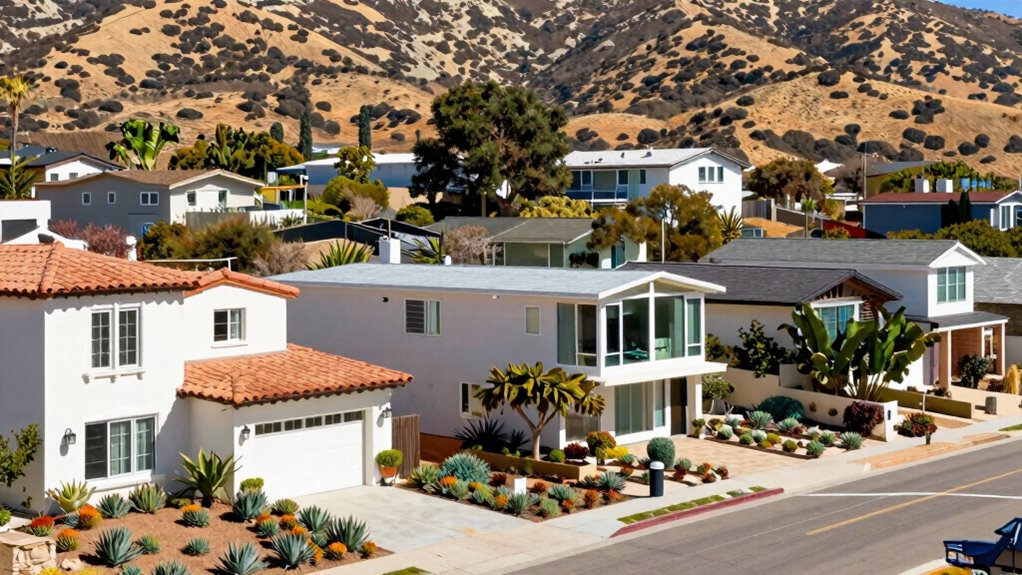
Have you ever wondered how California’s diverse climate shapes the homes you see across the state? It’s a fascinating interplay of environmental factors that influence construction choices, design features, and even the materials used. Architects and builders adapt their designs to meet the needs of each region, creating homes that blend seamlessly with their surroundings. One of the most notable aspects is how architectural innovations respond to the varying temperatures, humidity, and sunlight levels. For example, coastal homes often feature large windows and open layouts to maximize ocean breezes and natural light, helping to reduce reliance on air conditioning. Meanwhile, inland and desert regions tend to emphasize insulation and shading to keep homes cool during scorching summers.
California homes adapt to climate with designs that maximize natural light and airflow or enhance insulation and shading.
Sustainable materials play an essential role in making these adaptations both effective and eco-friendly. In many Californian homes, you’ll find the use of recycled wood, bamboo, and other renewable resources that reduce environmental impact. Builders increasingly turn to innovative, sustainable materials that not only improve energy efficiency but also withstand local weather conditions. For instance, adobe and insulated concrete forms are popular in warmer areas because they naturally regulate indoor temperatures, reducing cooling costs. In coastal zones, corrosion-resistant metals and treated wood help combat the effects of salty air, ensuring homes last longer without extensive maintenance. Additionally, some homes incorporate building materials that are specifically designed to resist local environmental challenges, such as termite-resistant woods in certain regions. These materials often require specialized construction techniques to maximize their benefits and longevity. Incorporating climate-responsive design principles further enhances the functionality and comfort of these homes. Recognizing the importance of climate-adaptive features, many homeowners and builders focus on integrating innovations that respond to the specific environmental conditions of their area. Moreover, advances in energy-efficient technologies support the ongoing adaptation of homes to their climate, reducing energy consumption and ecological impact.
You also see how climate influences routine-driven features. In wetter regions, homes often include advanced drainage systems and moisture-resistant building techniques to prevent mold and water damage. On the other hand, in fire-prone areas, fire-resistant roofing and firebreaks are integrated into the design, reflecting the importance of safety routines in these communities. These adaptations aren’t just practical—they’re a reflection of the environmental realities that residents face daily.
California’s homes aren’t static; they evolve with the climate and the routines of their inhabitants. You’ll notice that in many neighborhoods, homes incorporate solar panels, rainwater harvesting systems, and smart technology to optimize energy use and sustainability. These innovations serve both the environment and the residents’ routines, making daily life more efficient and comfortable. Whether you’re passing through a hillside community or a beachfront suburb, it’s clear that California’s architecture is a tribute to how deeply climate, geography, and daily routines influence the spaces we call home.
solar panel for California homes
As an affiliate, we earn on qualifying purchases.
As an affiliate, we earn on qualifying purchases.
Frequently Asked Questions
How Do California Homes Adapt to Wildfire Risks?
You can protect your California home from wildfires by using wildfire-resistant materials like tempered glass, metal, and stucco in construction. Implement firebreak landscaping by creating defensible spaces with gravel, fire-resistant plants, and removing dead vegetation. These strategies help prevent flames from spreading to your home, giving you peace of mind during wildfire season. Staying proactive with fire-resistant design and landscaping is essential for safety in fire-prone California regions.
Are There Specific Building Codes for Earthquake-Resistant Homes?
Yes, California has specific building codes focused on seismic safety to protect homes during earthquakes. You’ll find strict building regulations requiring earthquake-resistant features, like reinforced foundations and structural bracing. These codes aim to minimize damage and ensure safety. If you’re planning to build or buy a home, it’s essential to confirm that it complies with these seismic safety standards, which are regularly updated to reflect the latest engineering practices.
How Do Homes in Coastal Areas Prevent Saltwater Damage?
You can prevent saltwater damage in coastal homes by using corrosion-resistant materials like stainless steel or treated wood, which withstand salt corrosion. Installing barriers or sealants on walls and foundations helps protect against moisture intrusion. Additionally, designing homes to maximize airflow reduces salt buildup from sea breeze, which contributes to corrosion. Regular maintenance and cleaning also keep salt deposits at bay, ensuring your home remains sturdy and resilient against coastal elements.
What Sustainable Features Are Common in California Homes?
You might be surprised to discover that many California homes feature eco-friendly materials and seamlessly integrate solar energy, making them remarkably sustainable. These homes often use recycled or locally sourced materials, reducing environmental impact. Solar panels are common, harnessing abundant sunlight to generate power. By choosing these features, you not only lower your carbon footprint but also embrace innovative, eco-conscious living that aligns with California’s commitment to sustainability.
How Does Local Culture Influence Architectural Styles Across California?
You’ll notice that local culture shapes California’s architectural styles through cultural aesthetics and regional traditions. In urban areas, sleek modern designs reflect innovation, while Mediterranean influences showcase warmth and tradition. Coastal communities favor beachy, relaxed styles, and rural areas often feature rustic, farmhouse aesthetics. These cultural expressions create diverse neighborhoods, allowing you to experience California’s rich heritage through its homes, blending history, lifestyle, and regional identity seamlessly.
fire-resistant roofing materials
As an affiliate, we earn on qualifying purchases.
As an affiliate, we earn on qualifying purchases.
Conclusion
As you step inside California homes, you sense how their design whispers secrets of the climate, the land, and daily life. But what hidden stories lie beneath those walls? The more you explore, the more you realize that each house isn’t just a shelter—it’s a reflection of California’s ever-changing landscape and climate. Stay curious. Because in this state, even your home might have a story waiting to be uncovered—if you look closely enough.
moisture-resistant building materials
As an affiliate, we earn on qualifying purchases.
As an affiliate, we earn on qualifying purchases.
smart home climate control systems
As an affiliate, we earn on qualifying purchases.
As an affiliate, we earn on qualifying purchases.
Fall Picks
fall essentials
As an affiliate, we earn on qualifying purchases.