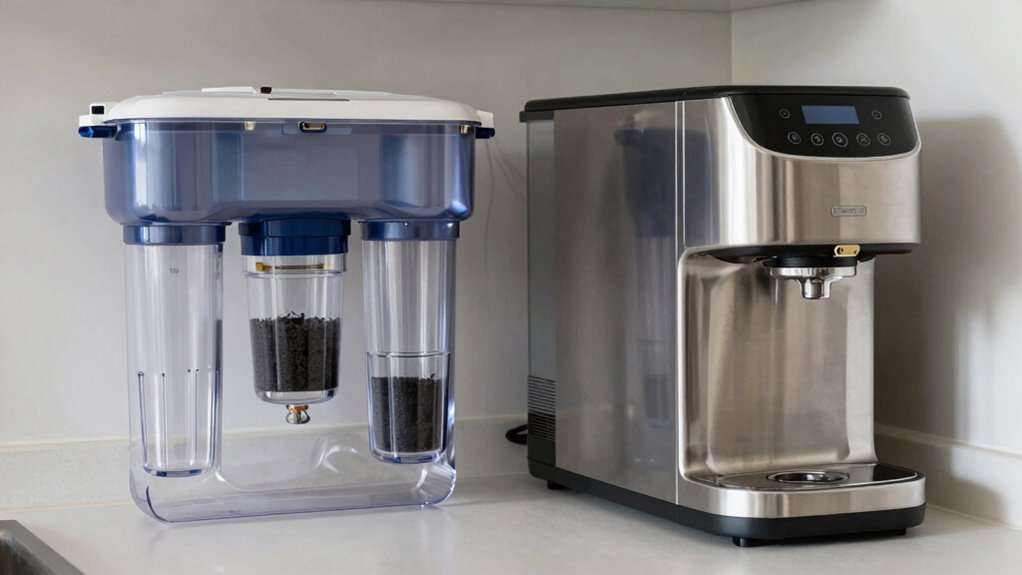

A whole house water filter removes contaminants like chlorine, sediment, and bacteria, improving water taste and safety for drinking, cooking, and bathing. A water softener, on the other hand, targets minerals like calcium and magnesium that cause hard water, preventing scale buildup and protecting appliances. Both systems address different issues—filters focus on purity, softeners on mineral reduction. To make the right choice and optimize your water quality, see what fits your home’s needs.

Get everyday essentials delivered free with Prime
- Fast, free delivery on millions of items
- Prime Video, Amazon Music and more included
- Member-only deals all year
Key Takeaways
- Whole house filters remove contaminants like chlorine, bacteria, and sediments, improving water safety and taste.
- Water softeners target minerals like calcium and magnesium, preventing scale buildup and mineral deposits.
- Filters focus on chemical and biological impurities; softeners mainly address mineral hardness.
- Combining both systems offers comprehensive water treatment for better health and appliance longevity.
- Water testing and regional water quality help determine whether filtration, softening, or both are needed.
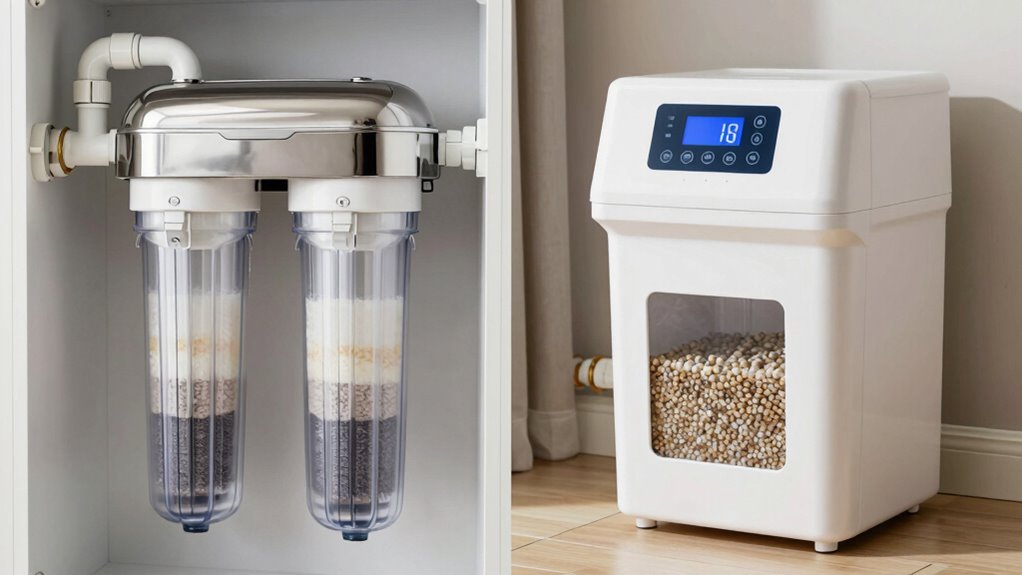
When it comes to ensuring clean, high-quality water throughout your home, choosing between a whole house water filter and a water softener can be confusing. Both systems aim to improve your water, but they do so in different ways. A whole house water filter primarily focuses on water filtration, removing impurities like chlorine, sediment, bacteria, and volatile organic compounds. This process ensures that every drop of water you use for drinking, cooking, and bathing is cleaner and safer. It also helps improve the taste and odor of your water, making it more pleasant to consume and use daily.
On the other hand, a water softener targets specific issues related to hard water, mainly mineral removal. Hard water contains high levels of calcium and magnesium, which can cause mineral buildup in pipes, appliances, and fixtures. This buildup leads to scale formation, reduced water flow, and decreased appliance efficiency. By exchanging calcium and magnesium ions with sodium or potassium ions, a water softener effectively reduces these minerals, preventing scale and prolonging the lifespan of your plumbing and appliances. Notably, some region-specific water sources have higher mineral content, making softeners particularly beneficial in those areas.
A water softener removes calcium and magnesium, preventing scale and protecting your plumbing and appliances.
If you’re concerned about water filtration, a whole house filter is the better choice. It addresses contaminants that can impact your health and the overall quality of your water. It also helps protect your plumbing from sediment and other particles that can cause damage or clogging. This makes it ideal if you want to improve water clarity, taste, and safety across your entire home. Additionally, understanding the regional flavors and sources of water can help you select the most appropriate system for your location. Moreover, selecting the right system can be influenced by understanding water quality testing, which provides insights into your specific water composition. Knowing your water’s chemical makeup can help you determine whether filtration or softening is more necessary.
However, if mineral buildup and hard water damage are your main worries, a water softener is more suitable. It doesn’t remove chemicals like chlorine or bacteria but effectively tackles mineral issues that cause scale and residue. Many households with hard water notice soap scum, dry skin, and mineral deposits on fixtures, which a water softener can significantly reduce.
Some homes benefit from having both systems. For instance, you might install a whole house filter to handle water filtration and remove harmful contaminants, while also adding a softener to combat hard water minerals. This combined approach provides comprehensive water treatment, ensuring your entire household has access to clean, soft, and high-quality water.
In the end, your choice depends on your specific water quality concerns. If your primary issue is contaminants and impurities, prioritize a whole house water filter. If mineral buildup and scale are your problems, a water softener will serve you best. Knowing the difference helps you make an informed decision to improve your home’s water quality effectively.
As an affiliate, we earn on qualifying purchases.
Frequently Asked Questions
Can Both Systems Be Installed Together Effectively?
Yes, you can install both systems together effectively. They’re generally compatible, with proper installation to guarantee each system functions efficiently. You’ll want to evaluate installation compatibility, making sure the plumbing setup accommodates both units. Also, do a cost comparison, as adding both will increase expenses initially but can improve water quality considerably. Combining them offers thorough filtration and softening, enhancing your home’s water quality for various needs.
How Much Maintenance Do Each Systems Require Annually?
Think of your water system as a garden needing regular care. A water filtration system generally requires annual filter replacements, about once a year, to keep water fresh. Soft water systems need similar upkeep, with salt refills every few months and occasional system cleans. Both systems keep your water clean and soft, but they demand consistent attention to make sure they work effectively and provide you with pure, soft water daily.
Do These Systems Impact Water Pressure?
These systems can impact your water flow and pressure reduction. A whole house water filter might slightly reduce water pressure if it’s clogged or not maintained properly, but it generally sustains good flow. Water softeners can cause a minor pressure drop due to the ion exchange process, especially if your system isn’t sized correctly. Regular maintenance ensures consistent water flow and minimizes pressure issues for both systems.
Are There Specific Water Qualities That Favor One System?
Certain water qualities make one system more suitable than the other. If you’re dealing with poor water taste or chlorine and sediment issues, a whole house water filter is ideal for removing contaminants and improving taste. On the other hand, if hard water causes mineral buildup, a water softener is better for removing calcium and magnesium. Assess your water’s specific qualities to choose the system that best addresses your needs.
What Is the Average Lifespan of Each System?
You can expect a whole house water filter to last around 10 to 15 years, depending on filtration efficiency and maintenance. Water softeners typically last about 10 to 20 years. When considering cost comparison, softeners might have higher initial costs but longer lifespans, while filters tend to be less expensive upfront but may require more frequent replacement. Proper upkeep guarantees both systems perform effectively over their lifespans.
As an affiliate, we earn on qualifying purchases.
Conclusion
So, now that you’ve seen how a whole house water filter and a water softener each tackle different water issues, which one will you choose? Will you prioritize removing contaminants or softening your water? Or maybe you’ll find a way to combine both for the ultimate solution. The decision isn’t easy, and the right choice depends on your needs. But one thing’s for sure—your perfect water solution might be closer than you think. Are you ready to discover it?
best water filtration system for home
As an affiliate, we earn on qualifying purchases.
As an affiliate, we earn on qualifying purchases.
As an affiliate, we earn on qualifying purchases.
Fall Picks
fall essentials
As an affiliate, we earn on qualifying purchases.