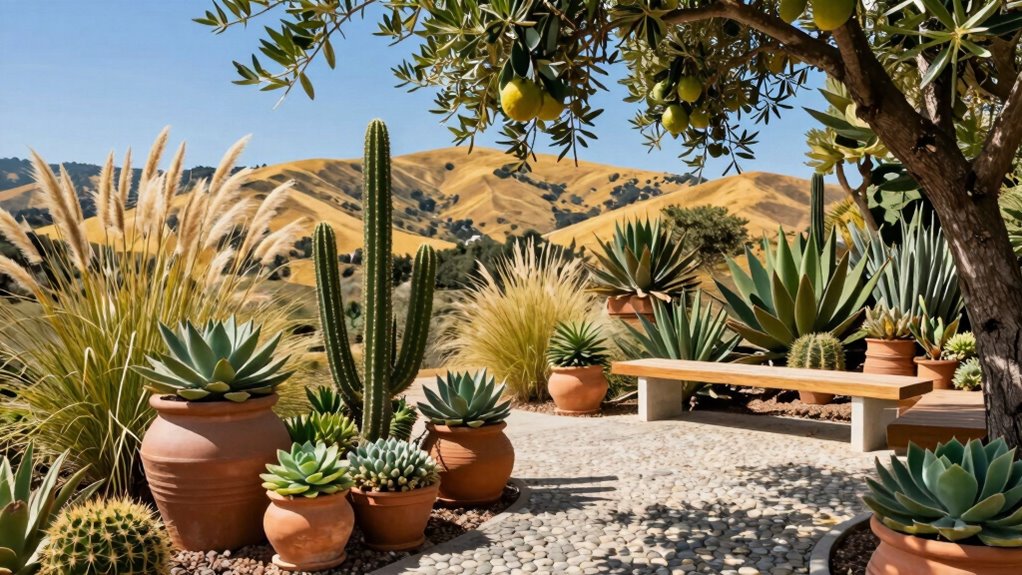

To create a California-inspired garden, choose native, drought-tolerant plants like California poppies, manzanita, and ceanothus that thrive in the region’s climate. Combine these with rock gardens, succulents, and natural elements for easy maintenance and water conservation. Optimize microclimates by placing sun-loving and shade-tolerant plants accordingly. Incorporating sustainable techniques makes your garden vibrant, eco-friendly, and low-maintenance. To discover more ideas on designing your perfect California landscape, keep exploring.

Get everyday essentials delivered free with Prime
- Fast, free delivery on millions of items
- Prime Video, Amazon Music and more included
- Member-only deals all year
Key Takeaways
- Incorporate native, drought-tolerant plants like California poppies and manzanita to suit local climate and reduce water use.
- Design with rock gardens, succulent beds, and mulch to create low-maintenance, water-efficient landscapes.
- Optimize microclimates by placing sun-loving plants in sunny areas and shade-tolerant species in shaded zones.
- Use drip irrigation and natural elements to enhance sustainability and minimize water consumption.
- Reflect California’s relaxed lifestyle with eco-friendly, visually appealing gardens emphasizing natural materials and native flora.
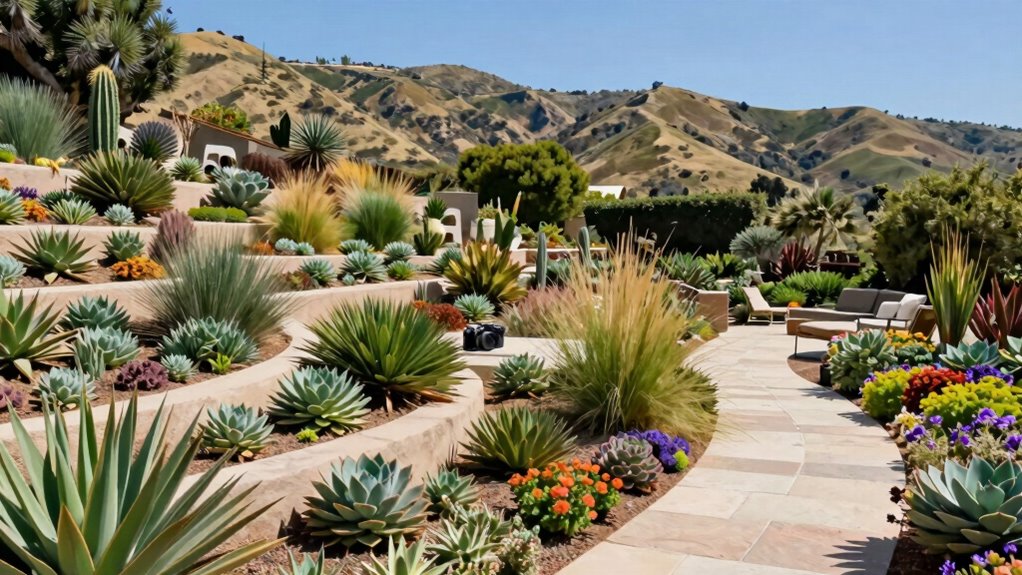
California’s diverse climate offers endless opportunities for creating stunning gardens, whether you have a sun-drenched backyard or a shaded courtyard. To make the most of your space, you should consider native plants—they’re perfectly adapted to your region’s conditions, require less water, and support local ecosystems. Incorporating native plants into your garden not only boosts its beauty but also reduces maintenance and conserves resources. For example, California poppies, manzanita, and ceanothus thrive naturally here, bringing vibrant color and texture without demanding constant watering or fertilizing. When selecting plants, focus on those that are drought tolerant, especially if you’re aiming for sustainability and water conservation. Drought tolerant design emphasizes plants that can endure dry spells, helping you save water while maintaining a lush, thriving garden.
Embrace native, drought-tolerant plants like California poppies and manzanita for a sustainable, vibrant garden.
You can create a stunning landscape by mixing drought-tolerant native plants with rock gardens, succulent beds, or xeriscaping elements. These choices allow you to craft a garden that remains vibrant during California’s dry months, all while minimizing irrigation. Think about using mulch around your plants to retain moisture and suppress weeds, which further reduces water needs and keeps your garden looking tidy. Incorporating native plants and drought-tolerant species supports local ecosystems and promotes biodiversity in your garden. Incorporating native plants into your landscape can also attract beneficial insects and pollinators, enhancing your garden’s overall health. Additionally, exploring natural filtration systems can help maintain water quality in garden features, supporting a healthier environment. Proper planning of garden layout and plant placement can also help optimize microclimates within your space, ensuring each plant receives the ideal amount of sun or shade.
Adjust your garden layout to optimize sun exposure and shade, which can influence which native and drought-tolerant plants will thrive best. For shaded courtyards, look for shade-tolerant natives like ferns or woodland plants native to California’s shady regions. Conversely, for sunny areas, focus on sun-loving species such as California fuchsia or red buckwheat. Besides plant choices, consider installing drip irrigation systems that deliver water directly to roots, further conserving water and ensuring your plants receive consistent hydration. Incorporate natural elements like boulders, pathways, or small water features to enhance aesthetic appeal without increasing water consumption.
Finally, think about creating a low-maintenance garden that reflects California’s lifestyle—relaxed, eco-conscious, and visually appealing. Native plants and drought-tolerant design principles work hand-in-hand to help you achieve this. With careful planning and selection, your garden can become a sustainable sanctuary that celebrates California’s unique climate while showcasing your personal style. This approach not only makes your outdoor space more manageable but also contributes positively to the environment, making your garden a true reflection of California’s vibrant, diverse landscape.
California native drought-tolerant plants
As an affiliate, we earn on qualifying purchases.
As an affiliate, we earn on qualifying purchases.
Frequently Asked Questions
What Are the Best Drought-Tolerant Plants for California Gardens?
You should consider native species like California poppies, manzanita, and ceanothus for your garden. These plants thrive with minimal water and fit well into xeriscape design, making them perfect drought-tolerant options. Incorporating these native plants not only conserves water but also creates a beautiful, sustainable landscape that reflects California’s climate and lifestyle. Their resilience guarantees your garden stays vibrant while reducing water use.
How Can I Attract Local Wildlife to My Garden?
To attract local wildlife, create diverse wildlife habitats and choose native plant choices suited for your area. Plant native shrubs, flowers, and trees that provide food and shelter, encouraging birds, butterflies, and pollinators to visit. Avoid pesticides and provide water sources like birdbaths. By cultivating a welcoming environment with native plants and habitats, you invite a variety of wildlife into your garden, enriching your outdoor space and supporting local ecosystems.
What Sustainable Gardening Practices Are Suitable for California?
You can embrace sustainable gardening practices by starting with composting techniques that turn kitchen scraps into rich soil, reducing waste and boosting plant health. Water conservation methods are essential—install drip irrigation, mulch generously, and collect rainwater to minimize consumption. These strategies not only help preserve California’s precious resources but also create a resilient, eco-friendly garden that thrives amid the state’s unique climate challenges, ensuring your garden remains vibrant and sustainable year-round.
How Do I Manage Soil Quality in Coastal Areas?
To manage soil quality in coastal areas, start by conducting soil testing to understand its pH, nutrients, and salinity levels. Based on results, improve soil health through composting methods like adding organic matter or seaweed extracts to enhance fertility and moisture retention. Regularly amend your soil, avoid over-watering, and choose salt-tolerant plants to thrive in coastal conditions, ensuring your garden remains healthy and resilient.
Are There Specific Design Tips for Small California Yards?
For small California yards, focus on maximizing space through container gardening and vertical planting. Use colorful pots and tiered plant stands to add visual interest without taking up ground area. Incorporate climbing plants on walls or trellises to create greenery vertically. Opt for drought-tolerant plants suited to your climate, and choose compact varieties to keep your yard lively yet manageable. These tips make your small yard both functional and beautiful.
drip irrigation system for gardens
As an affiliate, we earn on qualifying purchases.
As an affiliate, we earn on qualifying purchases.
Conclusion
By embracing California’s unique climate and lifestyle, you can craft a garden that’s both beautiful and sustainable. Choose drought-tolerant plants, incorporate outdoor living spaces, and use native greenery to create a vibrant oasis. Remember, “A garden is a friend you can visit anytime,” so start planning today and enjoy the endless beauty of your personalized California retreat. Your perfect outdoor haven is just a few thoughtful steps away.
rock garden landscaping supplies
As an affiliate, we earn on qualifying purchases.
As an affiliate, we earn on qualifying purchases.
succulent plants for xeriscaping
As an affiliate, we earn on qualifying purchases.
As an affiliate, we earn on qualifying purchases.
Halloween Picks
halloween
As an affiliate, we earn on qualifying purchases.