Before buying an espresso machine, you should understand key terms like brewing pressure, measured in bars, which affects shot quality; grind size, with a fine grind ideal for espresso; and tamping pressure, essential for even extraction. Knowing how pressure interacts with grind and tamping helps you fine-tune your brew, avoiding weak or bitter shots. Mastering these concepts guarantees you get the best results, and if you keep going, you’ll discover even more ways to perfect your espresso experience.

Get everyday essentials delivered free with Prime
- Fast, free delivery on millions of items
- Prime Video, Amazon Music and more included
- Member-only deals all year
Key Takeaways
- Understand brewing pressure (measured in bars) to ensure consistent, balanced espresso shots.
- Know the importance of grind size, especially fine for espresso, to control extraction quality.
- Learn proper tamping technique to promote even extraction and optimal flavor.
- Recognize how pressure and grind size interact to influence shot taste—weak or bitter.
- Develop control skills to fine-tune brewing variables for better flavor and troubleshooting.
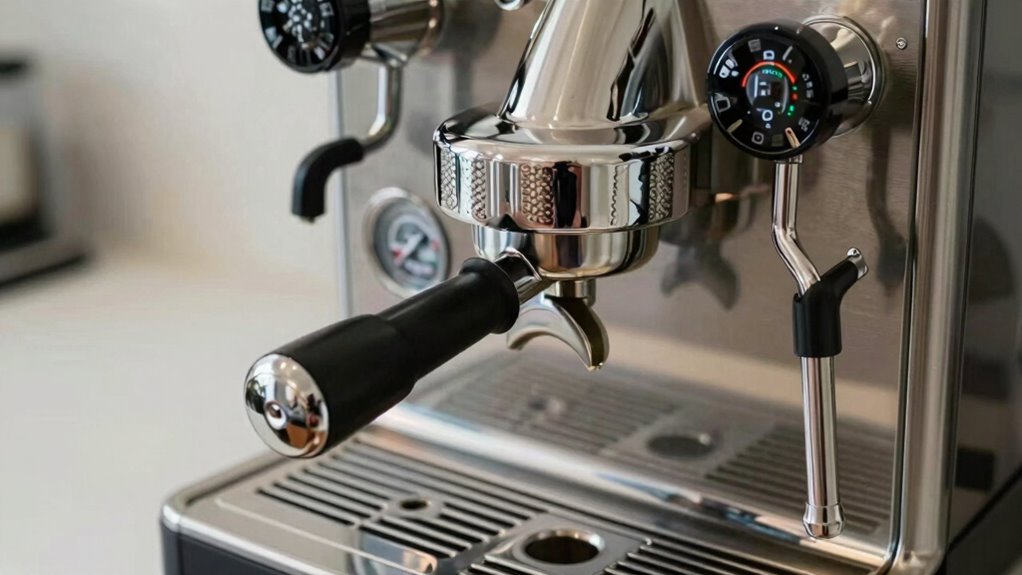
Understanding espresso machine terms can seem overwhelming at first, but familiarizing yourself with key concepts makes brewing coffee much easier. One of the most vital terms you’ll encounter is brewing pressure. This refers to the force exerted by the machine to push hot water through the coffee grounds. Typically measured in bars, brewing pressure directly impacts the extraction process and the flavor of your espresso. Most home espresso machines operate around nine bars of pressure, which is considered ideal for creating a rich, balanced shot. If the pressure is too low, the water won’t extract enough flavor, resulting in weak or sour espresso. On the other hand, excessive pressure can over-extract the coffee, making it bitter or harsh. Understanding and controlling brewing pressure helps you achieve consistent results and guarantees your espresso tastes just right. brewing pressure is a crucial factor that influences the overall quality of your espresso shot.
Alongside brewing pressure, the coffee grind plays a vital role in brewing quality. The grind size refers to how coarse or fine your coffee grounds are, and it must be tailored to your machine’s specifications. For espresso, you want a very fine grind—almost powdery—since this allows for maximum contact time and extraction. If your grind is too coarse, water will flow through too quickly, producing a weak, underwhelming shot. Conversely, a grind that’s too fine can cause excessive resistance, leading to over-extraction, a bitter taste, or even clogging the machine’s portafilter. Achieving the perfect grind isn’t just about the size; it also involves consistency. Uniform grounds ensure even extraction, which is essential for a balanced, flavorful espresso. Many machines have adjustable grinders, so you can fine-tune the grind size until you get the desired shot. Additionally, tamping pressure can influence how evenly the coffee is packed, impacting extraction as well. A proper tamping technique ensures the coffee bed is evenly compressed, further promoting uniform extraction and a better flavor profile.
Furthermore, understanding the extraction process can help you troubleshoot and refine your brewing technique for optimal flavor. In addition to knowing about brewing pressure and grind size, understanding how these two factors interact helps you troubleshoot and improve your brewing process. For example, if your espresso is coming out too watery or weak, you might need to increase the brewing pressure or adjust your grind to be finer. If it’s over-extracted and bitter, try lowering the pressure slightly or using a slightly coarser grind. Recognizing these connections allows you to make precise adjustments for a perfect cup every time. When you understand the relationship between brewing pressure and coffee grind, you gain more control over the brewing process—making your mornings easier and your coffee more satisfying. Learning these terms and how they influence each other is a key step toward becoming a confident home barista.
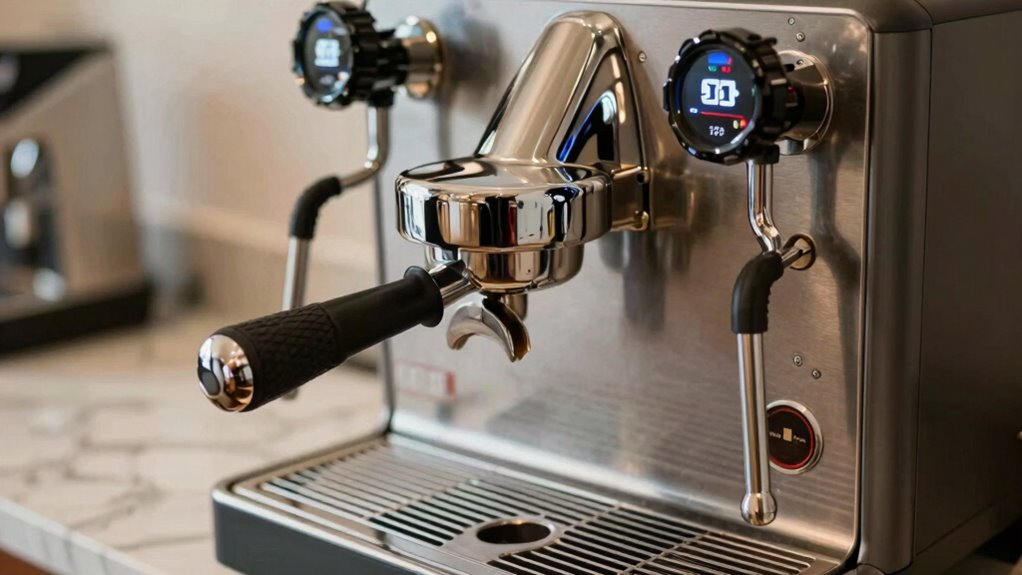
espresso machine with adjustable pressure
As an affiliate, we earn on qualifying purchases.
As an affiliate, we earn on qualifying purchases.
Frequently Asked Questions
How Long Does an Espresso Machine Typically Last?
An espresso machine usually lasts around 5 to 10 years, depending on durability factors like build quality and usage. Regular maintenance, proper cleaning, and using high-quality replacement parts can extend its lifespan. If you notice issues like declining pressure or leaks, replacing worn parts promptly helps maintain performance. Investing in a reputable brand and following the manufacturer’s guidelines also guarantees your machine stays in good shape longer.
What’s the Best Maintenance Routine for an Espresso Machine?
Of course, your espresso machine’s secret to eternal youth is a rigorous maintenance routine. You should follow a cleaning schedule weekly, descaling regularly, and ensuring water filtration is exceptional. Think of it as giving your machine a spa day—minus the cucumbers. Proper upkeep prevents buildup, prolongs lifespan, and guarantees that every shot tastes divine. Remember, a well-maintained machine is a happy, caffeinated masterpiece.
Are Higher Wattage Machines Always Better?
Higher wattage machines aren’t always better because they use more power, which can lead to higher energy costs and increased heat output. While they may heat up faster and potentially brew coffee more quickly, efficiency depends on your needs. If you prioritize speed and consistent temperature, a higher wattage machine could be advantageous. However, for casual use, a lower wattage model might be more energy-efficient and sufficient for your brewing needs.
Can I Use Pre-Ground Coffee With an Espresso Machine?
Yes, you can use pre-ground coffee with an espresso machine, but it’s not ideal. The key is ensuring grind consistency; pre-ground coffee often varies, which can affect extraction and flavor. Freshness also matters—pre-ground coffee loses its aroma quickly, impacting your espresso’s taste. For the best results, grind your beans just before brewing. However, if you must use pre-ground, choose a fine grind designed for espresso to get the best shot.
What’s the Difference Between a Semi-Automatic and Automatic Machine?
A semi-automatic machine requires you to control grind size and tamp pressure, giving you flexibility but needing more skill. An automatic machine handles grind size adjustments and tamp pressure automatically, making it easier for you. With semi-automatics, you manually operate the shot timing, while automatics do that for you. Your choice depends on how much control you want over the brewing process and your comfort level with espresso-making.
fine grind espresso coffee beans
As an affiliate, we earn on qualifying purchases.
As an affiliate, we earn on qualifying purchases.
Conclusion
Understanding these espresso machine terms helps you choose the perfect machine for your needs. Did you know that the global coffee market is expected to reach $155.6 billion by 2025? Knowing what features matter guarantees you invest wisely and enjoy barista-quality espresso at home. By grasping key terms like pressure, grind size, and boiler types, you’ll brew better coffee and make smarter purchases. Cheers to your perfect cup of espresso!
As an affiliate, we earn on qualifying purchases.
As an affiliate, we earn on qualifying purchases.
Halloween Picks
halloween
As an affiliate, we earn on qualifying purchases.