If you’re choosing between sewing machines, embroidery machines, and sergers, it depends on your needs. Sewing machines are versatile for general sewing, mending, and garment making, offering a variety of stitches. Embroidery machines specialize in decorative designs and intricate patterns, perfect for personalization. Sergers finish raw edges and assemble garments with clean seams. To understand which is best for your projects and how to get started, keep exploring these differences deeper.

Get everyday essentials delivered free with Prime
- Fast, free delivery on millions of items
- Prime Video, Amazon Music and more included
- Member-only deals all year
Key Takeaways
- Sewing machines are versatile for general stitching; embroidery machines specialize in decorative patterns; sergers focus on seam finishing.
- Embroidery machines include built-in or uploadable patterns; sewing machines offer various stitches; sergers primarily provide seam edges.
- Sewing machines handle diverse fabrics with adjustable tension; embroidery machines require delicate tension for lightweight fabrics; sergers manage multiple materials.
- Sewing machines are ideal for garment construction and repairs; embroidery machines personalize items; sergers produce clean, professional seams quickly.
- Embroidery machines excel at detailed embellishments; sergers ensure durable seams; sewing machines serve a broad range of sewing projects.
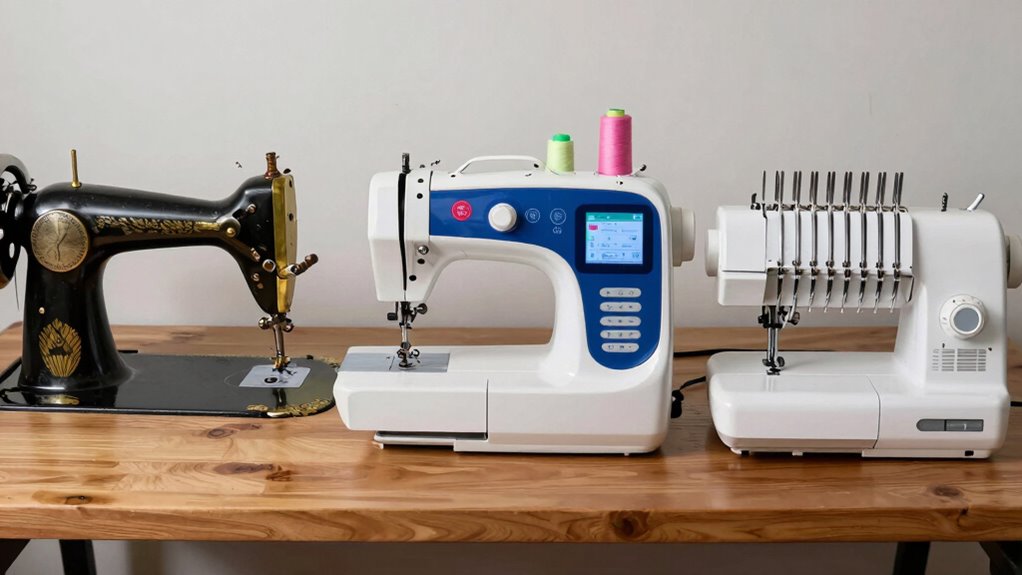
When you’re exploring sewing options, understanding the differences between sewing machines, embroidery machines, and sergers can help you choose the right tool for your projects. Each machine has a unique purpose and features that suit specific tasks. For instance, sewing machines are versatile and great for general stitching, mending, and creating garments. They typically have adjustable thread tension, which is vital for working with various fabric types. Thicker fabrics like denim or canvas require a different tension setting than delicate materials like silk or chiffon. Learning to balance thread tension ensures your stitches are even and secure, preventing puckering or loose seams. Sewing machines usually come with different stitch options, allowing you to sew straight lines, zigzags, and decorative stitches, making them highly adaptable for multiple projects.
Embroidery machines, on the other hand, excel at adding decorative designs and intricate patterns to fabric. They often come with built-in embroidery patterns or allow you to upload custom designs. When working with embroidery machines, understanding fabric types is essential because some fabrics, such as lightweight cotton or silk, can be delicate and require careful tension adjustments to prevent puckering. Embroidery machines often have specialized hoops and settings tailored to different fabric thicknesses and textures. Proper thread tension management becomes even more significant here, as uneven tension can distort embroidery patterns or cause thread breakage. These machines are ideal if you want to personalize items, create detailed motifs, or add professional-looking embellishments. Additionally, mastering thread tension is crucial across all these machines to achieve high-quality results. Sergers, also known as overlock machines, are designed for finishing raw edges, preventing fraying, and assembling garments quickly. They cut fabric while sewing, making them invaluable for production lines or sewing projects that require clean, professional seams. Sergers handle multiple threads simultaneously, with tension settings specific to each thread, which influences the quality of the seam and the durability of the finished product. Using the correct thread tension ensures that your seams are secure without puckering or loose stitches. Proper tension adjustment is especially important when working with different fabric types, as each material requires specific tension settings to achieve the best finish. Sergers are less versatile for decorative sewing but excel at creating finished edges and seams efficiently.
best sewing machine for beginners
As an affiliate, we earn on qualifying purchases.
As an affiliate, we earn on qualifying purchases.
Frequently Asked Questions
Can I Upgrade a Basic Sewing Machine to an Embroidery Machine?
You can’t directly upgrade a basic sewing machine to an embroidery machine because they have different features. However, you can explore upgrade options like adding embroidery machine compatibility through a dedicated embroidery module, if your sewing machine supports it. Keep in mind, this often requires purchasing a specific upgrade kit or new machine altogether. Check your machine’s specifications and consult the manufacturer to see what upgrade options are available for your model.
What Maintenance Do Sergers Require Compared to Sewing Machines?
Think of your serger as a finely tuned orchestra, requiring harmony to produce beautiful stitches. You need to regularly check thread tension, ensuring each string sings in tune. Needle maintenance is vital; replace needles when dull or bent to prevent skipped stitches. Regular cleaning removes lint buildup, keeping the machine running smoothly. Unlike sewing machines, sergers demand more frequent attention to thread tension and needle health to maintain perfect, professional seams.
Are Embroidery Machines Suitable for Professional Use?
Embroidery machines are definitely suitable for professional applications, especially if you’re creating intricate embroidery designs or custom apparel. They offer precise control and high-quality results, making them ideal for commercial use. With features like multiple needle setups and large embroidery areas, you can handle demanding projects efficiently. If you want to produce detailed embroidery designs consistently, investing in a professional-grade embroidery machine is a smart choice for your business.
How Do Sewing Machines Handle Thick or Layered Fabrics?
Sewing machines handle thick or layered fabrics well if you choose a model with a powerful motor and adjustable presser foot pressure. You should use a heavy-duty needle and strong thread to manage fabric thickness and layered fabrics effectively. Additionally, reducing the stitch length helps prevent puckering. With these adjustments, your sewing machine can confidently sew through various fabric thicknesses and multiple layers without issues.
What Safety Features Are Common Across All Three Machine Types?
All three machine types prioritize safety with features like safety sensors that detect potential hazards and stop operation to prevent injury. Emergency stops are standard, allowing you to quickly halt the machine if needed. These safety features help protect you during operation, regardless of whether you’re sewing, embroidering, or serging. Always guarantee these safety mechanisms are functional before starting your project for a safe and smooth experience.
embroidery machine with built-in patterns
As an affiliate, we earn on qualifying purchases.
As an affiliate, we earn on qualifying purchases.
Conclusion
Now that you’ve glimpsed the world of sewing, embroidery, and sergers, think of each machine as a different brushstroke on your creative canvas. Whether you’re weaving through fabric with a trusty sewing machine, adding intricate designs with embroidery, or finishing edges with a serger’s swift touch, each tool reveal new artistic horizons. Embrace the one that sparks your passion, and let your craft become a vibrant tapestry of your unique imagination.
As an affiliate, we earn on qualifying purchases.
adjustable tension sewing machine
As an affiliate, we earn on qualifying purchases.
As an affiliate, we earn on qualifying purchases.
Halloween Picks
halloween
As an affiliate, we earn on qualifying purchases.