To choose a digital piano for home use, focus on sound quality, voice options, and realistic tones that mimic acoustic instruments. Consider the size and design to fit your space, and think about portability if needed. Look for features like connectivity options for lessons or recording, and explore voice control if you want hands-free adjustments. Balancing these factors guarantees you pick a model that suits your needs now and as you grow—discover more tips ahead.

Get everyday essentials delivered free — and shop member deals
- Fast, free delivery on millions of items
- Access to Prime Big Deal Days deals on October 6–7
- Prime Video, Amazon Music and more included
Key Takeaways
- Assess sound quality and voice options for realistic tones and versatile sounds.
- Consider size, design, and portability to fit your home space and mobility needs.
- Prioritize connectivity features like USB and MIDI for future expansion and recording.
- Choose models with voice control for convenient, hands-free adjustments during practice.
- Match the digital piano’s features with your skill level, budget, and long-term musical goals.
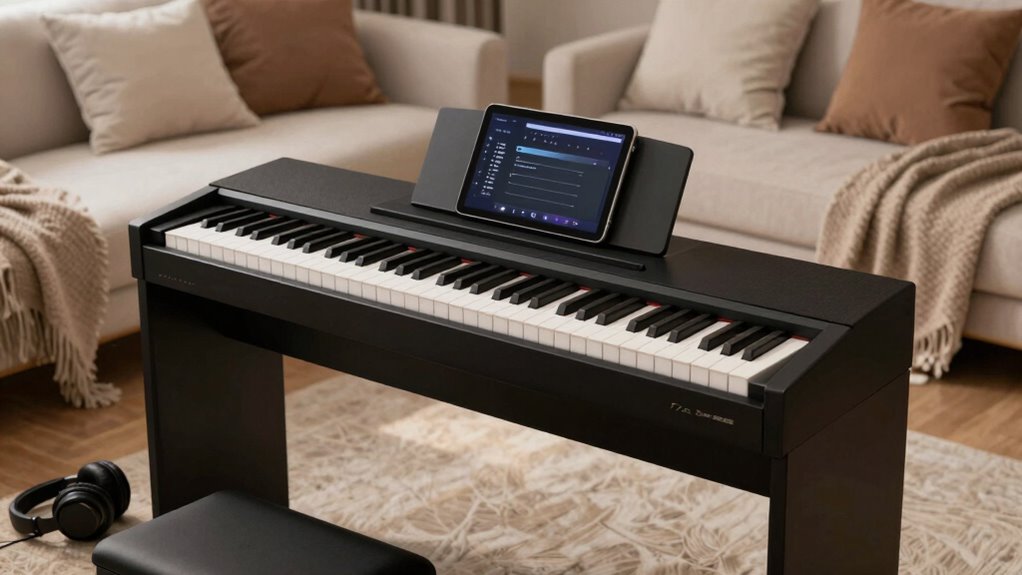
Another aspect to think about is voice control. Some modern digital pianos come equipped with voice command capabilities, letting you change settings, select sounds, or activate features hands-free. If you prefer a technology-integrated experience or want quick control without interrupting your practice, voice control can be a valuable addition. It’s particularly useful if you have a busy schedule or if you want to focus solely on playing without fiddling with buttons or menus.
Beyond key action and voice control, consider the overall sound quality. A good digital piano should produce rich, realistic tones that resemble an acoustic instrument. Look for models with high-quality speakers and multiple voice options, so you can experiment with different sounds like grand pianos, electric pianos, or organs. The quality of the sound engine directly impacts your playing experience, so don’t compromise on this aspect. Additionally, sound quality is influenced by the quality of the digital components and the speaker system used in the piano. Incorporating contrast ratio considerations can also help in understanding how the instrument performs in different acoustic environments, ensuring you get a clear and natural sound.
Choose a digital piano with rich, realistic sounds and versatile voice options for a more authentic playing experience.
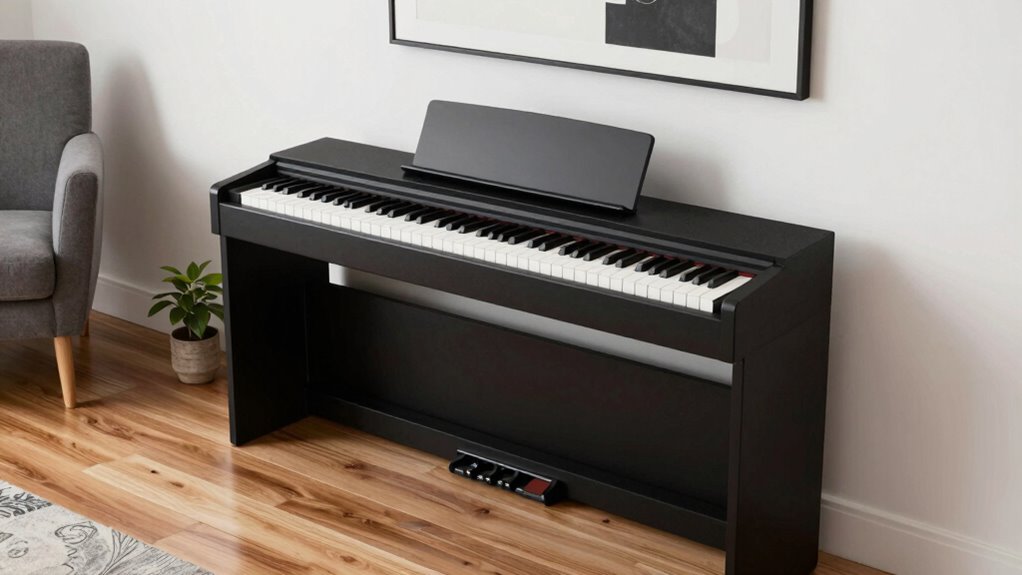
Size and design are also important, especially for home use. You want a model that fits comfortably into your space and complements your decor. Portable models with a compact footprint are great if you need flexibility and space efficiency, but they might sacrifice some features found in larger, more advanced models. Conversely, larger units often have more keys, better sound systems, and additional features that enhance your playing experience.
Finally, think about your long-term needs. Will you be taking lessons, recording, or connecting to other devices? Features like USB ports, MIDI compatibility, and built-in recording options can expand your options as your skills grow. Additionally, focusing on product features like customizable controls or expandability can help you select a digital piano that adapts to your evolving skills and preferences. Balancing your current skill level, budget, and future aspirations will help you choose a digital piano that’s right for you, making your home practice both enjoyable and productive.
digital piano with realistic sound
As an affiliate, we earn on qualifying purchases.
As an affiliate, we earn on qualifying purchases.
Frequently Asked Questions
Can I Connect My Digital Piano to External Speakers?
Yes, you can connect your digital piano to external speakers. Many models feature Bluetooth connectivity, allowing wireless connection to compatible speakers. Additionally, check if your piano has headphone compatibility, which often extends to connecting external speakers via standard audio outputs. Make certain your speakers have the right connections—such as aux or RCA—to easily link them to your digital piano for better sound quality during practice or performances.
Do Digital Pianos Require Regular Tuning Like Acoustic Pianos?
Think of your digital piano like a smartphone—it’s designed to work perfectly without regular tuning. Unlike acoustic pianos, digital pianos don’t require tuning, so their maintenance needs are minimal. Tuning frequency isn’t a concern here, saving you time and effort. With proper care—like keeping it away from extreme temperatures—you’ll enjoy consistent sound quality without the hassle of frequent adjustments.
What’s the Average Lifespan of a Digital Piano?
A digital piano typically lasts 10 to 20 years, depending on usage and maintenance. Regular digital piano maintenance, like keeping it clean and updating firmware, can extend its lifespan. When it starts feeling outdated or your needs change, digital piano upgrade options—such as new sound libraries or hardware improvements—allow you to refresh your instrument without buying new. Proper care and staying informed about upgrades help maximize your digital piano’s longevity.
Are Digital Pianos Suitable for Beginner and Advanced Players?
Digital pianos suit both beginners and advanced players, with about 60% of users being lifelong musicians. You’ll appreciate their adjustable keyboard sensitivity and realistic key action feel, which help you develop proper technique. Whether you’re just starting or are a seasoned performer, digital pianos offer the versatility and responsiveness you need to progress. Their dynamic features make them a great choice for players at every skill level.
Can Digital Pianos Be Used for Recording Music at Home?
Yes, digital pianos are great for recording music at home. You’ll appreciate their excellent sound quality, which captures your playing accurately, and their realistic keyboard feel, making it easy to record with expression and nuance. Many models come with built-in recording features, allowing you to track multiple takes and layers. With good sound quality and a comfortable keyboard feel, digital pianos make home recording both convenient and professional-sounding.
compact digital piano for home use
As an affiliate, we earn on qualifying purchases.
As an affiliate, we earn on qualifying purchases.
Conclusion
Choosing the right digital piano for your home is all about matching features with your needs and budget. Remember, 78% of digital piano owners say their instruments improve their practice and enjoyment. So, take your time to compare key actions, sound quality, and additional features. When you find the perfect fit, you’ll be more motivated to play, making your musical journey more rewarding and fun. Happy piano hunting!
digital piano with USB and MIDI connectivity
As an affiliate, we earn on qualifying purchases.
As an affiliate, we earn on qualifying purchases.
digital piano with voice control
As an affiliate, we earn on qualifying purchases.
As an affiliate, we earn on qualifying purchases.
Evergreen bestsellers Picks
bestsellers
As an affiliate, we earn on qualifying purchases.